
Your cart is currently empty!
Researchers Are Investigating a Jellyfish With the Ability to Literally Reverse Its Aging Process
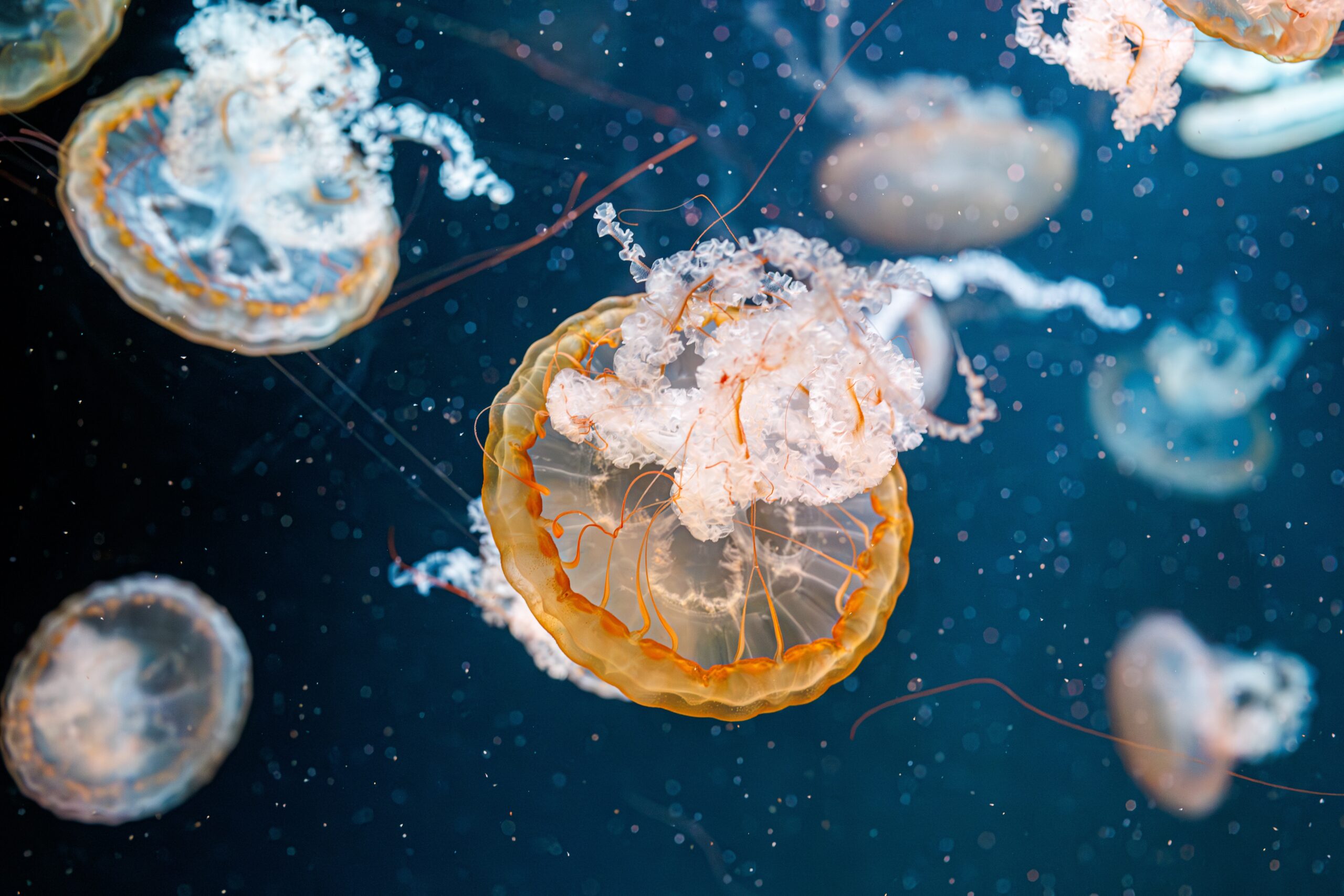
Humanity has searched for ways to slow down the relentless ticking of the biological clock, viewing aging as a universal and irreversible law of nature. Yet, floating quietly in the world’s oceans is a tiny, unassuming organism that has already solved this age-old problem.
Contents
show
By mastering an extraordinary cellular reset button, one specific species of jellyfish has learned to reverse its own life cycle, challenging the very definition of mortality. This rare biological marvel offers a profound glimpse into nature’s hidden capabilities, prompting a reexamination of the limits of life itself.
Breaking Biology’s Rules of Aging
Most jellyfish follow a predictable path of growing up. They start as tiny larvae swimming in the ocean and eventually attach to the sea floor to become plant-like polyps. From there, they mature into the familiar, free-swimming adults we usually see at the beach. Once they reach this final adult stage, their life cycle is complete, and they eventually die.
But one tiny species, Turritopsis dohrnii, plays by an entirely different set of rules. This jellyfish is barely the size of a pinky nail, yet it holds a unique survival skill. When it faces starvation, physical damage, or sudden stress in its environment, it does not just perish. Instead, it shrinks its body, pulls in its tentacles, and sinks to the ocean floor as a tiny, featureless blob.
Over the next day or two, this blob transforms back into a polyp. It is a literal reset button. Marine zoologist Stefano Piraino explains just how unusual this is by comparing it to a familiar land animal. He notes that the process might be comparable to a butterfly that would be able to revert to the caterpillar stage.
This backup plan relies on a rare biological process called transdifferentiation. In simple terms, the jellyfish takes its specialized adult cells and completely reprograms them into the cells needed for its younger self. It basically rebuilds its entire body from scratch. From there, it can grow back into an adult. If conditions allow, the jellyfish can repeat this cycle over and over again, completely avoiding death by old age.
An Accidental Breakthrough
How did the scientific community learn about this incredible ability? The species itself was first recorded in 1883, but its unique talent remained hidden for a full century. In the 1980s, researchers Christian Sommer and Giorgio Bavestrello were simply trying to rear the jellyfish for standard observation.
After collecting polyps that eventually matured into adult medusae, the pair accidentally left their glass jars unattended over a weekend. When they returned, they expected to find that the adults had spawned and died. Instead, they found newly formed polyps settled at the bottom of the water. The stressed adults had skipped death entirely and reverted to their younger state.
When this finding was presented at a 1991 marine biology workshop in Spain, many experts were highly skeptical. Marine zoologist Stefano Piraino attended that very meeting and recalled the disbelief in the room. He shared, “That was astonishing, because this was a kind of counter evidence against the fundamental dogma of biology that lives go in one direction, from fertilization of the eggs to death.”
To settle the debate, several scientists at the conference went straight to the Mediterranean Sea, collected their own specimens, and replicated the exact conditions. The results were undeniable. The stressed jellyfish once again transformed into polyps, proving that the initial laboratory accident was a genuine scientific milestone.
Cracking the Jellyfish’s Longevity Code
To understand exactly how this tiny creature resets its biological clock, researchers have turned to its DNA. A team of scientists in Spain recently mapped the genetic sequence of Turritopsis dohrnii, hoping to pinpoint the machinery that makes its rejuvenation possible.
To find answers, the researchers compared its genome to that of Turritopsis rubra, a close genetic cousin that completely lacks the ability to reverse its life cycle. The comparison revealed significant differences in how the immortal jellyfish maintains its cellular health. Specifically, Turritopsis dohrnii possesses unique variations and extra copies of genes dedicated to copying and repairing DNA.
The species also shows an exceptional ability to maintain its telomeres. These are the protective caps at the ends of chromosomes that naturally shorten as most animals, including humans, grow older. By keeping these telomeres intact, the jellyfish effectively protects its genetic integrity at a cellular level.
Marine biologist Maria Pia Miglietta highlights why these genetic safeguards are so vital for a creature that can live indefinitely. She notes, “If you are immortal, then there must be something in place to prevent [mutations from] accumulating, because eventually they’re going to be deleterious.” By continuously repairing its DNA and protecting its genetic blueprint, the jellyfish ensures that each time it reboots its life cycle, it does so with a healthy, stable set of instructions.
Immortal, Yet Not Invincible
Despite its impressive nickname, Turritopsis dohrnii is not invincible. While it can theoretically bypass death by old age, it remains a fragile creature in the wild. These tiny jellyfish and their polyp forms are defenseless against common ocean predators, including turtles, fish, sea slugs, and crustaceans. If they are eaten or struck by a fatal disease, their life cycle ends permanently. As marine zoologist Stefano Piraino clarifies, “If a single species would be able to achieve immortality and continuously reproduce, that species would invade the planet until it would fill the oceans.”
Even though they are vulnerable to predators, this species has successfully migrated far beyond its suspected origins in the Mediterranean Sea. Researchers now find them in waters near Japan, Panama, Spain, and the United States. Scientists attribute this silent, worldwide spread to human activity. The leading theory suggests that the jellyfish travel across the globe hidden inside the ballast water of large cargo ships.
Because they can revert to a dormant state when stressed by cramped conditions or a lack of food during long voyages, they make excellent hitchhikers. Once the ships empty their water tanks in new ports, the jellyfish simply resume their normal growth. While they have not caused any known ecological damage so far, their unseen migration serves as a gentle reminder of how human transportation continuously, and often invisibly, shapes the natural world.
Nature’s Clues to Healthier Aging

Studying Turritopsis dohrnii could teach us a lot about healing and medicine. By watching how this jellyfish repairs its own DNA and uses specific genes to stay healthy, scientists hope to find new ways to treat human illnesses related to old age. Researcher Joao Pedro Magalhaes notes that if nature figured out a way to stop an animal from aging, we might eventually learn how to use those same genetic tricks to keep humans healthier for longer.
More than anything, this tiny animal shows us why protecting nature matters so much. Some of the most important medical breakthroughs come from creatures that seem completely unimportant or are found by pure accident. As marine zoologist Stefano Piraino points out, we need to spend more time and money exploring the ocean’s hidden life.
The sea is still mostly a mystery. Protecting it isn’t just about saving fish or coral reefs; it’s about keeping our options open. If we don’t protect our oceans, we might lose out on future discoveries that could completely change how we handle getting older.