
Your cart is currently empty!
Katy Perry Leaves Fans Stunned With Masked Met Gala Look
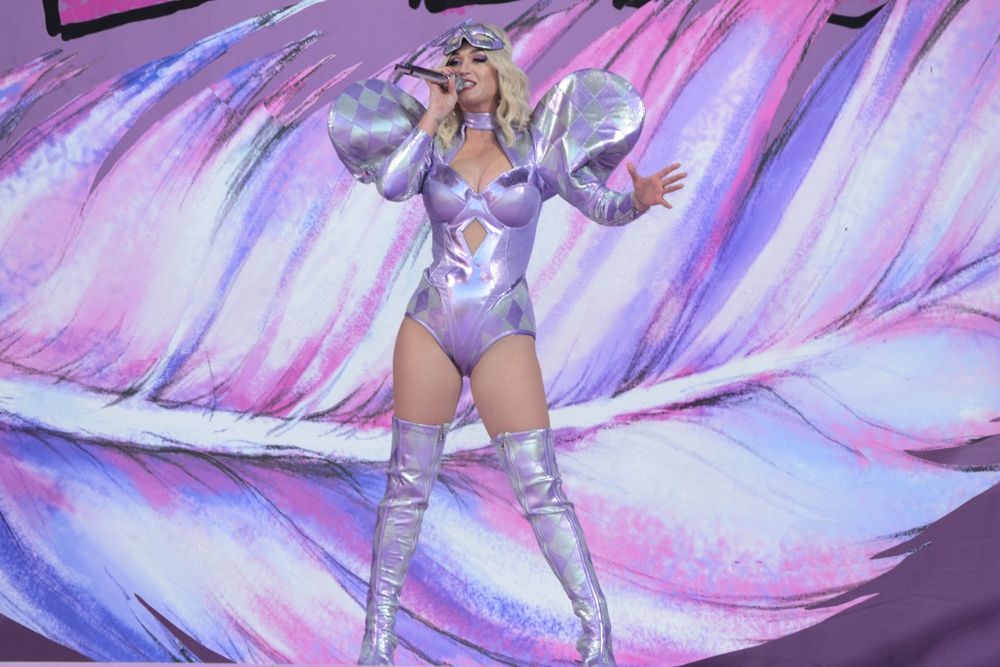
Katy Perry arrived at the 2026 Met Gala looking less like a pop star and more like a futuristic art installation.
Contents
show
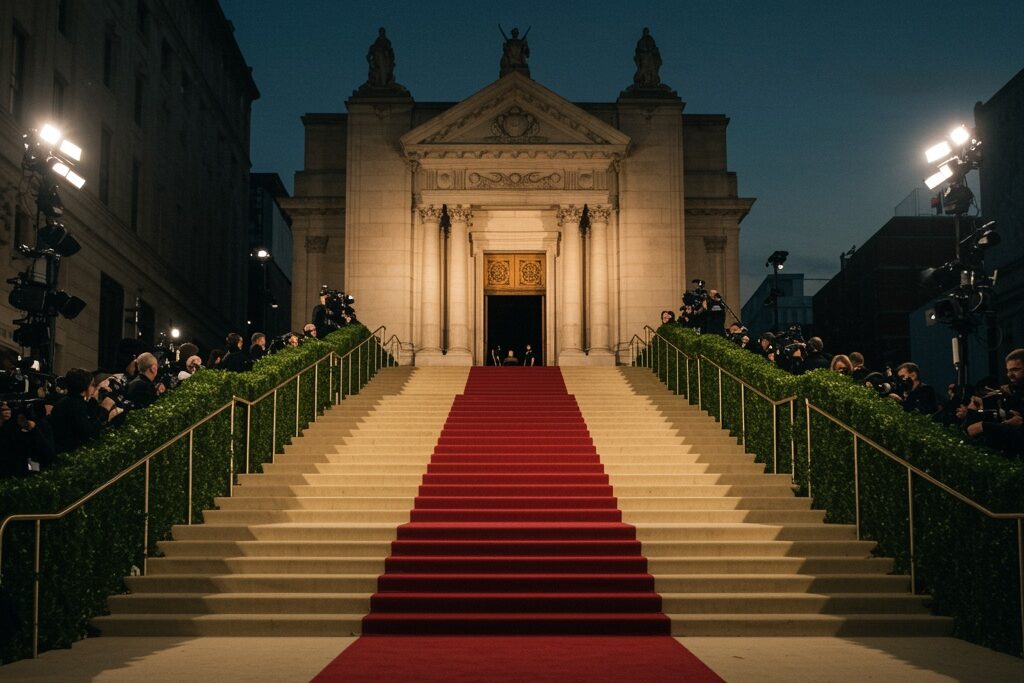
By the time she reached the top of the Metropolitan Museum of Art staircase in New York, social media was already flooded with theories, memes, and confusion over the singer’s mirrored face mask and dramatic white gown. Some viewers thought she looked like an astronaut. Others compared her to a robot, an AI-generated image, or even a Hunger Games character.
As the night unfolded, it became clear that Perry’s divisive outfit was designed to provoke exactly that kind of reaction.
Katy Perry Returned to the Met Gala in Full Costume-Art Mode
The 41-year-old singer made her first Met Gala appearance since 2022 wearing a custom Stella McCartney gown paired with a chrome headpiece designed by Serbian artist Miodrag Guberinic.
The outfit immediately stood out among the celebrity crowd because Perry’s face was completely hidden beneath a reflective silver mask that resembled a fencing helmet crossed with an astronaut visor.
Her white strapless gown featured sheer side panels, long opera gloves, and a scorched-looking train that dragged behind her on the carpet.
At one point during her arrival, Perry dramatically opened the mask to reveal her face to photographers waiting on the museum steps.
The reveal quickly became one of the most replayed moments of the night.
According to a press release shared after the event, the mirrored mask was “designed to be a literal and symbolic reflection that invites the observer to consider that their perception of others can mirror their own internal world, and conversely mask truth.”
That explanation only added to the internet’s fascination.
The 2026 Met Gala theme, “Costume Art,” encouraged celebrities to blur the line between fashion, performance, and visual art. Perry leaned heavily into that idea, turning herself into what many viewers described as a moving sculpture.
Fans Immediately Began Comparing the Outfit to AI Imagery
One detail from Perry’s look sparked even more discussion online.
Her opera glove appeared to feature six fingers.
At first glance, many viewers assumed it was either a design error or an intentionally strange artistic choice. Soon after, fashion commentators and fans began connecting the extra finger to one of the most recognizable flaws in AI-generated images.
For years, distorted hands and extra fingers have become a telltale sign of deepfake or AI-created imagery.
Perry has been at the center of several viral AI hoaxes in recent years, including fake Met Gala photos that spread online while she was not actually attending the event.
Many fans now believe the six-finger glove was a deliberate reference to those fake images.
The theory gained traction after details emerged about the symbolism behind the outfit. Perry’s mirrored mask, reflective surfaces, and distorted human details appeared to reference growing concerns around digital identity and artificial imagery online.
Some viewers praised the concept almost immediately.
One person wrote on X: “I don’t care. For hours we were wondering whether what we were seeing online was real or AI, and that’s exactly what she wanted to achieve.”
Another posted: “Katy Perry is mocking AI in her Met Gala dress by dressing up that resembles an AI robot.”
Others were less convinced.
Several viewers described the outfit as “weird,” “out of touch,” or unnecessarily confusing.
A viral clip of Perry closing the face mask over her face also spread rapidly across TikTok, where users turned the moment into reaction memes and introvert jokes.
Within hours, the video had become one of the most widely shared Met Gala moments online.
The Space-Age References Did Not Go Unnoticed
While some viewers focused on AI symbolism, others immediately connected Perry’s outfit to her controversial Blue Origin space flight from last year.
The reflective helmet-like mask prompted countless astronaut comparisons across social media.
One X user joked: “Katy Perry pretending to be an astronaut again at Met Gala 2026.”
Another wrote: “Katy Perry at the Met Gala reminding everyone that she’s been to space.”
The references were difficult to ignore.
Perry’s brief trip aboard Blue Origin alongside Lauren Sánchez Bezos became a major talking point online in 2025, with critics accusing celebrities of glamorizing billionaire space tourism while ordinary people struggled with economic pressures back on Earth.
The backlash became especially intense after clips circulated showing Perry kissing the ground after returning from the flight.
At the time, the singer admitted the online criticism had affected her deeply.
Perry previously described herself as feeling “battered and bruised” by the reaction, while also calling the internet a “dumping ground for unhinged and unhealed people.”
That controversy resurfaced almost instantly because Jeff Bezos and Lauren Sánchez Bezos served as lead sponsors and honorary co-chairs of the 2026 Met Gala.
The event itself faced protests and criticism from activists who accused Bezos of using the prestigious fashion event to strengthen his cultural influence.
Signs criticizing the sponsorship reportedly appeared around New York ahead of the Gala, with some protestors referring to the event as the “Bezos Met Gala.”
Perry’s futuristic appearance unintentionally tied her back into that ongoing debate.
For some viewers, the outfit looked like a continuation of the same billionaire space-age imagery that previously made her a target online.
Others argued the look was more self-aware than critics realized.
Perry Has a Long History of Going All-In at the Met Gala
Even people confused by Perry’s latest appearance admitted one thing.
She rarely plays it safe at the Met Gala.
Over the years, Perry has built a reputation for delivering some of the event’s most theatrical looks.
Her 2019 appearance remains one of the most memorable outfits in recent Met Gala history.
That year, she arrived wearing a fully illuminated crystal chandelier costume designed by Jeremy Scott for the “Camp: Notes on Fashion” theme.
The outfit included working lights powered by hidden battery packs.
Later in the evening, Perry changed into a giant cheeseburger costume for the after-party.
The transformation instantly became internet gold.
Back in 2018, Perry embraced the “Heavenly Bodies” theme by wearing enormous Versace angel wings that stretched dramatically behind her as she climbed the museum staircase.
The singer has consistently treated the Met Gala less like a standard celebrity red carpet and more like live performance art.
That approach explains why her 2026 look felt intentionally theatrical rather than traditionally glamorous.
Fashion critics also noted that this year’s “Costume Art” theme practically invited celebrities to push beyond conventional beauty standards.
Perry appeared to take that challenge more seriously than many of the evening’s other attendees.
One fan wrote online: “Katy Perry is the only one so far who actually brought a concept and an idea.”
Another commented: “Very few others really tried to adapt to the theme.”
Even critics who disliked the look acknowledged that it generated discussion, which has become one of the biggest goals at the Met Gala.
The Outfit Triggered Wild Online Theories
As photos from the event spread online, conspiracy theories began appearing almost immediately.
Some social media users claimed the mirrored mask and six-finger glove contained “transhumanist” symbolism.
Others accused the outfit of referencing occult imagery or “satanic” themes.
One viral post claimed the Met Gala looked like “the who’s who in the satanic worshippers club.”
Another viewer described Perry’s appearance as “a self-entitled narcissist with god-like delusions of supremacy.”
The criticisms quickly snowballed across conspiracy-focused corners of the internet.
Several users also drew comparisons between Perry’s metallic mask and the extravagant Capitol fashion featured in The Hunger Games films.
Others simply found the outfit unsettling.
“This reminds me of The Capitol in The Hunger Games,” one person wrote.
Another commented: “Weird. For sure.”
Some critics even referenced Perry’s early music career performing Christian gospel music before becoming a global pop star.
Despite the backlash, many fans pushed back against the more extreme interpretations.
One person responded online: “Let’s be honest. In what way is this satanic or transhumanist?”
Another added: “She’s always doing something crazy. I love it.”
Fashion experts and entertainment commentators largely dismissed the conspiracy theories, pointing instead toward the AI symbolism embedded throughout the outfit.
The six-finger glove especially became a major talking point among fashion writers covering the event.
Experts noted that distorted hands remain one of the most recognizable errors associated with AI-generated imagery, even as technology improves.
That detail made the glove feel less accidental and more like a deliberate joke aimed at internet culture itself.
The Mask Was Designed to Blur Identity and Perception
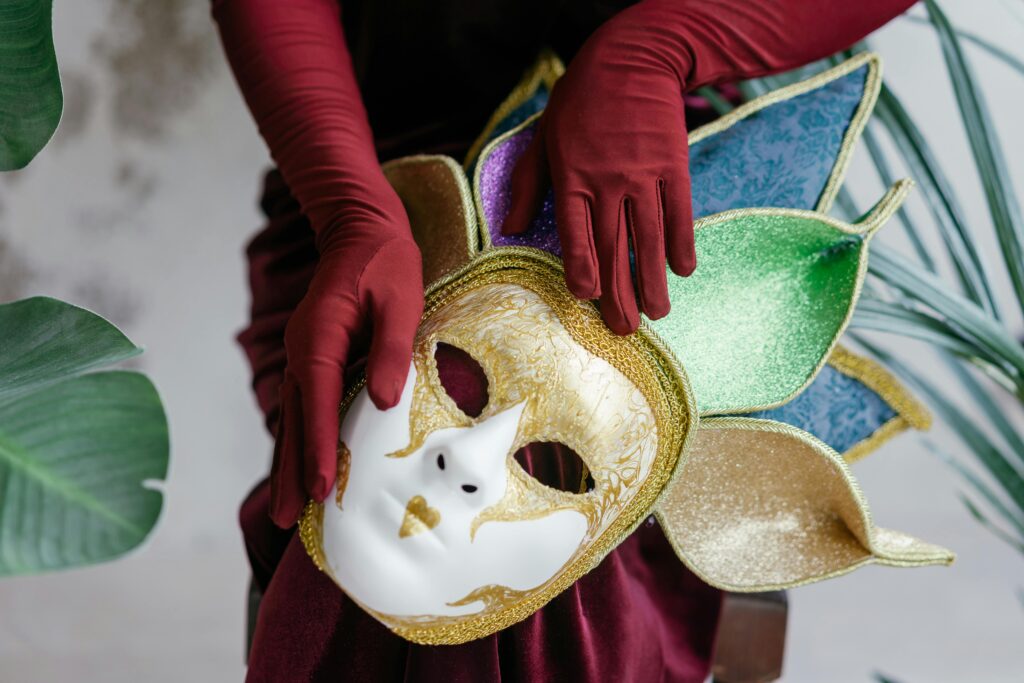
Beyond the memes and online arguments, Perry’s look also reflected a larger conversation currently happening across entertainment, fashion, and social media.
What happens when people can no longer easily distinguish between reality and fabrication online?
That question appeared central to Perry’s outfit.
The mirrored mask literally prevented viewers from seeing her identity clearly until she chose to reveal herself.
At the same time, the reflective surface forced cameras and onlookers to see themselves staring back.
Designers connected to the outfit explained that the concept focused heavily on perception and hidden truth.
That idea aligned closely with the broader “Costume Art” exhibition connected to the 2026 Met Gala.
According to reports surrounding the event, the exhibition explored how fashion transforms the body into artistic expression.
Perry’s appearance pushed that concept into almost performance-art territory.
Her use of tarot cards as accessories added another symbolic layer.
One card reportedly displayed the phrase “Commit to the bit,” which many fans interpreted as Perry openly acknowledging the theatrical absurdity of the entire spectacle.
The singer also collaborated with digital artist @sailkatycat ahead of the Gala by releasing rendered images teasing elements of the outfit online.
That move blurred the line between authentic photography and digitally manipulated imagery even further.
By the time Perry finally stepped onto the red carpet, viewers were already questioning what was real.
In many ways, that confusion became part of the artwork itself.
Other Celebrities Also Turned the Gala Into Meme Material
Perry was not the only celebrity whose outfit dominated social media during the event.
Sabrina Carpenter also became a major topic of discussion after arriving in a Dior gown constructed from film strips taken from the 1954 movie Sabrina.
The dress reportedly even included references to Letterboxd subscriptions.
Online film fans immediately flooded social media with jokes about obsessive movie culture.
Bad Bunny sparked another wave of reactions after appearing to age himself decades using detailed prosthetics.
Some viewers initially failed to recognize him.
Still, Perry remained the center of most online conversations.
Part of that came down to timing.
Artificial intelligence remains one of the biggest cultural anxieties surrounding entertainment, creativity, and celebrity identity.
Deepfake technology has already caused major problems for actors, musicians, and public figures.
AI-generated celebrity images regularly spread online faster than corrections can keep up.
Perry’s outfit seemed designed to tap directly into those fears while also mocking them.
That balance between satire, performance, and internet culture helped make her one of the night’s most discussed celebrities.
Even people who hated the outfit could not stop talking about it.
The Met Gala Has Become About Virality as Much as Fashion
For years, the Met Gala focused primarily on luxury fashion and celebrity exclusivity.
Now, the event operates just as heavily within meme culture and social media discourse.
The most successful looks are no longer simply beautiful.
They need to become instantly recognizable online.
They need reaction GIFs, TikTok edits, and viral screenshots.
Perry’s mirrored face mask accomplished all of those things within minutes.
The clip of her closing the mask became meme material almost instantly because the movement itself looked cinematic and exaggerated.
TikTok users quickly paired the footage with captions about avoiding social interaction, pretending not to see people in public, or emotionally shutting down after awkward conversations.
The internet transformed Perry’s carefully designed artistic statement into relatable comedy within hours.
That transformation may actually reinforce the point she was trying to make.
Once images hit the internet, audiences reshape them however they want.
Meaning becomes unstable.
Identity becomes performative.
Reality competes with edited clips, manipulated photos, AI-generated recreations, and viral jokes.
Perry’s outfit seemed built specifically for that chaotic environment.
It was dramatic enough for fashion headlines while also strange enough to dominate social media feeds.
Few celebrities manage to achieve both at the same time.
Why Katy Perry’s Met Gala Look Divided the Internet
The strongest reactions to Perry’s outfit revealed how differently people now view celebrity fashion.
Some viewers want glamour and elegance from red carpet events.
Others want celebrities to deliver concepts, commentary, and spectacle.
Perry clearly chose spectacle.
Her look was intentionally difficult to categorize.
It contained elements of sci-fi, performance art, satire, internet culture, and high fashion all at once.
That combination made the outfit impossible to ignore.
It also guaranteed backlash.
The same people praising Perry for mocking AI culture were often the same viewers who enjoy bizarre Met Gala fashion moments.
Meanwhile, critics who found the look pretentious or strange tended to see the event itself as increasingly disconnected from reality.
That divide has become a defining feature of modern celebrity culture.
Every major public appearance now unfolds simultaneously across fashion media, meme pages, TikTok commentary, conspiracy communities, and political debates.
Perry’s outfit somehow touched all of those spaces in a single night.
Whether viewers loved it or hated it, the singer achieved something many celebrities spend years chasing.
People paid attention.
Days after the event, her mirrored mask, six-finger glove, and astronaut comparisons were still dominating online conversation.
For a performer who has always understood the value of visual spectacle, that level of attention may have been the entire point.
And in an era where celebrity images are constantly manipulated, copied, and reimagined online, Perry’s decision to turn herself into a walking conversation about identity, artificial imagery, and internet culture suddenly feels a lot less random than it first appeared.