
Your cart is currently empty!
KitKat Launches Tracker After Massive Chocolate Theft Across Europe

There are some headlines that feel too absurd to be true. A truckload of chocolate disappearing somewhere between Italy and Poland is definitely one of them.
Contents
show
But this one, according to KitKat and Nestlé, is very real.
What began as a strange social media post quickly spiraled into one of the internet’s favorite stories of the week after the brand revealed that more than 400,000 KitKat bars had been stolen in transit across Europe. Then, in a move that made the entire story feel even more surreal, KitKat announced it had launched an official “Stolen KitKat Tracker” to help identify bars from the missing batch.
On the surface, it sounds almost too perfect for the internet: a candy heist, a missing truck, a public tracker, and thousands of people making the same joke about someone taking the slogan “have a break” a little too literally. But underneath the memes and brand banter is something more interesting. This story is not just going viral because it is funny. It is spreading because it sits at the strange intersection of modern marketing, global logistics, internet culture, and a very real problem that businesses around the world are quietly dealing with more often than most people realize.
How Over 400,000 Kitkats Disappeared
According to the details shared by KitKat and Nestlé across multiple reports, the missing shipment involved around 12 tonnes of chocolate, which works out to roughly 413,793 individual bars.
The stolen products were not just standard candy bars pulled from a supermarket shelf. Reports say the shipment consisted of KitKat’s newer Formula 1-themed bars, a collaboration that had already been getting attention after the company became Formula 1’s official chocolate partner in 2025. The bars were reportedly being transported from a production site in central Italy and were ultimately headed toward Poland before wider European distribution.
Somewhere along that route, the truck and its contents vanished.
That is the part that has captured so much attention. This was not someone slipping a few chocolates into a coat pocket at a convenience store. This was a large-scale theft operation involving an entire freight shipment. The sheer size of the stolen load immediately changed the tone of the story from silly to strangely cinematic.
And yet, despite how dramatic it sounds, Nestlé has kept its public statements fairly measured. The company has said that investigations are ongoing and that it is working closely with local authorities and supply chain partners to determine what happened. At the time of the reports, both the truck and the stolen shipment remained unaccounted for.
That detail has only added to the fascination. People can understand a stolen phone or a missing package. But a truck carrying more than 12 tonnes of branded chocolate somehow disappearing feels like the kind of thing that should not be possible in the modern world. That disconnect is part of what has made this story so irresistible.
The Tracker That Turned a Theft Into a Viral Spectacle

If the theft itself sounded unusual, KitKat’s response pushed the story fully into viral territory.
After speculation spread online that the whole thing might be an elaborate publicity stunt or an April Fools’ joke, the company doubled down publicly and insisted it was genuine. Then it launched what it called the “Stolen KitKat Tracker,” a tool that allows customers and retailers to enter the eight-digit batch code printed on the back of a KitKat wrapper to check whether it belongs to the stolen shipment.
That single move transformed the story.
Instead of simply issuing a corporate statement about an ongoing logistics theft, KitKat invited the public into the narrative. Suddenly, buying a chocolate bar came with a weird little possibility: what if this one was part of the missing batch?
It is easy to see why that immediately took off online. The tracker gave the story a level of participation that most brand announcements never get. It also blurred the line between a genuine corporate response and something that felt almost like alternate reality internet theater.
For many people, that was exactly why they did not believe it at first.
The timing did not help. KitKat’s insistence that the theft was “not a stunt” and “not an April Fools’ joke” only made the story feel more suspicious to people who had spent years being trained by social media to assume everything strange is either satire, marketing, or both. In 2026, when a major brand tells the public to scan chocolate wrappers to help solve a heist, skepticism is almost inevitable.
Still, that disbelief may actually have helped the story travel further. The more people argued over whether it was real, the more they shared it. And once a story crosses into that territory, it stops being just news and becomes internet culture.
The Internet Responded Exactly How You’d Expect
If there is one thing the internet will never waste, it is a perfectly ridiculous premise.
Within hours of the announcement, social media was flooded with jokes, puns, fake suspect descriptions, and mock investigations. The theft of more than 400,000 KitKats somehow became one of the funniest stories online, not because people thought theft was unimportant, but because the setup was too absurd to ignore.
The jokes almost wrote themselves.
People made quips about thieves making a “break” for it. Others referred to it as a “four-finger discount,” a line that quickly spread because it fit the product so perfectly. Some users described it as “Fast and Furious: chocolate edition,” while others imagined underground warehouses stacked floor to ceiling with wafer bars.
One of the most widely shared reactions summed up why this story landed so well: stealing 12 tonnes of KitKats is not a random petty crime. It suggests planning, transport, timing, and a strange level of commitment to confectionery-related crime.
And it was not just ordinary users having fun with it.
Other brands jumped in too, which only amplified the story further. Domino’s, Outback Steakhouse, Denny’s, Ryanair, and PayPal were among the companies referenced in reports as posting playful responses or mock tie-ins. Some joked about launching KitKat-inspired menu items. Others offered tongue-in-cheek “support” during what was framed as a national chocolate emergency.
This is one of the reasons stories like this spread so aggressively online. Once brands begin participating, the original story stops belonging only to the original company. It becomes part of a larger digital conversation, and every joke or quote-post adds another layer of reach.
For KitKat, that created a very unusual balancing act. The company had to remain serious enough to communicate that this was an active theft investigation, while also navigating the fact that the public had essentially turned the story into a giant communal comedy thread.
That tension, oddly enough, is what made the story feel so modern.
Why the Story Felt Like a Pr Stunt, Even if It Wasn’t
There is a reason so many people immediately assumed the entire thing was fake.
Over the past decade, audiences have become deeply familiar with “viral marketing” campaigns disguised as strange real-world events. Brands now regularly use fake feuds, staged leaks, mystery countdowns, or intentionally bizarre announcements to grab attention. So when a chocolate company says hundreds of thousands of bars have vanished and then launches a tracker, people naturally wonder whether they are watching a crime story or a campaign.
That suspicion is not irrational. In fact, it says a lot about the current relationship between audiences and corporate messaging.
Consumers are no longer passive recipients of advertising. They decode it in real time. They question tone, timing, visuals, phrasing, and rollout strategy. They are constantly asking whether a brand is being transparent or whether they are being cleverly pulled into a narrative.
That is partly why KitKat had to keep repeating that this was not a joke.
But there is another reason the story felt like marketing, and it is because the company handled it in a way that was unusually legible to social media. The statements were written in a playful voice. The tracker had a name that sounded made for sharing. The campaign visuals were clean, clickable, and easy to repost. Even if the theft was entirely genuine, the communication strategy around it was clearly designed to be internet-native.
That does not necessarily make it cynical. In fact, it may simply reflect the reality that brands now have to communicate through the same channels and instincts that shape online culture. If something strange happens, they know the internet will talk about it anyway. So rather than fighting that, they build their response around it.
In this case, KitKat did not create the weirdness. The theft did that. What the company did do was package its response in a way that made the public want to follow along.
Behind the Jokes is a Much Bigger Problem

For all the memes and punchlines, one of the most important parts of this story is also the least flashy.
Cargo theft is not a quirky one-off issue. It is a serious and growing problem in global supply chains.
According to figures cited in the reference coverage, nearly 160,000 cargo-related crimes were recorded across 129 countries between 2022 and 2024, based on research from the International Union of Marine Insurance and the Transported Asset Protection Association. Reports also noted that freight theft costs the American economy up to $35 billion per year.
That is an enormous number, and it helps explain why Nestlé chose to go public.
Most people do not spend much time thinking about what happens between a factory and a supermarket shelf. The modern consumer experience is built around convenience and expectation. Products appear when and where they are supposed to. Shelves are stocked. Orders arrive. Distribution feels invisible.
But invisibility is often just complexity hidden in plain sight.
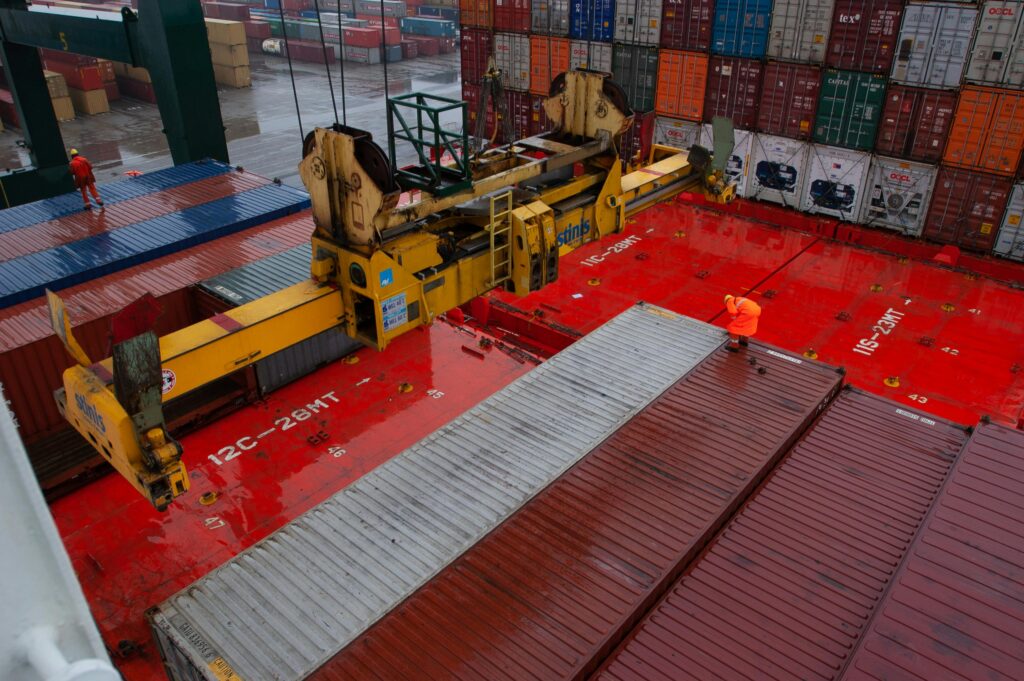
Every consumer product travels through a chain of logistics hubs, freight carriers, storage facilities, route plans, handoffs, scans, and security procedures. The longer and more interconnected that chain becomes, the more points of vulnerability exist.
And while the image of criminals making off with chocolate bars sounds funny, cargo theft is often highly organized. In many cases, stolen goods are not taken for personal use. They are diverted into unofficial sales channels, resold in gray markets, or moved quickly through distribution networks that are difficult to trace.
That is why KitKat has warned that the stolen products could potentially surface in unofficial channels across European markets.
The bars themselves may seem harmless, but the theft reflects something much bigger than snack-related mischief. It is part of a broader challenge facing industries that rely on complex international movement of goods.
Why the Public Tracker is More Revealing Than It First Appears
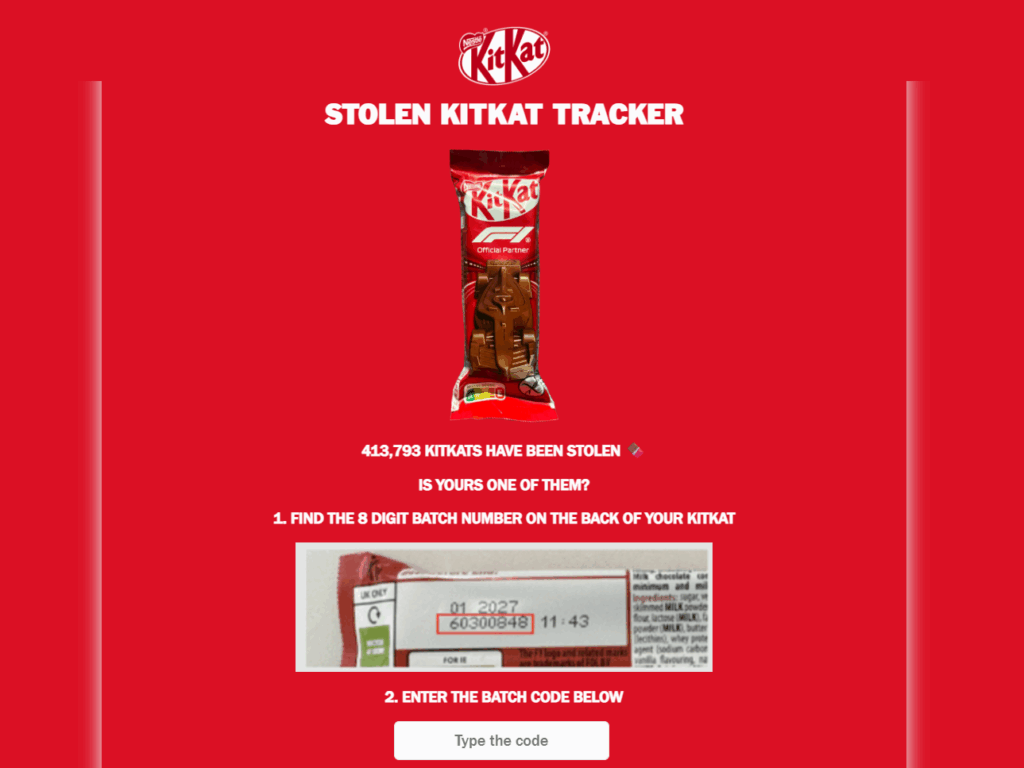
Image Credits – Website @nes.tl
At first glance, the “Stolen KitKat Tracker” sounds like a funny gimmick. But in practice, it says something interesting about how brands are increasingly trying to solve modern problems.
Instead of treating the public as spectators, KitKat has effectively turned consumers into low-level participants in a traceability system.
That matters because product traceability is becoming more central across industries. Unique batch numbers, scannable codes, and digital verification tools are no longer just internal logistics features. They are increasingly visible to the public, especially when something goes wrong.
In this case, the tracker works by asking customers to locate the eight-digit code on the wrapper and enter it online. If the bar is not from the stolen batch, they are encouraged to share the tracker and help widen the search. If it is a match, the user is reportedly given instructions on how to alert the company so the information can be passed on appropriately.
That is a strange sentence to write about a chocolate bar, but it reflects a very current reality. A wrapper is no longer just packaging. It is part of an information system.
There is also something culturally revealing about the fact that people were willing to engage with it.
The internet loves low-stakes participation. People enjoy being able to click, check, compare, scan, and feel briefly involved in something unusual. The tracker gave the public a tiny role in a story that otherwise would have remained a distant corporate incident. It transformed passive attention into active curiosity.
And in a digital culture driven by interaction, that is often the difference between a story people notice and a story they obsess over.
Why Bizarre Stories Like This Spread So Fast
There is a reason a missing chocolate shipment can dominate timelines while far more serious news struggles to hold attention.
Stories like this are viral because they are easy to understand, visually memorable, emotionally light enough to share, and just strange enough to feel irresistible.
A heist involving KitKats has all the ingredients the internet tends to reward.
It is weird. It is funny. It is specific. It is visual. And it feels shareable without requiring heavy emotional labor.
In an online environment where people are constantly sorting through outrage, conflict, fear, and fatigue, bizarre stories offer a kind of temporary release. They are absurd without being empty. They let people react, joke, and connect without needing to take a side in a larger ideological battle.
That does not mean these stories are meaningless. In fact, they often reveal a lot about how people process the world.
The reaction to the KitKat heist showed how quickly the public can turn confusion into collective storytelling. Within a day, people had built a shared vocabulary around the event. There were jokes, recurring phrases, imagined scenes, fake narratives, and brand pile-ons. That is not just virality. That is collaborative myth-making at internet speed.
And once that process starts, a story can grow far beyond the original facts.
That is partly why companies now have to manage not only what happened, but also what the internet thinks happened, jokes happened, or wishes had happened.
What This Oddly Perfect Story Says About Modern Life
The KitKat heist is funny. It is also strangely revealing.
It shows how quickly a logistics problem can become pop culture. It shows how brands now communicate in the language of memes and participation. It shows how consumers instinctively distrust corporate storytelling while still enthusiastically engaging with it. And it shows how something as simple as a candy bar can become a symbol of much larger systems that most people rarely think about until they malfunction.
There is also a small but useful lesson in the public reaction.
People were drawn to this story because it was ridiculous, but they stayed with it because it felt layered. Underneath the chocolate jokes was a real theft. Underneath the theft was a real supply-chain issue. Underneath the tracker was a glimpse into how traceability and public-facing logistics are changing the way brands operate.
In other words, this was not just a silly internet moment. It was a silly internet moment with surprisingly modern themes.
And perhaps that is why it worked so well.
We live in a time when almost everything feels either too polished, too cynical, or too heavy. A story about 413,793 missing KitKats managed to cut through because it was weird enough to feel human. It reminded people that even in a world of algorithms, logistics software, corporate messaging, and hyper-managed brands, chaos still happens. Sometimes it happens in the form of an entire truck full of chocolate simply vanishing.
For now, the missing bars remain missing, the investigation continues, and somewhere out there is either a very confused black-market distributor or the most committed KitKat fan in Europe.
Either way, one thing is certain: this is probably the only crime story in recent memory where checking the back of your snack wrapper feels like participating in a live investigation.
And that, for better or worse, is exactly the kind of headline the internet was built to make famous.