
Your cart is currently empty!
The Artist Creating Incredible Sculptures From Her Own Hair

A braid becomes a ram’s horns. Another rises into the shape of an animal, while extensions can become scales of justice, a wooden comb, or a body in motion. Ivorian artist Laetitia Ky has turned her own hair into an extraordinary form of sculpture inspired partly by African hairstyles documented before colonization.
Contents
show
What began with a single photograph in 2016 eventually took Ky from a small apartment studio in Abidjan to the Venice Biennale and a TED stage watched by hundreds of thousands. Her work combines historical hairstyles with contemporary messages about beauty, identity, and women’s rights.
Her Hair Became Her Canvas
Ky creates her sculptures in her apartment in Abidjan, which doubles as her studio. Wire provides the initial structure, thread helps secure it, and extensions are braided into her own hair until the finished shape can support itself.
Some designs can take around 10 or 20 minutes, while more complicated pieces require four or five hours.
Every extension has to be shaped and secured carefully before the sculpture can stand on its own.
The results can look almost architectural, with hair rising from her head in shapes that resemble animals, instruments, symbols, and human figures. The technique has allowed Ky to turn something associated with everyday beauty into a medium for storytelling.
The Childhood Experience Behind The Art
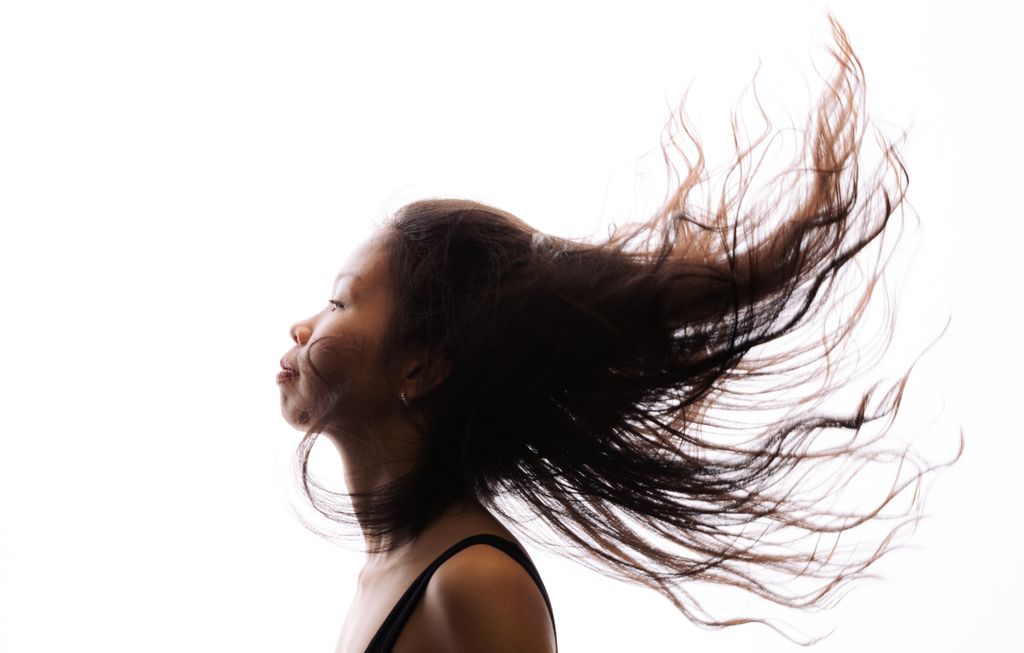
Ky has said her first chemical hair straightening treatment came when she was five years old. She described straightening Black hair as something that was simply considered normal at the time.
She was around 16 when she learned that a Black woman could keep her natural hair and live with it. Even as a child, she had been questioning the beauty standards around her, cutting the straight hair from Barbie dolls and replacing it with curly extensions.
A chemical treatment went wrong when Ky was 16 and caused her to lose a significant amount of hair. That experience became part of the path that eventually led her toward natural hair and the sculptural work that would define her career.
One Photograph Changed Everything

The turning point arrived in 2016 when Ky encountered an online album showing African women’s hairstyles from before colonization. The photographs showed elaborate shapes decorated with materials including gold, pearls, and shells.
“One day, one of those accounts posted a photo album of the hairstyles African women were wearing before colonization and I felt inspired,” Ky told Hyperallergic. She decided to recreate one of the hairstyles on herself and shared the result on Facebook.
Her friends and family responded with encouragement, which pushed her to keep experimenting. The process eventually developed into a recognizable artistic practice, and one of her photo series later went viral.
Ky had a business administration degree, but she chose to pursue the hair work instead. What began as an experiment gradually became an international career built around a material she had spent years being encouraged to change.
African Hair Once Carried Messages

The historical hairstyles that inspired Ky were not simply elaborate arrangements designed for appearance. According to Ayana Byrd and Lori Tharps in Hair Story, hair could function as a carrier of messages in many West African societies by the early 15th century.
Those messages could communicate several details about the person wearing a particular style:
- Age: Certain hairstyles could distinguish children, young women, and older members of a community.
- Marital status: A style could indicate whether someone was married or available for marriage.
- Religion: Hair could carry religious and spiritual meaning.
- Ethnic identity: Hairstyles could help identify someone’s community or cultural background.
- Rank and wealth: Some arrangements could communicate social position and status.
The signals could be highly specific. The source material notes that young Wolof girls who were not yet of marrying age could partially shave their heads to indicate they were unavailable for courting, while widows could stop tending their hair during a mourning period.
Yoruba belief also placed particular spiritual significance on hair. It was understood as being close to the divine, with a connection between hair, the gods, and the soul.
Ky Rebuilds The Shapes Strand By Strand
That history gives Ky’s work another layer beyond its visual impact. She takes forms preserved through historical photographs and reconstructs them on a living person, using familiar braiding techniques alongside wire and extensions.
The underlying braids can include cornrows, French braids, and Dutch braids. Extensions provide the extra length and volume needed to create shapes that rise from the head and resist gravity.
“Some sculptures are really easy to do and will take me like ten minutes, twenty minutes; other sculptures are way more complicated, and I need to do them for hours,” Ky said in an interview with Fondazione Imago Mundi. One video project required roughly 10 different hairstyles to carry its story from beginning to end.
The finished sculptures also affect how Ky sees herself. “Every time I finish one hairstyle and I watch myself in the mirror, I think, ‘this is my new everyday hairstyle,’” she has said, adding that the work makes her feel beautiful.
The Symbols Carry Their Own Meaning
Some of Ky’s pieces draw directly from Akan visual language. She has incorporated Adinkra symbols into her hair, including Dwennimmen, represented by ram’s horns and associated with strength and humility.
Another symbol is Duafe, the wooden comb, which carries associations with femininity, patience, and care. Other works move beyond historical reconstruction and use the same sculptural technique to address contemporary issues affecting women.

Her Hair Also Became A Political Statement
As Ky’s audience grew, the political dimension of her work became increasingly visible. Some sculptures have featured scales of justice alongside gender symbols, while another depicted a uterus with fallopian tubes ending in raised middle fingers.
She has also created female figures marked with stretch marks. Ky has connected these works to experiences faced by African women, including genital mutilation, period stigma, breast flattening, obstetric violence, lack of education for girls, and forced marriage.
“The experience of African women is very different from the experience of Western women,” Ky said. She has also described receiving more backlash in Ivory Coast when her work addresses equality between the sexes.
That tension is part of what makes the sculptures more than visual curiosities. A piece may initially look like an elaborate hairstyle, but its meaning becomes clearer when the viewer understands the issue or symbol being represented.
From A Facebook Post To Venice

Ky’s career expanded rapidly after her early experiments went online. In 2022, she became one of six artists involved in the opening of Côte d’Ivoire’s pavilion at the 59th Venice Biennale, when she was 26 years old.
That same year, she published Love and Justice, a 200-page book featuring her images and her arguments around equality. By March 2022, her combined following across social platforms had reportedly passed six million.
In October 2023, Ky took her work to the TED stage with “Wild, Intricate Sculptures, Made Out of My Hair.” The talk has since passed 570,000 plays, giving a global audience a closer look at the technique behind the photographs.
Her career had moved a long way from that first Facebook post, but the central idea remained remarkably consistent. Hair could be shaped into something that carried history while also giving Ky a way to speak about the present.
Two Very Different Lessons Began At Five
There is a striking detail connecting the beginning of Ky’s childhood relationship with hair to the work she creates today. She has said her first chemical relaxer came at five, around the same age she began braiding hair.
One experience taught her to alter her natural hair, while the other became a skill she would eventually transform into an artistic language. Years later, those same skills would help her recreate historical forms and build sculptures addressing beauty, culture, and gender.
Ky’s work shows how much meaning can exist inside something as familiar as a hairstyle. A strand of hair can become part of a sculpture, a historical reference, or a message about identity, depending on how it is shaped and what the artist chooses to say with it.