
Your cart is currently empty!
Lake Powell Nears Critically Low Levels and ‘Dead Power Pool,’ Experts Warn
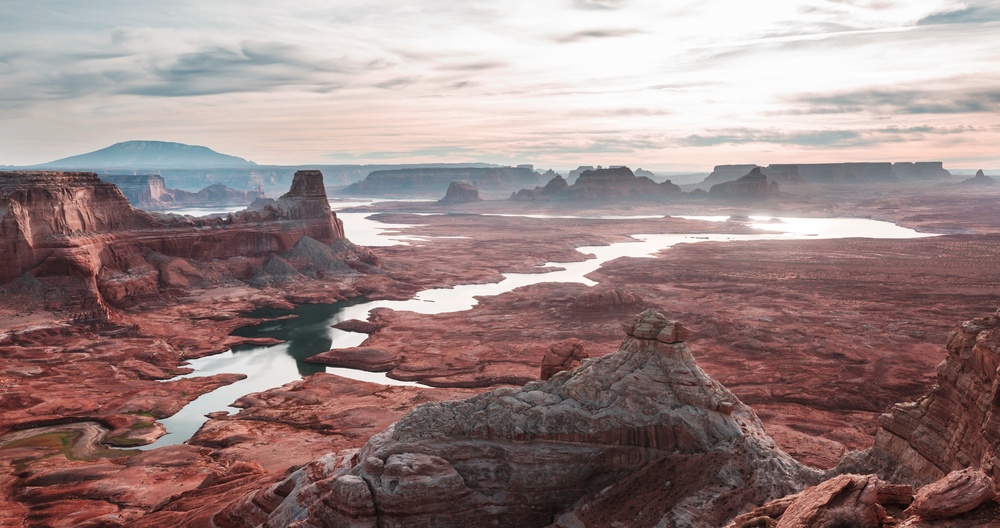
A reservoir can still look enormous while coming dangerously close to losing one of its most important functions. Lake Powell now sits only about 34 feet above the point where Glen Canyon Dam can no longer generate hydropower, following a record-low snowpack and decades of strain across the Colorado River Basin. Falling water levels threaten electricity production, complicate downstream releases and expose how little flexibility remains in a system serving millions of people. The question is no longer whether the river is under pressure, but whether the states and communities depending on it can act before a manageable crisis becomes far more difficult to contain.
Contents
show
Just 34 Feet Above a Major Operating Limit
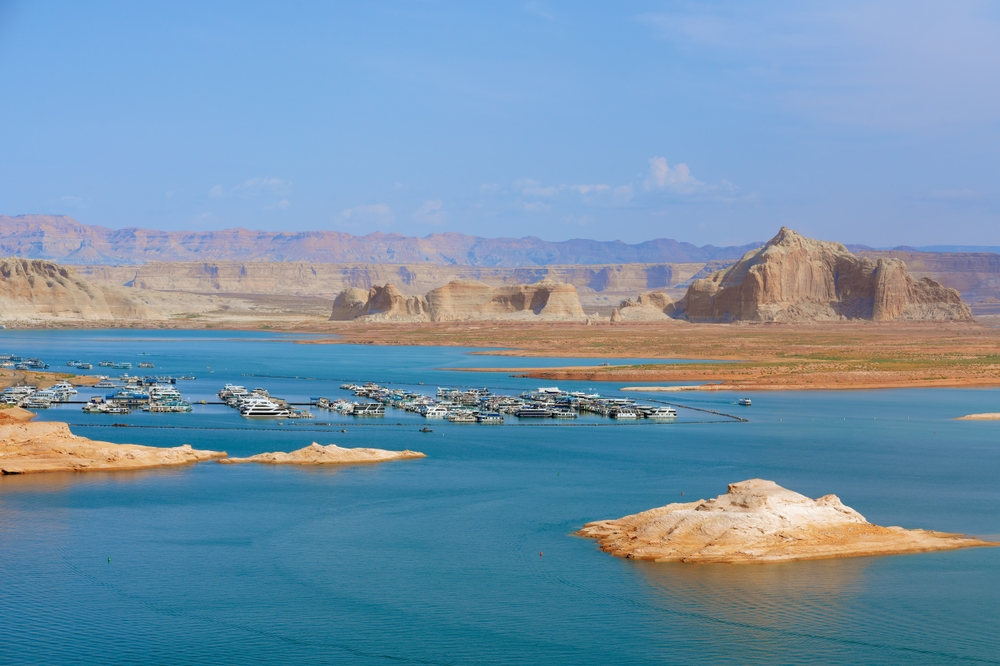
Lake Powell is moving dangerously close to an elevation where Glen Canyon Dam could no longer generate hydroelectric power. On July 13, 2026, the reservoir stood at approximately 3,524.3 feet above sea level, only about 34 feet above the dam’s minimum power pool of 3,490 feet, according to the U.S. Bureau of Reclamation.
At that threshold, water can no longer enter the penstocks that carry it through the dam’s turbines. Hydropower generation would stop, and releases would have to pass through lower outlet tubes that were not designed for prolonged operation under such conditions. Federal officials have warned that extended use of these outlets could damage pipes, erode areas below the dam, and create additional infrastructure risks.
The terminology can be confusing. Minimum power pool, sometimes called “dead power pool,” occurs at 3,490 feet and refers specifically to the loss of power generation. True “dead pool” is much lower, at 3,370 feet, when water can no longer flow through Glen Canyon Dam by gravity.
The reservoir’s declining storage makes the narrow margin especially concerning. Lake Powell held about 5.52 million acre-feet of live storage in mid-July and had been losing approximately 4,800 acre-feet per day since June 1, Colorado River researcher Jack Schmidt told ABC News. Schmidt said operations become “very complicated” below 3,500 feet, a level the reservoir is now approaching after decades of drought and unusually poor runoff.
Record-Low Snowpack Leaves Lake Powell Without Its Usual Refill
Lake Powell depends heavily on snow accumulating across the Upper Colorado River Basin during winter. When that snow melts in spring, the runoff travels through rivers and streams before eventually reaching the reservoir. In 2026, however, the basin recorded its lowest winter snowpack on record.
An unusually dry March and periods of abnormal warmth caused the limited snow to melt rapidly. The spring runoff was so weak that the Bureau of Reclamation projected Lake Powell would receive only about 3.4 million acre-feet of unregulated inflow during the 2026 water year, roughly 35 percent of the 1991–2020 average. The April-to-July inflow forecast was even lower at approximately 15 percent of average, according to the agency’s June hydrology report.
This dry year is part of a much longer pattern. The Colorado River Basin has endured more than two decades of drought, while rising temperatures have made the available precipitation less effective at replenishing rivers and reservoirs. Warmer conditions increase evaporation, reduce snow cover and cause soils and vegetation to absorb more moisture before it can become runoff. A peer-reviewed study published in Science estimated that the Colorado River’s average annual flow decreases by about 9.3 percent for every 1 degree Celsius of warming.
Water use has also remained greater than the river can reliably support during dry periods. As Colorado River researcher Jack Schmidt explained to ABC News, reservoir storage is depleted when “society is not able to reduce its use at the same rate that nature reduces its supply.” The current decline is therefore not the result of one poor winter alone, but of repeated dry years acting on an already strained system.
Lake Powell’s Water Crisis Is Also an Energy Crisis
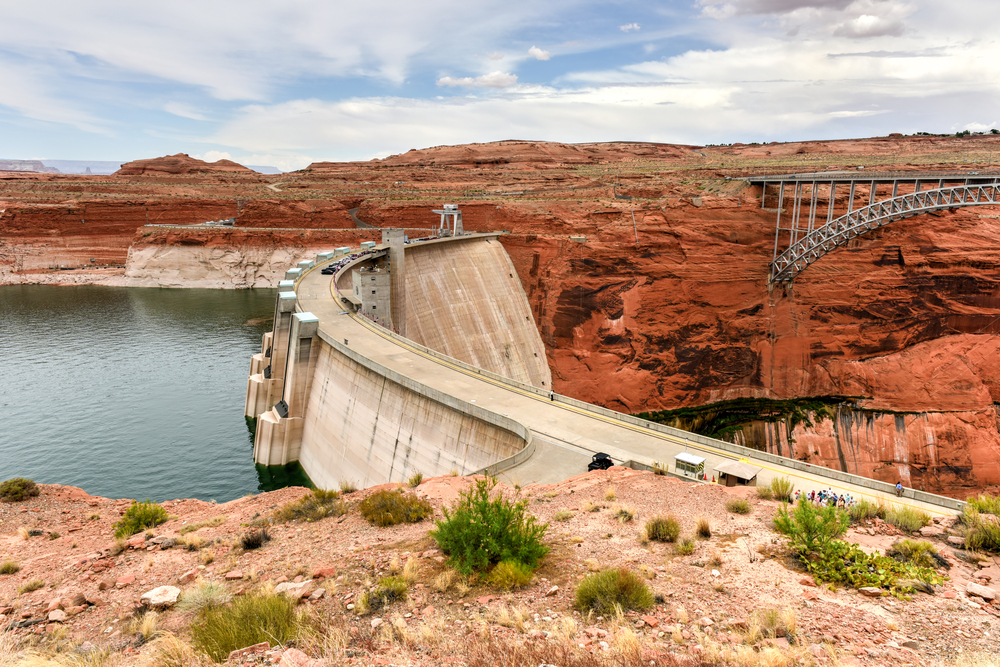
Glen Canyon Dam is not only a water-storage facility. Its eight generators can produce up to 1,320 megawatts of electricity when Lake Powell is near its normal operating level. The plant generates about four billion kilowatt-hours in an average year, making it the largest power-producing facility in the Colorado River Storage Project.
Its electricity is marketed by the Western Area Power Administration to more than 100 customers, including municipalities, rural electric cooperatives, irrigation districts, public agencies and tribal utilities. Together, Colorado River Storage Project power facilities supply part of the electricity used by more than five million people across the West.
Power production becomes less efficient even before the reservoir reaches its cutoff point. Lower water creates less pressure to drive the turbines, reducing how much electricity the plant can generate. Federal estimates show that Glen Canyon’s maximum capacity falls from 1,320 megawatts at a full reservoir to roughly 630 megawatts near minimum power pool. Below that threshold, generation would stop entirely.
That would not automatically cause widespread blackouts because the western electrical grid draws power from many sources. However, utilities that receive relatively low-cost federal hydropower could be forced to purchase more electricity on the wholesale market, where prices may be higher and more volatile. Those additional costs could eventually affect local utilities and their customers.
The loss would also remove an electricity source that can respond quickly when demand rises. Hydropower can increase or decrease its output within minutes, helping grid operators balance variable sources such as solar and wind. Lake Powell’s decline therefore threatens more than the amount of electricity available. It could also weaken one of the region’s most flexible tools for keeping the power system stable.
Lake Powell’s Warning Cannot Be Ignored
Lake Powell has not yet reached minimum power pool, and true dead pool remains much farther below. That distinction matters because the worst outcome is not inevitable. However, emergency releases from upstream reservoirs and reduced deliveries to Lake Mead can only buy time. These measures move limited water around the same strained system without resolving the imbalance between the Colorado River’s shrinking supply and the demands placed upon it.
A lasting response will require the seven basin states, tribal nations, Mexico and the federal government to agree on enforceable reductions that reflect the river’s present conditions rather than its wetter past. Cities, farms and industries will all face difficult compromises, but delaying them would leave nature to impose harsher limits later. Lake Powell’s exposed shoreline is no longer simply an image of drought. It is a warning that the Colorado River can no longer support promises built around water that may not return.