
Your cart is currently empty!
The Last Person In America Living Inside An Iron Lung Is Gone
A five-year-old girl woke up on a sunny morning in Oklahoma in 1953 and could barely move her neck.
Contents
show
Four days later, Martha Ann Lillard could not breathe.
She would spend the next 73 years living with the consequences of polio, much of that time inside a steel machine that forced her lungs to work. When she died in June 2026 at age 78, America lost its last known polio survivor who still depended on an iron lung.
Martha Lillard Woke Up To A Nightmare
It was June 1953 in Shawnee, Oklahoma. Lillard had just turned five.
The morning began like any ordinary summer morning. Sunlight came through the bedroom window, but something was terribly wrong.
“I woke up and it was sunny outside, and I started to sit up, and my neck was killing me,” Lillard recalled.
Within days, the illness had progressed dramatically.
She became unable to breathe or move her arms and legs. Four days after that first morning, she was unconscious.
The culprit was poliovirus, a highly infectious virus that could invade the nervous system and cause paralysis. For children growing up during America’s polio epidemics, the disease was not some distant historical threat.
It was something families feared.
In the early 1950s, parents could watch healthy children become paralyzed within days. Some survived with permanent disabilities. Others died when the muscles needed for breathing stopped working.
Lillard survived.
But survival came with a machine that would become part of her life for more than seven decades.
The Iron Lung Became Part Of Her Life
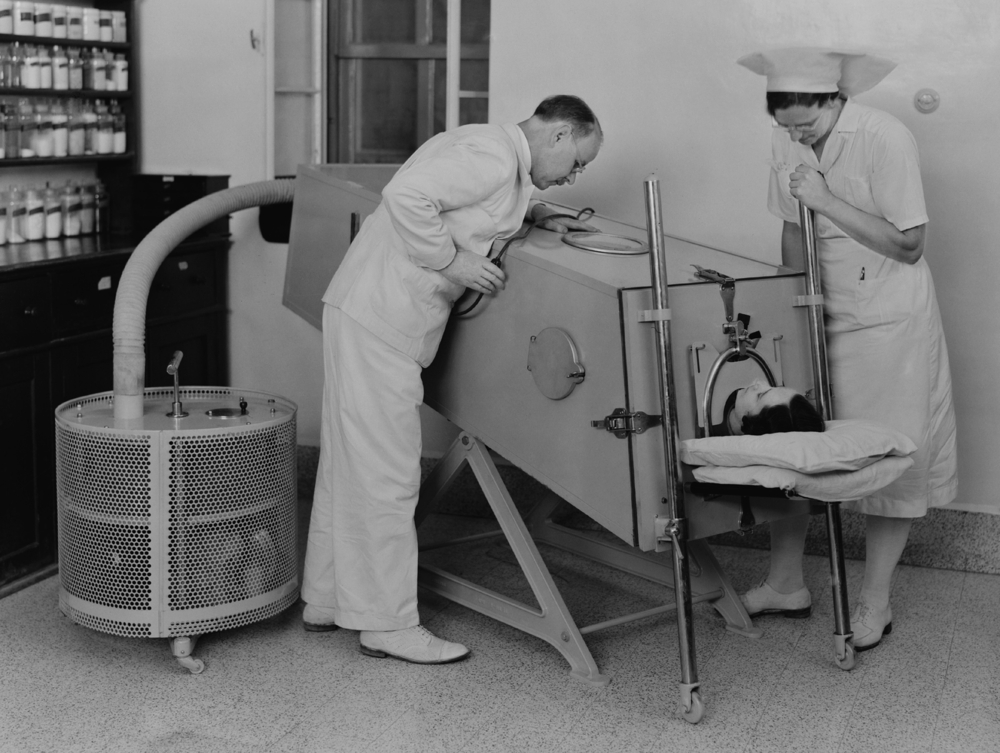
An iron lung looks almost like something from another century because it is.
An iron lung is not a ventilator. It does not push air down your throat. A motorized bellows drops the air pressure inside the sealed tube so your chest expands, then raises it so your chest falls.
The huge steel cylinder enclosed a patient’s body while leaving the head outside. Instead of forcing air directly into the lungs through a tube, the machine changed air pressure around the patient’s chest.
That pressure made the chest expand and contract.
In other words, the machine breathed for the person inside it.
Lillard spent six months in the hospital after becoming ill. For much of that time, she remained inside the iron lung for roughly 23 hours a day.
Doctors and therapists worked to help her regain some function.
Eventually, she recovered enough movement to leave the machine during the day. She regained the use of her legs and partial movement in her left arm.
Her breathing remained severely compromised.
The iron lung therefore never became something she simply left behind.
It became part of the routine of her life.
She slept inside it at night. When she needed it during the day, she used it. The machine hummed around her while decades passed outside.
During one ice storm, Lillard became trapped inside the machine without electricity.
She later described the experience as “like being buried alive almost, you know, it’s so scary.”
Yet she continued.
“That’s what keeps me healthy. That’s what heals me. That’s what allows me to breathe the next day,” she said.
There is something startling about those words.
The machine was frightening. It was uncomfortable. It was enormous and increasingly difficult to maintain.
But it also kept her alive.
Doctors Did Not Expect Her To Live This Long
Lillard’s family was reportedly told that she might not live beyond 20.
She proved that prediction spectacularly wrong.
Her sister, Cindy McVey, described her as someone who had “the enthusiasm and the drive to continue living.”
Lillard went on to build a life that was far larger than the machine surrounding her.
She completed high school with tutors who taught her through an intercom system. She learned to drive. She lived independently for years.
She wrote poems and songs.
She volunteered with the Humane Society.
She formed relationships and maintained friendships.
And decades after childhood polio had changed her life, she found love.
Lillard met Baha Salh online more than 20 years ago. The couple married in February 2026, when she was 77.
Her sister described them as “really soul mates.”
For people who knew Lillard, the iron lung was not the whole story.
It was simply part of the furniture of her existence.
McVey captured that perspective in one remarkably simple sentence.
“To me, it was just normal.”
That may be one of the most revealing details of Lillard’s life.
For most people, sleeping every night inside a massive steel chamber sounds unimaginable. For Lillard, it was simply how life worked.
She adapted to circumstances that would have overwhelmed many people.
And she kept living.
America Once Had Thousands Of Children Like Her
Lillard’s story becomes even more striking when placed against the scale of the polio epidemic.
During the 1950s, the United States recorded roughly 15,000 cases of paralytic polio each year.
The peak came in 1952.
Nearly 58,000 cases were recorded that year. More than 3,000 people died, while around 21,000 were left with some degree of paralysis.
Those numbers can become strangely abstract.
Fifty-eight thousand cases sounds like a statistic.
It is much harder to picture 58,000 individual children.
Each case represented a family suddenly confronting a disease that could change a child’s life within days. Each death left people grieving. Each paralysis could mean decades of rehabilitation, medical treatment and adaptation.
The iron lung became one of the most recognizable symbols of that era.
Hospitals needed entire wards filled with the machines.
Patients lay inside them for hours or days. Some depended on them for months. A few, like Lillard, depended on them for decades.
Parents who lived through those years did not need an explanation of what polio could do.
They had seen it.
Then something changed.
The Vaccine Changed What America Had To Fear
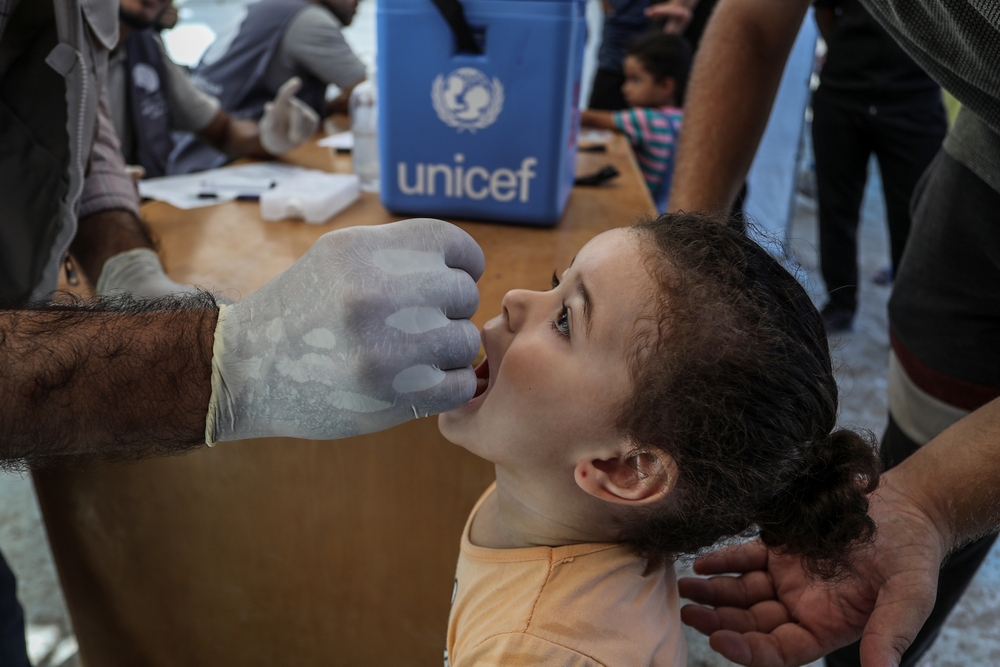
Jonas Salk’s polio vaccine was licensed in the United States on April 12, 1955.
The effect was dramatic.
By 1957, the annual number of polio cases had dropped below 5,500.
By the 1960s, it was below 100.
In 1979, the United States declared polio eliminated.
That timeline tells a story that is easy to overlook.
The iron lung did not become obsolete because someone invented a better iron lung.
The disease that created the demand for those machines was pushed out.
That distinction matters.
Medical technology can help people survive disease. Prevention can stop the disease from reaching them in the first place.
Lillard needed an iron lung because she contracted polio before vaccination could protect her.
Children born later largely did not have to make that choice.
They could grow up without ever knowing what an iron lung looked like.
They could hear the word polio in a history lesson rather than in a hospital room.
That is what successful vaccination can look like.
The disease disappears from ordinary life.
Then, eventually, people forget why
What Happened To Polio Can Happen With Other Diseases

Lillard’s story arrives at a moment when vaccination rates have been moving in the wrong direction in the United States.
According to the source data cited in the original reporting, polio vaccination among American kindergarteners fell to 92.5% during the 2024 to 2025 school year, compared with 93.1% the previous year.
That change may look small.
Public health, however, is often shaped by small changes repeated across large populations.
The same school-year data showed measles, mumps and rubella vaccination at 92.5%. Measles transmission is generally interrupted when coverage reaches around 95%.
At the same time, exemptions among kindergarten students increased from 3.3% to 3.6%, with 17 states reporting exemption rates above 5%.
Measles cases also surged.
States recorded 2,288 cases in 2025, including 243 hospitalizations and three deaths. More than 3,800 cases were reported between January 2025 and March 2026, according to the source material.
None of this means that America is suddenly facing another 1952-style polio epidemic.
The United States has been free of naturally circulating polio since 1979.
The point is different.
Diseases that become rare can become easy to underestimate.
And when vaccination coverage declines far enough, diseases that once seemed like history can regain opportunities to spread.
Measles provides a visible example because it can move quickly through communities with insufficient immunity.
Polio is a different case, but the underlying principle remains familiar.
Prevention works best when people never have to notice it.
Martha Lillard Lived Long Enough To See The World Change
Martha Lillard’s life spanned an incredible chapter in medical history. Catching polio just before a vaccine was available, she relied on an iron lung to keep her breathing for decades. But Martha didn’t just survive her circumstances; she built a rich and full life. She studied, wrote, volunteered, cared for animals, and even found love, all while watching the terrifying disease that changed her life slowly disappear from the world.
Her journey is powerful simply for what it is: a five-year-old girl who wasn’t expected to survive grew into a resilient 78-year-old woman. Her iron lung was her constant companion for most of her life, until finally, it was no longer needed.
In many ways, this is a bittersweet ending. The silence of that machine means we have lost the incredible woman who depended on it, but it also represents one of our greatest medical triumphs. Today, parents no longer have to live in fear of summer polio outbreaks, and hospitals are no longer filled with paralyzed children. Martha Lillard was the last person to need an iron lung. Ultimately, the most beautiful part of her legacy isn’t just that she was the last—it’s why she was the last. Thanks to a vaccine, we can be sure that no one else will ever have to take her place.