
Your cart is currently empty!
Louisiana Supreme Court Overturns Murder Conviction Built on Junk Science
For more than a quarter of a century, Jimmie “Chris” Duncan lived with the possibility that the state of Louisiana could execute him for murdering his girlfriend’s 23-month-old daughter. Prosecutors argued the evidence was overwhelming. Jurors agreed, sentencing him to death in 1998.
Contents
show
Now, nearly three decades later, Louisiana’s highest court has unanimously concluded that the forensic evidence at the centre of that conviction cannot withstand scientific scrutiny. In a decision that closes one of the state’s longest-running death penalty battles, the Louisiana Supreme Court upheld a lower court’s ruling vacating Duncan’s conviction, finding that the evidence used to secure his guilty verdict had been fundamentally undermined.
The ruling has become one of the most striking examples of how discredited forensic techniques helped send people to prison, and even to death row, long before modern scientific standards exposed their flaws.
A Conviction That Rested on Bite Mark Evidence
The case dates back to December 18, 1993, when Haley Oliveaux died after being left in a bathtub inside the West Monroe home she shared with her mother and Duncan. According to Duncan, he had stepped downstairs to wash dishes while Haley was bathing. Moments later he heard a noise, rushed upstairs and found the toddler floating face down in the water.
He immediately attempted CPR before running next door for help. Haley was pronounced dead a short time later.
Police initially arrested Duncan on a charge of negligent homicide. At that point, investigators had not accused him of intentionally killing the child.
Everything changed after forensic pathologist Dr. Steven Hayne and forensic dentist Dr. Michael West examined Haley’s body.
The pair concluded that Haley had been sexually assaulted, bitten and intentionally drowned. Those findings transformed the investigation almost overnight. Prosecutors upgraded the charge from negligent homicide to first-degree murder, opening the door for a death sentence.
During Duncan’s 1998 trial, prosecutors relied heavily on testimony suggesting that marks found on Haley’s body matched Duncan’s teeth. At the time, bite mark comparison evidence was accepted in many American courtrooms, even though its scientific foundation was already being questioned by some experts.
Jurors ultimately convicted Duncan after approximately two weeks of testimony and sentenced him to death.
The Evidence That Began to Unravel

For years, Duncan maintained he was innocent.
As new lawyers began reviewing the case decades later, they uncovered evidence that cast doubt on nearly every major piece of the prosecution’s theory.
The most significant discovery involved a videotape recorded during Dr. Michael West’s examination of Haley’s body.
Unlike the photographs shown to jurors in 1998, the video had never been presented during Duncan’s trial.
When defence experts finally reviewed the footage, they argued it showed something far different from what prosecutors had described.
Rather than documenting existing bite marks, the recording appeared to capture West repeatedly pressing and grinding a mould of Duncan’s teeth directly against the child’s skin during the post-mortem examination.
According to Duncan’s legal team, the procedure created impressions that were later presented as evidence supposedly left during the attack.
That allegation became one of the defining issues during Duncan’s post-conviction proceedings.
Justice Cade R. Cole later wrote that defence experts concluded it was “scientifically indefensible” to identify the marks as bites made by Duncan. He also noted expert testimony explaining that the bite angles shown in the recording were physically impossible for an actual human bite.
West has consistently defended his actions.
According to the court record, he said he was using what he called a “direct comparison” technique, pressing the dental mould onto suspected bite marks to compare them more accurately.
But the scientific community had already moved on.
A Science That Lost Its Credibility
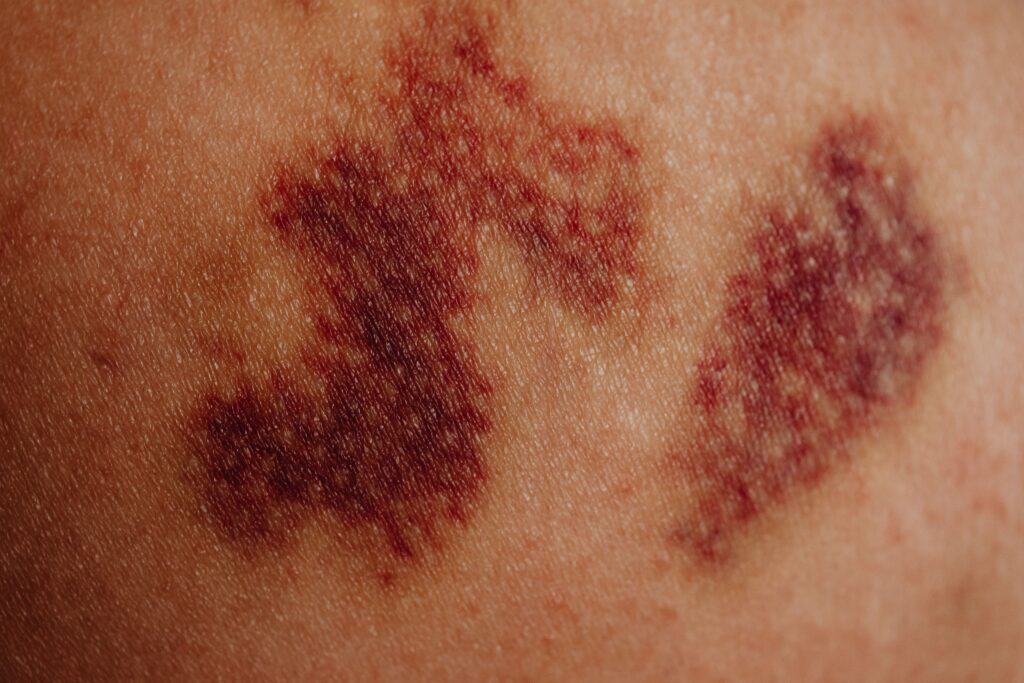
When Duncan went on trial in 1998, bite mark identification still appeared regularly in criminal prosecutions across the United States.
Over the years that followed, however, researchers increasingly questioned whether human skin could reliably preserve bite patterns or whether individual teeth were distinctive enough to identify one specific person.
One report after another concluded there was no reliable scientific basis for making such claims.
The National Academy of Sciences later found there was “no evidence of an existing scientific basis” for identifying one individual to the exclusion of everyone else through bite marks. The Innocence Project has documented dozens of wrongful convictions linked to bite mark testimony.
Dr. Michael West himself eventually acknowledged the limitations of the discipline.
During later legal proceedings in another case, West admitted he no longer believed bite mark analysis was reliable enough to be used in court.
“When I testified in this case, I believed in the uniqueness of human bite marks,” he said during a deposition. “I no longer believe that.”
That admission became part of a much broader reassessment of convictions built around the work of West and Hayne.
By the time Duncan’s appeal reached the courts, nine prisoners had already been released after convictions involving forensic evidence from the same two experts. Three of those individuals had also been sentenced to death.
According to the Louisiana Supreme Court, Duncan became the last person still facing execution based on their work.
More Than One Piece of Evidence Fell Apart

The bite mark testimony was not the only pillar supporting Duncan’s conviction.
His defence team also revisited testimony from a jailhouse informant who had claimed Duncan confessed while they shared a cell before trial.
Years later, that witness recanted.
According to court filings, he admitted Duncan never confessed and instead spent much of his time crying and insisting he had done nothing wrong. Another former inmate similarly told investigators he never heard Duncan admit to killing Haley.
Medical experts also challenged the original conclusion that Haley had been murdered.
New testimony suggested her death was consistent with an accidental drowning rather than homicide.
Evidence presented during post-conviction proceedings also highlighted serious head injuries Haley had suffered shortly before her death.
According to Duncan’s lawyers, doctors treating the toddler after those injuries warned her family not to leave her alone in a bathtub because of the possibility she could suffer seizures.
That information was never presented to the jury that convicted Duncan.
Experts further disputed the prosecution’s claim that Haley had been sexually assaulted.
Defence forensic pathologists testified that injuries originally described as evidence of abuse could instead be explained by constipation, infection or other medical conditions.
Taken together, the new evidence challenged nearly every forensic conclusion presented during the original murder trial.
The Supreme Court Finds the Conviction Could Not Stand

Following a lengthy evidentiary hearing, Louisiana District Judge Alvin Sharp ruled in 2025 that Duncan’s conviction should be vacated.
Judge Sharp concluded the bite mark evidence was “no longer valid” and “not scientifically defensible,” while finding the new evidence supported Duncan’s factual innocence.
Prosecutors appealed that decision to the Louisiana Supreme Court, arguing Duncan remained guilty because he was alone with Haley when she died.
During oral arguments, District Attorney Steve Tew argued, “We don’t need the bite mark evidence to put Mr. Duncan in the apartment alone with this child.”
The state’s highest court disagreed.
Writing for the unanimous court, Justice Cade R. Cole concluded that the post-conviction evidence “undermined the core factual premises on which the state depended.”
He wrote that the new findings did far more than offer an alternative interpretation of the evidence presented at trial.
Instead, they dismantled the very forensic foundation on which prosecutors built their murder case, concluding that it was “much more probable than not” that no rational juror would have convicted Duncan beyond a reasonable doubt.
A Judge Compared the Evidence to Medieval Witch Trials

The Louisiana Supreme Court’s ruling went well beyond rejecting the bite mark evidence used against Duncan.
Chief Justice John L. Weimer wrote a separate concurring opinion that drew a striking comparison between bite mark testimony and one of history’s most notorious examples of pseudoscience.
He likened its use to the “trial by water” tests carried out during 17th-century witch hunts.
In those ordeals, people accused of witchcraft were tied up and thrown into water. Floating supposedly proved guilt because the water had “rejected” them. Sinking suggested innocence, though many innocent people drowned before they could be rescued.
“We now look back at those practices as asinine and absurd,” Weimer wrote.
He said the forensic evidence used against Duncan had ultimately proven to be “similarly specious.”
The chief justice also warned about the unique risks posed by capital punishment when convictions depend on unreliable science.
“This matter demonstrates we cannot be too careful in determining whether the death penalty should be implemented,” Weimer wrote, adding that carrying out an execution based on evidence “devoid of legitimacy” would create “an irreversible and tragic consequence” for the justice system.
His comments reflected a broader concern running throughout the court’s opinions. Once a death sentence has been carried out, there is no opportunity to correct a mistake.
Louisiana’s Long History of Wrongful Death Penalty Cases

Duncan’s case did not emerge in isolation.
Louisiana has one of the highest numbers of death row exonerations in the United States. According to the case materials, at least 12 people have been exonerated and released from the state’s death row since 1973. Duncan has not yet been added to that list because prosecutors have indicated they may seek another trial rather than dismiss the charges.
The case also became another chapter in the collapse of bite mark comparison as forensic evidence.
For decades, courts accepted testimony claiming experts could identify a specific individual through marks left on skin.
Subsequent scientific reviews dismantled those assumptions.
The Innocence Project has documented dozens of wrongful convictions and indictments linked to bite mark comparison, while the technique itself has been broadly discredited by forensic scientists.
Much of that scrutiny has centred on the work of Dr. Michael West and Dr. Steven Hayne.
Their testimony contributed to numerous convictions across Mississippi and Louisiana before courts began overturning those verdicts.
Several high-profile exonerations exposed serious problems with their forensic methods.
In the cases of Kennedy Brewer and Levon Brooks, DNA evidence later identified another man as the real killer after both men had spent years imprisoned because of bite mark testimony from West and Hayne. Investigators eventually concluded that marks originally identified as human bites were actually caused by scavenging animals.
Other convictions involving the pair also collapsed after courts found their conclusions unreliable.
By the time Duncan’s appeal reached the Louisiana Supreme Court, his case represented the last remaining death sentence still tied directly to their forensic work.
The Prosecutors Still Believe Duncan Is Guilty
Despite the unanimous Supreme Court ruling, the legal battle may not be over.
District Attorney Robert “Steve” Tew has consistently maintained that Duncan murdered Haley.
Throughout the appeals process, prosecutors argued that the new evidence did not erase the fact that Duncan was alone with the toddler when she died.
“We don’t need bite mark evidence to put Mr. Duncan in the apartment alone with this child,” Tew argued during oral arguments before the Louisiana Supreme Court.
According to the reference material, Tew has previously indicated that if the conviction was not reinstated, his office intended to retry Duncan, although he has not publicly specified what charge prosecutors would pursue.
The court’s decision therefore resolves Duncan’s conviction but does not necessarily end the prosecution.
His lawyers, however, believe the case should finally be brought to a close.
Chris Fabricant, Director of Strategic Litigation at the Innocence Project and a member of Duncan’s legal team, welcomed the Supreme Court’s decision.
“I am flooded with relief,” Fabricant said after the ruling.
“It would have been a moral outrage for the conviction to be reinstated.”
Addressing the possibility of another trial, he added, “If there is any sense of fairness and justice left, this should be the end of this case.”

Haley’s Family Also Questioned the Original Conviction
One of the more unusual aspects of the case is that Duncan’s release has received support from members of Haley Oliveaux’s own family.
According to the case materials, Haley’s mother, Allison Layton Statham, publicly backed efforts to overturn Duncan’s conviction and supported his release from prison.
Relatives from Haley’s father’s side of the family also criticised the prosecution.
They said they repeatedly sought meetings with prosecutors to express concerns about the case but never received a response.
Their position underscored how dramatically perceptions of the case have shifted since Duncan’s conviction nearly three decades ago.
At the original trial, prosecutors presented the forensic testimony as powerful scientific proof.
Years later, that same evidence became the reason courts determined the conviction could no longer stand.
A Case That Changed With Advances in Science
Duncan spent 27 years on Louisiana’s death row before being released on bail after the trial court vacated his conviction. He is now officially free following the Louisiana Supreme Court’s decision affirming that ruling.
His case illustrates how scientific standards continue to evolve long after criminal trials have ended.
Evidence once presented as definitive can later collapse under closer examination, particularly as forensic disciplines undergo independent testing and validation.
The Supreme Court concluded that the evidence presented after Duncan’s trial did not simply introduce an alternative explanation for Haley’s death. It fundamentally dismantled the forensic foundation that persuaded jurors to convict him in 1998.
Whether prosecutors ultimately pursue another trial remains uncertain.
What is already clear is that one of Louisiana’s longest-running death penalty cases has become a defining example of the risks posed when criminal convictions rely on forensic methods that science no longer supports.
For Duncan, the ruling ends nearly three decades spent under a death sentence built around evidence the state’s highest court has now determined was “scientifically indefensible.”