
Your cart is currently empty!
Louisiana Just Banned Balloon Releases and Grieving Communities Are Furious

Picture a warm evening in Baton Rouge. A crowd gathers in a neighborhood that has lost someone, and dozens of helium balloons rise together into the sky. For the people holding them, the moment is not decoration or spectacle. It is a form of prayer, a visible act of sending something upward on behalf of someone who is gone. It has become one of the most common collective grief rituals in communities across the American South, particularly in places that have endured violent loss over and over again.
Contents
show
Starting August 1, 2026, that ritual will be illegal in Louisiana. A new state law banning the intentional outdoor release of Mylar and latex helium balloons has cleared the legislature and is headed into effect, and the response from people who participate in balloon releases has been sharp, personal, and in some cases furious.
What the Law Prohibits and What It Doesn’t
Louisiana’s balloon release ban targets organized outdoor releases specifically, and its scope has been defined with some care. Children under 17 are exempt. Anyone who releases a balloon accidentally rather than intentionally falls outside its reach. Balloon releases held indoors remain permitted, and nothing in the legislation touches the indoor use of balloons for any purpose.
What the law does address is the deliberate, organized outdoor release of Mylar or latex helium balloons, which is precisely the kind of event communities hold to honor the dead. Someone who violates it once faces a $500 fine and eight hours of litter-related community service. A second offense brings $900 and 20 hours of community service. A third or subsequent violation carries a $2,500 fine, an 80-hour community service requirement, and a one-year suspension of the offender’s driver’s license.
Those are not token penalties. A three-time offender faces a combination of financial cost and license loss that could affect their ability to work and move through daily life. Louisiana’s legislature clearly intended the graduated structure to produce actual behavioral change rather than serve as a largely ignored symbolic gesture.
Why Environmental Groups Backed the Ban
Rebecca Triche, executive director of the Louisiana Wildlife Federation, has been among the most prominent voices supporting the legislation, and her case rests on documented patterns of harm rather than hypothetical risk.
“I think when people release balloons, I think they don’t realize all of the elements of that balloon release. So there are the strings that they held onto the balloons that could become something that strangles wildlife. You’ll see birds trying to make that a part of their nest, and that’s not nesting material,” Triche said.
That specific harm, birds attempting to weave balloon string into nests and getting entangled in the process, is one of several ways balloon releases cause damage that most participants never witness because it happens far from where the balloons were released. What goes up comes down, and where it lands is rarely someone’s backyard. Balloons released in Baton Rouge drift on air currents and eventually fall into marshes, waterways, forests, and farm fields, where the debris accumulates among animals who have no way of distinguishing it from food or nesting material.
Mylar balloons carry an additional hazard that has nothing to do with animals. When they drift into power infrastructure, they can short out electrical lines, causing outages and potentially starting fires. Farmers in Louisiana have found balloon debris in their fields, where livestock have attempted to eat it. Wildlife officials across the state expressed support for the legislation, in Triche’s account, and saw it as an overdue recognition of a problem that had been growing alongside the popularity of outdoor memorial releases.
What Balloon Releases Mean to the People Who Hold Them

Cathy Toliver is a community activist in Baton Rouge who has participated in dozens of balloon releases over the years, including one held after her grandson Devin Page Junior was shot and killed. For Toliver, the new law is not primarily a policy disagreement. It is a wound.
Her objection is spiritual as much as practical. A balloon release is not interchangeable with other memorial rituals because of what the upward movement means to the people participating in it. Watching balloons rise is understood, in the communities where this practice is most common, as watching a message travel toward heaven, toward the person who is gone. That directional, visible quality is intrinsic to what the act communicates. Telling people they cannot do it, in Toliver’s framing, is not just an inconvenience.
“When we are releasing those balloons, we are watching the balloons go up to where our loved ones are in heaven. That’s the biblical principle of balloon releases. And I just think it’s just absolutely evil for someone to say, you can’t do that,” she said.
Her use of the word evil is significant and worth taking seriously rather than dismissing as rhetorical excess. For Toliver, the state’s prohibition on a spiritual practice that communities have developed in response to grief and violence is a category of wrong that goes beyond regulatory overreach. It reaches into how people are permitted to mourn, which is a domain that most people would consider deeply personal.
Whether the Alternatives Actually Work
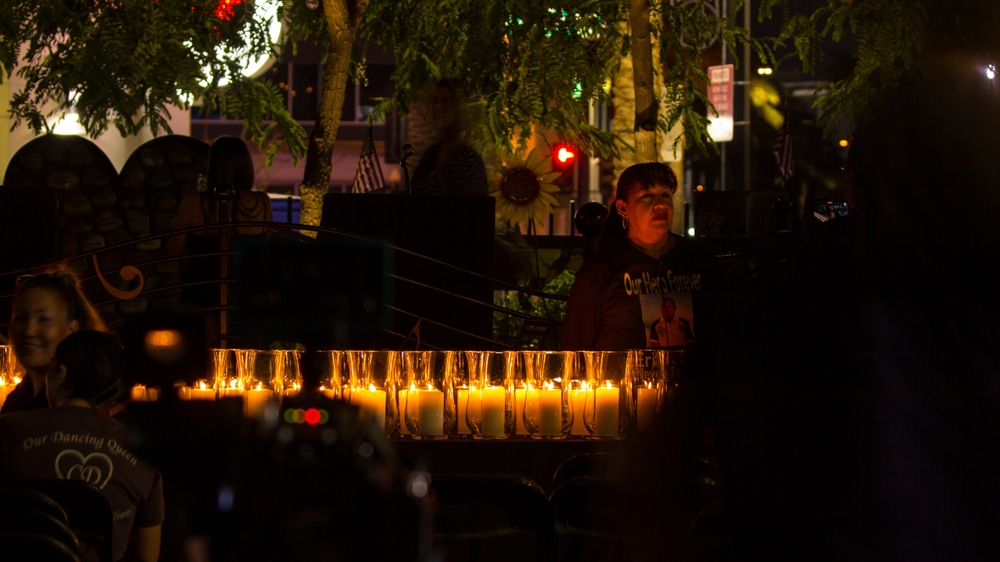
Triche and other supporters of the ban have consistently offered alternatives to outdoor balloon releases: candle lighting ceremonies, biodegradable confetti, flower petals, planting trees. On their face, those substitutions seem reasonable. They are equally visible, equally communal, and they do not produce the environmental harms that concern wildlife advocates.
Toliver’s response to those alternatives was not to dispute their environmental credentials but to reject their equivalence. A candle lit in a circle does not do what a balloon does. Flower petals scattered on the ground do not carry the same directional meaning as something released into the sky. The upward movement is not incidental to the ritual; it is the point. Substituting something that stays earthbound misses what participants are trying to express.
That disagreement reveals something important about why this debate has cut so deeply. Environmental advocates and grief communities are not actually arguing about the same thing. One side is focused on what happens after the balloon lands. Another is focused on what happens in the moment of release, and specifically on what that moment means to the people who gather for it.
Who This Law Affects Most
Balloon releases in Louisiana, and across much of the American South, are most common in communities dealing with ongoing violent loss, places where gun violence has claimed young lives repeatedly over years and decades. Memorial gatherings in those communities serve functions beyond individual grief. They create a moment of collective expression in neighborhoods that might otherwise have nowhere to channel shared pain. They bring people outside together around a common act.
Toliver framed this dimension of the argument directly and without apology. “What’s the biggest picture? We have so much crime in our community. Why not do something that’s going to bring us together? Yes, I understand the wildlife situation, but mankind is more valuable than animals,” she said.
Whatever one thinks of her conclusion, her observation about the communal function of balloon releases is accurate. In communities where institutional trust is low and public gatherings can feel fraught, a memorial balloon release offers something structured and participatory that most proposed alternatives do not replicate. Planting a tree is meaningful over a long time horizon. It does not do the same work on the afternoon after a funeral.
Louisiana in the Larger Picture
Louisiana is not alone in moving in this direction. Several other US states and individual municipalities have already restricted or banned outdoor balloon releases on environmental grounds, and the legislative trend has been building for years. Coastal states and wetland-heavy regions have been particularly active, given that balloon debris accumulates in sensitive marine and freshwater ecosystems where the environmental damage is most easily documented.
Louisiana’s combination of extensive coastal marshland, active wildlife culture, and a high rate of organized outdoor memorials in urban communities made it a place where this conflict was always likely to surface. What the state’s new law represents is a decision about which concern takes priority when those two things directly conflict.
A Law That Cannot Resolve the Deeper Question

Balloons released outdoors cause real, documented harm to wildlife and infrastructure. Outdoor balloon releases carry real, documented meaning to the communities that hold them. Louisiana has now decided, through its legislature, which of those realities gets to prevail under state law.
What the law cannot do is give people who grieve through balloon releases an alternative practice that carries equivalent meaning to them. That is not a problem the law was designed to solve, and most laws are not equipped to solve it. What August 1 will bring, in Baton Rouge and elsewhere in Louisiana, is not a resolution of that tension but a legal constraint on one side of it, and a fine structure built to make that constraint stick.
For Cathy Toliver and the communities she speaks for, the question of what comes next, how people gather, how they send something upward, how they make loss feel witnessed, does not have an answer written into the legislation.
balloon litter wildlife, balloon release alternatives, balloon release fine Louisiana, balloon release grief ritual, balloon release law Louisiana 2026, balloon release memorial, balloon release mourning communities, balloon release wildlife harm, Baton Rouge community grief, Cathy Toliver Baton Rouge, latex balloon ban, Louisiana August 2026 law, Louisiana balloon release ban, Louisiana Wildlife Federation, Mylar balloon ban Louisiana, outdoor balloon release illegal, Rebecca Triche Louisiana