
Your cart is currently empty!
Countries Restricting Israeli Passports Continue to Rise Worldwide
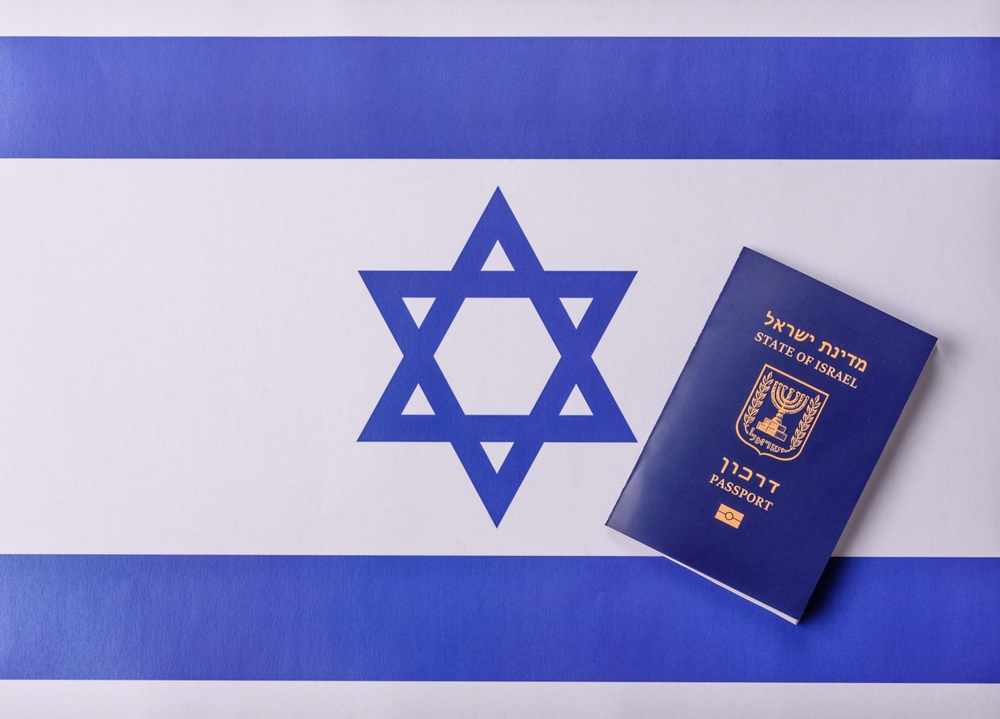
The Maldives, long associated with calm waters and luxury escapes, has stepped into the center of a deeply charged geopolitical conversation. Its recent decision to bar Israeli passport holders from entering the country is not just a policy change tied to tourism or immigration. It reflects a broader global pattern that is quietly taking shape.
Contents
show
Across different regions, a growing number of countries have either maintained or introduced restrictions on Israeli passport holders. While each nation has its own reasons, the timing of the Maldives’ move has drawn particular attention due to the ongoing war in Gaza and the emotional, political, and diplomatic reactions it continues to provoke worldwide.
This development is not simply about borders. It is about how countries express solidarity, how domestic politics intersect with foreign policy, and how global conflicts reshape travel, identity, and international relations in real time.
The Maldives Decision That Sparked Global Headlines
The Maldives formally enacted its ban after parliament passed an amendment to immigration law, which was quickly ratified by President Mohamed Muizzu. According to statements from the President’s Office cited across multiple reports, the move was framed as a response to what officials described as ongoing atrocities against Palestinians in Gaza.
The law now prevents individuals traveling on Israeli passports from entering the island nation. However, the final version of the legislation includes an important qualification. Israeli citizens who hold dual nationality are still permitted to enter if they present a different passport.
This detail highlights the balance the government attempted to strike between symbolic political action and practical enforcement. Immigration authorities had previously noted that verifying dual citizenship at borders presents significant logistical challenges.
The decision came after months of delay. The proposal had been introduced earlier by opposition lawmakers but remained inactive for over 300 days. Its sudden passage surprised many observers, particularly given earlier hesitation from government officials who had expressed concerns about economic fallout.
A Response Rooted in the Gaza Conflict
At the center of the Maldives’ decision lies the ongoing war in Gaza, which began after the October 7, 2023 attacks and has since escalated into a prolonged and devastating conflict. Reports referenced in international coverage indicate that tens of thousands of Palestinians have been killed during Israel’s military operations.
Maldivian leadership has repeatedly condemned these developments. President Muizzu publicly criticized specific incidents, including a deadly airstrike in Rafah that reportedly killed dozens of displaced civilians. In official statements, the government emphasized its support for an immediate ceasefire, humanitarian access, and adherence to international law.
The language used by Maldivian authorities has been strong. Government statements described Israel’s actions as violations of international norms and positioned the ban as a direct response to those concerns. Israel, for its part, has consistently rejected allegations of genocide and maintains that its actions are a form of self-defense following the initial attacks.
This divergence reflects the broader international divide over how the conflict is interpreted. Some governments and organizations have accused Israel of severe violations, while others have defended its right to respond militarily.
Domestic Pressure and Political Calculations

Although the Maldives presented the ban as a principled foreign policy stance, internal political dynamics played a crucial role in shaping the outcome.
Public sentiment in the Maldives has been strongly supportive of the Palestinian cause. Social media campaigns, public demonstrations, and calls for action placed increasing pressure on the government to move beyond symbolic gestures.
Opposition lawmakers seized on this momentum. The original bill proposing the ban became a focal point of political debate, with critics accusing the ruling government of delaying action and responding only when public pressure became unavoidable.
During parliamentary debates, tensions were evident. Opposition figures argued that the final version of the law had been diluted, particularly because it allows entry through alternative passports. Government leaders countered by questioning the opposition’s intent, suggesting that the proposal had initially been introduced without expectation that it would ever be implemented.
These exchanges reveal how the issue became intertwined with broader political competition. The final decision, therefore, reflects not only foreign policy priorities but also domestic legitimacy and leadership positioning.
Tourism Concerns and Economic Realities

The Maldives is heavily dependent on tourism, which contributes a significant portion of its national income. This makes any policy affecting international travel particularly sensitive.
Industry representatives had warned that a blanket ban could carry economic risks. Tourism associations expressed concerns that such a move might affect the country’s global image or discourage visitors from other markets.
Israeli tourists represent a relatively small share of total arrivals, but their presence is not negligible. Data cited in reports shows that Israeli visitors peaked at over fifteen thousand in 2022, declined to around eleven thousand in 2023, and dropped further in 2024.
While these numbers account for less than one percent of total tourism, the broader concern lies in perception. Travel decisions are often influenced by stability, inclusiveness, and international reputation. Any shift that signals political tension can have indirect consequences.
Despite these warnings, the Maldivian government moved forward. This suggests a willingness to accept potential economic trade-offs in favor of political and moral positioning.
Part of a Wider Global Pattern

The Maldives is not alone in restricting Israeli passport holders. According to widely circulated data and official statements, at least 13 countries currently deny entry to Israeli citizens.
These include Algeria, Bangladesh, Brunei, Iran, Iraq, Kuwait, Lebanon, Libya, Pakistan, Saudi Arabia, Syria, and Yemen.
The reasons vary across countries. In some cases, the restrictions are tied to longstanding political or military conflicts. In others, they reflect broader regional alignments or ideological positions.
For example, several Middle Eastern nations have historically classified Israel as an adversarial state. Travel restrictions in these regions are often embedded in decades-old policies linked to unresolved geopolitical disputes.
South Asian countries like Bangladesh and Pakistan have also maintained restrictions, reflecting their political stance and public sentiment regarding the Israel-Palestine issue.
The Maldives’ decision is distinct because it comes after a period of relative openness. The country had lifted a previous ban in the early 1990s and even explored normalization efforts in the following decades. This makes the recent reversal particularly notable.
International Reactions and Diplomatic Signals
The response to the Maldives’ decision has been mixed.
Within the country, many citizens expressed support. Social media reactions indicated that the move resonated strongly with public sentiment, particularly among those advocating for Palestinian rights.
Internationally, reactions have been more complex. Some observers praised the decision as a bold expression of solidarity. Others criticized it as discriminatory or counterproductive.
The United States has previously seen lawmakers propose measures that could affect aid to the Maldives in response to similar policies. This highlights the potential for diplomatic consequences, especially when actions intersect with broader geopolitical alliances.
Israel responded by advising its citizens to avoid travel to the Maldives. Officials also warned that Israelis already in the country should consider leaving, citing potential difficulties in receiving assistance if needed.
Such advisories reflect the practical implications of political decisions. Travel restrictions do not operate in isolation. They often trigger reciprocal actions, advisories, and shifts in diplomatic engagement.
The Legal and Ethical Debate

The Maldives’ move has also reignited discussions about the legality and ethics of travel bans based on nationality.
Supporters argue that sovereign nations have the right to control their borders and to use immigration policy as a tool for political expression. From this perspective, the ban is a legitimate form of protest against actions the government views as violations of international law.
Critics, however, raise concerns about collective punishment and discrimination. They argue that restricting individuals based on nationality risks conflating governments with citizens, many of whom may hold diverse views.
This tension is not new. Similar debates have emerged in other contexts, including sanctions, travel bans, and boycotts. The core question remains whether such measures effectively influence government behavior or primarily impact ordinary people.
In the case of the Maldives, the inclusion of an exception for dual nationals adds another layer to the discussion. It suggests an attempt to navigate between symbolic protest and practical limitations, though it also raises questions about consistency and enforcement.
What This Means for the Future of Travel and Politics

The Maldives’ decision highlights how global conflicts are increasingly shaping travel policies. Borders are no longer just about security or migration. They are becoming platforms for political messaging and moral positioning.
As more countries take visible stances on international issues, travelers may find themselves navigating a more complex landscape. Nationality, once a straightforward administrative detail, can carry deeper implications depending on the geopolitical climate.
For governments, these decisions involve balancing competing priorities. Economic interests, public opinion, diplomatic relationships, and ethical considerations all play a role.
The Maldives has chosen to align itself clearly on one side of a highly polarizing issue. Whether this approach influences other nations remains to be seen, but it has already contributed to a broader conversation about how countries respond to global conflicts.
A Moment That Reflects a Divided World
The ban on Israeli passport holders entering the Maldives is more than a single policy decision. It reflects a world where international conflicts resonate far beyond their immediate regions, shaping policies, perceptions, and everyday realities.
For some, the move represents a principled stand in defense of human rights. For others, it raises concerns about fairness and the unintended consequences of political actions.
What is clear is that decisions like this are no longer isolated. They are part of an evolving global pattern where nations use every available tool, including travel policy, to express their positions.
In a time of heightened polarization, the Maldives’ choice serves as a reminder that even the most idyllic destinations are not removed from the pressures of global politics. The lines between local decisions and international impact continue to blur, leaving governments, travelers, and observers to navigate an increasingly interconnected and complex world.