
Your cart is currently empty!
Man Who Was ‘Brain Dead for 90 Minutes’ Shares His Story of Faith and Recovery

Near-death experiences have long occupied a space where science, spirituality, and human curiosity converge. When someone emerges from such an event with vivid, detailed recollections, the public often finds itself grappling with questions that defy easy explanation. This is the case with Robert Marshall, a man who shared on the Next Level Soul Podcast that he was “dead for three days” following a medical emergency in 2024. His story, profound, personal, and deeply reflective, has since sparked conversations about the mind, faith, and what may lie beyond the boundaries of life.
Contents
show

Marshall’s account is neither sensational nor offered as definitive proof of the afterlife. Instead, it sits in the realm of lived experience: an individual’s attempt to articulate what he believes he encountered during a prolonged medical crisis. His recollections of peace, vivid landscapes, and a conversation with Jesus have prompted both awe and skepticism, drawing renewed attention to the complexity of near death narratives.
As his story has continued to circulate, it has prompted renewed interest in how personal testimony, medical knowledge, and cultural understanding intersect when individuals describe what they believe they encountered during moments of critical physical distress.
Robert Marshall’s Medical Crisis
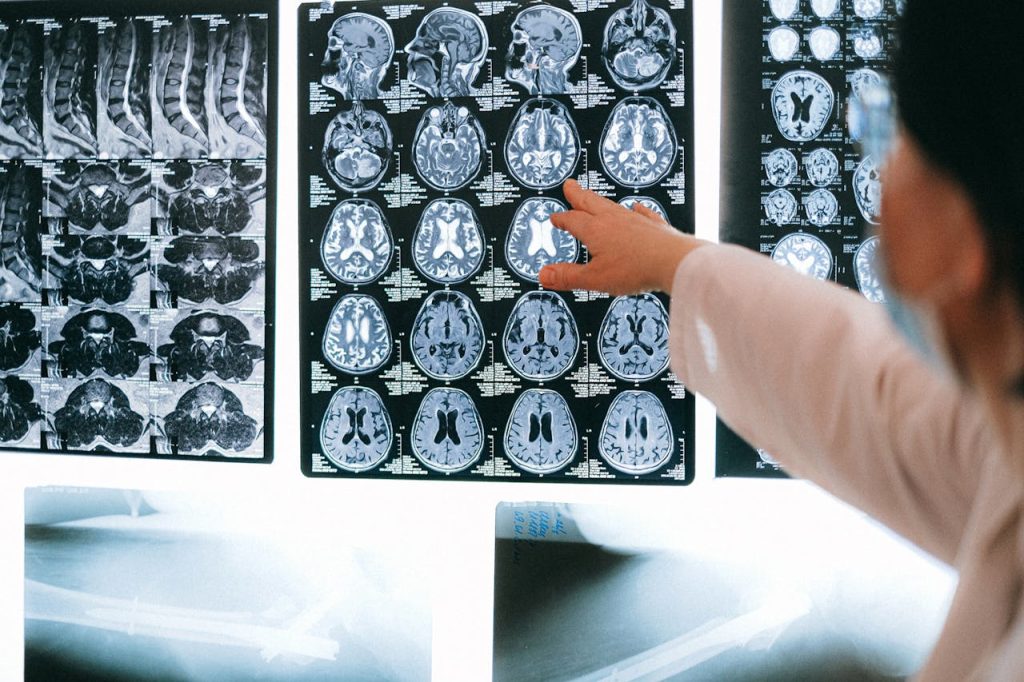
In May 2024, Marshall sought emergency care for what he described as a “very large mass on his neck that was swollen.” According to his account, “They did MRI, blood tests. I was having trouble breathing, that’s why I went there.” What followed was a series of life-threatening events, including respiratory failure and cardiac arrest.

His book 44 Hours in Heaven recounts that he went into “code blue” three times. A description of the book states that this was due to “drowning on his blood in his lungs, acute hypoxic respiratory failure, and cardiac arrest.” During this period, Marshall says he was not simply unconscious but entirely without life.
Appearing on the Next Level Soul Podcast, he remarked: “I was dead for three days,” a claim he differentiated from traditional near-death experiences by emphasizing that he believed he had truly crossed the boundary between life and death.
The Vision He Says He Experienced
Marshall describes entering an environment unlike anything he had seen or imagined. Heaven, he said, was filled with “giant oak trees, flowers and ‘the most vibrant colors’,” accompanied by an overwhelming sense of “peace and love.” Such descriptions align with the themes commonly reported in near-death narratives, which often involve heightened sensory experiences and feelings of tranquility.
His account goes further, however. Marshall claims he encountered Jesus and felt compelled to ask to return to his wife. Despite being awestruck, he recalled that he “felt every bit of her pain” and wanted to comfort her.
According to his recollection, Jesus responded: “When you first came before me, you asked if you could go back.” The host, Alex Ferrari, then quipped, “I don’t think Jesus is hard of hearing,” to which Marshall joked, “I went ‘oh he did hear!’”
Marshall says Jesus then told him: “I could and would send you back with some caveats. I’ll send you back with a miracle that nobody could ever deny, not the doctors, not the nurses, not scientists, nobody could ever deny that I am God and I did this, and there’s no question that I’m alive, I’m real, heaven is real.”

Marshall further claimed that Jesus promised to give him a “new brain” and “restore your entire memory” before his return.
Understanding Near Death Experiences: Science, Faith, and Unknowns
Near death experiences draw interest from both researchers and those who interpret them through spiritual or cultural frameworks. Scientific inquiry concentrates on what can be measured physiologically during critical medical events. A 2023 report in Scientific American noted that some patients show brain wave activity linked to internal awareness during resuscitation, suggesting that coherent mental activity may continue briefly during cardiac arrest.
Faith based perspectives view these events differently, often treating them as encounters that exceed scientific description. Accounts of clarity, peace, or spiritual presence appear across cultures and religious traditions, and they frequently become part of a community’s understanding of what it means to approach the boundary between life and death. For many, the value lies in the personal transformation or reassurance these experiences provide.
Despite continued advances in neuroscience, many elements of near death experiences remain beyond what current methods can fully explain. They sit at a point where biology, interpretation, and belief converge, making definitive conclusions difficult. What these accounts consistently show is the human desire to make sense of extraordinary moments using the tools and perspectives available, whether grounded in empirical study, spiritual conviction, or a blend of the two.
Why Marshall’s Story Resonates
What makes Robert Marshall’s account particularly resonant is not only its content but also the context in which he chooses to share it. His decision to speak publicly through platforms like the Next Level Soul Podcast and to write a book about his experience reflects a desire to share something deeply personal with a broader audience. This willingness invites listeners and readers to consider interpretations of consciousness, faith, and experience that they might not otherwise encounter.
Marshall’s narrative also arrives amid growing scholarly and public interest in near‑death experiences. Recent reviews of scientific literature have documented that a noticeable proportion of people who survive cardiac arrest report experiences that meet criteria for near‑death experiences. One such review found that incidence among survivors ranged from roughly 6.3% up to over 30%, depending on the study settings. PMC Even as these accounts vary widely, the fact that they emerge in clinical contexts gives Marshall’s claims a certain resonance: they echo a larger body of anecdotal and academic testimony.

There is also a deeply human and relational dimension in Marshall’s story. His insistence that he asked to return primarily to comfort his wife because he “felt every bit of her pain” speaks to love and empathy as catalysts for survival in extreme moments. That emotional thread adds a dimension of vulnerability and connection that resonates beyond doctrinal or spiritual belief. For many who hear or read his story, this element of devotion may feel more deeply real than religious imagery, enabling the narrative to cross belief‑system boundaries.
Finally, what gives Marshall’s story enduring weight is how he presents it not as a universal truth to be accepted by all, but as his own lived experience, open to interpretation. That openness, combined with measured recollection and emotional honesty, allows the story to engage people across ideological lines.
Cultural and Historical Patterns in Near Death Experiences
Across centuries and cultures, reports of near death experiences have followed recognizable themes, often involving vivid imagery, altered states of consciousness, and perceived encounters with spiritual entities. From ancient Egyptian and Greek texts to modern clinical accounts, these narratives have consistently reflected a human effort to interpret extraordinary physiological and psychological events.
In the modern medical era, resuscitation practices have enabled more people to report such experiences. One of the most cited clinical studies, led by Dr. Pim van Lommel and published in The Lancet in 2001, examined cardiac arrest survivors and found that some recalled structured experiences despite being medically unconscious.
Cultural background plays a clear role in shaping content. Religious individuals may report seeing figures aligned with their beliefs, while others describe nonreligious but emotionally powerful sensations such as lights, tunnels, or feelings of unity. Despite these differences, researchers in anthropology and psychology have observed consistent psychological effects, including shifts in values, reduced fear of death, and lasting emotional impact.
Together, these patterns suggest that near death experiences reflect both physiological processes and culturally influenced interpretation. While science continues to explore their neurological underpinnings, their historical consistency points to a longstanding human need to find meaning in moments of extreme vulnerability.
At the Edge of Life
Marshall’s account does not resolve the question of what happens after death. It does not attempt to. What it does is frame that question in personal terms, offering experience in place of doctrine and clarity in place of certainty. He does not argue his case. He recounts it.
What lingers is not the imagery but the impulse behind it, the act of returning for someone else. That choice, however one interprets it, resonates beyond belief systems. It speaks to the emotional gravity that near death experiences can carry and to the deeply human instinct to connect, even at the edge of life.

His story also reinforces the quiet power of testimony shared without the need for persuasion. In a time where divisive narratives dominate public attention, accounts like Marshall’s offer something different. They do not demand belief. They invite a moment of reflection.
Whether viewed through the lens of faith or science, the story remains rooted in what is undeniably human: vulnerability, love, and the enduring desire to make sense of the unknown.