
Your cart is currently empty!
Millions Have Lost SNAP Benefits As Another Major Change Looms For States
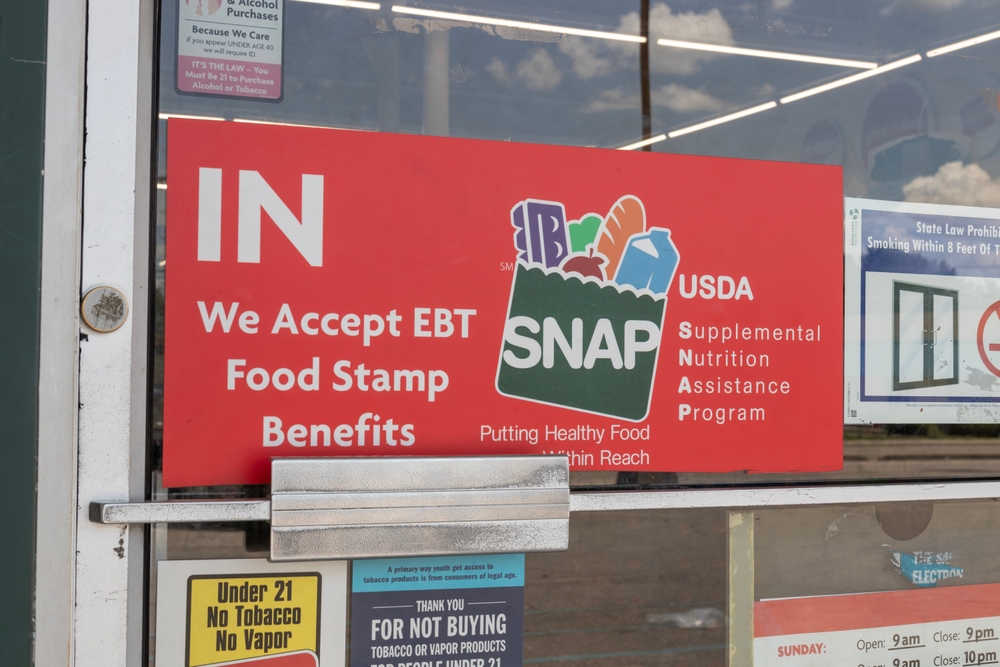
Millions of Americans have already lost access to SNAP benefits, and another major change is now approaching that could put even more pressure on the food assistance system. Starting October 1, states are scheduled to take on 75% of SNAP’s administrative costs, while a separate shift involving benefit costs is expected to begin as early as 2027. Food assistance groups are warning that states may struggle to absorb the additional burden.
Contents
show
The changes come after roughly 5 million people, including more than 1.5 million children, lost access to SNAP following the passage of the Republican-backed budget law known as H.R. 1. New work requirements and administrative hurdles have already affected participation, while lawmakers face a September deadline over the next stage of the program’s funding structure.
SNAP Participation Has Fallen By Millions
Around 5 million Americans have lost access to SNAP since H.R. 1 became law, according to the Center on Budget and Policy Priorities. More than 1.5 million children are included in that decline, with the drop linked partly to new work requirements and changes to the rules surrounding eligibility. The law raised the upper age limit for able-bodied adults without dependents who must meet work requirements from 54 to 64, while exemptions for parents and other relatives responsible for dependents were also changed.
Dottie Rosenbaum, director of federal SNAP policy at the Center on Budget and Policy Priorities, said the scale and speed of the decline have been greater than expected. “The declines we’re seeing in SNAP participation so far are far deeper and far faster than the Congressional Budget Office predicted at the time the law was enacted, and it’s especially alarming that more than one and a half million children have been cut,” Rosenbaum said.
The changes have also created concerns for households trying to balance food costs with other basic expenses. Rosenbaum said organizations are receiving increasing reports of people struggling to put food on the table while making difficult choices involving rent, groceries, transportation and other essentials. The White House did not provide a comment on the impact of the new work requirements, although the administration has previously supported the approach.
Agriculture Secretary Brooke Rollins has defended the broader philosophy behind reducing reliance on food assistance. “The American dream is not being on [a] food stamp program. … The American dream is not being on all these programs. That should be a hand up, not a handout,” Rollins said in January.
States Face A New SNAP Cost Burden
The next major change involves the cost of administering SNAP. Beginning October 1, states are scheduled to become responsible for 75% of those administrative expenses, shifting a much larger share of the financial burden away from the federal government. States are also expected to assume part of the cost of SNAP benefits in the years ahead, with the new structure tied to how accurately each state administers the program.
The benefit cost change could begin as early as 2027. States with certain error rates could be required to make additional payments ranging from 5% to 15%, creating another potential expense for governments already managing their own budgets and public programs. Food assistance leaders have warned that some states could respond by making cuts or changes elsewhere to cover the additional costs.
The immediate concern is that states may not have enough time to prepare for the October change. Food assistance organizations at both the state and national levels are asking Congress to delay the cost shift so states can improve their payment accuracy and lower their error rates before assuming the additional responsibility.
“States need more time,” Rosenbaum said. “They need more time to work to lower their error rate and improve their payment accuracy in a way that doesn’t limit access to benefits.” The request has put the September deadline under particular scrutiny as lawmakers prepare to return to Washington.

Arizona Has Already Seen A Sharp Drop
Arizona offers a glimpse of what can happen when states tighten SNAP administration. After H.R. 1 became law, the Arizona Department of Economic Security expanded documentation requirements, established a preauthorization review process and introduced continuous income monitoring as part of efforts to reduce errors.
More than 400,000 SNAP recipients subsequently lost access to the program, according to the Center on Budget and Policy Priorities. Terri Shoemaker, executive vice president of the Arizona Food Bank Network, said the change was followed by a substantial increase in demand for food assistance. “Which meant that the number of people visiting food banks increased by about the same amount,” Shoemaker said.

Food banks have been able to respond by relying on donations and community support, but Shoemaker warned that charitable organizations cannot replace SNAP at the same scale. “For every one meal that Arizona food banks provide for families, SNAP usually provides about five,” she said. “Nationally, that statistic is more like one [meal from food banks] for every nine [meals from SNAP].”
The numbers show why a large reduction in SNAP participation can create problems far beyond individual households. Food banks can distribute emergency supplies, but their capacity depends on donations, volunteers, funding, transportation and available food. Replacing a large federal assistance program with charitable food distribution would require resources that many local organizations do not have.
New Mexico Food Lines Stretch More Than A Mile
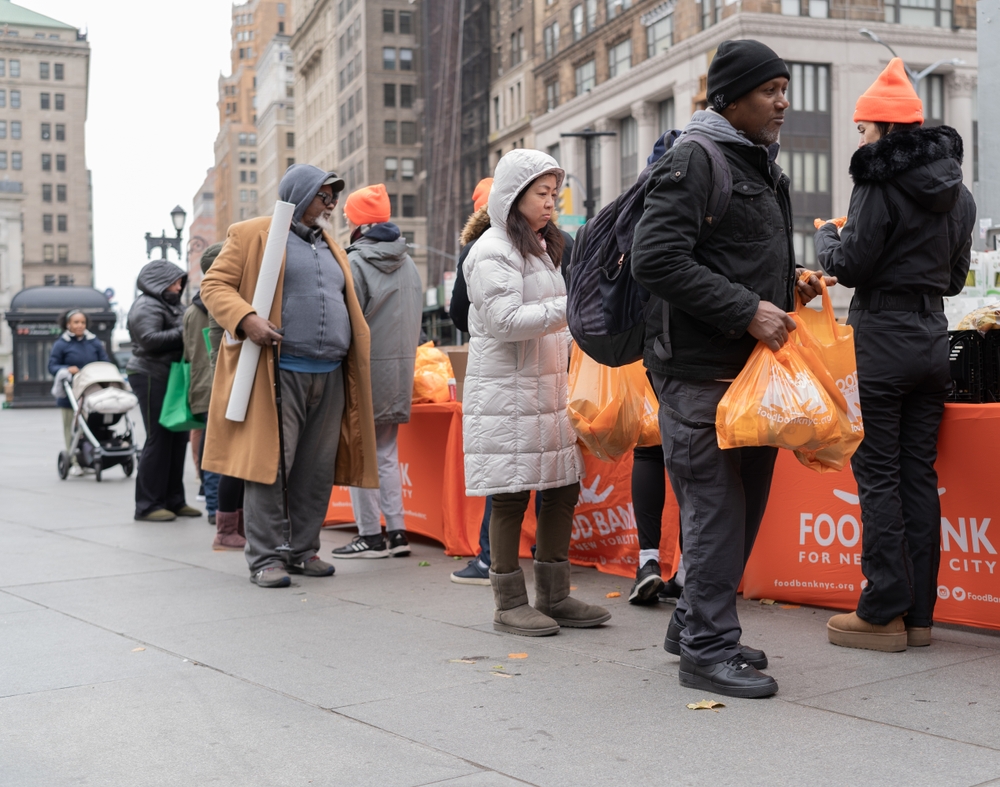
The pressure is also visible in New Mexico, where food distribution sites have experienced long lines. Jill Dixon, executive director of the Food Depot, described the demand at one distribution location in particularly stark terms. “Find out where your food bank distributes food and check out the length of a line,” Dixon said. “We have one in front of our building on the first and third Thursday of every month. That line usually extends over a mile and a half by the time it opens at 7 a.m.”
The Food Depot distributed more than 8 million meals across much of New Mexico in 2025. That level of distribution illustrates how heavily communities can rely on food banks when households struggle to access enough food through other means.
Dixon said the people waiting for assistance should not be viewed simply as numbers or statistics. “These are people. They’re not lines. It’s not boxes of food. It’s not anonymous. It’s deeply personal, and it’s right at the center of our community,” she said.
She also warned that the pressure could become harder to manage if the changes to SNAP continue. “We’re going to see some hard times ahead,” Dixon said. “Long term, we really have a reckoning of how we’re going to go about making sure that people are fed in a moment when it is incredibly hard to make ends meet.”
Republican-Leaning States Are Feeling The Impact
The decline in SNAP participation is also affecting states that traditionally vote Republican. Louisiana has recorded the second-largest per-capita decline, with 21% of its SNAP recipients no longer having access to the program, according to the Center on Budget and Policy Priorities. The figures demonstrate that the changes are affecting communities across different political regions.

Arkansas is another state facing concerns about the future cost of SNAP. Jeff Quick, CEO of the Food Bank of North Central Arkansas, said the charitable food system cannot absorb a large increase in demand indefinitely. “We will never be able to food bank our way out of food insecurity,” Quick said.
Quick also warned about the potential economic consequences if Arkansas becomes unable to afford its future share of SNAP costs. “At best, I think we may be unprepared or unable to cover the cost to continue SNAP in Arkansas, and again, if that worst-case scenario were to happen, it could have an estimated $1.2 billion negative economic impact on our state,” he said.
The state’s work requirements have created another concern. Quick said a worker earning Arkansas’ $11-an-hour minimum wage could still be ineligible for SNAP, raising questions about how people with low-paying jobs will manage if their benefits disappear while living costs remain high.
“We don’t want to see anyone go hungry, and regardless of who you are or how you vote or how you legislate, we’re all on the same path,” Quick said. “We got to put great minds together around common causes to find solutions to hunger.”
Food Banks Cannot Easily Replace SNAP
The numbers coming from food banks show the enormous scale of the challenge. SNAP generally provides several times more meals than food banks can supply, meaning even a relatively small shift in participation can translate into much greater demand for charitable assistance.
For local organizations, that can mean more people arriving at food distribution centers, greater demand for donated food and increased pressure on staff and volunteers. Some communities may also face longer lines and more frequent distribution events as organizations try to keep up.
The gap becomes especially difficult when several pressures arrive at once. Families losing SNAP access may already be dealing with rent, transportation, utility and grocery costs, while food banks must simultaneously find enough supplies to serve everyone who needs help.
The contrast can be seen in the experiences reported by food assistance organizations:
- Arizona: More than 400,000 SNAP recipients lost access after changes to state administration.
- New Mexico: One food distribution line was reported to stretch more than a mile and a half before opening.
- Arkansas: Food bank leaders warned that charitable organizations cannot replace SNAP on their own.
- Louisiana: 21% of SNAP recipients had lost access, according to the Center on Budget and Policy Priorities.
Congress Faces A September Decision
Food assistance organizations are now asking Congress to delay the upcoming cost shift. Their goal is to give states additional time to reduce error rates, improve payment accuracy and prepare for the financial responsibility that begins October 1.
Senate Agriculture Committee Chairman John Boozman has released a version of the farm bill that would delay the SNAP cost shift, although the measure has not advanced through the other chamber. The White House has not commented on whether the administration supports delaying the change.
Lawmakers return to Washington on September 14 following the August recess, leaving a limited window before the October 1 implementation date. The decision could determine whether states begin taking on the new administrative costs on schedule or receive additional time to prepare.
For families already affected by the decline in SNAP participation, the debate over funding is not an abstract budget issue. It can determine whether assistance remains available when the grocery bill arrives and the household budget is already stretched.
The September deadline is therefore more than a date on the congressional calendar. It is the point at which states could begin carrying a much larger share of a program millions of Americans rely on to buy food.