
Your cart is currently empty!
Mom Launches Pink Taxi Service to Help Women Get Home Safely
Amberine Nawaz stared at her silent phone in a panic. Her eight-year-old daughter was in a taxi with a stranger, driving through an area with no cell service—meaning Amberine couldn’t reach her at all. Since her family had just moved to a new town, she didn’t know a single person nearby she could call for help. But that terrifying wait ended up being a turning point.
Contents
show
Instead of just brushing off the scare once her daughter was safe, Amberine let the experience push her into action. She finally launched an idea she’d been sitting on for years: a new business meant to shake up the male-dominated transportation industry and give vulnerable passengers a safer way to travel.
The Taxi Journey That Changed Everything

Nawaz is originally from Bradford and grew up in a family that encouraged its daughters to pursue education and professional careers. “I come from a family of professionals. My parents were very supportive of their daughters and promoted us to get an education to do well in life,” she said. She trained and became licensed as a teacher and assessor, but she also had experience in the taxi trade after running a taxi company in Surrey. The idea of a ladies-only taxi service was therefore not something that appeared overnight. It had been sitting in the back of her mind for years, waiting for a reason to become a real business.
That reason arrived after the family moved to Skipton. Her daughter was travelling between school and the remote farmhouse where they lived, and there was a stretch of the journey where mobile phone coverage disappeared. When Nawaz tried to contact her daughter and could not get through, she was left with the fear that something could have happened without anyone nearby knowing. She had no family or close friends in Skipton who could immediately help, and she understood the situation from both sides because of her own experience in the taxi industry.
The experience made the problem feel much more immediate. Nawaz was not simply thinking about whether women might prefer female drivers. She was thinking about what it feels like to put your child into a car with someone you have never met and then lose the ability to contact them. That was the point when her long-standing ambition became something she felt she had to pursue.
“As a mother, so many things go through your mind. God forbid anything happened to her… I didn’t know anybody; I had no family or friends in the Skipton area,” Nawaz said.
Pink Ladies Hit The Roads In Skipton
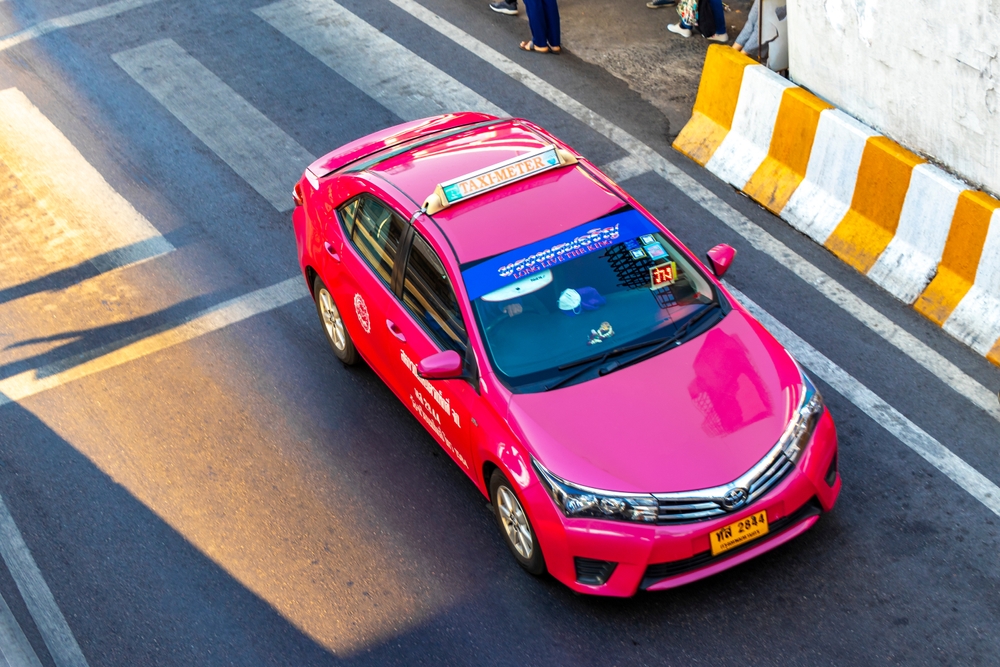
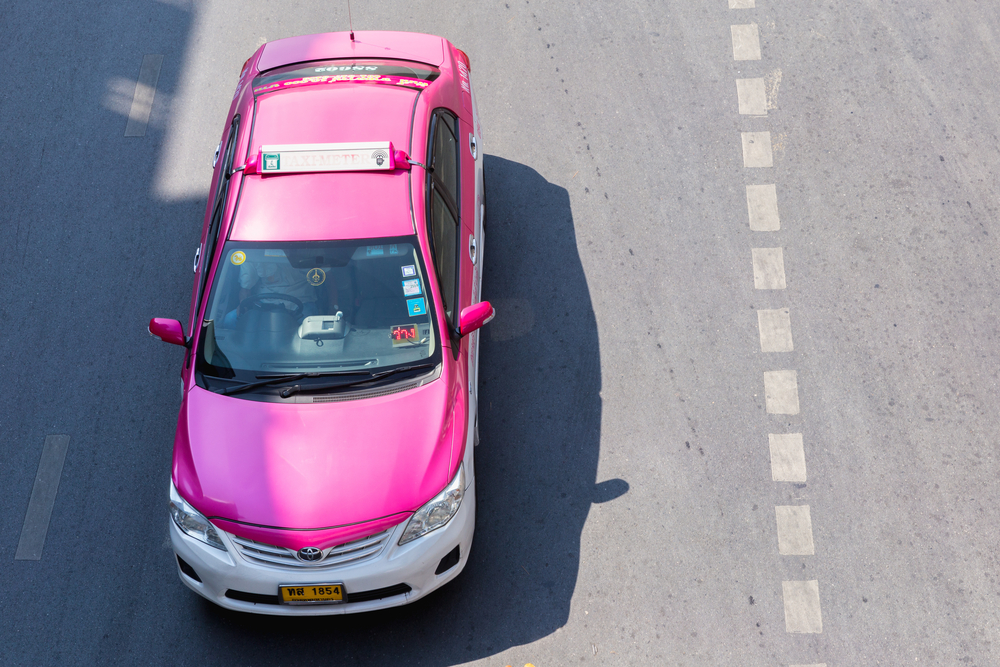
Pink Ladies launched in Skipton in October 2023, with its bright pink vehicles immediately separating the company from the rows of ordinary taxis passengers might normally see. The colour is part of the company’s identity, but it also serves a practical purpose. A woman waiting at the side of a road can spot the vehicle coming towards her without having to rely entirely on checking a registration number. Once the taxi arrives, there is another point of reassurance: the person behind the wheel is a woman.
The company prioritises women, children and vulnerable passengers, although couples can also use the service. Drivers can decline jobs that fall outside the company’s operating priorities, while the service itself has expanded beyond standard passenger journeys. Nawaz describes Pink Ladies as specialising in ladies-only, disability and regular driving services, with vehicles that can accommodate wheelchair users and pets. “We specialise in ladies-only, disability and regular driving services,” she said.
The company also puts extra attention on passengers who may need assistance during a journey. Elderly and vulnerable customers can receive help beyond simply being dropped outside a destination, with drivers able to accompany them into an appointment. That approach is part of what Nawaz says makes the service different from a standard taxi ride. The journey is treated as something that may require support from the moment the driver arrives until the passenger is safely inside their destination.
By late August 2024, Pink Ladies had three drivers and Nawaz was trying to recruit two more. But expanding the company meant confronting a much larger problem within the taxi industry. There simply were not many women already working behind the wheel, meaning that growing demand for female drivers could not easily be met by the existing workforce.
More Than 93% Of Taxi Drivers Are Men
Department for Transport figures for England in 2024 showed that 93.6% of taxi and private hire vehicle drivers were men. The proportion has remained above 90% for the past decade, meaning women make up only a small part of the workforce available to passengers looking for a female driver. For someone who specifically wants a woman behind the wheel, finding that option can therefore be difficult even when the demand is there.
Nawaz says some customers have told her that simply seeing a female driver arrive makes them feel more comfortable. Some have also spoken about previous bad experiences that affected how they felt about using taxis. “Safety is paramount and we get a lot of customers that get into the car and say how great it is to have a female driver because they may have had a bad experience,” Nawaz said.
That creates a challenge for Pink Ladies as the company expands. More passengers asking for female drivers means more women are needed to drive the vehicles, but the wider industry has remained heavily dominated by men. Recruitment is therefore not just about finding employees for one growing business. It is about trying to increase the number of women available in a sector where they have represented less than 10% of drivers for years.
The company has continued recruiting as it has expanded. By March 2026, the number of women driving for Pink Ladies had reached 12, giving the business a significantly larger presence than it had during its early days in Skipton.
Why Some Women Want A Female Driver

Pink Ladies has attracted women for different reasons, and the preference for a female driver is not based on one single concern. Some customers have chosen the service because of previous experiences, while others have cultural or religious reasons for wanting to travel with another woman. Nawaz has said many of her Bradford customers are Muslim women, and she has heard from women wearing the niqab who told her they would feel uncomfortable travelling alone on public transport.
For some Muslim passengers, the preference is connected to Islamic teaching around travelling alone with an unrelated man. The service therefore provides an option that can meet a cultural or religious preference while also addressing concerns about personal safety. Nawaz has not suggested that every Muslim woman shares those concerns, but the customers who have approached her have helped shape the way Pink Ladies operates.
There is also a documented safety concern involving taxi drivers in the Bradford district. During 2023-24, 17 reported rapes and nine sexual assaults involved taxi drivers as suspected perpetrators, according to figures reported about the district. Those figures do not mean taxi drivers generally are dangerous, but they show why some passengers may have specific concerns about travelling alone with an unfamiliar driver.
Nawaz believes some women who experience sexual offences may never report them because of the information a driver can have about a passenger. “There are so many women that don’t come forward because drivers know where they live,” she said. For those customers, having a female driver can remove one particular concern before the journey has even started.
Pink Ladies Expanded Into Bradford
The company eventually moved beyond Skipton and into Bradford, where Nawaz had grown up. By December 2024, she had secured an office in Westgate and was preparing to establish a dedicated base for the business. The plan was to provide a service primarily for women and children, while still allowing couples to use the taxis.
“In the Bradford area, I have now secured an office, I pick the keys up on Sunday, so we’re going to be in Westgate in town, and there it will be just for women, children unless there’s a couple,” Nawaz said. The office opened in January 2025, and Nawaz said the response from potential customers was immediate, with people contacting the company to say they were looking forward to having the service available.
“The messages we had were absolutely amazing, everyone saying, ‘we can’t wait for this’,” she said. The expansion also created opportunities for more women to join the company. By March 2026, 12 women were driving for Pink Ladies, a major increase from the three-driver operation that existed in 2024.
One of those drivers is Atifa Ahmed, 36, who carries out school and college runs during the week. The service has attracted parents who want their children transported by female drivers, particularly for regular journeys to and from school or college. “We’ve had a lot of positive feedback from parents saying, ‘We’re so glad that you’ve come out because we now know that our child is safe,’” Ahmed said.
Nawaz has also considered taking the company further afield. Sheffield has been among the locations discussed as a possible future expansion, although the company’s growth depends on the same issue it has faced from the beginning: finding enough women willing to work as taxi drivers.
Safety Beyond the Drop-Off
While the fleet’s bright pink cars might grab the most attention, the most crucial part of the service happens after the engine stops. Drivers don’t just pull away when a passenger steps out; they wait to ensure vulnerable customers are safely inside their homes.
“Little things like that make such a difference,” Nawaz said.
That protocol stems directly from the panic that sparked the business. Nawaz couldn’t fix rural cell towers or dictate who other companies hired, but she could build an alternative that eliminated the vulnerability of a solitary drop-off. What began with one mother staring at a silent phone has grown into an expanding operation with a dedicated Bradford office and a dozen female drivers. Yet despite the growth, Pink Ladies’ defining promise remains reassuringly simple: the driver doesn’t leave until you are safely through the door.