
Your cart is currently empty!
NASA Finds Lost Cold War City Beneath Greenland Ice
For most of modern history, Greenland’s vast ice sheet has been treated as a place where things disappear forever. Planes lost in World War II, ancient landscapes, forgotten experiments, and even entire human ambitions have slowly vanished beneath layers of snow and ice, seemingly locked away for eternity. But in April 2024, that assumption was quietly challenged when a NASA research flight revealed something that was never meant to resurface at all.
Contents
show
While testing advanced radar equipment high above Greenland, scientists unexpectedly rediscovered Camp Century, a Cold War era United States military base hidden deep beneath the ice for more than half a century. Often referred to as the city under the ice, the base was once part of an ambitious and secretive military strategy that blurred the lines between scientific research and nuclear brinkmanship. Its sudden reappearance on radar screens has sparked renewed interest not only in Cold War history, but also in the environmental and ethical questions tied to what humanity leaves behind.
What began as a routine scientific mission has now become a powerful reminder that the past is not as buried as we like to think, especially as the planet continues to warm.
An Accidental Rediscovery Beneath the Ice
The rediscovery occurred during a NASA mission designed to study Greenland’s ice sheet, not its history. A team of engineers and scientists flew aboard a Gulfstream III aircraft equipped with a sophisticated radar system capable of peering deep into ice. The radar, known as UAVSAR, was being tested for its ability to map internal ice layers and the bedrock below, information essential for understanding how ice sheets respond to rising global temperatures.
As the aircraft flew roughly 150 miles east of Pituffik Space Base in northern Greenland, the radar began returning unusual signals. Instead of the smooth, layered patterns typically seen within ice, the data revealed sharp lines and structured shapes. These were not natural formations. They were unmistakably artificial.
At first, the scientists were unsure what they were seeing. The mission was not focused on archaeology or military history, and no one expected to encounter human structures buried beneath hundreds of feet of ice. But after comparing the radar imagery with historical records, the realization set in. The radar had captured Camp Century.
Camp Century was never completely forgotten. Its existence had been acknowledged in declassified documents decades ago. Yet seeing its physical structure mapped so clearly, with individual tunnels and features visible in radar images, was something entirely new. According to NASA scientists involved in the flight, the level of detail revealed by the radar exceeded anything previously recorded.
What Was Camp Century
Camp Century was constructed in 1959 by the United States Army Corps of Engineers during the height of the Cold War. Officially, it was presented as a scientific research station designed to study Arctic conditions and test construction techniques in extreme environments. In reality, that scientific mission served as a convenient cover for a far more ambitious and controversial military objective.
Hidden beneath Greenland’s ice sheet, Camp Century was part of a classified initiative known as Project Iceworm. The goal was to explore whether nuclear missiles could be deployed beneath the ice, creating a vast and mobile launch network that would be difficult for adversaries to detect or destroy. The plan envisioned thousands of miles of tunnels stretching beneath the ice, capable of housing hundreds of nuclear warheads.
The base itself was a small but fully functional underground city. It contained living quarters, a hospital, a chapel, a theater, workshops, and laboratories. Power was supplied by a portable nuclear reactor, one of the first of its kind, which provided electricity and heat in an environment where temperatures could drop far below zero.
At its peak, Camp Century housed several hundred personnel who lived and worked entirely beneath the ice. Snow trenches were carved into the surface, steel arches were installed, and the tunnels were covered again with snow, allowing the ice sheet to act as both insulation and concealment.
The Illusion of Permanence
When Camp Century was built, engineers believed the ice sheet was stable enough to support long term occupation. The prevailing assumption at the time was that Greenland’s ice was effectively permanent on human timescales. Climate science was still in its infancy, and the idea that global temperatures could rise rapidly enough to destabilize massive ice sheets was not widely considered.
That assumption turned out to be wrong.
Within just a few years of operation, it became clear that the ice was far more dynamic than expected. The tunnels began to deform as the ice slowly shifted and flowed. Walls buckled, ceilings cracked, and maintenance became increasingly difficult. By the mid 1960s, engineers concluded that the base was not sustainable.
In 1967, Camp Century was abandoned. The nuclear reactor was removed, but much of the infrastructure was left behind. Waste generated during the base’s operation, including chemical, biological, and radioactive material, was entombed within the ice. At the time, this decision was made under the belief that the ice would never melt enough to expose it.
Seeing the City Again

Previous surveys had detected hints of Camp Century beneath the ice, but those efforts relied on older radar systems that produced limited two dimensional profiles. These images showed distortions in the ice layers, suggesting the presence of buried structures, but they lacked clarity.
The UAVSAR system used in the April 2024 flight changed that. Unlike traditional ground penetrating radar that looks straight down, UAVSAR collects data from multiple angles. This allows scientists to create more detailed maps of subsurface features.
In the new radar images, individual elements of Camp Century appear with unprecedented clarity. Parallel lines align with the known layout of tunnels. Larger shapes correspond to key facilities. When scientists compared the radar data with historical maps of the base, the match was striking.
The rediscovery was not planned, and for now, NASA scientists describe the image as a scientific curiosity rather than a breakthrough. Still, it demonstrates the growing power of remote sensing technology and its ability to reveal what lies hidden beneath ice and snow.
Why the Discovery Matters Now
At first glance, rediscovering an abandoned Cold War base might seem like a historical novelty. But the timing of the discovery has given it deeper significance.
Greenland’s ice sheet is melting at an accelerating rate due to climate change. As global temperatures rise, the ice is thinning and flowing more rapidly toward the ocean. Scientists are increasingly concerned about what this means not only for sea level rise, but also for what is trapped within the ice.
Camp Century contains waste that was never removed when the base was abandoned. Studies have suggested that if the ice above the site continues to thin, there could come a point where that waste is no longer securely contained. While this is not expected to happen immediately, projections indicate that by the end of the century, conditions could change significantly.
The rediscovery has therefore reignited discussions about responsibility. Who is accountable for waste left behind decades ago? What obligations exist to address environmental risks created by past military activities? These questions are complex, involving international law, environmental ethics, and geopolitical relationships.
A Reminder of Cold War Secrecy
Camp Century also serves as a reminder of how secrecy shaped Cold War decision making. The Danish government, which has sovereignty over Greenland, was initially told that Camp Century was purely a scientific project. The true scope of Project Iceworm was not publicly revealed until decades later, long after the base had been abandoned.
This secrecy allowed ambitious projects to move forward without public scrutiny or informed consent from all parties involved. While the Cold War context helps explain these decisions, the rediscovery of Camp Century invites reflection on how such secrecy can have long lasting consequences.
The base was not just a military experiment. It was a human settlement built on assumptions about nature that proved incorrect. Its remains now sit as a physical record of those assumptions, preserved within the ice.
Technology That Looks Backward and Forward
The radar system that rediscovered Camp Century was designed to look forward, not backward. Its primary purpose is to help scientists measure ice thickness and understand how ice sheets interact with warming oceans and atmosphere. Without accurate data on ice thickness, projections of future sea level rise remain uncertain.
The accidental discovery highlights how tools developed for one purpose can reveal unexpected insights into another. The same technology that helps scientists predict the future of Earth’s climate can also uncover hidden chapters of human history.
NASA researchers have emphasized that missions like this are essential for improving climate models. Antarctica, which contains even more ice than Greenland, presents similar challenges. Understanding how ice behaves in these extreme environments is critical for coastal communities around the world.
The Environmental Question Beneath the Ice
Perhaps the most unsettling aspect of Camp Century’s rediscovery is what it represents environmentally. The base was built at a time when long term environmental impacts were rarely considered in military planning. Waste disposal practices that were acceptable in the 1960s would be unthinkable today.
If warming continues, the ice that has safely contained Camp Century for decades may no longer provide the same protection. This raises the possibility that future generations could inherit the consequences of decisions made long before climate change was widely understood.
Scientists stress that there is no immediate danger, but the situation underscores the importance of monitoring. Knowing exactly where Camp Century lies, how deep it is, and how the ice above it is changing will be crucial for assessing future risk.
Greenland as a Mirror of Global Change
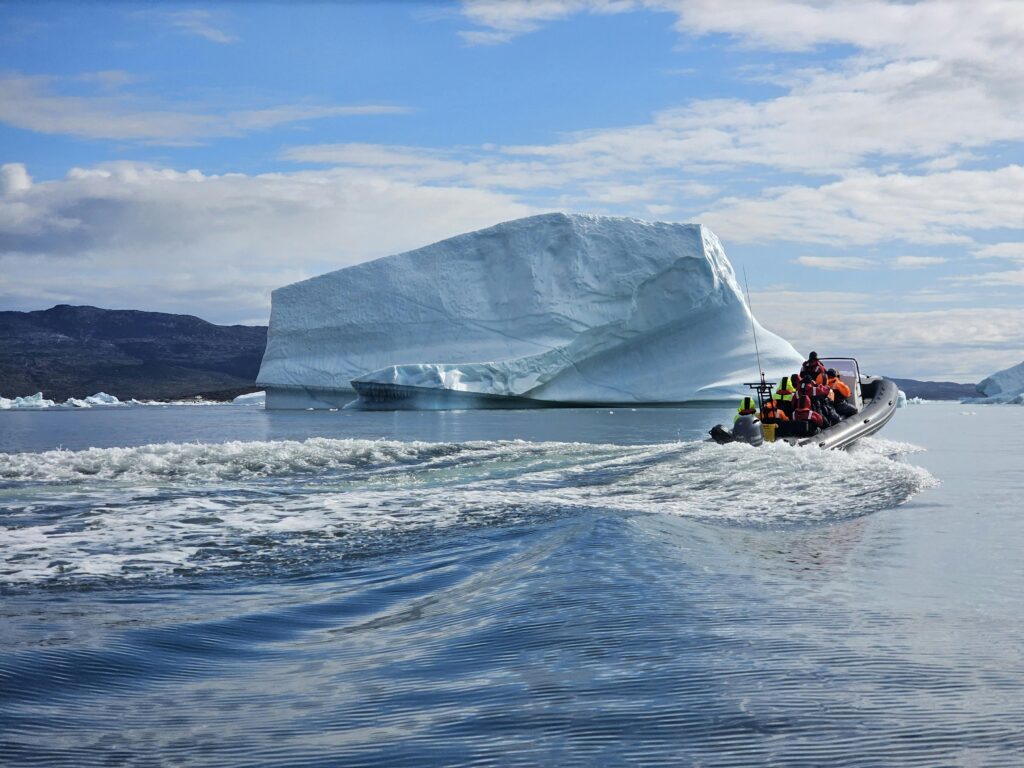
Greenland has become one of the most visible symbols of climate change. Its melting ice contributes significantly to global sea level rise, affecting communities thousands of miles away. The rediscovery of Camp Century adds another layer to that story.
It shows how human history and environmental change are deeply intertwined. What was once considered safely hidden is now being reexamined because the natural systems that concealed it are changing.
The base also highlights Greenland’s strategic importance, both historically and today. From Cold War military planning to modern scientific research, the island has long been a focal point for global powers. As climate change reshapes the Arctic, that attention is likely to intensify.
A Frozen City That Still Speaks
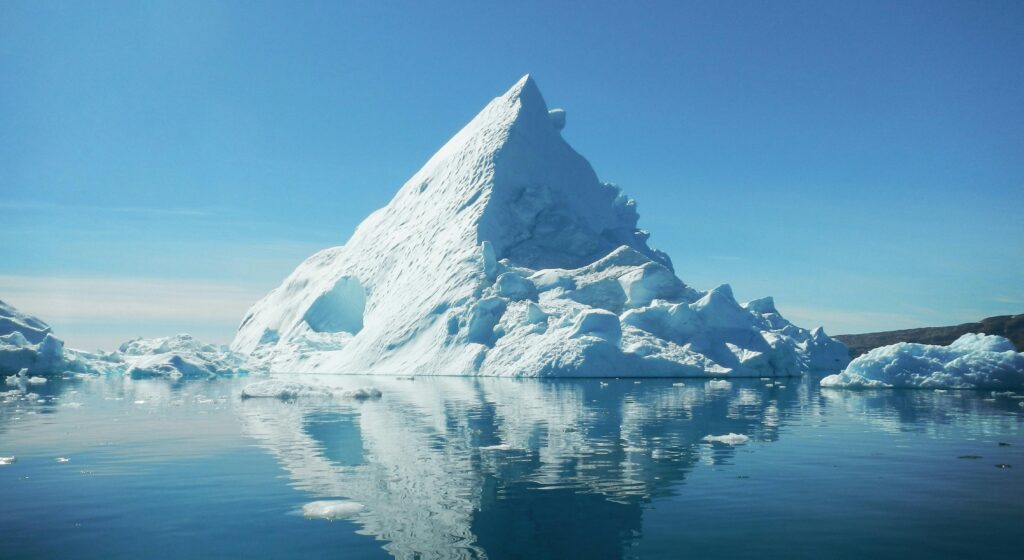
Camp Century was abandoned nearly sixty years ago, but its rediscovery has given it a new voice. Through radar images and renewed scientific interest, it tells a story of ambition, secrecy, innovation, and oversight.
It reminds us that infrastructure does not simply disappear when it is abandoned. It remains, sometimes hidden, sometimes forgotten, but always part of the environment it occupies. As the climate changes, those remnants can resurface in unexpected ways.
The city under the ice was built with confidence in human ingenuity and control over nature. Its rediscovery challenges that confidence, showing how even the most ambitious projects are ultimately shaped by forces larger than themselves.
A Hidden Legacy Beneath the Ice
For now, Camp Century remains buried beneath Greenland’s ice, visible only through the eyes of radar and the interpretation of scientists. But its rediscovery has ensured that it will no longer be overlooked.
As technology continues to advance and climate change accelerates, more hidden stories like this may come to light. Each will raise its own questions about responsibility, memory, and the legacy of human activity.
The rediscovery of Camp Century is not just a viral headline or a historical curiosity. It is a quiet warning. What we choose to hide today may not stay hidden forever, especially on a planet that is changing faster than we once believed possible.