
Your cart is currently empty!
NASA Reveals Massive Plan To Build A Permanent Moon Base
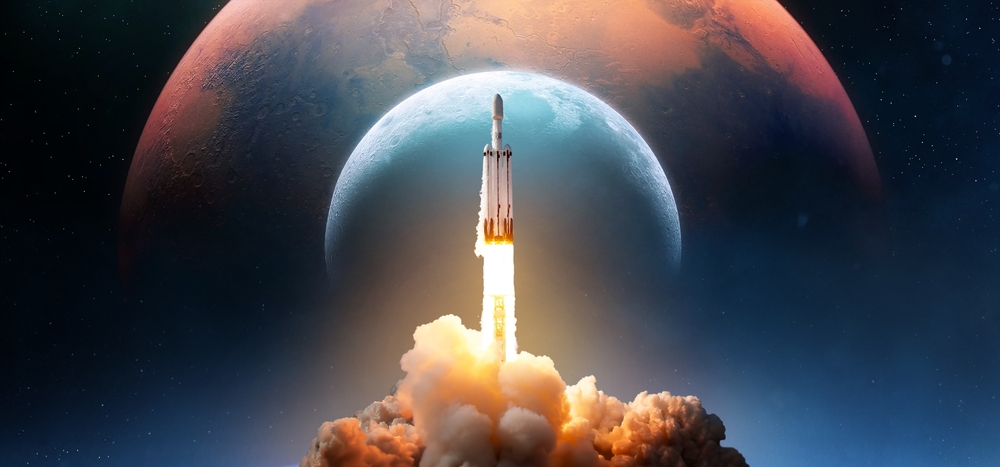
NASA has revealed its boldest vision for the Moon since the Apollo era, and this time the agency says it is not going back just to plant another flag.
Contents
show
Officials are now talking openly about building a permanent human foothold near the Moon’s south pole, launching astronauts there every six months, and creating the foundation for missions that could eventually push humans toward Mars.
The announcement came during NASA’s recent “Ignition” event, where agency leaders outlined a sweeping plan that includes a lunar base, nuclear-powered spacecraft, commercial Moon deliveries, and a major overhaul of the Artemis program.
NASA Says The Race Back To The Moon Has Already Started
NASA Administrator Jared Isaacman made it clear that the agency sees the next decade as a turning point in global space exploration.
“The goal is not flags and footprints but to stay on the moon,” Isaacman said while unveiling the agency’s updated strategy.
That single line captured the entire direction of the new plan.
For decades, lunar missions were treated as short expeditions. Astronauts arrived, gathered samples, conducted experiments, and returned home within days. NASA now wants something far more ambitious.
The agency intends to establish an enduring human presence on the lunar surface, specifically near the Moon’s south pole, where frozen water may exist inside permanently shadowed craters.
NASA believes that region could become one of the most valuable locations in future space exploration.
Water ice on the Moon could eventually provide drinking water, breathable oxygen, and even rocket fuel. If astronauts can produce resources directly on the lunar surface, future missions may no longer need to launch every supply from Earth.
That would dramatically reduce costs and change how humanity explores deep space.
Isaacman also hinted at the geopolitical urgency behind the project.
“The clock is running in this great‑power competition, and success or failure will be measured in months, not years,” he said.
China has already announced plans to land astronauts on the Moon before 2030. NASA officials now believe the United States could be competing against a very narrow timeline.
Artemis Missions Are Being Completely Reshaped
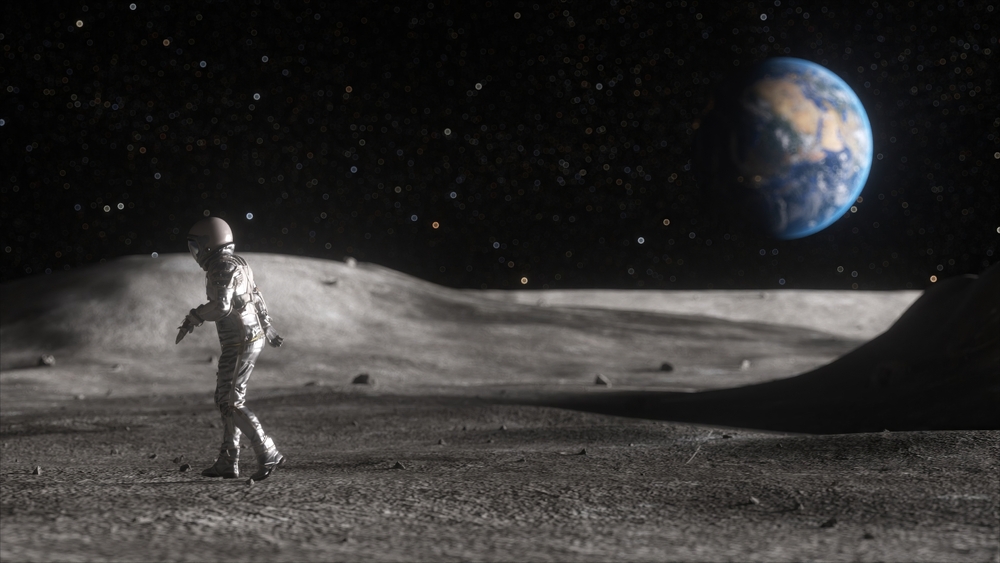
NASA’s updated roadmap changes several major pieces of the Artemis program.
The original Artemis architecture focused heavily on Gateway, a small space station planned for lunar orbit. That station was supposed to act as a staging point for missions heading to the Moon’s surface.
NASA is now stepping away from that approach.
Instead, the agency wants to focus directly on surface operations and infrastructure.
The revised strategy puts more emphasis on reusable landing systems, modular habitats, robotic cargo deliveries, and commercial partnerships that can support regular lunar activity.
The agency also adjusted the order of upcoming Artemis missions.
Artemis II, which recently sent astronauts around the Moon, served as a major test of NASA’s Space Launch System rocket and Orion capsule.
Artemis III is now expected to focus primarily on testing docking operations in Earth orbit between Orion and privately built lunar landing systems from SpaceX and Blue Origin.
The first crewed Moon landing of the modern Artemis era is currently targeted for Artemis IV in 2028.
That landing would begin laying the groundwork for future lunar infrastructure.
NASA officials say the long-term goal is to eventually support human landings every six months.
That kind of cadence would represent one of the biggest operational shifts in the history of spaceflight.
During the Apollo era, Moon missions were rare and politically driven. Under the new model, NASA wants lunar travel to become repeatable and sustainable.
NASA’s Moon Base Will Be Built In Three Phases

The agency has already outlined a step-by-step strategy for constructing the lunar outpost.
Rather than attempting to build a giant Moon colony all at once, NASA plans to expand operations gradually over several years.
Phase One Focuses On Testing Equipment And Technology
The first stage centers on robotic exploration and technology demonstrations.
NASA plans to dramatically increase lunar deliveries through its Commercial Lunar Payload Services program, also known as CLPS.
The agency is targeting up to 30 robotic Moon landings beginning in 2027.
Those missions would transport:
- Scientific instruments
- Surface rovers
- Navigation systems
- Power technologies
- Communications equipment
- Experimental drones and hoppers
- Mobility systems for astronauts
NASA says these missions will help engineers understand how to operate continuously on the lunar surface before humans begin staying for longer periods.
The environment near the Moon’s south pole presents major challenges.
Some craters remain in permanent darkness for months at a time. Temperatures can plunge to extremes that threaten machinery and human survival.
Lunar dust is also considered a serious hazard.
Unlike Earth dust, lunar regolith contains sharp microscopic particles that can damage equipment, seals, electronics, and even astronaut lungs.
NASA hopes repeated robotic missions will help solve many of those problems before larger human operations begin.
Phase Two Introduces Semi-Habitable Infrastructure

Once NASA gathers enough data from early missions, the agency plans to transition into building the first long-duration infrastructure.
This phase would include semi-habitable systems designed to support recurring astronaut operations.
International partners are expected to play a major role.
Japan’s space agency, JAXA, is already contributing plans for a pressurized rover that astronauts could live and work inside for extended periods.
Canada is expected to contribute a Lunar Utility Vehicle.
Italy’s space agency is working on habitat concepts that may eventually support longer human stays.
NASA officials say this phase will also involve logistics systems capable of routinely transporting cargo, scientific payloads, and replacement hardware.
The strategy reflects a major philosophical change.
Instead of building one enormous government-run system, NASA wants an expandable ecosystem where different countries and private companies contribute specialized technologies.
Phase Three Pushes Toward A Permanent Human Presence

The final phase represents the most ambitious part of the plan.
NASA says future cargo-capable landing systems will eventually transport heavier infrastructure to the Moon, allowing astronauts to remain there continuously.
That transition would move lunar exploration beyond short expeditions and into something much closer to a permanent settlement.
According to agency officials, future infrastructure could include:
- Long-duration habitats
- Surface power stations
- Advanced communications networks
- Large-scale cargo systems
- Scientific laboratories
- Nuclear power technologies
- Transportation systems connecting different lunar regions
NASA currently hopes to establish the core of this Moon base between 2032 and 2036.
If successful, it would become the first permanent human outpost beyond Earth.
Nuclear Power Is Suddenly Becoming Central To NASA’s Vision

One of the most surprising announcements involved nuclear technology.
NASA confirmed plans to launch the first nuclear-powered interplanetary spacecraft before the end of 2028.
The spacecraft, called Space Reactor-1 Freedom, would demonstrate nuclear electric propulsion during a mission to Mars.
Unlike traditional rockets, nuclear electric propulsion systems can operate far more efficiently during deep-space missions.
That efficiency becomes critical once missions move beyond Mars and into regions where sunlight weakens too much for solar panels to function effectively.
The spacecraft will reportedly deploy helicopter-style drones near Mars after arrival, continuing aerial exploration inspired by the Ingenuity helicopter mission.
But nuclear technology may become even more important for the Moon itself.
NASA officials say the lunar south pole experiences long stretches of darkness that could make solar energy unreliable in some locations.
As a result, future Moon habitats may eventually require nuclear reactors and radioisotope power systems to survive those conditions.
Casey Dreier of The Planetary Society described the shift as one of the most important developments in NASA’s latest strategy.
“Nuclear electric propulsion would open up huge opportunities for energy use in various science missions and, of course, crewed missions around the solar system,” Dreier said.
The renewed focus on nuclear systems reflects how seriously NASA now views long-term lunar operations.
Temporary camps can survive with limited energy.
Permanent infrastructure demands far more reliable power.
NASA Wants Private Companies To Build Much Of The Future Moon Economy

Commercial space companies now sit at the center of nearly every major NASA initiative.
The agency’s updated Moon strategy depends heavily on private contractors building transportation systems, habitats, landing vehicles, and logistics networks.
SpaceX and Blue Origin are already developing lunar landing systems tied to the Artemis program.
But NASA’s plans extend much further than astronaut transportation.
Future commercial partnerships could involve:
- Cargo transportation services
- Habitat construction
- Surface communications systems
- Lunar robotics
- Navigation technologies
- Scientific delivery services
- Resource extraction systems
NASA also announced changes involving low Earth orbit and the future of the International Space Station.
The ISS cannot operate forever.
After more than two decades of continuous human presence in orbit, NASA says it wants to gradually transition toward commercially operated stations.
Under the new approach, private companies may first attach modules directly to the ISS before eventually detaching them into independent free-flying stations.
NASA would then become one customer among many.
The strategy is designed to avoid a gap in American human spaceflight capabilities while encouraging private investment.
Officials also hinted at a future where commercial astronauts, private research groups, and industry partnerships become far more common.
NASA Associate Administrator Amit Kshatriya described the agency’s approach as a move toward a more flexible and scalable space economy.
“In low Earth orbit, we are recognizing where the market is and where it isn’t,” Kshatriya said.
That shift may end up redefining NASA’s role.
Instead of building every major piece of infrastructure itself, the agency increasingly wants to act as a coordinator, customer, and technology driver.
Scientists Believe The Moon Could Become A Gateway To Mars

NASA’s Moon plans are deeply connected to future Mars exploration.
The agency repeatedly describes the Moon as a proving ground where astronauts can learn how to survive in deep-space environments before attempting longer missions.
Living on the Moon presents many of the same problems astronauts would face on Mars.
Radiation exposure remains a major concern.
Communication delays can complicate operations.
Extreme temperatures threaten both humans and machinery.
Psychological isolation becomes a growing factor during long-duration missions.
NASA hopes lunar missions will help solve those challenges in a relatively nearby environment before humans attempt the far longer journey to Mars.
The agency’s latest science plans also show how aggressively it intends to expand exploration beyond the Moon.
Upcoming projects include:
- The Nancy Grace Roman Space Telescope
- The Dragonfly mission to Saturn’s moon Titan
- Advanced Mars exploration systems
- New Earth weather-monitoring satellites
- Expanded lunar science payloads
NASA says the Moon base itself will support scientific research ranging from geology to astronomy.
Some scientists believe the far side of the Moon could become one of the best places in the solar system for future radio telescopes because it remains shielded from Earth’s radio interference.
The lunar south pole may also preserve ancient records of solar system history trapped inside frozen regions untouched for billions of years.
That scientific potential is one reason multiple countries are now racing to establish a long-term lunar presence.
The Biggest Challenge May Be Time

NASA’s plans are massive.
They are also expensive, technologically difficult, and highly dependent on launch systems that are still being developed.
The agency’s roadmap calls for dozens of launches over the next decade.
Some experts believe launch cadence could become the biggest obstacle.
“The prime challenge of the very ambitious plan is cadence: the numbers of lunar landings,” Moon Base program official Carlos Garcia-Galan said.
A single Moon mission already requires enormous coordination between rockets, landing systems, habitats, communications, cargo delivery, and astronaut safety systems.
NASA now wants to scale that process dramatically.
There is also uncertainty surrounding the rockets that will eventually support later Artemis missions.
NASA’s Space Launch System remains central to near-term operations, but officials have acknowledged that future launches may rely more heavily on commercial systems.
SpaceX’s Starship remains one of the leading candidates.
The company is still working to reduce the number of in-orbit refueling missions required before a lunar landing attempt can take place.
At the same time, international competition continues accelerating.
China’s own lunar ambitions have become impossible for NASA to ignore.
Isaacman openly acknowledged that the timeline between the two nations may be separated by only a matter of months.
That pressure appears to be driving many of NASA’s recent decisions.
The agency is attempting to streamline programs, simplify infrastructure, expand commercial involvement, and accelerate mission frequency all at once.
NASA’s New Vision Feels Different From The Apollo Era
The Apollo program was built around a singular objective.
Land humans on the Moon before the Soviet Union.
Once that goal was achieved, political momentum faded and the missions ended.
NASA’s new strategy is trying to avoid repeating that history.
The agency now talks about permanence instead of prestige.
Repeated missions instead of isolated victories.
Infrastructure instead of symbolic moments.
That shift changes the meaning of lunar exploration entirely.
For the first time, NASA is openly discussing the possibility of humans living and working continuously beyond Earth.
The Moon is no longer being framed as a destination people briefly visit.
It is increasingly being treated as the first step toward building a permanent human presence deeper in space.
NASA is expected to reveal additional details about its Moon Base strategy during a major briefing on May 26, where officials will discuss industry partnerships, mission progress, and long-term plans for sustained lunar operations.
If the agency succeeds, the next generation may grow up seeing lunar bases the same way previous generations viewed polar research stations or orbiting space labs.
That possibility no longer sounds like distant science fiction.
NASA is already building the roadmap.