
Your cart is currently empty!
NASA Finds Its Own Spacecraft Debris on Mars and Scientists Are Confused
It began as a routine mission, the kind that scientists have carefully refined over decades of Mars exploration. NASA’s Perseverance rover was sent to scan the surface, study ancient rocks, and search for signs that life might once have existed on the Red Planet. Instead, it ended up uncovering something far more unexpected.
Contents
show
While moving across the dusty terrain of Jezero Crater, the rover captured images of a strange object lying on the ground. It was not a rock, not a natural formation, and not something shaped by wind or erosion. It was something familiar. Too familiar.
NASA had found a piece of its own spacecraft on Mars, and even the experts could not immediately explain how it ended up where it did.
A Familiar Object in an Unfamiliar Place
The object in question turned out to be a fragment of thermal blanket material from the rover’s descent stage. This was the rocket-powered system that helped lower Perseverance safely onto the Martian surface in February 2021 before flying away and crashing at a distance.
The discovery itself was not entirely surprising. Engineers already knew that parts of the landing system were scattered across Mars. Previous images had shown wreckage from the descent shell and parachute. Even
NASA’s Ingenuity helicopter had captured aerial views of debris fields left behind after the landing sequence.
What made this particular finding so puzzling was its location.
The descent stage was expected to have crashed roughly two kilometers away from where Perseverance currently sits. Yet this fragment appeared much closer than anticipated. Scientists were left trying to determine whether the piece had landed there during the crash or if it had somehow traveled across the Martian surface afterward.
Mars is not a calm environment. Winds can be strong, and dust storms can reshape the landscape over time. Still, the idea that a piece of spacecraft material could move across such a distance raised new questions.
NASA openly acknowledged the mystery. The agency described the discovery as unexpected and admitted that it was not entirely clear how the fragment reached its resting place.
When Space Missions Leave Footprints

There is something quietly profound about the idea that humans are now leaving behind artifacts on another planet. The fragment of the thermal blanket is more than just debris. It is a reminder that human technology has extended far beyond Earth.
Mars is no longer untouched. It carries traces of our presence, scattered across its surface in the form of landers, rovers, parachutes, and fragments like this one.
These remnants are not just leftovers from engineering feats. They also serve a scientific purpose. By studying how materials behave after landing, scientists can improve future missions. Every piece of debris becomes part of a larger learning process.
Understanding how the descent stage broke apart, how far fragments traveled, and how they interact with the Martian environment can help engineers design safer and more efficient landing systems in the future.
But even with that practical value, there is still something strangely human about the discovery. It feels almost like stumbling across a lost object from a past journey, except that journey happened millions of kilometers away.
A Much Bigger Discovery Nearby
While the spacecraft fragment captured attention for its mystery, it was not the only remarkable finding made by Perseverance. In fact, the rover has recently uncovered something that could be far more significant.
In a region known as Neretva Vallis, scientists identified an unusual rock formation nicknamed Cheyava Falls. At first glance, it looked like just another piece of Martian geology. But closer analysis revealed something far more intriguing.
The rock contained chemical signatures that are closely associated with life on Earth. It was rich in organic carbon, along with elements like iron, phosphorus, and sulfur. Even more striking was the presence of minerals such as vivianite and greigite.
On Earth, these minerals are often linked to redox reactions, which are chemical processes that involve the transfer of electrons. These reactions are fundamental to life. They are used by organisms to produce energy, whether through photosynthesis or respiration.
Finding evidence of such chemistry on Mars does not prove that life once existed there. However, it does suggest that the conditions necessary for life may have been present.
Scientists described the moment using a simple analogy. It is like using a metal detector and hearing a signal. You do not yet know what you have found, but you know that something is there worth investigating.
The Fine Line Between Life and Chemistry
One of the most challenging aspects of studying Mars is distinguishing between biological and non-biological processes. Many of the chemical signatures that indicate life can also be produced through purely natural reactions.
This creates a scientific puzzle.
The minerals found in Cheyava Falls could be the result of ancient microbial activity. They could also be formed through slow chemical processes that have nothing to do with life. Both possibilities remain open.
What makes the discovery particularly compelling is the context in which these minerals appear. The rocks are more than 3.5 billion years old and show no signs of having been altered by extreme heat or pressure. Yet they contain sulfides that typically form under conditions associated with biological activity on Earth.
Scientists are cautious about drawing conclusions. There is no definitive evidence of life yet. But there is a growing sense that Mars is offering stronger hints than ever before.
The distinction matters. If these features are biological in origin, it would mean that life is not unique to Earth. If they are not, they still reveal new kinds of chemistry that could reshape our understanding of how life begins.
A Planet That Once Could Have Supported Life
Mars today is cold, dry, and largely inhospitable. Its thin atmosphere and lack of liquid water make it a harsh environment for life as we know it. But the planet was not always like this.
Data from multiple missions, including NASA’s Curiosity rover, suggest that Mars once had a much thicker atmosphere and stable bodies of liquid water. Evidence of carbonate minerals indicates that carbon dioxide interacted with water and rock, creating conditions that could have supported life.
These findings point to a time when Mars may have resembled early Earth in some ways. Lakes, rivers, and possibly even a functioning carbon cycle may have existed on the planet.
Over time, however, Mars lost much of its atmosphere. Carbon dioxide became trapped in rocks, and the planet gradually cooled. Water disappeared from the surface, leaving behind the dry landscape we see today.
Understanding this transformation is not just about Mars. It also offers insights into how planets evolve and how fragile habitability can be.
A Mystery Beneath the Ice
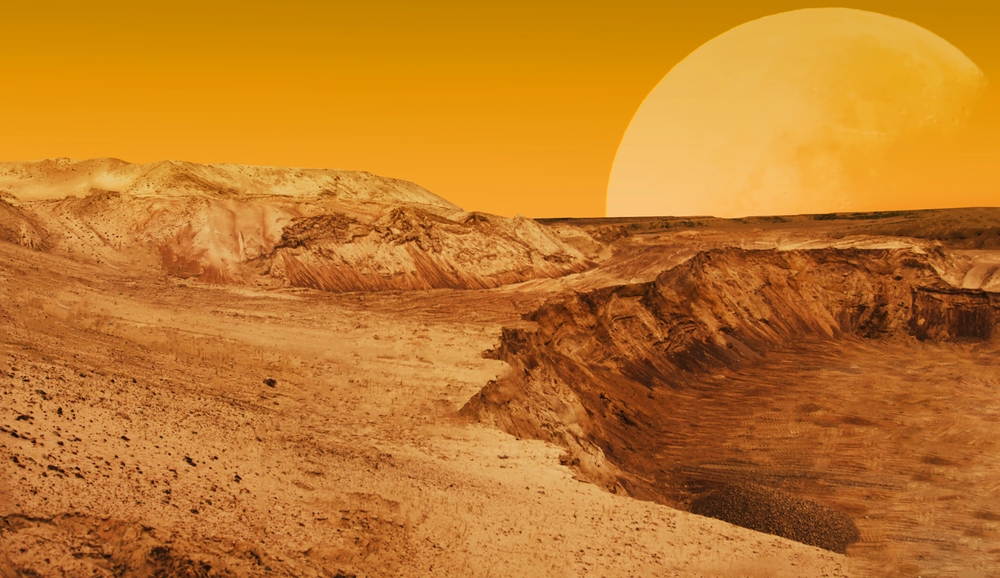
Another long-standing question about Mars involves what lies beneath its surface. In 2018, scientists detected signals that suggested the presence of a liquid water lake buried under the planet’s south pole.
The possibility of hidden water sparked excitement, as liquid water is closely tied to the potential for life. However, more recent observations using advanced radar techniques have challenged that idea.
Instead of a lake, the data now suggest that the signal may come from layers of rock and dust beneath the ice. While this does not completely rule out the presence of water elsewhere, it shows how complex and uncertain the search can be.
At the same time, the improved radar methods are opening new possibilities. Scientists can now probe deeper into the Martian subsurface, searching for ice deposits or other resources that could support future human missions.
The Bigger Picture of Exploration
Taken together, these discoveries paint a picture of Mars that is both complex and evolving.
On one hand, there are physical reminders of human exploration, like the fragment of a spacecraft lying on the surface. On the other, there are chemical clues buried in ancient rocks, hinting at processes that may have once supported life.
Each finding adds another piece to the puzzle. None of them provides definitive answers on their own, but together they are helping scientists build a clearer understanding of the planet’s history.
Mars is no longer just a distant world observed through telescopes. It is a place where we are actively conducting experiments, collecting samples, and asking increasingly detailed questions.
The presence of debris from human missions also raises subtle questions about our role as explorers. As we continue to send spacecraft to other worlds, we are not just observers. We are participants, leaving traces behind.

What Comes Next
The journey is far from over. Perseverance continues to collect samples that may one day be returned to Earth for detailed analysis. These samples could provide the strongest evidence yet about whether life ever existed on Mars.
Future missions will likely build on the discoveries made so far. Improved technology will allow scientists to explore deeper, analyze more precisely, and perhaps even search directly for microscopic fossils.
There is also growing interest in sending humans to Mars. If that happens, the knowledge gained from current missions will be essential in preparing for the challenges of living and working on another planet.
For now, though, Mars remains a place of unanswered questions.
A Quiet Reminder from Another World
The image of a torn piece of spacecraft resting on the Martian surface may not seem as dramatic as the search for alien life. But in its own way, it captures something important.
It shows how far human exploration has come, and how much further it still has to go.
At the same time, the chemical clues hidden in ancient rocks remind us that Mars still holds secrets that could change our understanding of life itself.
Not every discovery provides a clear answer. Some only deepen the mystery. But that is part of what makes exploration meaningful.
Mars is not just a destination. It is a story that is still unfolding, one discovery at a time.