
Your cart is currently empty!
Native Teen’s Science Fair Experiment Found A Surprising Effect From Traditional Chokecherry Pudding
A traditional Native American food became the center of an unexpected cancer experiment after a high school student decided to investigate something she had grown up seeing in her own community. Destany “Sky” Pete, a Shoshone and Paiute student from the Duck Valley Indian Reservation in Idaho and Nevada, wanted to know whether the traditional preparation of chokecherry pudding could affect cancer cells in a laboratory.
Contents
show
What began as a question about an old food tradition eventually became an award-winning science fair project. Pete tested different chokecherry preparations against uterine sarcoma cancer cells and found that the traditional version containing crushed chokecherry seeds produced the most notable result during the experiment. The finding helped propel her to the top prize at a county science fair and earned her a place at an international competition, although the actual scientific result was far more limited than the dramatic viral headline suggests.
A Traditional Recipe Gave Her The Idea
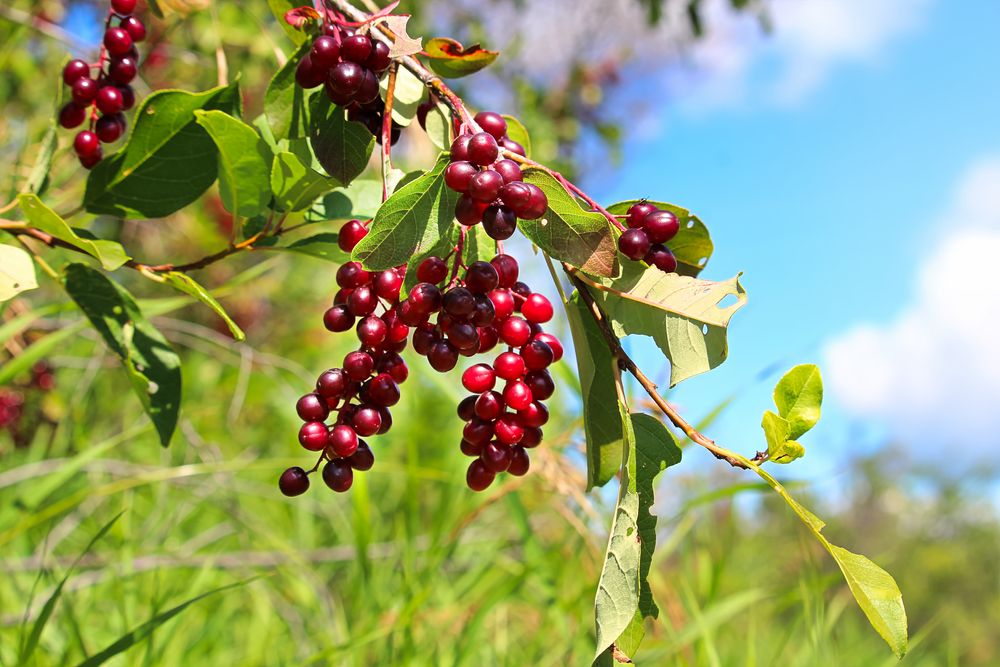
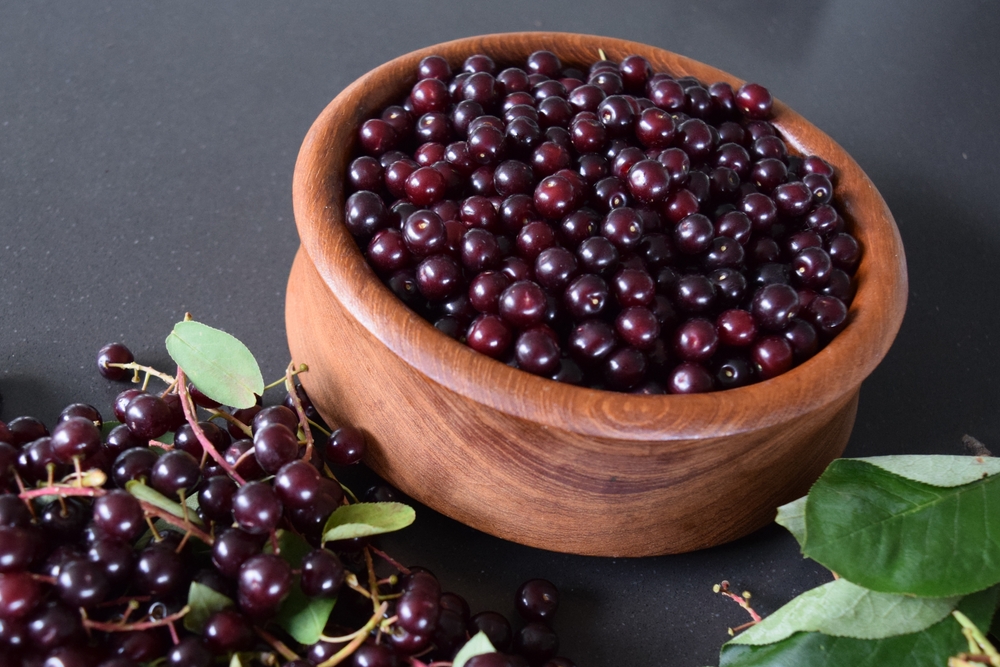
Pete’s interest in chokecherries came from a food that remained connected to her Shoshone and Paiute community. The chokecherry tree, Prunus virginiana, grows across much of North America, and its fruit has been gathered and prepared by Indigenous communities for generations. Among the Shoshone and Paiute, one traditional preparation is chokecherry pudding, known as toishabui in the Paiute language.
What caught Pete’s attention was the way the traditional pudding was prepared. The seeds were crushed along with the fruit rather than being removed completely. Modern versions, however, can be made differently, with some people extracting the juice and leaving the seeds behind. For a teenager interested in science, that difference presented a natural question: if generations of people had preserved a particular preparation method, could there be something about it that modern science had not yet investigated?
“The traditional (Shoshone and Paiute) method of preparing chokecherry pudding includes the seed of the chokecherry, crushed up,” Pete told Indian Country Media Network. “Nowadays, some people just kind of juice the berry and take out the seed completely. But maybe the seed has medicine that can help us to stay well.”
Her curiosity grew after a conversation with a traditional leader in her community, who connected the decline in traditional foods with the illnesses affecting tribal members. Pete did not simply accept that explanation. Instead, she turned it into a scientific hypothesis and decided to investigate whether the traditional preparation of chokecherry pudding could inhibit the growth of cancer cells.
Her High School Project Reached A University Laboratory
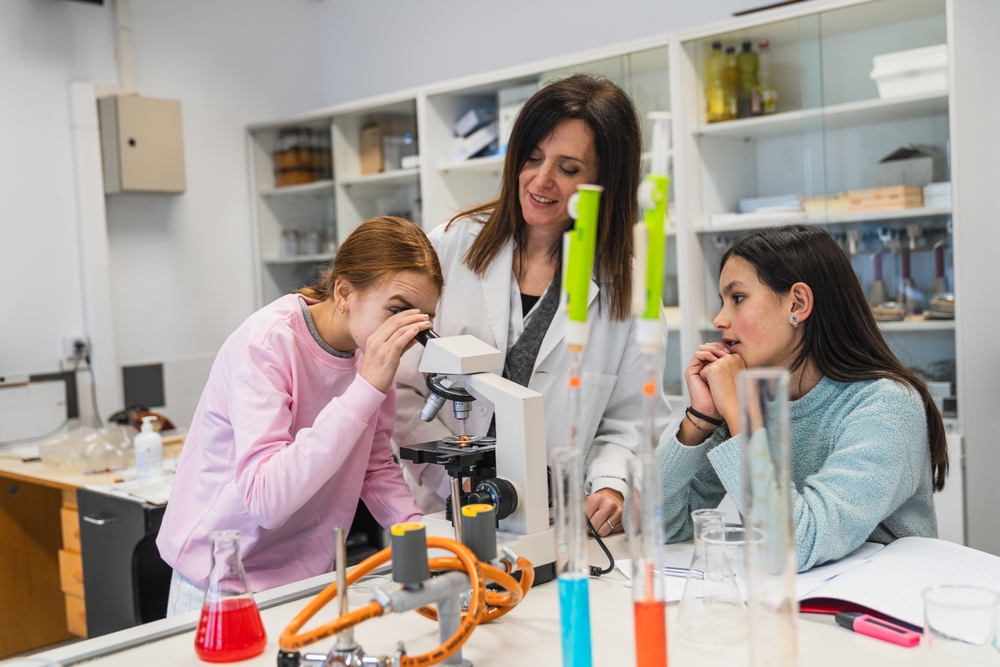
Pete’s question was ambitious for a high school science project, so she needed access to equipment and expertise that were not available in an ordinary classroom. Her science teacher, Dietlinde Dann, helped connect her with Dr. Ken Cornell, a biochemistry professor at Boise State University who worked with uterine sarcoma cancer cells.
The university laboratory gave Pete the opportunity to take an idea rooted in her community and examine it under controlled conditions. Rather than simply testing whether chokecherries contained something interesting, she compared several different preparations to see whether the traditional method produced a different result from versions where the seed had been removed.
Pete tested four different chokecherry specimens by combining them with uterine sarcoma cancer cells. The mixtures were then allowed to incubate for 24 hours, giving her a defined period in which to observe how the cancer cells responded. The key comparison was the traditional chokecherry pudding containing crushed seeds against preparations that did not contain the seed in the same way.
That experimental design made the project especially interesting because Pete was not merely asking whether chokecherries had some effect. She was asking whether a specific part of a traditional preparation might account for a difference in the laboratory.
The Traditional Preparation Produced The Strongest Result
After the 24-hour incubation period, Pete found that the traditionally prepared chokecherry pudding containing crushed seeds produced cancer-cell killing in the laboratory. The other preparations, including versions without the seed and chokecherry juice alone, did not produce the same result under the conditions she tested.
“It was the traditional preparation of toishabui with the crushed seeds that had the results,” Pete said.
That result gave Pete a scientific reason to keep looking at the part of the recipe that had initially made her curious. The seed was not simply a forgotten ingredient in her experiment. It was the feature that separated the traditional preparation from some of the modern versions she compared.
However, the actual finding needs to be put into context. The experiment did not demonstrate that chokecherry pudding could cure uterine cancer, and it did not involve cancer patients. The work involved cancer cells in laboratory conditions, and the amount of cell killing observed during the 24-hour period was described as small.
Pete herself treated the finding as a starting point for further research. She suggested that a longer incubation period or a stronger dilution could produce different results, and she wanted to investigate whether the preparation would affect other types of cancer cells.
The Viral Claim Goes Further Than The Experiment
The phrase “kills aggressive uterine cancer cells in just 24 hours” makes for an eye-catching headline, but it gives the experiment a much broader meaning than the source material supports. Pete’s project did not establish that eating chokecherry pudding would kill cancer inside a human body, nor did it establish the pudding as a cancer treatment.
What it did show was narrower and still scientifically interesting: under laboratory conditions, one traditionally prepared chokecherry sample produced some cancer-cell killing during a 24-hour experiment. That observation was enough to justify further questions, but it was not enough to establish a medical treatment or prove that the traditional food could produce the same effect in people.
Pete understood that more work would be necessary. “We can also try the experiment on different types of cancer cells in the future,” she said. “I really want to do the same test on breast cancer cells.” Her comments show that she saw the experiment as an investigation that could lead to additional testing rather than as a finished answer.
That distinction matters because laboratory cancer research is only an early stage in determining whether a substance has any useful medical application. A substance can affect isolated cells without producing the same effect in a living person. Pete’s project therefore raised an intriguing question about chokecherry preparation, but it did not answer whether the food could prevent or treat cancer in humans.
Chokecherries Have Been Part Of Indigenous Food Traditions For Generations
The science experiment also brought attention to the long history behind the ingredient Pete chose to study. Chokecherries have been harvested across North America for generations, and the fruit has been prepared in a range of traditional foods. When eaten raw, the fruit can have a sharply acidic and astringent flavor, which is why it has often been cooked, sweetened, dried, or incorporated into recipes rather than eaten straight from the tree.
Traditional chokecherry preparations have included puddings, patties, jams, jellies and other foods. Some people also preserve the fruit by freezing or drying it for later use. The chokecherry tree itself has had practical importance beyond its fruit, with its wood traditionally used for items including bows, arrows and other objects. For Pete, however, the most important detail was the traditional preparation of toishabui, because it gave her a way to investigate whether an old food practice might contain a scientific question worth asking.
The seed also requires caution. The source material notes that chokecherry stones contain hydrocyanic acid and warns that consuming too many can cause illness. That makes it especially important not to turn Pete’s laboratory experiment into advice to consume crushed chokecherry seeds as a cancer remedy. Her project tested a preparation under controlled laboratory conditions, and the result cannot be used to establish that the same preparation is safe or effective as a treatment for people.
Her Science Fair Win Took The Project Much Further
After completing the experiment, Pete entered the 2017 Elko County Science Fair in northern Nevada, where her project competed against more than 440 other entries. She received the First Grand Prize for her work linking traditional chokecherry pudding with the reduction of uterine sarcoma cancer cells. The award came with a $500 scholarship, along with additional recognition and awards from organizations including the Navy and Air Force.
The county victory also gave Pete the opportunity to compete at the Intel International Science Fair in Los Angeles. She faced roughly 1,800 other high school students representing more than 75 countries, putting her community-based project alongside research from students around the world. Although she did not take home the top international prize, reaching the competition itself represented a major achievement for a high school student.
For Pete, the significance of the project extended beyond winning trophies or scholarships. She wanted her work to show that her Native identity and her interest in modern science could exist side by side. “I’m proud to be Native American,” Pete told Indian Country Media Network. “And I want people to know that science and culture can be represented together.”
Pete Wanted To Take What She Learned Back Home
The science fair project was only one part of Pete’s ambitions. After high school, she hoped to attend Stanford University and major in biology before continuing to the University of California Davis Veterinary School. Her long-term plan was to return to the reservation and open her own veterinary practice, bringing the education and experience she gained away from home back to her community.
“There is so much out there in the world. You can go to college, and do anything, and then come back to your community,” Pete said. That outlook helps explain why the chokecherry experiment carried such personal significance for her. She was taking something familiar from her community, examining it through a scientific process, and then imagining how education could eventually be used to serve the same community.
Pete also connected traditional food with the health of earlier generations. “I feel like our ancestors were really healthy. Nowadays, we’re prone to diabetes and other diseases. But back then, it was our food that made us healthy,” she said. Her statement reflected the motivation behind the project, while the experiment itself provided a much narrower scientific finding about how one preparation affected cancer cells in laboratory conditions.
What Pete’s Experiment Actually Discovered
The most accurate version of the story is less dramatic than the viral headline, but it still makes for an unusual science fair story. A Native high school student noticed that a traditional chokecherry pudding recipe differed from some modern preparations, wondered whether the difference mattered, and then designed an experiment to investigate it with the help of a university biochemistry professor.
The traditional preparation containing crushed chokecherry seeds produced some cancer-cell killing during the 24-hour laboratory experiment. The versions without the seed did not produce the same result under the conditions tested. Pete believed the observation deserved further investigation, including testing different incubation periods, concentrations and types of cancer cells.
Several details should remain clear when the story is shared:
- The test used cancer cells in a laboratory. It did not involve human patients or cancerous tumors inside the body.
- The observed effect was limited. The source describes a small amount of cancer-cell killing rather than a proven cancer treatment.
- The traditional preparation produced the notable result. The crushed seed was part of the preparation that showed the observed effect.
- Pete wanted additional experiments. She specifically discussed testing other cancer-cell types.
- The project did not establish a cure. There was no evidence in the supplied sources that eating chokecherry pudding treats cancer in humans.
That final distinction is what separates a fascinating science fair experiment from a medical claim. Pete’s work did not prove that a traditional pudding can cure cancer, but it showed how a question rooted in cultural knowledge could become the basis for a scientific investigation.
A Science Fair Project Became A Meeting Point Of Two Traditions
Pete’s story ultimately stands out because of where the scientific question came from. She did not begin with a pharmaceutical compound or a laboratory invention. She began with a traditional food, a conversation with a community leader, and a detail in a recipe that had survived across generations.
Her project then followed a familiar scientific path: ask a question, develop a hypothesis, compare samples, observe the results, and consider what should be tested next. The laboratory did not replace the cultural knowledge that inspired the question. It gave Pete a way to investigate one specific part of it.
That combination is what Pete wanted people to see when she spoke about the project. Her science fair success showed that a young student could bring together her cultural background and her interest in biology without treating either one as separate from the other. The chokecherry pudding was the starting point, but the bigger achievement was turning curiosity about her own community into a serious scientific project.
The viral headline may focus on cancer cells dying within 24 hours. Pete’s actual story is more grounded: a teenager asked why an old recipe was prepared a certain way, then went into a laboratory to find out whether that detail made a difference.
Sources: