
Your cart is currently empty!
Navy Crew Couldn’t Believe What Was Floating Nearly 10 Miles Offshore
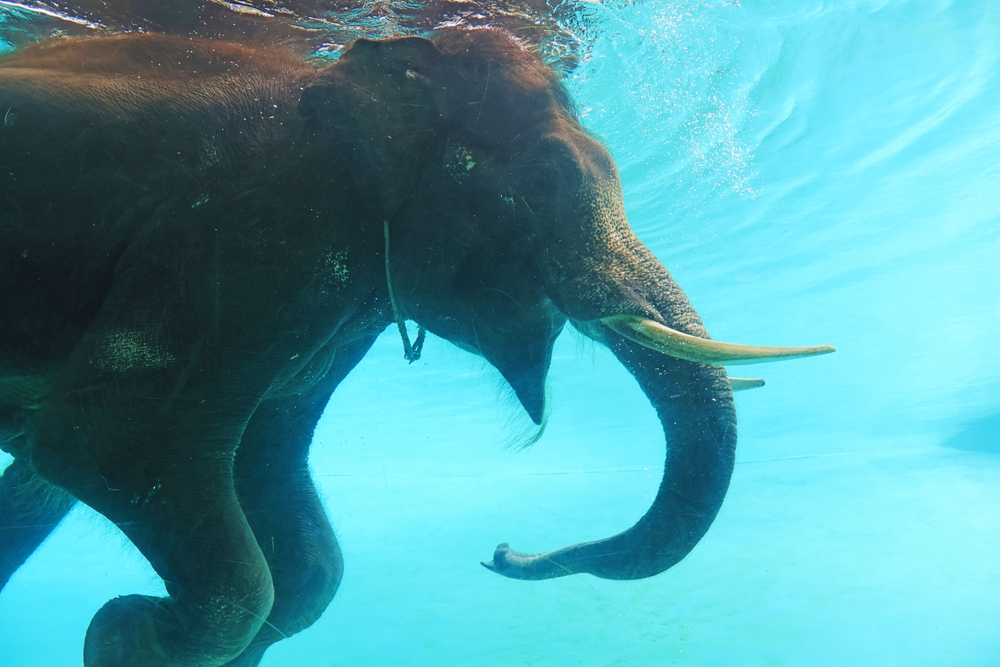
The Sri Lankan Navy expected another uneventful patrol as they sailed through the waters off the country’s northeastern coast. Instead, crew members spotted something that looked completely out of place, a massive shape rising and disappearing beneath the waves nearly 10 miles from land. As their vessel drew closer, the mystery quickly turned into an emergency. A fully grown Asian elephant was stranded in the open ocean, fighting exhaustion while struggling to keep its head above water. Video from the scene showed the animal’s body almost entirely submerged, with only its trunk breaking the surface every few seconds to breathe. The sight was extraordinary even for experienced sailors, who immediately realized the elephant had little chance of surviving without help.
Contents
show
What followed became one of the most remarkable wildlife rescues ever carried out in Sri Lanka. Over the next 12 hours, naval divers, rescue crews, and wildlife officials worked together to guide the exhausted elephant back to safety. The operation required patience, precision, and teamwork, with rescuers entering the water to secure ropes around the struggling animal while carefully towing it toward shore. Although elephants are among the strongest swimmers in the animal kingdom, experts believed this one had already spent far too long battling powerful currents. The rescue not only saved the life of an endangered Asian elephant but also offered a rare glimpse into the surprising abilities of one of Earth’s largest land mammals.
A Routine Patrol Suddenly Became a Life-or-Death Mission
What began as a standard patrol quickly transformed into a rescue operation unlike anything the Sri Lankan Navy had experienced before. Crew members first noticed an unusual object floating in the distance, but it wasn’t immediately clear what they were looking at. The shape repeatedly disappeared beneath the waves before resurfacing moments later, prompting the patrol vessel to investigate.
As the ship approached, sailors made an astonishing discovery. The object was a fully grown Asian elephant that had somehow drifted miles away from the shoreline. The exhausted animal was visibly struggling, using every ounce of its strength simply to remain afloat. Video captured during the rescue showed the elephant’s trunk extending above the water like a snorkel while the rest of its enormous body remained submerged beneath the surface.
Officials understood the urgency almost immediately. Although elephants are naturally strong swimmers, they are not built to spend endless hours fighting ocean currents without rest. The longer the animal remained stranded, the greater the risk of exhaustion, dehydration, and prolonged exposure to saltwater. Leaving it alone was simply not an option.
Additional rescue teams were quickly dispatched to the area, including divers and wildlife officials. Together, they began planning an operation that would eventually stretch across 12 hours and require careful coordination to avoid placing even more stress on the already exhausted animal.
How the Elephant Ended Up Drifting Almost 10 Miles Into the Ocean
The dramatic rescue left many people asking the same question: how could one of the world’s largest land animals end up so far from shore? According to Sri Lankan wildlife officials, the elephant wasn’t intentionally swimming through the open ocean. Instead, it is believed to have been attempting a much shorter and familiar journey across the Kokkilai Lagoon, a body of water that lies between two forested areas inside an important wildlife sanctuary. Elephants regularly move between these habitats in search of food, water, and mates, making the crossing a routine part of their lives.
Officials explained that elephants frequently swim across the lagoon because it provides a much shorter route than walking around it. “They usually wade through shallow waters or even swim across to take a short cut,” one official told Agence France-Presse. Under normal conditions, these crossings are completed without incident, as elephants are naturally strong swimmers that have adapted to moving through rivers, lakes, and lagoons throughout Asia and Africa.
Something clearly went wrong during this particular crossing. Wildlife authorities believe changing currents carried the elephant beyond the sheltered waters of the lagoon and into the open sea before it could reach the opposite shore. Once it entered deeper ocean waters, escaping became far more difficult. Powerful currents likely continued pulling the animal farther from land, forcing it to swim continuously just to avoid being carried even farther offshore.
By the time the Sri Lankan Navy discovered the elephant, it had drifted approximately eight nautical miles, just under 10 miles, from the coastline. At that distance, even an animal renowned for its swimming ability was running dangerously low on energy. Rescuers later explained that if the elephant had continued struggling against the current for much longer, exhaustion and prolonged exposure to saltwater could have become fatal, making immediate intervention the only realistic chance of saving its life.
A Delicate 12-Hour Rescue Tested Everyone Involved
With the elephant stranded far from shore and visibly losing strength, the Sri Lankan Navy quickly realized that simply pulling the animal back to land was not an option. An adult Asian elephant can weigh between 4,000 and 11,000 pounds, making any rescue at sea both dangerous and technically challenging. Officials called in additional personnel from the Department of Wildlife, while naval divers prepared to enter the water and work alongside the exhausted animal. Every decision had to balance speed with caution, as startling the elephant could have made the situation even more dangerous.
Rescue footage released by the Navy captured the remarkable operation as divers slipped into the ocean wearing scuba gear and carefully approached the struggling elephant. Rather than forcing the animal, they moved slowly to earn its trust before securing thick ropes around its body. At one point, one of the rescuers climbed onto the elephant’s back to help guide its direction while other team members coordinated from nearby vessels. The elephant, despite its obvious fatigue, remained calm throughout much of the operation, allowing crews to continue their painstaking work.
Instead of lifting the elephant onto a ship, rescuers adopted a far gentler approach. Naval vessels moved at an extremely slow pace, towing the animal while allowing it to continue swimming naturally. This reduced the amount of energy the elephant needed to expend while ensuring its trunk remained above the water so it could breathe comfortably. Progress was slow, but the rescue team knew rushing the process could place unnecessary stress on the already exhausted animal.
As daylight gradually faded into evening, the mission continued without interruption. After nearly 12 hours in the water, the rescue team finally reached Sri Lanka’s coastline, where the elephant was guided into shallow water and safely released into the care of wildlife officials. Tired but alive, the animal slowly made its way back onto land, bringing an extraordinary rescue operation to a successful conclusion and showcasing the dedication of everyone involved in saving one of the country’s most iconic endangered species.
Why Seeing an Elephant Swimming Isn’t As Unusual As You Might Think
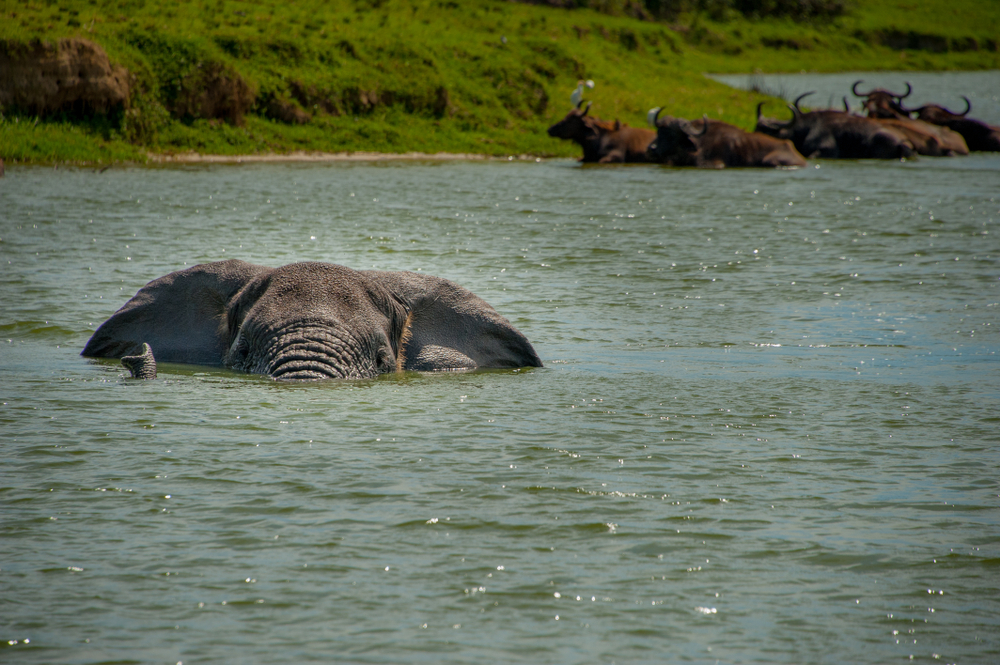
For many people, the most surprising part of the rescue wasn’t the operation itself but the fact that an elephant could survive in deep water for so long. Images of the massive animal using its trunk as a snorkel quickly spread around the world, leaving many wondering whether elephants are actually capable swimmers. While it may seem extraordinary, experts say swimming is a natural ability for elephants, and they are considered among the strongest swimmers of any land mammal.
Unlike many large animals that struggle in deep water, elephants are naturally buoyant. Their enormous lungs help keep their bodies afloat, while their powerful legs propel them through rivers, lakes, and coastal lagoons with surprising ease. Rather than keeping their heads above water, elephants often swim almost completely submerged, extending only the tip of their trunk above the surface to breathe. This unique adaptation allows them to travel long distances without constantly lifting their heavy heads out of the water.
Joyce Poole, co-founder of Elephant Voices, explained that elephants are exceptionally skilled swimmers after reviewing footage of the rescue. “Elephants are considered the best swimmers of any land mammal, perhaps excluding trained human swimmers,” she said. Even so, Poole noted that the rescued elephant appeared visibly tired, reinforcing concerns that it had already spent far too long battling the ocean currents before rescuers found it.
History has shown just how comfortable elephants can be in the water. Rajan, an Indian elephant that became famous through documentaries and online videos, captivated audiences by swimming effortlessly around the Andaman Islands for years. However, even experienced swimming elephants require opportunities to rest. Without a place to recover, constant movement eventually drains their energy, which is why wildlife officials believed the exhausted elephant rescued off Sri Lanka’s coast would not have survived much longer without help.
The Rescue Also Drew Attention to the Species’ Uncertain Future
Although the rescue ended with a happy outcome, conservationists say it also serves as a reminder of the challenges facing Asian elephants across Sri Lanka and much of their native range. Classified as Endangered by the International Union for Conservation of Nature (IUCN), Asian elephants have experienced significant population declines over the past several decades as forests continue to disappear and human development expands into traditional wildlife habitats.
Sri Lanka is home to one of the world’s largest remaining populations of wild Asian elephants, yet their numbers have dropped dramatically since the beginning of the century. Conservation groups estimate that the country’s elephant population has fallen by nearly 65 percent, largely because of deforestation, agricultural expansion, and increasing conflict between humans and wildlife. As forests become fragmented, elephants are often forced to travel greater distances in search of food and water, increasing the likelihood of dangerous encounters with roads, villages, and other hazards.
Unlike African elephants, many Asian elephants do not have large visible tusks, leading some people to believe they face less danger from poaching. However, conservation experts warn that the species continues to be hunted in some areas for its meat, skin, and other body parts. Habitat loss remains the greatest long-term threat, shrinking the natural corridors elephants have relied on for generations and forcing them into increasingly risky situations as they move between isolated patches of forest.
Sri Lanka has introduced strict legal protections for its elephants, making it a serious criminal offense to kill one. Wildlife agencies continue working to protect remaining habitats while developing strategies that reduce conflict between people and elephants. Stories like this rescue highlight not only the resilience of these remarkable animals but also the importance of preserving the landscapes they depend on to survive.
A Rescue That Showed What Teamwork Can Achieve
By the time the elephant finally reached shallow water, nearly half a day had passed since rescue crews first spotted it drifting in the Indian Ocean. The exhausted animal slowly regained its footing before disappearing back toward safety under the watch of wildlife officials, bringing an extraordinary operation to a successful close. For everyone involved, the mission demonstrated just how much patience, planning, and determination can accomplish when multiple agencies work toward the same goal.
The dramatic footage has since been viewed around the world, not simply because of the unusual sight of an elephant swimming in the open ocean, but because it captured an extraordinary moment of cooperation between humans and wildlife. Every diver who entered the water, every sailor who helped guide the rescue vessel, and every wildlife official monitoring the elephant played a role in ensuring the animal survived an ordeal few creatures could endure.
While elephants are remarkably capable swimmers, their strength has limits. This rescue showed that even one of nature’s largest and most resilient land mammals can find itself overwhelmed by circumstances beyond its control. Thanks to the quick thinking of the Sri Lankan Navy and wildlife authorities, an exhausted elephant was given a second chance, turning what could have become a tragic story into one of the most remarkable wildlife rescues ever recorded.
animal rescue, animal rescue story, Asian elephant, Birds Advice, elephant at sea, elephant conservation, elephant rescue, elephant survival, elephant swimming, endangered elephants, Kokkilai Lagoon, nature news, Navy rescue, ocean rescue, Sri Lanka elephant, Sri Lankan Navy, viral animal story, viral news, wildlife news, wildlife rescue