
Your cart is currently empty!
Netflix Buys Warner Bros. & HBO for $82.7 Billion

Hollywood awoke Friday morning to news that would reshape the entertainment industry for generations. A bidding war that began in the fall had finally ended. Netflix, the streaming service that spent two decades disrupting traditional studios, had emerged victorious against formidable opponents.
Contents
show
What Netflix won would alter its identity completely. Warner Bros., the studio behind Harry Potter and Game of Thrones, along with HBO and HBO Max, would become part of the streaming giant. For $27.75 per Warner Bros. Discovery share, Netflix secured one of Hollywood’s oldest and most prized assets in a deal valued at $82.7 billion, including debt.
Shareholders might question why Netflix, a company known for building rather than buying, suddenly shifted strategy. Investors who watched the company spend a decade creating Stranger Things and Squid Game from scratch now see it acquiring a century-old studio. Something fundamental changed in Netflix’s calculation about its future.
Battle for Warner Bros. Draws Three Suitors
Netflix emerged victorious after weeks of competition against Paramount, Skydance, and Comcast NBC. Paramount, led by David Ellison and fresh from its own $8 billion merger in August, pursued Warner Bros. Discovery aggressively with multiple all-cash offers. Unlike Netflix, Paramount wanted the entire company, including cable networks like CNN and Discovery.
CNBC reported Paramount offered $30 per share at some point during negotiations. Ellison’s company questioned the sale process earlier in the week and alleged favorable treatment toward Netflix. Close ties with the Trump administration gave Paramount political connections that might have influenced regulatory considerations.
Comcast entered as the third bidder but remained quieter throughout the process. Neither Paramount nor Comcast responded to requests for comment after Netflix’s victory announcement.
Warner Bros. Discovery shares rose nearly 3 percent in premarket trading to $25.33, still below the offer price. Netflix fell about 0.2 percent while Paramount dropped 6.1 percent as investors processed the implications of missing out on the acquisition.
September 10 marked when initial buyout reports emerged. Warner Bros. Discovery traded at significantly lower levels before the acquisition interest became public. Netflix’s winning bid represents a 121 percent premium over that closing price.
What Netflix Gains Beyond Streaming Rival
Warner Bros.’ film and television studios join Netflix, along with HBO, HBO Max, and DC Studios. Franchises including Harry Potter, Game of Thrones, Friends, The Sopranos, The Big Bang Theory, and the DC Universe featuring Batman and Superman become Netflix properties. Classic films like Casablanca, Citizen Kane, and The Wizard of Oz enter the portfolio alongside Netflix originals, including Stranger Things, Squid Game, and KPop Demon Hunters.
HBO brings its reputation as a premium content producer. Warner Bros. is recognized as a leading supplier of television titles and filmed entertainment, with production capabilities that Netflix spent years building from scratch.
Discovery Global cable networks split off separately. CNN, Discovery channels, TNT Sports in the United States, Discovery+ streaming service, and Bleacher Report will spin into a publicly traded company by the third quarter of 2026. TNT Sports International stays with the Netflix deal.
David Zaslav, president and CEO of Warner Bros. Discovery, framed the transaction as uniting two great storytelling companies. “For more than a century, Warner Bros. has thrilled audiences, captured the world’s attention, and shaped our culture,” Zaslav said in a statement. “By coming together with Netflix, we will ensure people everywhere will continue to enjoy the world’s most resonant stories for generations to come.”
Company That Disrupted Studios Becomes One
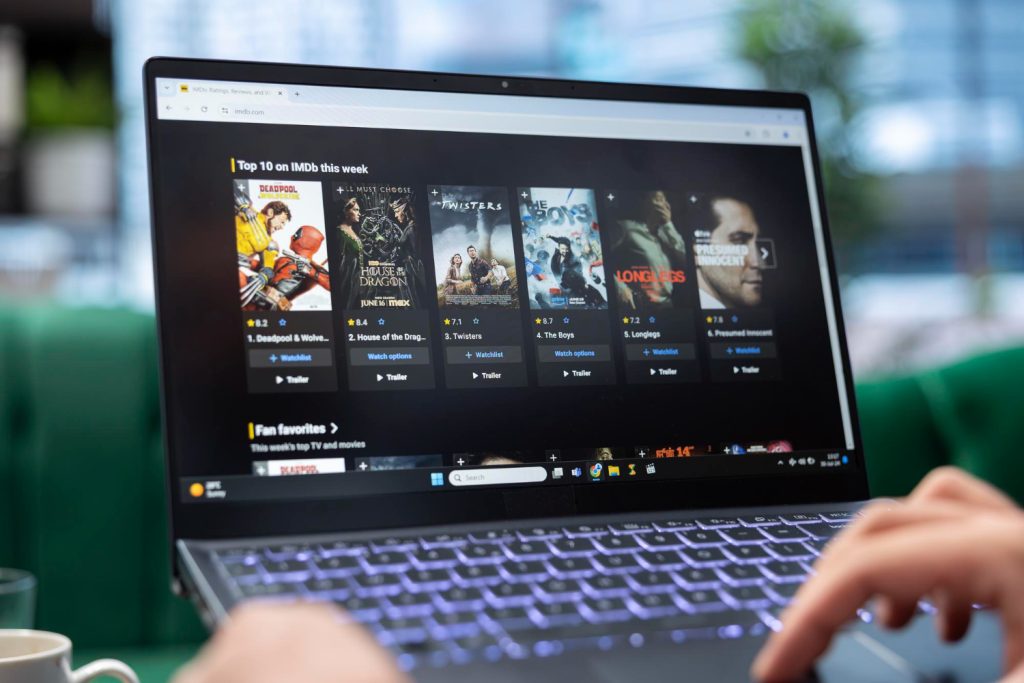
Netflix launched as a DVD mail service before pioneering streaming that upended how audiences consume entertainment. For a decade, the company developed original series like Stranger Things, Bridgerton, Wednesday, and films including its K-pop Demon Hunters franchise. Now it owns a mainstream studio, becoming the thing it disrupted.
Ted Sarandos, Netflix co-CEO, addressed the strategic shift directly when speaking to investors. “I know some of you are surprised that we’re making this acquisition, and I certainly understand why,” Sarandos said. “Over the years, we have been known as builders, not buyers. But this is a rare opportunity that’s going to help us achieve our mission to entertain the world, and bring people together through great stories.”
Years ago, Sarandos said his goal was to become HBO faster than HBO can become us. Now the two companies will help define the next century of storytelling together under Netflix ownership.
As recently as October, when Warner Bros. Discovery signaled openness to potential sale, Sarandos told investors on an earnings call that Netflix had no interest in owning legacy media networks, with no change there. He kept options open by saying the company would be choosy without fully ruling out a Warner Bros. bid.
Growth pressures may have shifted calculations. Netflix shares gained only 16 percent this year after surging more than 80 percent in 2024. Investors worried about slowing momentum after Netflix stopped disclosing subscriber figures. Ad-supported tier won’t become a major revenue engine until next year. Gaming push stumbled amid strategy shifts and executive departures.
Acquiring Warner Bros. addresses multiple concerns. Long-term rights to hit shows and films reduce reliance on outside studios. Gaming opportunities expand with Warner Bros. being among the few entertainment companies notching big successes in the sector. Hogwarts Legacy generated more than $1 billion in revenue, potentially deepening Netflix’s gaming bet.
Deal Structure Includes Cash, Stock, and Safeguards

Each Warner Bros. Discovery shareholder receives $23.25 in cash plus approximately $4.50 in Netflix stock per share under the terms announced Friday. A collar mechanism protects both sides based on Netflix’s stock price movements. If the 15-day volume weighted average price measured three trading days before closing falls between $97.91 and $119.67, shareholders get the $4.50 stock value. Below $97.91, they receive 0.0460 Netflix shares per Warner share. Above $119.67, they get 0.0376 shares.
Enterprise value reaches approximately $82.7 billion, including Warner Bros. Discovery debt. Equity value totals $72 billion in what becomes one of the largest media deals in history.
Breakup fee structure adds another layer. Netflix offered $5.8 billion if the deal collapses. Warner Bros. Discovery would pay Netflix $2.8 billion under the same circumstances.
Both company boards unanimously approved the transaction. Moelis & Company and Wells Fargo advised Netflix alongside legal counsel Skadden, Arps, Slate, Meagher & Flom. Allen & Company, J.P. Morgan, and Evercore advised Warner Bros. Discovery, with Wachtell Lipton, Rosen & Katz, and Debevoise & Plimpton providing legal counsel. Wells Fargo, BNP, and HSBC are committed to debt financing.
Theater Owners and Guilds Voice Strong Opposition

Cinema United, representing more than 30,000 US movie screens and 26,000 internationally, opposed the deal immediately. CEO Michael O’Leary called it an “unprecedented threat to the global exhibition business.” Netflix’s stated business model doesn’t support theatrical exhibition, he argued. “In fact, it is the opposite. Theatres will close, communities will suffer, jobs will be lost.”
Netflix promised to maintain Warner Bros.’ commitment to theatrical releases, honoring existing contractual agreements for studio films. Warner Bros. traditionally releases major films in theaters as part of its identity and contracts. Netflix mostly keeps original content on its streaming platform, with limited exceptions like K-pop Demon Hunters sing-along screenings and the coming Stranger Things series finale.
Writers Guild of America East and West branches issued a rare joint statement demanding that the merger be blocked. “The world’s largest streaming company swallowing one of its biggest competitors is what antitrust laws were designed to prevent,” the statement declared. Predicted consequences included eliminated jobs, lower wages, worse conditions for entertainment workers, higher consumer prices, and reduced content volume and diversity.
Industry concentration already allows a few powerful companies to have tight control over what consumers watch on television, streaming, and in theaters. Adding this merger would worsen the situation, the guilds argued.
Directors Guild of America requested a meeting with Netflix to discuss concerns. Before the deal confirmation but after Netflix won the bidding battle, the guild told Deadline it believes a “vibrant, competitive industry that fosters creativity and encourages genuine competition for talent” remains essential for safeguarding directors’ careers and creative rights.
Bipartisan Political Opposition Emerges
This deal is a nightmare. It would mean more price hikes, ads, & cookie cutter content, less creative control for artists, and lower pay for workers.
The media industry is already controlled by a few corporations with too much power to censor free speech. The gov’t must step in. https://t.co/mOSdEbkdLT
— Rep. Pramila Jayapal (@RepJayapal) December 5, 2025
Senator Elizabeth Warren of Massachusetts called the deal “an anti-monopoly nightmare.” One massive media giant would control close to half the streaming market, she warned. Consumers could face forced higher prices and fewer choices about what and how they watch. American workers face risk. Warren urged the Justice Department to “enforce our nation’s anti-monopoly laws fairly and transparently.”
Representative Pramila Jayapal of Washington predicted price hikes, ads, cookie-cutter content, less creative control for artists, and lower pay for workers. The media industry already has too few corporations with too much power to censor free speech, she argued. Government must step in.
Senator Mike Lee of Utah warned before Netflix won the bidding war that any potential transaction would “raise serious competition questions, perhaps more so than any transaction I’ve seen in about a decade.” Increasing Netflix dominance this way would “mean the end of the Golden Age of streaming for content creators and consumers,” Lee added.
Bipartisan scrutiny represents unusual unity in the current political climate. Both Democratic and Republican lawmakers expressed similar worries about market concentration and consumer harm.
Netflix Plans Integration and Cost Savings

Greg Peters, Netflix co-CEO, said details about HBO’s future as a separate streaming service remain premature. HBO brand matters to consumers, but specifics on how Netflix will tailor offerings need more time. Options include bundling services together or introducing HBO Max content directly to Netflix subscribers. Netflix built audiences for television series over the years, as it did for Breaking Bad and legal drama Suits.
Warner Bros.’ current operations will be maintained, with Netflix building on existing strengths. Production capacity expands significantly in the United States with long-term investment in original content, creating jobs and strengthening the entertainment industry. Warner Bros. Television continues to produce content for third parties rather than exclusively for Netflix. Netflix keeps its own productions exclusive to its platform.
Cost savings targets reach $2 billion to $3 billion annually by the third year. Savings come mostly from eliminating overlaps in support and technology areas. Netflix expects the transaction to boost earnings per share by year two after closing.
Regulatory Hurdles and Timeline Ahead
Deal completion requires 12 to 18 months after Warner Bros. Discovery spins off its cable business. Discovery Global separation now targets the third quarter of 2026. Required approvals include regulatory clearance in the United States and Europe, Warner Bros. Discovery shareholder approval, completion of the Discovery Global spinoff, and other customary closing conditions.
Antitrust scrutiny appears likely given the combination creates the world’s biggest streaming service with ownership of a rival boasting nearly 130 million subscribers through HBO Max. Netflix serves more than 300 million paid subscribers across more than 190 countries already.
Harrington predicted big reductions in television and film output from a newly merged company, creating resistance from Hollywood parts and relevant unions. For consumers, the merger likely leads to higher prices with Netflix getting more expensive. Even if HBO Max becomes non-essential, greater Netflix household penetration would probably increase total subscription revenues.
What Comes After Deal Closes
Warner Bros., founded in the 1920s, became part of a streaming service born in the late 1990s as a DVD mail company. Century-old studio’s storied history through multiple ownership changes from Time Warner to AT&T to the Discovery merger now adds Netflix as its next chapter.
Streaming services no longer disrupt traditional Hollywood. They become traditional Hollywood. Whether consolidation serves audiences, creators, or primarily shareholders remains the question regulators, lawmakers, and industry members will debate over the coming months as Netflix pursues approval for its $82.7 billion bet on Warner Bros.’ next century.