
Your cart is currently empty!
Scientists Reveal Possible New Human Species Discovered in China

The story of human evolution has always been filled with surprises. Just when scientists believe they have mapped out the branches of our ancient family tree, a new discovery appears that forces researchers to rethink what they thought they knew. Fossils found decades ago in China are now doing exactly that.
Contents
show
A group of researchers studying ancient skull fragments and fossils has proposed the existence of a previously unidentified human species called Homo juluensis. The name translates roughly to “large head people,” a reference to the unusually large skulls associated with the fossils. The discovery is not simply about adding another name to a list of ancient humans. It may reshape how scientists understand the complicated web of species that lived alongside our own ancestors hundreds of thousands of years ago.
The proposed species is part of a growing effort to clarify one of the most confusing periods in human evolution. For decades, researchers have struggled to classify many fossil discoveries from Asia dating between roughly 300,000 and 50,000 years ago. Now, scientists believe those puzzling fossils may belong to a distinct group of ancient humans that once roamed across eastern Asia.
The Mysterious Fossils That Sparked the Discovery
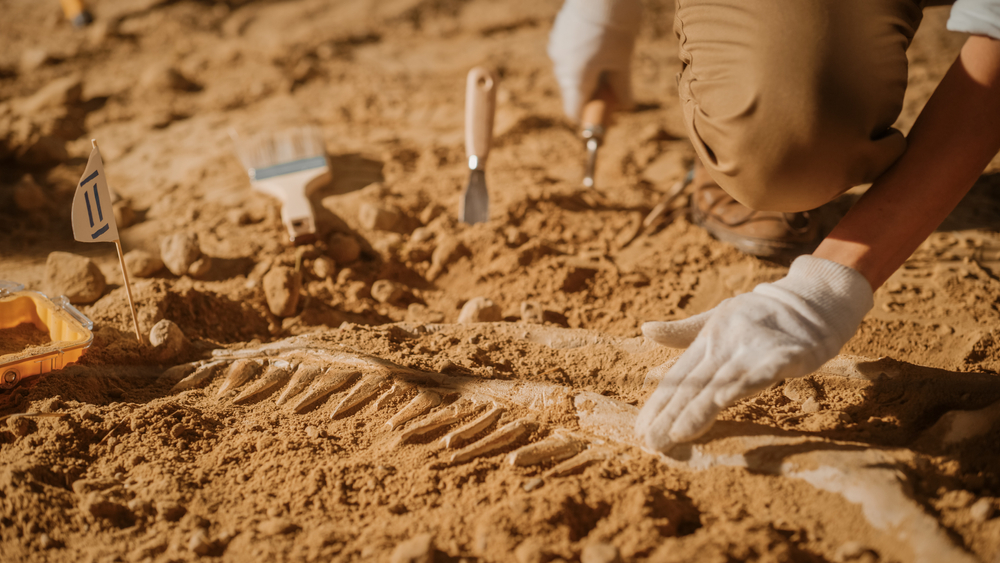
The fossils behind the new classification were not discovered recently. In fact, some of them were unearthed nearly fifty years ago. Excavations at the Xujiayao archaeological site in northern China during the 1970s uncovered thousands of stone tools and numerous fossil fragments belonging to ancient humans.
Researchers recovered more than 10,000 stone artifacts and at least 21 fossil pieces from around ten individuals. These remains included fragments of skulls that immediately stood out because of their unusual size and thickness.
For decades, scientists struggled to determine exactly which species these fossils belonged to. Some features resembled Neanderthals. Others looked more like modern humans. Certain traits also appeared similar to the mysterious Denisovans, an ancient population known mostly through genetic evidence.
Because the fossils did not neatly fit into any known category, researchers often placed them into broad labels such as “archaic Homo” or “Middle Pleistocene humans.” These catch all terms helped describe the fossils but did little to explain how they actually fit into the evolutionary picture.
Anthropologists sometimes referred to this confusing period as “the muddle in the middle.” The fossil record from that era seemed crowded with humanlike species that overlapped in time and shared many characteristics.
The fossils from Xujiayao and nearby sites remained part of this mystery for decades. Only recently have scientists begun reexamining them using new methods and broader comparisons across the human fossil record.
Naming a New Species: Homo Juluensis
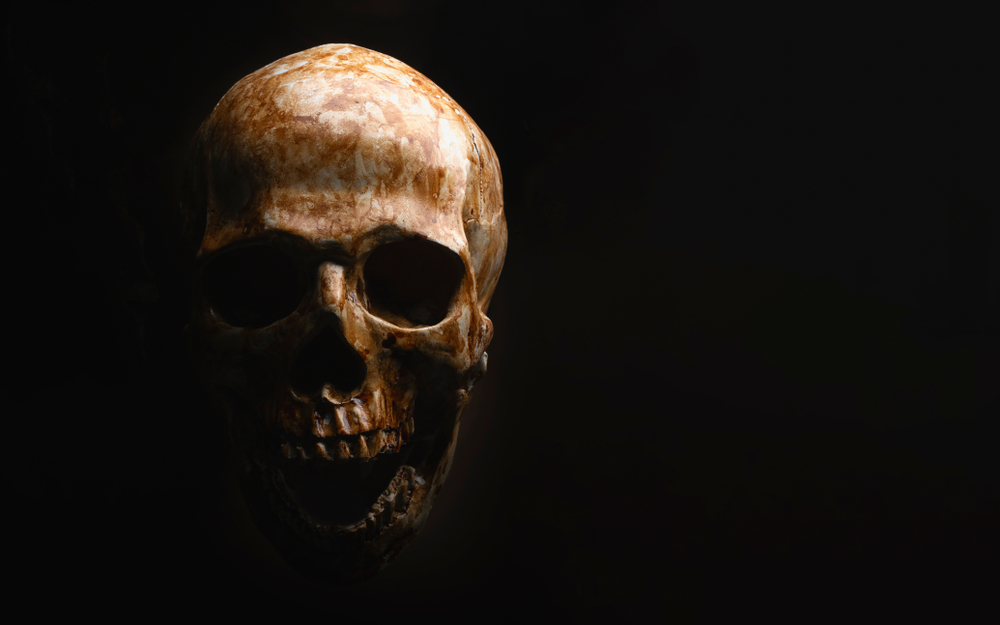
The proposal for the new species emerged from work led by anthropologist Christopher J. Bae of the University of Hawaiʻi at Mānoa and paleoanthropologist Xiujie Wu from the Chinese Academy of Sciences. Their research revisited fossil material from sites in northern and central China, including Xujiayao and Xuchang.
When the team analyzed the skull fragments and compared them with other human fossils, they noticed a combination of traits that did not align with any known species. The skulls were unusually large and wide. They also had thick cranial bones and distinctive features in the face and jaw.
Because these traits appeared consistently across several fossils from different locations, the researchers concluded they likely represented a distinct population of ancient humans. In a study published in the journal PaleoAnthropology, they proposed naming this group Homo juluensis.
The term “Juluren” refers to “large headed people” and reflects the prominent cranial features seen in the fossils. According to the researchers, these ancient humans lived across eastern Asia between about 300,000 and 50,000 years ago.
Evidence suggests they were capable hunters who worked together in small groups. Archaeological findings from their sites include stone tools and signs that they may have processed animal hides. Researchers believe they hunted animals such as wild horses for food.
Although the fossils show impressive brain sizes, the scientists emphasize that Homo juluensis should not be imagined as simply a bigger brained version of other humans. Instead, they likely represented a unique population shaped by migration, adaptation, and interaction with other human groups.
A Crowded World of Ancient Humans

One reason the discovery has attracted so much attention is that it highlights just how crowded the human world once was. Today, Homo sapiens are the only surviving human species. But for most of our evolutionary history, several human relatives lived at the same time.
During the Middle and Late Pleistocene periods, different groups of ancient humans occupied Africa, Europe, and Asia. These groups evolved separately but also interacted with each other in complex ways.
Examples of these ancient relatives include:
- Homo neanderthalensis, commonly known as Neanderthals, who lived in Europe and parts of western Asia.
- Denisovans, a mysterious group identified through genetic traces and a few fossil fragments found in Siberia and Asia.
- Homo floresiensis, often called the “Hobbit” species discovered on the Indonesian island of Flores.
- Homo luzonensis, another small bodied human species found in the Philippines.
The addition of Homo juluensis to this list emphasizes how diverse the human family tree was during this period.
Rather than a simple line of evolution leading directly to modern humans, the story now resembles a branching network. Different human populations emerged, spread across continents, and sometimes interbred with each other.
Researchers believe this interbreeding played a major role in shaping the genetic makeup of ancient humans. Modern human DNA still contains traces of Neanderthal and Denisovan ancestry, evidence that our ancestors interacted with these groups long ago.
The Denisovan Connection

One intriguing possibility raised by the researchers is that Homo juluensis may be connected to the Denisovans. Denisovans are one of the most mysterious human relatives known to science.
Unlike Neanderthals, whose fossils are relatively abundant, Denisovans are known mainly through genetic evidence extracted from a few bones and teeth found in a Siberian cave. Scientists have also identified Denisovan DNA in modern populations across Asia and Oceania.
Because the physical fossils of Denisovans are so rare, researchers have struggled to determine what they actually looked like. Some scientists believe that fossils attributed to Homo juluensis may include Denisovan individuals or closely related populations.
Jaw and tooth fossils discovered in places such as Tibet and Laos show similarities that could link them to this newly proposed species. If this connection is confirmed, Homo juluensis could help provide a clearer picture of Denisovan biology and appearance.
However, researchers caution that more evidence is needed. Fossil classification is a complex process, and many experts remain cautious about assigning new species names without broader agreement.
A Discovery That is Still Debated
As with many discoveries in human evolution, the proposal of Homo juluensis has sparked debate among scientists. Some researchers support the idea that the fossils represent a distinct species, while others believe they may belong to groups that have already been identified.
For example, paleoanthropologist Chris Stringer from the Natural History Museum in London has suggested that some of the fossils might fit better within the species Homo longi, sometimes referred to as “Dragon Man.” This species was identified from a well preserved skull discovered in northeastern China.
Other experts point out that features such as large skull size alone may not be enough to define a separate species. Ancient human populations often shared traits, making classification difficult.
The debate reflects a broader challenge in paleoanthropology. Unlike modern biology, where DNA can often confirm relationships between species, many ancient fossils provide only partial information. Scientists must rely on the shapes of bones, geological dating, and limited genetic clues to piece together evolutionary relationships.
Because of this, the human family tree is constantly being revised as new fossils are discovered and new analytical techniques emerge.
Another Discovery That May Rewrite the Timeline
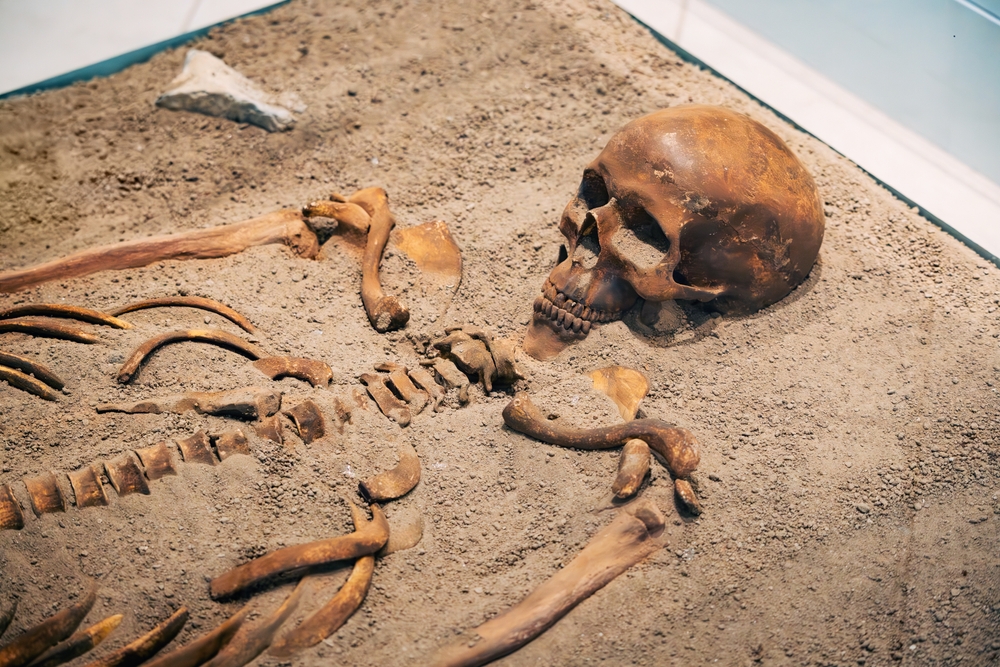
The discussion around Homo juluensis is happening alongside another surprising discovery from China. A separate study analyzing a million year old skull known as Yunxian 2 has suggested that complex human evolution may have started much earlier than scientists once believed.
The skull was originally thought to belong to Homo erectus, an earlier human ancestor known for spreading across Africa and Asia. However, advanced scanning and digital reconstruction revealed features that appear more similar to later human species.
Some researchers now believe the skull may belong to an early ancestor related to Homo longi and Denisovans. If that interpretation is correct, the divergence between several major human lineages may have begun hundreds of thousands of years earlier than previously assumed.
This possibility has profound implications for our understanding of human evolution. It suggests that species such as modern humans, Neanderthals, and Denisovans may have shared the planet for far longer than scientists once thought.
Instead of a simple timeline where one species replaced another, ancient humans may have coexisted and interacted for nearly a million years.
Why Asia is Becoming Central to the Story of Human Evolution
For many decades, much of the focus in human evolution research centered on Africa and Europe. Africa remains widely recognized as the birthplace of modern humans, while Europe provided extensive fossil evidence of Neanderthals.
However, discoveries across China and other parts of Asia are revealing that the region may hold crucial clues to understanding our past.
Numerous fossil discoveries from China have challenged earlier assumptions about where different human species lived and how they evolved. Some researchers now believe that eastern Asia hosted a wide diversity of human populations that played important roles in shaping later human evolution.
These discoveries are helping scientists piece together a more global picture of our ancestry. Instead of viewing human evolution through a narrow regional lens, researchers are increasingly examining how populations moved, mixed, and adapted across continents.
The fossils associated with Homo juluensis represent another piece of this expanding puzzle.

What the Discovery Means for Our Understanding of Humanity
Whether Homo juluensis ultimately becomes widely accepted as a separate species or is eventually grouped with another population, the research highlights an important truth about human evolution. Our origins are far more complex than the simple diagrams once shown in textbooks.
The traditional image of evolution often shows a straight line progressing from primitive ancestors to modern humans. In reality, the process looked more like a branching tree filled with multiple human species that sometimes interacted with one another.
Some branches eventually died out, while others contributed to the genetic heritage of modern humans.
The growing fossil record from Asia, combined with new genetic discoveries, is helping scientists reconstruct that complicated story in greater detail. Each new fossil has the potential to shift timelines, connect previously unknown populations, or reveal entirely new species.
The proposal of Homo juluensis reflects this evolving understanding. Fossils once considered puzzling fragments of unknown origin may now represent an entire group of ancient humans who lived, hunted, and adapted to their environments thousands of generations before our own species dominated the planet.
A Reminder of How Much We Still Have to Learn
Even after more than a century of research into human evolution, scientists still have many unanswered questions about our past. New fossils continue to emerge from caves, riverbanks, and archaeological sites around the world.
Each discovery adds new details to the story while also raising new mysteries. Were groups like Homo juluensis widespread across Asia or limited to certain regions. How often did they interact with Neanderthals, Denisovans, or early Homo sapiens. And what ultimately led to their disappearance around 50,000 years ago.
For now, the fossils offer a glimpse into a distant world where multiple human species shared the landscape. These ancient relatives built tools, hunted animals, and navigated environments very different from the ones we know today.
As new discoveries continue to reshape the human family tree, one thing becomes increasingly clear. The history of humanity is not a simple story of one species rising alone. It is a complex saga filled with diverse populations, unexpected connections, and discoveries that continue to surprise us.
The proposal of Homo juluensis is another reminder that the story of our origins is still being written.