
Your cart is currently empty!
New Study Claims Dogs May Cry Tears When Reunited With Owner

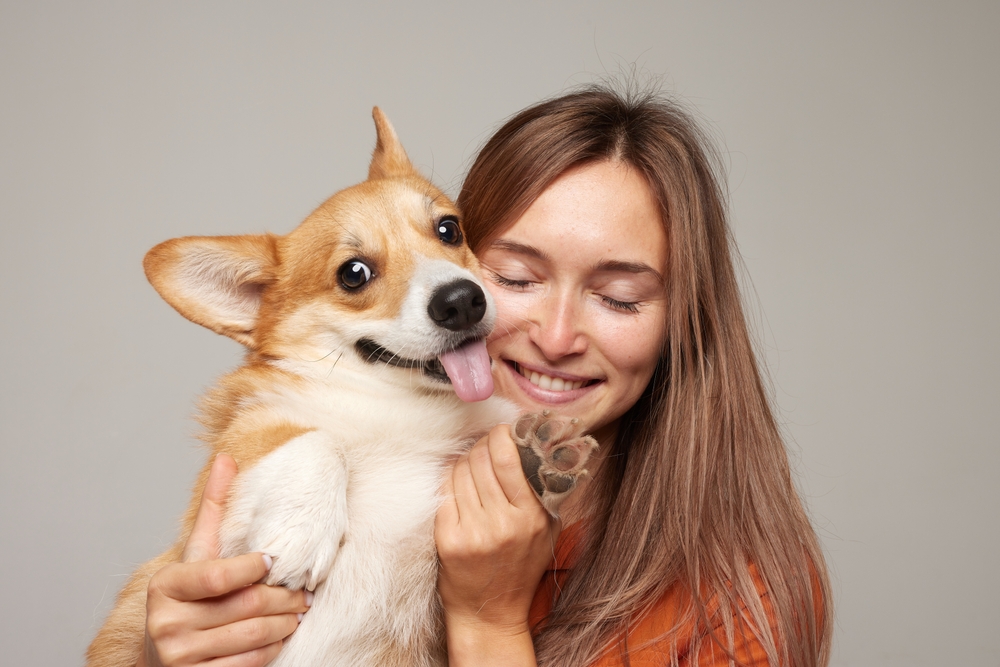
There’s a moment every dog owner recognizes instantly, and it never really loses its emotional weight, no matter how many times it happens. You open the door after being away, and before you can even set your keys down, your dog is already there, reacting as if something extraordinary has just taken place. Their tail moves uncontrollably, their whole body seems to vibrate with excitement, and their eyes lock onto you with an intensity that feels deeply personal and almost human. Even if you were only gone for a short while, the reunion carries a sense of emotional significance that feels far greater than the situation itself would suggest, as though your presence alone has completely shifted their world back into place.
Contents
show
For years, people have described this behavior in emotional terms, often half-joking that their dogs love them more than anything else in the world, but also quietly believing there is truth behind that statement. Now, new scientific research is adding an unexpected and surprisingly moving dimension to that belief. According to a recent study, dogs may not only feel overwhelming joy when reunited with their owners, but they may also produce tears during those moments. The idea feels almost too powerful and too human-like to accept without hesitation, which is exactly why it has captured widespread attention, sparked emotional reactions online, and opened up an ongoing debate between those who feel it confirms what they already knew and those who believe the science is not yet strong enough to support such a conclusion.

The Study That Sparked Global Attention
The research, published in the journal Current Biology, set out to explore how dogs physically express positive emotions in ways that extend beyond the obvious behaviors people are already familiar with, such as tail wagging, jumping, and vocal excitement. Scientists wanted to understand whether there are measurable biological changes that occur when dogs experience strong emotional moments, particularly those involving separation and reunion with their owners, which are often some of the most intense experiences in a dog’s daily life. The study was led by Takefumi Kikusui, a veterinary researcher at Azabu University in Japan, whose work has long focused on the emotional connections between humans and animals and how those bonds are reflected in both behavior and biology.
To measure tear production in a consistent and quantifiable way, researchers used a method that involved placing a small strip of paper inside each dog’s lower eyelid and observing how far tears traveled along the strip over a set period of time. While the technique may sound simple, it allowed researchers to capture subtle differences in tear volume that would otherwise be difficult to detect, making it possible to compare emotional states through physical responses. This approach created a structured way to examine something that is usually considered abstract and difficult to measure, which is how animals experience and express emotion.
The experiment itself involved several carefully designed scenarios intended to isolate different types of emotional interactions, including moments when dogs remained at home with their owners, moments when they were separated and later reunited after several hours, and situations where they interacted with familiar individuals who were not their primary caregivers. By comparing these different conditions, researchers aimed to determine whether any observed changes in tear production were specifically tied to the emotional bond between a dog and its owner rather than general excitement or stimulation from social interaction.
What the Researchers Discovered
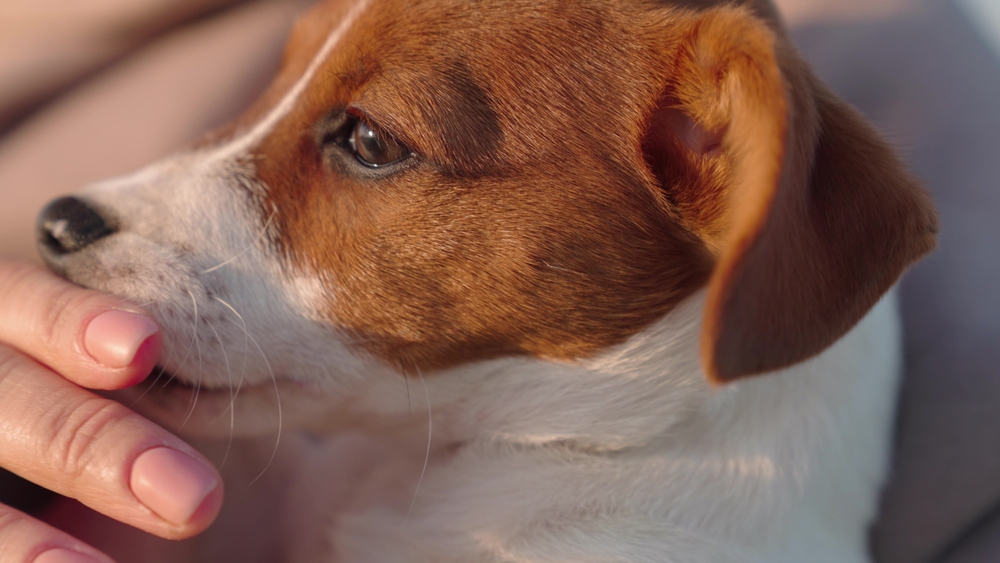
The findings revealed a noticeable and consistent increase in tear production when dogs were reunited with their owners after being apart for five to seven hours, suggesting that something meaningful was happening at a physiological level during these moments. According to the research, tear production increased by about 10 percent during reunions compared to baseline levels when dogs and owners were already together, which may seem modest at first glance but becomes more significant when viewed as a repeatable biological response tied to a specific emotional trigger. This kind of measurable change indicates that the experience of reunion is not just behavioral but may also involve internal processes that reflect emotional intensity.
What made the results particularly interesting was the comparison with familiar non-owners, as the same increase in tear production did not occur when dogs were reunited with people they knew but did not share the same bond with. This distinction suggests that the response is not simply about excitement, novelty, or stimulation, but rather about the unique emotional connection that exists between a dog and its owner. It points toward the possibility that dogs are capable of experiencing different layers of social relationships, each with its own emotional significance and corresponding physical response.
Kikusui emphasized the importance of this finding by stating that “dogs shed tears associated with positive emotions, such as a reunion with the owner,” a conclusion that has resonated strongly with dog owners who feel it validates their lived experiences. While the statement is still being debated within the scientific community, it captures the essence of what the study is trying to explore, which is whether animals can express emotion in ways that are more similar to humans than previously understood.
The Role of Oxytocin in Emotional Bonding
To better understand the underlying mechanism behind this response, researchers focused on oxytocin, a hormone that plays a central role in bonding, emotional connection, and social attachment in humans. Often referred to as the love hormone, oxytocin is released during moments of closeness, such as hugging, caregiving, and forming social bonds, and it has also been linked to emotional tears in people, particularly in situations involving strong positive or negative feelings. This made it a natural candidate for explaining why dogs might show increased tear production during emotionally significant moments.
Previous research had already demonstrated that both dogs and humans experience a rise in oxytocin levels when they interact with each other, reinforcing the idea that their relationship is not only behavioral but also deeply rooted in shared biological processes. This mutual hormonal response helps explain why interactions between dogs and their owners can feel so meaningful and emotionally charged, as both species are experiencing similar internal changes that strengthen their connection.
In this study, researchers tested whether oxytocin could directly influence tear production by administering eye drops containing the hormone and comparing the results to a control solution. The findings showed that dogs who received oxytocin produced more tears, while those given the placebo did not show the same increase, suggesting a possible link between the hormone and the physical response. Reflecting on this, Kikusui explained, “So that gave me the idea that oxytocin might increase tears,” highlighting how earlier knowledge about bonding and hormones helped shape the direction of the research.

The Observation That Inspired the Research
The origins of the study can be traced back to a quiet and personal moment that might have gone unnoticed by many, but stood out enough to spark scientific curiosity. Several years earlier, Kikusui observed one of his own dogs after she had given birth, and he noticed that her behavior seemed unusually affectionate and emotionally expressive while she cared for her puppies. At the same time, her eyes appeared visibly teary, which created a connection between maternal bonding and physical signs that are often associated with emotion in humans.
This observation raised an important question about whether emotional states in dogs could influence tear production in a way that had not yet been studied, particularly in situations involving strong bonds such as caregiving or reunion. Since oxytocin is known to play a major role in maternal behavior and emotional attachment, the moment provided a natural starting point for exploring whether similar mechanisms might be present in other emotionally significant experiences.
Looking back on this, Kikusui explained the progression of his thinking by saying, “We previously observed that oxytocin is released both in dogs and owners when interacting. So we conducted a reunion experiment,” showing how a simple real-life observation can evolve into a structured scientific investigation that attempts to answer broader questions about emotion, biology, and connection.
Why Some Experts Remain Skeptical
Despite the emotional appeal of the findings and the widespread interest they have generated, many scientists remain cautious about interpreting the results as definitive proof that dogs cry tears of joy. One of the main challenges in this type of research is that emotional states in animals cannot be directly confirmed, meaning that researchers must rely on indirect measurements and careful interpretation, both of which can introduce uncertainty. This makes it important to consider alternative explanations before drawing strong conclusions.
One concern raised by experts involves the method used to measure tear production, as the presence of the paper strip in the dog’s eye could potentially influence the results, particularly if more excited dogs moved around more and caused additional irritation. This could lead to increased tearing that is not necessarily related to emotional experience but rather to physical stimulation, making it difficult to separate cause and effect.
Another issue relates to the use of oxytocin eye drops, as some scientists suggest that the solution itself may have caused mild irritation, which could trigger tear production regardless of emotional state. Reflecting this skepticism, one expert stated that “it would take a lot to convince me” that the current evidence is sufficient to prove emotional tears in dogs, emphasizing the need for further research and more refined methods before the claim can be widely accepted.
What Scientists Do Agree On
Even with ongoing debate about the interpretation of tear production, there is strong and consistent agreement among researchers on one key point: dogs are highly attuned to human emotions and capable of forming deep, meaningful social bonds with their owners. This has been demonstrated through decades of research showing that dogs can read facial expressions, respond to emotional cues, and adjust their behavior based on the emotional state of the people around them.
These findings suggest that dogs do not simply react to external stimuli, but rather engage with humans in a way that reflects a level of social understanding and emotional awareness that is more complex than previously assumed. This helps explain why interactions with dogs often feel intuitive and emotionally satisfying, as both species are participating in a shared experience that is reinforced by behavioral and biological responses.
As one expert described, dogs appear to categorize people based on emotional relevance, expressing responses such as “You are somebody I care about, therefore, I’m pleased to see you,” and “You are somebody I don’t care about, so I can ignore you most of the time,” which aligns closely with everyday observations made by dog owners and reinforces the idea that these animals experience distinct and meaningful emotional relationships.
The Unexpected Human Response
One of the most revealing aspects of the study focused on how humans respond to visual cues from dogs, particularly the presence of tears, which are often associated with vulnerability and emotional expression. In a separate experiment, participants were shown photos of dogs with and without visible tears and asked to rate how strongly they felt the desire to care for them, creating a way to measure human emotional reactions in a controlled setting.
The results showed a clear and consistent pattern, with participants expressing stronger caregiving instincts toward dogs that appeared to have teary eyes. These dogs were rated as more appealing, more endearing, and more deserving of attention and care, suggesting that even subtle visual cues can significantly influence how humans perceive and respond to animals.
Researchers proposed that this reaction may be rooted in deeply ingrained nurturing instincts, with one expert explaining that “It might be that things like a more glossy eye or the presence of tears do encourage nurturing tendencies in us,” indicating that these traits may strengthen the emotional bond between humans and dogs and possibly even play a role in how that bond evolved over time.
Why This Story Feels So Personal
The widespread reaction to this research goes beyond scientific curiosity and taps into something much more personal for many people, which is the emotional connection they share with their dogs. For countless individuals, dogs are not just pets but companions who provide comfort, stability, and a sense of connection that is difficult to replicate in other relationships, making any insight into their emotional world feel deeply meaningful.
The idea that dogs might express their feelings in a way that resembles human emotional behavior reinforces what many owners already believe, which is that their bond with their dog is not one-sided but shared. It suggests that the excitement, loyalty, and affection displayed during everyday interactions are part of a deeper emotional exchange that is supported by both behavior and biology.
Even as the science continues to develop and questions remain unanswered, the emotional truth of the story resonates strongly because it reflects real experiences that people have with their dogs every day, creating a sense of validation that goes beyond data and enters the realm of personal connection.
So, Do Dogs Really Cry Tears of Joy
At this point, the answer remains uncertain, as the study provides intriguing evidence but not definitive proof that dogs produce emotional tears in the same way humans do. The observed increase in tear production during reunions suggests that there may be a link between emotional experiences and physical responses, but more research is needed to confirm the exact nature of that relationship and to rule out alternative explanations.
Scientists emphasize the importance of approaching these findings with both curiosity and caution, recognizing that while the results are promising, they represent an early step in understanding a complex topic that involves both biology and behavior. Further studies using different methods and larger sample sizes will be necessary to build a clearer picture of what is truly happening.
Sources:
- Kikusui, T., et al. (2022). Dogs show increased tear production during reunions with owners: Evidence for emotional arousal linked to oxytocin. Current Biology. https://doi.org/10.1016/j.cub.2022.10.002
- Nagasawa, M., Mitsui, S., En, S., Ohtani, N., Ohta, M., Sakuma, Y., Onaka, T., Mogi, K., & Kikusui, T. (2015). Oxytocin-gaze positive loop and the coevolution of human–dog bonds. Science, 348(6232), 333–336. https://doi.org/10.1126/science.1261022