
Your cart is currently empty!
New York City Is Banning AI for Hundreds of Thousands of Students

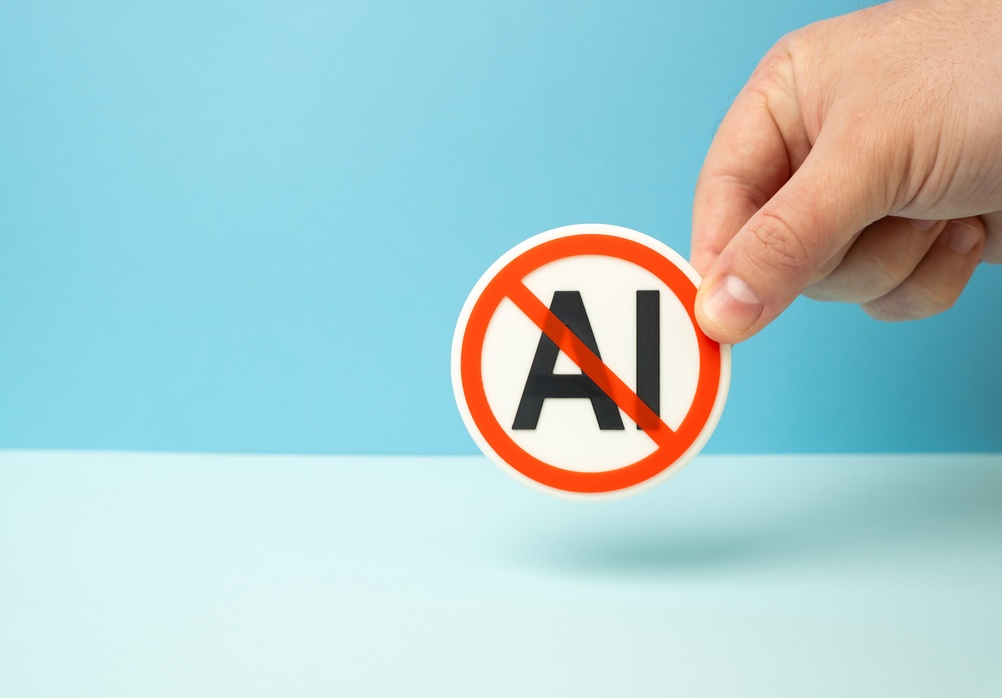
New York City is taking one of the toughest positions on artificial intelligence yet seen in American education. Starting with the 2026-2027 academic year, the nation’s largest school district will ban more than half a million students from using generative AI, covering children from preschool and 2-K through eighth grade. The move comes as schools across the country are still trying to work out whether AI belongs in the classroom, with some educators embracing the technology while others worry that students could become dependent on it before developing essential skills on their own.
Contents
show
The city plans to spend the next year examining the effects of AI on younger students, while removing student-facing AI software and banning companion chatbots. Mayor Zohran Mamdani made the city’s position clear when he said, “The tech industry wants us to believe that A.I.-powered early education is not only inevitable, but necessary.” He added, “We do not see it that way.” For a generation growing up surrounded by screens, algorithms, and AI-powered tools, New York City has decided to hit pause.

The Biggest AI Ban Yet
The new moratorium is being described as the most expansive AI restriction of its kind in the United States. It will affect students across New York City’s enormous public school system and prevent younger children from using generative AI tools as part of their school experience. Officials are taking the position that the rush to introduce new technology into education should not automatically be treated as progress, particularly when the long-term effects on developing minds remain unclear.
The ban goes beyond simply asking students not to use a popular chatbot for homework. The district plans to eliminate student-facing software that relies on AI and prohibit companion chatbots for children through eighth grade. That creates a clear boundary during the years when students are still developing reading, writing, reasoning, problem-solving, and communication skills that could be affected by heavy dependence on automated tools.
New York City leaders want the coming academic year to function as a period of observation rather than a permanent rejection of the technology. Officials will study AI’s impact while students continue learning without direct access to generative AI in school. The approach leaves open the possibility that future policies could change, but for now the city is choosing evidence over a rapid rollout.
The decision places New York City at the center of a growing national argument. AI has entered workplaces, homes, search engines, and classrooms at extraordinary speed, yet schools are still trying to answer a basic question: when does a tool that can help students learn begin doing too much of the thinking for them?

High School Students Face Different Rules
The moratorium stops at high school. Older students will still be allowed to engage with AI, although the district plans to introduce twice-yearly AI literacy classes designed to help them understand the technology before they begin relying heavily on it. The goal is to give students a stronger understanding of how AI works, what it can do, and where its limitations may lie.
That means students in the same public school system will experience AI very differently depending on their age. Younger children will spend their school years building foundational skills without student-facing generative AI, while high school students will be taught how to approach the technology with greater awareness and critical thinking.
The district’s approach can be broken down into several key points:
- Students through eighth grade: Generative AI and student-facing AI tools will be restricted under the moratorium.
- High school students: AI remains outside the scope of the younger students’ ban.
- AI literacy: High school students will receive classes intended to build critical understanding of the technology.
- The next year: Officials will study how AI affects learning before making further decisions.
- The wider goal: Technology should support education without replacing the thinking and creativity students need to develop themselves.
The age-based system reflects a growing belief that understanding AI and depending on AI are two different things. New York City is attempting to give older students exposure to the technology while giving younger students more time to develop their abilities without it.
Officials Want Critical Thinking Back
Schools Chancellor Kamar Samuels said the policy is closely connected to the skills students need to develop before leaving the education system. “We’re standing firmly in our decision to not conflate innovation with more tech, and we’re going to lead over the next year with evidence and make sure technology serves learning, not the other way around,” Samuels said.
That statement goes straight to the heart of the city’s argument. Technology companies have spent years promoting the idea that more advanced digital tools naturally create better outcomes, but education does not always work that way. A student who can instantly generate an answer may finish an assignment faster, yet speed does not necessarily mean they understand the material or can solve a similar problem independently later.
City and district leaders are urging teachers and students to place greater value on human connection, relationships, and creativity. Those goals have become increasingly important as AI systems can now write essays, summarize information, answer questions, and generate ideas within seconds. The concern is that convenience could gradually replace the difficult mental work that education is supposed to encourage.
The new policy also follows New York City’s bell-to-bell cell phone restrictions, which limited students’ use of devices during the instructional day. Taken together, the two policies suggest that city leaders are willing to challenge the assumption that every piece of modern technology deserves a permanent place in the classroom.

Teachers Are Still Divided Over AI
While New York City is putting the brakes on student use, many teachers elsewhere have already made AI part of their daily routine. Educators are using the technology to help develop lesson plans, organize information, and provide feedback on assignments. For some, the tools save time and reduce the administrative burden that can take attention away from students.
Texas teacher Lori Garrett described just how deeply AI had entered her classroom work when she said, “I use AI for nearly everything in the classroom right now.” She also said her students use AI during lessons to help themselves learn, showing how dramatically classroom practices can differ from one school district to another.
Supporters of AI argue that schools cannot simply ignore a technology that students will encounter throughout their adult lives. They believe education should teach young people how to use AI responsibly, recognize inaccurate information, and understand when automated systems should not be trusted. From that perspective, avoiding AI completely could create its own problems.
New York City’s policy does not settle that argument. Instead, it has created one of the clearest tests yet of whether younger students benefit from a slower introduction to the technology. While some classrooms are moving deeper into AI, more than half a million students in New York City will be learning under a very different experiment.

Concerns About Children And Technology Are Growing
The AI debate is happening alongside broader concerns about children’s relationship with technology. Childhood experts have been examining the effects of excessive screen use, while parents, educators, and policymakers continue to argue over how much digital access is appropriate at different ages. AI has added another layer to the conversation because the technology does far more than display content or connect people online.
Dr. Stephanie Haridopolos, director of health communications at the Office of the Surgeon General, stressed the need to distinguish between technology that can support children and technology that could cause harm. “There’s certain aspects of technology that are educational, and then there are certain ones that actually can be harmful,” she said. “We need to delineate between the two.”
That challenge is becoming harder as AI tools grow more sophisticated and appear in products that children already use. The same technology can potentially help someone understand a difficult subject, generate an explanation, or organize ideas. It can also provide answers so quickly that a student never has to struggle through the process of reaching them.
New York City’s moratorium is built around the belief that those differences need to be studied carefully. Rather than treating all AI as either dangerous or beneficial, officials are attempting to examine how specific forms of the technology affect students at different stages of development.
The Rest Of The Country Is Watching
New York City’s decision comes at a time when other parts of the government are encouraging responsible AI use in education. Some officials believe the technology could transform how teachers work and how students receive information, particularly when it is used with clear safeguards and proper oversight.
That puts the country’s largest school district on a different path from many of the voices calling for faster adoption. New York City is not arguing that AI will disappear from society, and its high school policy shows that the district recognizes students will eventually need to understand the technology. The immediate question is how early that introduction should happen.
The results could influence conversations far beyond New York. If officials find that younger students develop stronger independent thinking skills without generative AI, other districts may consider similar restrictions. If the moratorium creates unexpected problems, supporters of classroom AI will have another argument for introducing the technology earlier and more carefully.
For now, hundreds of thousands of students are about to become part of one of the country’s largest experiments in technology and education. While the AI industry continues racing forward, New York City has chosen a different approach for its youngest learners: put the technology aside, watch what happens, and find out whether the skills students build without it are worth protecting.