
Your cart is currently empty!
New York City Restaurants Are Now Hiring Cashiers From The Philippines Who Work From Zoom For $3.75 Per Hour

A screen glows near the entrance of Sansan Chicken in Long Island City, and a woman’s face appears with a warm smile. She greets customers as they walk through the door, takes their orders, and rings them up at checkout. Everything seems normal until you realize something odd about the transaction.
Contents
show
She’s not there at all. She’s sitting in her living room in the Philippines, thousands of miles away, working through a Zoom call.
Five restaurants across Manhattan, Queens, and Jersey City have replaced in-person staff with remote hostesses who appear on video screens. Sansan Chicken, Sansan Ramen, and Yaso Kitchen specialize in fried chicken and ramen, but they’ve become known for something else entirely. When customers check out, they’re still prompted to add a tip of up to 18% on their bill, raising a question that has divided patrons and sparked viral debate online.
Should you tip someone who’s on the other side of the world?
Screens Replace Humans at NYC Fried Chicken and Ramen Shops
Walk into any of these five locations and you’ll encounter the same setup. A large screen mounted near the entrance displays a live video feed of a hostess. She takes your order, processes your payment, and says goodbye when you leave. Between customers, a placeholder message appears on the screen until the next person walks in.
Tech entrepreneur Brett Goldstein discovered one of these restaurants and posted about it in a thread on X that went viral. His documentation of the concept brought widespread attention to what might represent the future of customer service, or a dystopian vision of it, depending on whom you ask.
Reporters who visited the locations found the operations shrouded in mystery. Employees refused to divulge information about their bosses. Attempts to reach the business owner went nowhere. No one would explain who actually owns the restaurants, whether the hostesses work directly for the establishments or for a third-party company that hires them out, or exactly how much these remote workers get paid.
Wage Gap Between NYC and Philippines Makes Remote Staffing Profitable
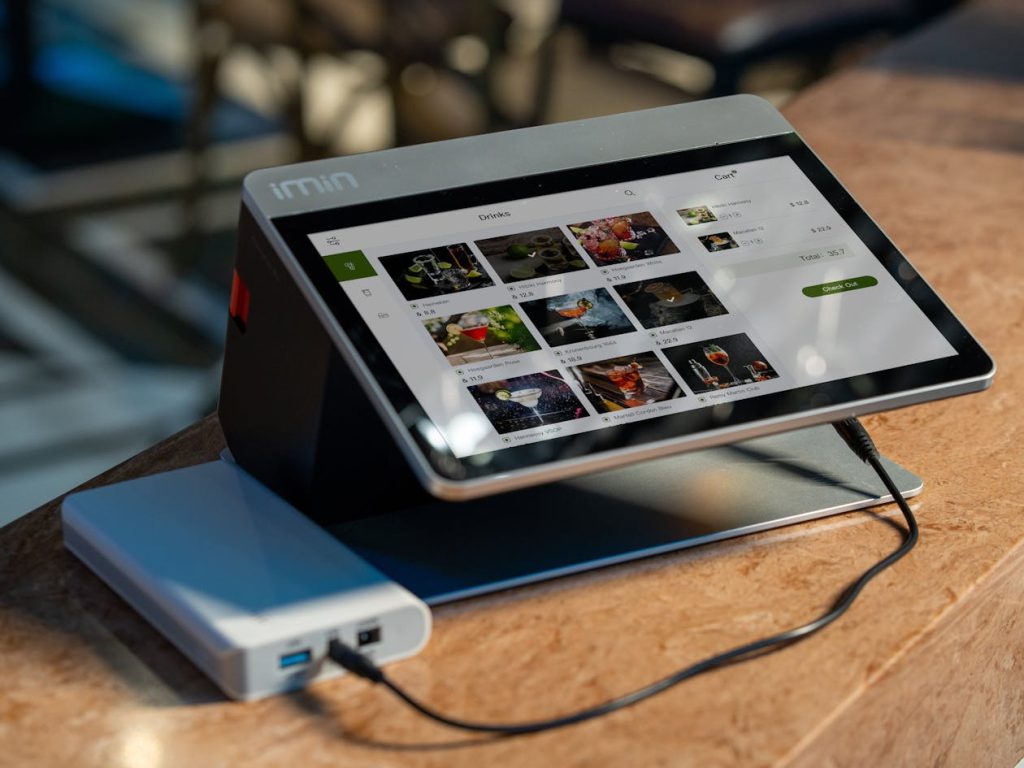
Economics tells the story that management won’t. New York City’s minimum wage stands at $16 per hour. In the Philippines, hourly pay hovers around $3.75. Median monthly wages in the Southeast Asian nation reach just $325.
Do the math, and the arbitrage becomes clear. A restaurant could hire four Filipino workers for the cost of one New York City employee at minimum wage. Even accounting for technology costs, internet infrastructure, and payment processing fees, the savings remain substantial.
Someone designed a business model around this wage gap. Whether that someone operates from New York, the Philippines, or somewhere else entirely remains unclear. Opacity seems built into the system.
Meet Pie Who Works Three Restaurants From Her Living Room
On a recent afternoon at Sansan Chicken in Long Island City, a reporter for The Post met Pie, a 33-year-old hostess who works from her living room in the Philippine city of Subic. She said she’s employed by a company called Happy Cashier and that she enjoys her work.
Pie appears to juggle three different restaurants at the same time, alternating between screens as customers come and go. When one location gets busy, she switches her attention there. When another customer walks in elsewhere, she pivots again. Her workday involves constant monitoring of multiple video feeds and rapid context switching between different menus, different clientele, and different neighborhoods she’s never physically visited.
Despite being thousands of miles away, Pie maintains a cheerful demeanor. She greets customers with enthusiasm and processes their orders with efficiency. Some customers find her presence novel and engaging. Others barely notice they’re talking to someone who isn’t actually there.
Pie declined to disclose her exact salary, but she did share details about one aspect of her compensation that surprised even her.
Remote Hostesses Sometimes Receive Generous Tips Despite Distance
Tips come through occasionally, and sometimes they’re substantial. Pie recalled her best day at work when a customer left her $40 at Yaso Kitchen in Jersey City. She splits tips with her manager and the kitchen staff at the restaurant, meaning that money gets divided among people in two different countries separated by an ocean.
For context, $40 represents more than 10 hours of work at the Philippine base rate of $3.75 per hour. A single generous tipper can make a significant difference in her earnings. Whether customers understand this dynamic when they’re prompted to add 18% to their bill remains an open question.
Americans have complicated relationships with tipping culture. Many resent being asked to subsidize wages that employers should pay. Others feel social pressure to tip regardless of service quality. Adding geographic distance to this equation creates new tensions.
When Pie processes a transaction and the screen prompts customers to tip, they face a moral calculus. Does proximity matter? Should physical presence determine whether someone deserves a tip? If the service was good, does it matter where the service provider lives?
Some Customers Think Remote Workers Are AI Avatars

Pie said customers often come in surprised to find a virtual cashier. Some people think the hostesses are artificial intelligence and ask if they’re real. In an era when chatbots and AI assistants proliferate, skepticism about whether you’re talking to a human or a machine has become reasonable.
Remote hostesses have become part of the restaurant’s allure, Pie explained. People visit out of curiosity as much as hunger. They want to see how the system works, to test whether they can detect the difference between a remote human and an AI, to experience something they haven’t encountered before.
Dan O’Keefe, a 34-year-old conductor for Metro North, appreciated the novelty. “It’s definitely interesting and different,” he told The Post. “I thought it was fun.”
At least a few customers share his enthusiasm. For them, the remote hostess represents an amusing quirk in an increasingly automated world, a halfway point between full human service and complete automation that provides entertainment value alongside their fried chicken.
Customer Named Catherine Worries About Lost Human Connection
Not everyone finds the concept amusing. Catherine, speaking outside Sansan Ramen in Long Island City, articulated concerns that many others share. “I think you lose an element of connecting with someone when they’re not physically there,” she said. “I also don’t know if it’s taking a job away from someone, as well. I think it’s important that we’re supporting our communities, and having people from the community connecting with their clientele.”
Her observation cuts to the heart of what makes this model controversial. Service work has traditionally provided entry-level employment for residents. Restaurants hire teenagers for their first jobs, immigrants building new lives, students working through college, and people re-entering the workforce after setbacks. When those positions disappear, replaced by screens showing faces from overseas, something changes in the economic fabric of a neighborhood.
Ismael Oquendo, a 34-year-old teacher from the Bronx, expressed a similar sentiment about what gets lost. “If you’re a regular at a certain place, and you go there all the time, you want to feel like home,” he told The Post.
Regular customers build relationships with staff. They exchange small talk, ask about each other’s families, and develop inside jokes. A barista remembers your order. A host recognizes your face and saves your favorite table. These micro-connections make commercial spaces feel less transactional and more communal.
Screen-mediated interactions change that dynamic. Pie might be warm and friendly, but she can’t remember every face when she’s serving three restaurants across two states. She can’t build the kind of rapport that comes from repeated in-person encounters over months and years.
Cost-Cutting Measure Could Lead to More Dystopian Advances

Observations about AI replacement deserve attention because they identify an acceleration pattern. Companies first outsource work to lower-wage countries, establishing infrastructure and workflows for remote service delivery. Once those systems are in place, replacing human workers with AI becomes easier. The transition from in-person to remote prepares the ground for the transition from remote human to automated system.
Remote hostesses might represent a transitional phase rather than a destination. Pie and her colleagues could be training the algorithms that will eventually replace them, their interactions providing data that teaches AI systems how to greet customers, process orders, and handle complaints.
Nobody advertises this progression. Restaurants present remote hostesses as innovative solutions to labor challenges. Behind that framing sits a longer game about eliminating labor costs.
Model Raises Questions About Community Support and Job Displacement
Catherine’s concern about supporting local communities points toward broader implications. Service sector jobs provide economic stability for millions of Americans. When those positions disappear, either outsourced overseas or eliminated through automation, the economic consequences ripple outward.
Local workers spend their wages in local economies. They rent apartments, buy groceries, pay for transportation, and support other businesses in their neighborhoods. Money circulates through communities, creating multiplier effects. When wages flow to workers in the Philippines instead, those multiplier effects happen elsewhere.
Business owners might argue they’re helping Filipino workers escape poverty by providing better-paying opportunities than they’d find locally. That argument carries weight. Pie’s $40 tip probably meant more to her than it did to the person who left it. Global labor markets can lift people out of poverty by connecting them to higher-paying opportunities.
Yet both things can be true at once. Filipino workers benefit from access to higher wages, while New York workers lose access to employment. Framing this as a binary choice between helping one group or another obscures the real question about who captures the value created by this arbitrage.
Restaurant owners pocket the savings from paying $3.75 per hour instead of $16. Workers in both countries receive wages lower than what in-person New York staff would earn. Customers still pay the same prices and still get prompted to tip. Everyone’s economic position stays the same or worsens, except for the business owners who designed this system.
Future of Service Industry Might Look Like Sansan Chicken
Whether this model spreads depends on customer reactions and regulatory responses. If enough customers refuse to patronize restaurants using remote workers, the practice might remain a novelty. If customers accept or embrace the concept, expect more businesses to follow.
Right now, these restaurants operate in a regulatory gray zone. Labor laws weren’t written with international Zoom cashiers in mind. Questions about minimum wage compliance, tip distribution, worker classification, and employment status lack clear answers when workers live overseas but serve American customers through screens.
Tech advances faster than the law. By the time regulators figure out how to address remote hostesses, AI avatars might have already replaced them. Policy debates about international labor arbitrage could become moot if automation eliminates the need for human workers.
For now, Pie keeps working from her living room in Subic, greeting customers in Queens and Manhattan, taking orders, and processing payments while juggling three restaurants at once. She’s real, not AI, though customers keep asking. How much longer that distinction matters remains an open question.