
Your cart is currently empty!
Orange Teeth and Iron Jaws Inside the Beaver’s Remarkable Mouth
Most mammals enter the world toothless, vulnerable, and dependent on their mothers for every meal. Beavers break that rule before they take their first breath.
Contents
show
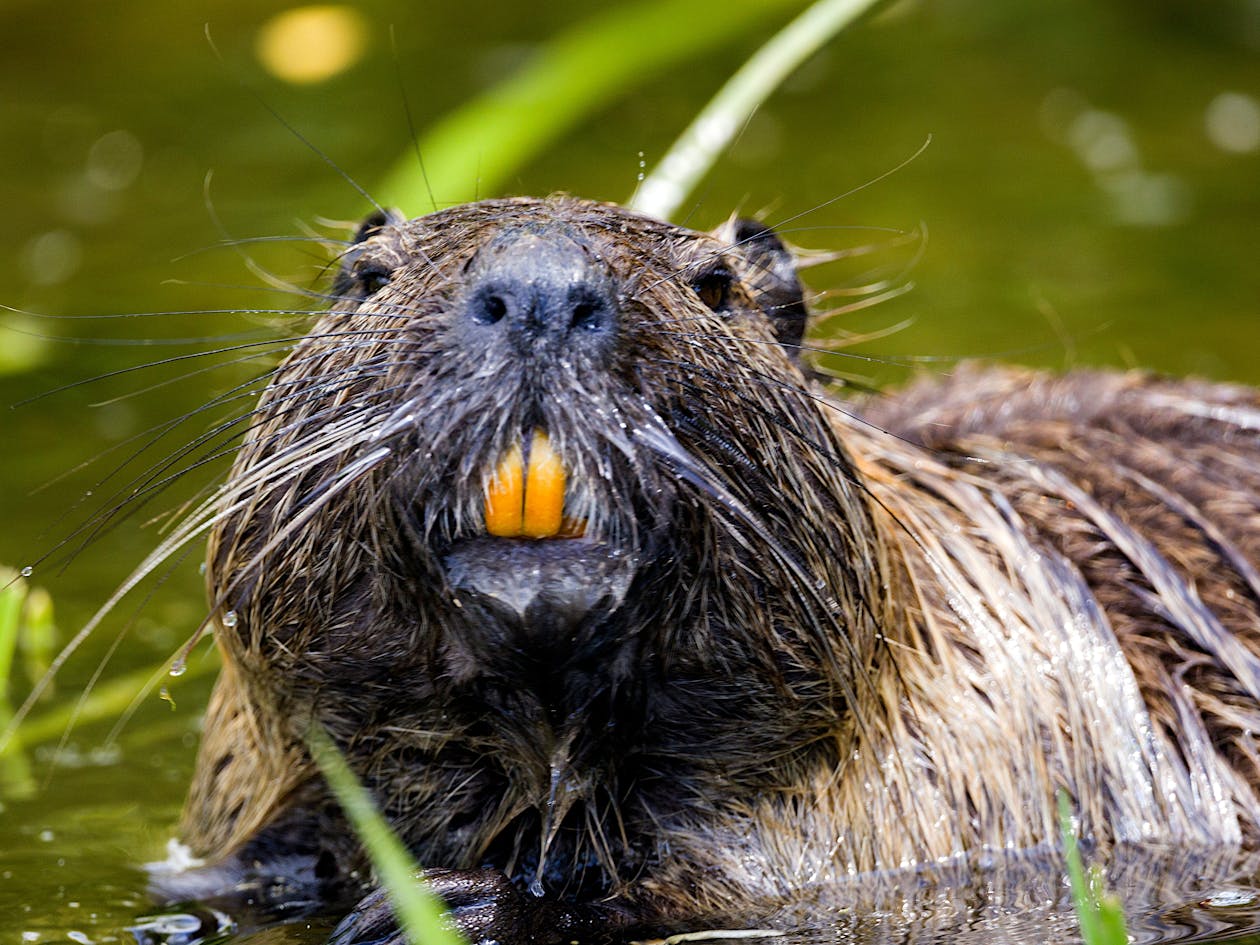
Beaver kits arrive with something unusual already visible in their tiny mouths. A flash of color peeks through their gums, bright and unmistakable. Orange. Not the soft pink of emerging baby teeth or the pale buds that human infants develop months after birth. A vivid, rusty orange that looks almost artificial, as if someone painted their incisors with a brush.
What could turn a newborn mammal’s teeth that color? And why would nature bother with such a striking detail on an animal that won’t fell its first tree for months?
Answers lie in chemistry, evolution, and millions of years of adaptation to one of Earth’s most demanding lifestyles. Behind that peculiar pigmentation sits a biological engineering feat that allows a 60-pound rodent to reshape entire ecosystems, construct elaborate homes, and chew through materials that would destroy ordinary teeth within weeks.
Orange from Birth
Many assume that beavers develop their orange teeth over time, perhaps from years of gnawing on bark or consuming certain plants. Popular belief holds that diet stains their incisors, much like coffee darkens human enamel. Reality tells a different story.
Beaver teeth are orange because of iron. Iron oxide, the same compound that gives rust its reddish-brown appearance, saturates the outer enamel of beaver incisors. Genetic programming, not dietary habits, determines that coloration. From the moment a kit’s teeth emerge, iron has already begun its work.
Human teeth appear white because of hydroxyapatite, a calcium phosphate mineral that forms their protective outer layer. Beaver enamel contains something extra. Iron deposits accumulate within the enamel structure during tooth development, creating that signature hue long before a young beaver ever tastes wood.
Other rodents carry trace amounts of iron in their teeth. Rats, mice, and squirrels all possess some degree of orange or yellow pigmentation in their incisors. Yet none match the intensity found in beavers. Among rodents, beavers wear the deepest, most saturated orange, a visual signal of just how much iron their teeth contain.
Dr. Lila Chen, a mammalian biologist at the University of Alberta, has studied beaver dentition for years. She describes the iron infusion as a perfect example of form meeting function, where evolutionary pressure produced an elegant solution to an extreme biological challenge.
Iron-Fortified Enamel
Beneath that orange exterior lies a sophisticated two-layer architecture that separates beaver teeth from those of most mammals.
An outer layer of hardened enamel forms the front surface of each incisor. Iron deposits concentrate here, reinforcing the enamel and making it resistant to cracking under pressure. Behind that fortified front sits a second layer composed of dentin, a softer material that makes up the bulk of the tooth’s structure.
Dentin lacks the iron reinforcement of the outer enamel. It wears down faster, eroding at a different rate than the harder front surface. At first glance, having softer material behind harder material might seem like a design flaw. In practice, it creates one of nature’s most effective cutting tools.
As beavers gnaw on wood, the softer dentin erodes more quickly than the iron-rich enamel. Differential wear between the two layers produces a beveled edge, with the harder enamel always protruding slightly beyond the softer dentin behind it. Each bite resharpens the tooth, maintaining a chisel-like edge without any conscious effort from the beaver.
Picture a knife that sharpens itself every time you use it. Beaver teeth function on that principle. Years of constant gnawing don’t dull their incisors. Quite the opposite. Regular use keeps those cutting edges razor-sharp, ready to slice through bark, branches, and even hardwood trunks.
Nature’s Self-Sharpening Knife
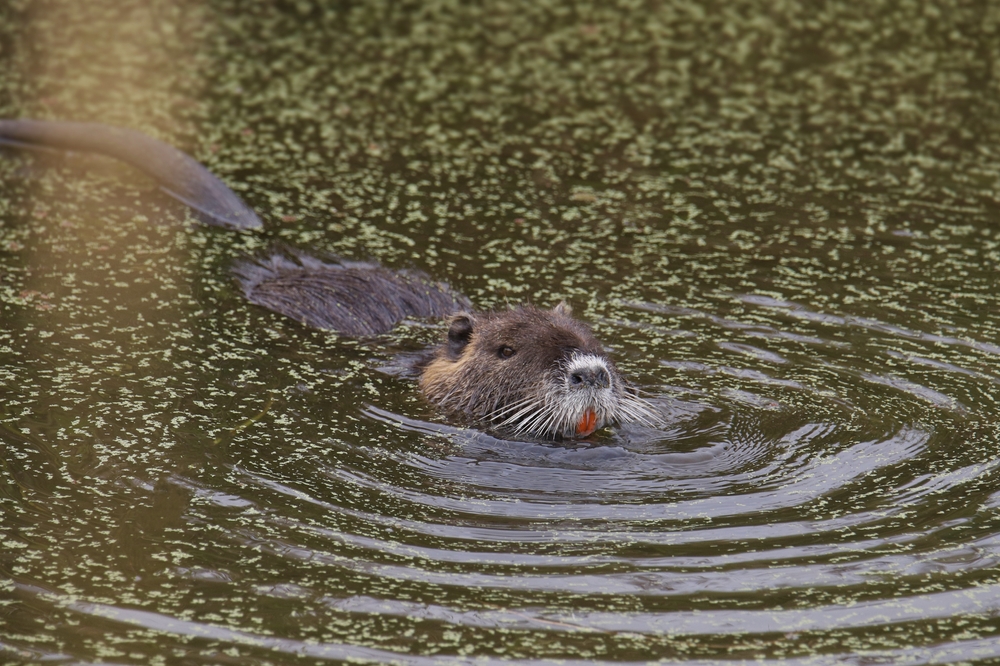
Engineering alone doesn’t explain the full picture. Beaver incisors possess a slight backward curvature that aids their cutting motion. When a beaver clamps down on a branch, that curve directs force inward, helping the animal pry material away from trees more efficiently.
Continuous growth adds another layer to the system. Like all rodents, beavers have incisors that never stop growing. New tooth material pushes up from the root throughout their lives, replacing whatever wears away at the cutting edge. A beaver that lives 15 years will produce inches upon inches of new tooth material over its lifetime.
Constant growth sounds advantageous until you consider the consequences of insufficient wear. A beaver that stops gnawing faces a serious problem. Without regular use, those ever-growing incisors would extend beyond functional length. Teeth could curve back into the skull, prevent proper feeding, or cause fatal injuries.
Beavers must chew. Their survival depends on it. Jimmy Taylor, a research wildlife biologist with the USDA’s National Wildlife Research Center and Oregon State University, notes that teeth unable to wear down could eventually kill their owner. Nature built beavers with powerful tools but also created an inescapable obligation to use them.
Built for a Lifetime of Gnawing
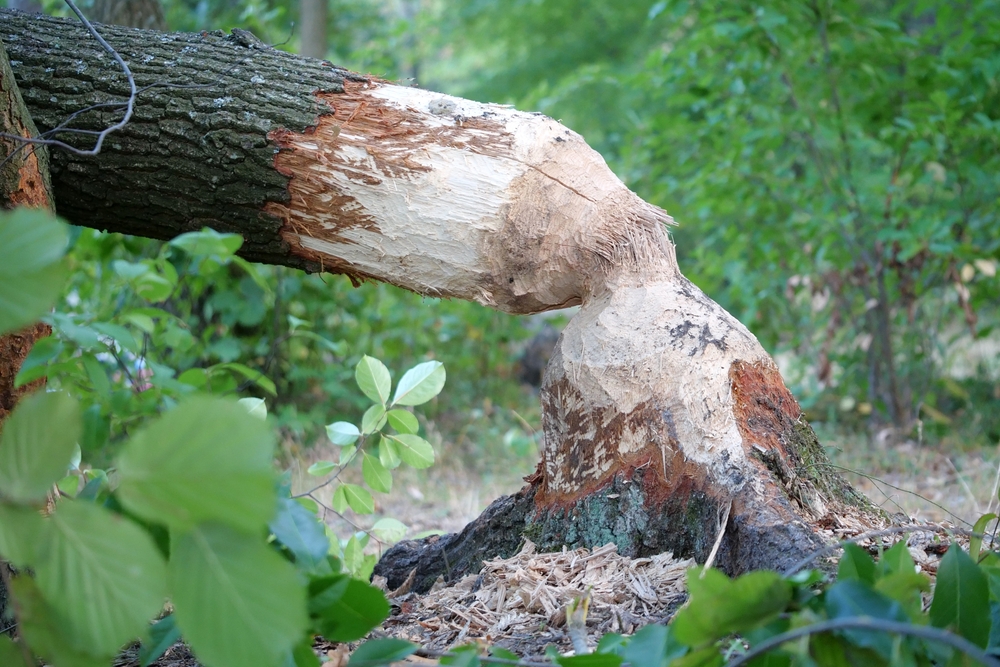
Wild beavers live between 10 and 15 years, spending much of that time engaged in activities that would destroy ordinary teeth within weeks.
Consider the daily workload. An adult beaver may consume up to 2 kilograms of plant matter every day, roughly 4.4 pounds of leaves, bark, and woody material passing through those orange incisors. Over a decade, that adds up to thousands of pounds of vegetation processed by a single set of teeth.
Preferred food sources include aspen, willow, birch, and cottonwood, all trees with tough, fibrous bark that requires serious cutting power. Iron reinforcement prevents the cracking and chipping that would sideline a beaver mid-meal. Enamel rich in iron oxide resists fractures even when biting into dense hardwoods.
Energy efficiency matters too. Every crack, chip, or fracture in a tooth requires biological resources to repair. By minimizing damage during feeding, iron-fortified enamel lets beavers direct more energy toward other needs, building dams, maintaining lodges, raising kits, and surviving harsh winters.
How Teeth Power Landscape Transformation
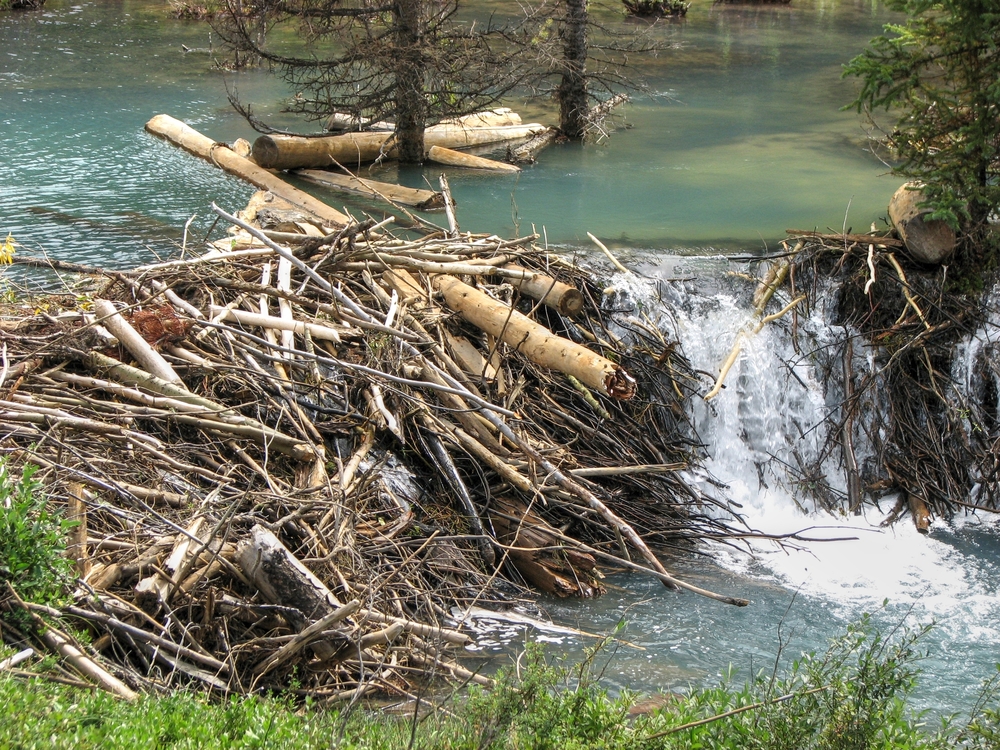
Strong teeth do more than feed individual beavers. They enable an entire way of life that reshapes environments on a scale few animals can match.
Glynnis Hood, a wildlife ecologist at the University of Alberta’s Augustana Campus and author of “The Beaver Manifesto,” observes that beavers can change landscapes like almost no species other than humans. Dam construction requires felling trees, stripping bark, dragging branches, and assembling materials into structures that can span hundreds of feet.
Alberta’s Wood Buffalo Park contains the largest beaver dam ever discovered, measuring half a mile long. Building something that massive requires processing an enormous volume of wood, all with teeth that started orange on day one.
Beaver activity creates ripple effects throughout ecosystems. Open water increases ninefold in areas where beavers establish themselves. Wetlands can expand by nearly 600 percent. Drought conditions ease. New habitats emerge for fish, birds, amphibians, and countless other species.
All of it traces back to those iron-fortified incisors. Without teeth capable of handling such demanding work, beavers could never build the structures that define their species.
More Than Just Teeth
Remarkable dental equipment represents just one piece of beaver anatomy adapted for an aquatic, wood-based lifestyle.
Leathery tails serve multiple purposes beyond their obvious appearance. When a beaver gnaws at the base of a tree, its tail acts as a brace, providing stability and balance. Slapped against water, that same tail produces a loud warning signal to alert family members of danger. During cold months, tails function as fat storage units, expanding their reserves by up to 60 percent to help beavers survive winter.
Grooming occupies nearly 20 percent of a beaver’s waking hours. A specialized split toenail on each hind foot works through their dense fur, distributing oils and maintaining the air pockets within their undercoat that provide insulation. Castoreum, an oil produced in glands near the tail, waterproofs their outer fur and serves as a scent marker for territory.
Due to the beavers’ bark-heavy diet, castoreum carries an unexpected aroma. Many people describe it as smelling like vanilla, a quality that once made it a flavoring ingredient in certain food products.
Family bonds run deep among beavers, despite recent genetic research suggesting males may mate outside their pair bonds. Parents and offspring share lodges, groom each other, and defend territory together. Both males and females will fight intruding beavers to the death over home turf.
From their very first moments, equipped with orange teeth and an instinct to build, beavers arrive ready to reshape the world around them.