
Your cart is currently empty!
Palm Beach Airport Renamed for Trump, a First for a Sitting US President
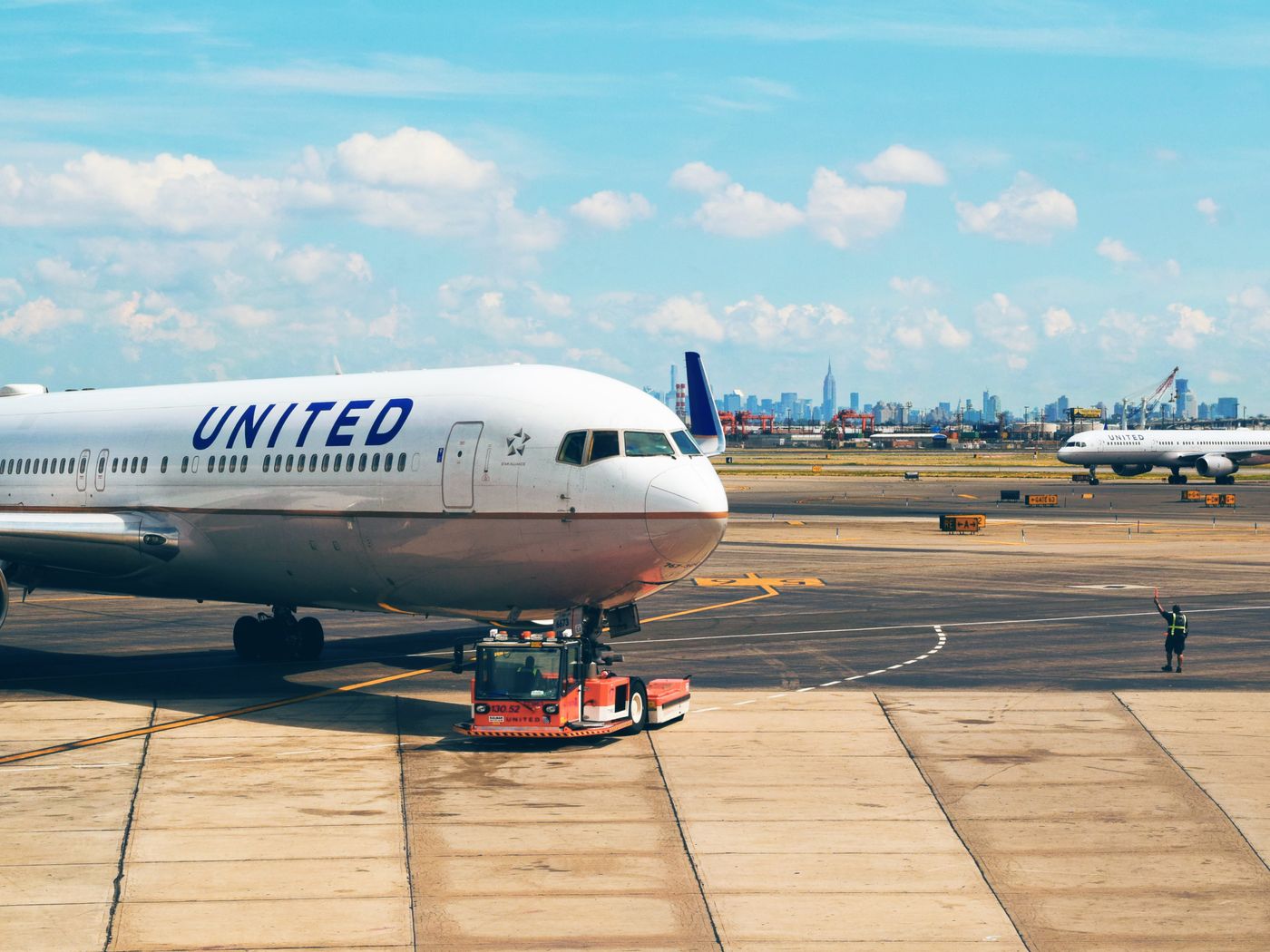
At 5:01 in the morning on Thursday, July 9, a Boeing 757 touched down on a runway in West Palm Beach, Florida. The aircraft belongs to the Trump Organization and carries the nickname Trump Force One. Eric Trump was aboard, and by the time the wheels met asphalt, the airport receiving him no longer bore the name it had carried for nearly half a century.
Contents
show
Palm Beach International Airport had become President Donald J. Trump International Airport. The renaming placed the facility in a category of one. Airports across the country honor former presidents, from John F. Kennedy International in New York to Ronald Reagan Washington National. None had ever been named for a president still occupying the Oval Office. Until Thursday, that line had held for the entire history of American commercial aviation.
Getting there required a state legislature, a governor’s signature, a federal aviation agency, a trademark filing, and roughly five and a half million dollars. It also arrived on the same day, and as part of the same wave, as something happening 700 miles north in Tennessee.
The First Flight to Land Under the New Name
Eric Trump made certain the moment was documented. He announced on X that Trump Force One had been the first plane to land at the airport under its new name, a detail he offered with evident satisfaction.
“There is no person who has done more for Florida and our country, and no one more deserving of this incredible honor,” he wrote. “As a son, and someone who flies out of this airport nearly every day, I will forever be proud to see the initials ‘DJT’ on my boarding pass.”
The claim about frequency is not promotional. The airport sits a short drive from Mar-a-Lago, the president’s golf resort and compound in Palm Beach, and the family passes through it constantly. Speaking to Fox News from the terminal, Eric Trump called it a beautiful day and argued that nobody is more synonymous with Palm Beach, and perhaps with all of Florida, than his father. He also noted, correctly, that the main road leading out of the airport already carries the name Donald J. Trump Boulevard, having been renamed in January.
How the Renaming Happened
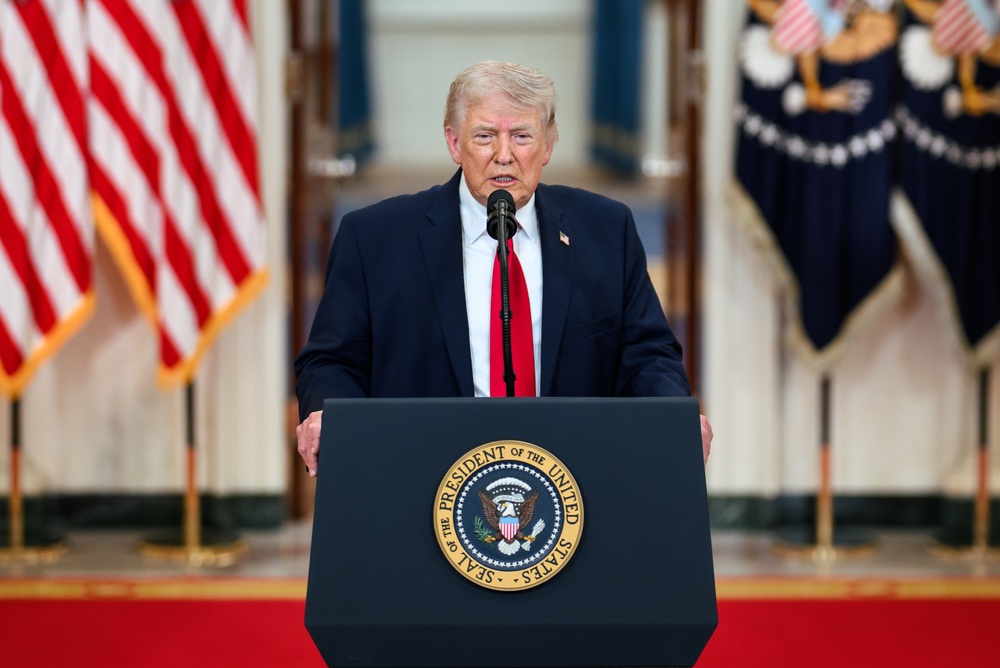
The change did not originate at the airport. It came out of Tallahassee. Florida lawmakers passed legislation to rename the Palm Beach hub after the president, and Governor Ron DeSantis signed it into law in March. The Federal Aviation Administration subsequently approved the change, confirming it as effective Thursday.
Running alongside the legislative track was a commercial one. The Trump Organization had submitted trademark applications for possible airport names, and the US Patent and Trademark Office approved the family’s February request on June 18. The airport’s website states that it entered into an agreement with the Trump family regarding the trademark, an arrangement that is unusual for a publicly operated aviation facility and one that has drawn limited public explanation.
The President’s Response
Trump responded on Truth Social late Thursday, treating the renaming as both an honor received and a project announced.
“A very big day in Palm Beach, Florida, where it was my Great Honor to have the Palm Beach International Airport be renamed, by a spectacular vote, The President Donald J. Trump International Airport. The Area is HOT, the Location is GREAT, and the Renovation will be SPECTACULAR. Thank you to all in Palm Beach for your Vote and your Confidence. This will soon be one of the Greatest and Most Spectacular Airports anywhere in the World!”
The reference to a vote points to the legislative process rather than any referendum of Palm Beach residents, who were not asked directly.
What Changes and What Doesn’t
For anyone with a flight booked through West Palm Beach, the airport has worked to keep the answer simple.
Operations and services continue without interruption. Flight routes are unaffected. Schedules are unaffected. Ownership and governance remain exactly as they were, under the Palm Beach County Department of Airports. The airport’s own FAQ describes what happened in deliberately unglamorous terms, calling it a branding change only.
The visible transformation will take time. Officials said transition activities, including updates to signage, branding, and public-facing materials, will occur in phases across several weeks. On Facebook, the airport acknowledged that an entire airport transformation does not happen overnight, and warned travelers that the classic look and the new brand elements would coexist in the terminal for a while yet. More than a dozen airlines serve the facility, including Delta, United, American, and Southwest.
The Code Change Travelers Need to Know
Here is the detail most likely to cause confusion at a check-in counter, and it involves two separate systems that are changing on two separate timelines.
The FAA locational identifier switched to DJT effective Thursday. That is the code used in air traffic and federal aviation systems, and it has already moved.
The IATA code, which is the three-letter identifier travelers actually encounter on tickets, baggage tags, and booking sites, is a different matter. It changes from PBI to DJT on August 18, 2026. Until that date, the airport advises passengers to keep using PBI when searching for flights or checking bags.
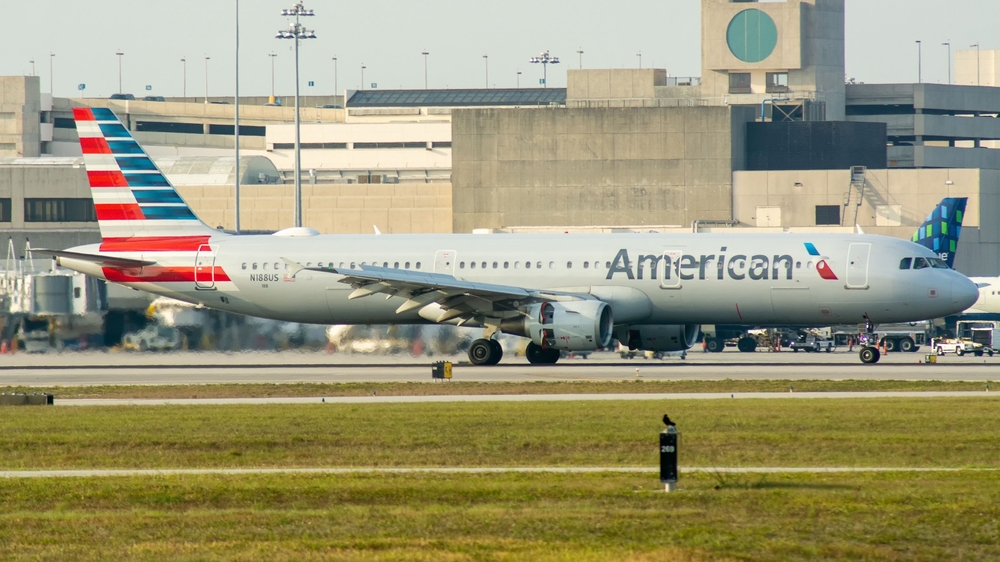
The rollout in the interim has been uneven, as these things tend to be. Delta and United began adding the DJT code to their booking pages on Thursday, though searches for PBI continue to return the airport. American Airlines, as of Thursday afternoon, recognized only the original PBI identifier. Travelers who try DJT and find nothing have not made a mistake. The system simply has not caught up.
What the Rebranding Costs, and Who Pays
The Palm Beach County Department of Airports estimates the total cost of the name change at roughly $5.5 million.
That figure covers new signage across the facility, updated branding throughout terminal spaces and digital channels, and the replacement of printed materials, among other items. The state of Florida appropriated $2.75 million toward the effort, meaning taxpayers statewide are funding half the transition directly. The remainder comes from the Department of Airports’ operating budget and its capital improvement program.
The airport has been explicit on one point that passengers tend to ask about. The rebranding does not result in a separate fee charged to travelers.
Travelers Divided at the Terminal
Reporters who spoke to passengers on the morning of July 9 found opinion split along lines that will surprise nobody.
Chris Bailey, a corporate pilot, told AFP that Trump had certainly done enough to warrant having an airport named after him. Standing in the same terminal, a physician named John Manov reached the opposite conclusion, arguing that Palm Beach was the stronger brand, that people do not really like Donald Trump, and that the whole thing seemed in poor taste.
The airport itself appeared to anticipate exactly this division. In its published FAQ, it struck a tone of careful neutrality, acknowledging that the required name change may be received in different ways by passengers while expressing gratitude for continued support through the transition. Its stated focus, it added, remains a safe, reliable, and welcoming airport experience. The word “required” is doing quiet work in that sentence.
The Same Day, a Tennessee Bridge
While the signage went up in Florida, Treasury Secretary Scott Bessent stood at a ceremony in Dandridge, Tennessee, unveiling another sign bearing the same name.
A span of Interstate 40 crossing the French Broad River in Jefferson County, previously known as the Francis Burnett Swann Memorial Bridge, is now the President Donald J. Trump Bridge. Tennessee’s legislature passed the law renaming multiple bridges and roads the previous year.
Bessent framed the tribute around the drivers who would cross it. He noted that Tennessee license plates once carried the motto “Follow me to Tennessee,” and observed that everyone following those cars would now travel across the Donald J. Trump Bridge on I-40. He also said that from that day forward, every driver encountering the bridge would see that it bears Trump’s name because he never stopped fighting for the people who travel on it. Ahead of the ceremony, Bessent said no one was more deserving of the honor. Jefferson County gave Trump 82% of its vote in the 2024 presidential election.
A Broader Pattern of Renamings
The airport and the bridge are not isolated. They are part of a rapidly expanding pattern that has few precedents in American practice.
In Washington, the United States Institute of Peace now carries Trump’s name. Large posters bearing his image have been hung from the facades of major government buildings. There are Trump-branded visa programs, medical programs, and other official government initiatives. His image appears on passes to national parks and is due to appear on a limited run of commemorative passports the State Department announced in April, produced for the 250th anniversary of the Declaration of Independence and bearing his signature. An entire “Trump class” of naval vessels has been announced. According to the Treasury, his signature will appear on US dollar notes later in 2026.
The United States has long maintained an informal tradition against honoring living figures on currency and public buildings, a convention observed most strictly regarding sitting presidents. That convention is now being set aside at a pace that has attracted attention well beyond partisan commentary.
The Kennedy Center Reversal
The pattern has not been uninterrupted, and one recent reversal is worth noting precisely because it complicates the narrative in both directions.
Trump’s name was affixed to the John F. Kennedy Center for the Performing Arts in Washington in December. The move triggered a legal challenge that ran for months and ended with a federal judge ruling the renaming illegal and ordering that all references to Trump be removed from the center and from its website.
The Florida airport signage and the Tennessee bridge signage went up only weeks after that removal was completed. Where the Kennedy Center change came without legislative authority, the airport and bridge renamings were enacted by state legislatures and signed by governors, which is the distinction that has so far kept them standing.
The Criticism and the Response
Critics of the expanding Trump brand have reached for a comparison that has become common enough to lose some of its sting through repetition, likening the proliferation of a living leader’s name and image across public infrastructure, currency, and government programs to the personality cults associated with authoritarian governments.
Supporters view the same developments as a legitimate expression of political will, enacted through legislatures elected by voters who, in places like Jefferson County, backed Trump overwhelmingly.
Eric Trump addressed the objection directly, telling Fox News that anything bearing the family name is slightly controversial, a formulation that concedes the disagreement without engaging it. Asked how his father felt about having a Florida airport named after him, he said the president was honored and humbled.
The name is now official, the FAA has recorded it, and on August 18 the boarding passes will change to match. Whether the initials on those passes read as tribute or as something else will continue to depend, as it did in the terminal on Thursday morning, entirely on who is holding them.
Air Travel, airport renaming, Dandridge Tennessee, DJT airport code, Donald J. Trump Bridge, Donald Trump, Eric Trump, FAA, Florida politics, IATA code change, Kennedy Center, Mar-a-Lago, Palm Beach International Airport, PBI, President Donald J. Trump International Airport, Ron DeSantis, Scott Bessent, trademark, Trump Force One, West Palm Beach