
Your cart is currently empty!
Woman Reportedly Cries For Three Hours After Stranger Refuses To Swap Plane Seats
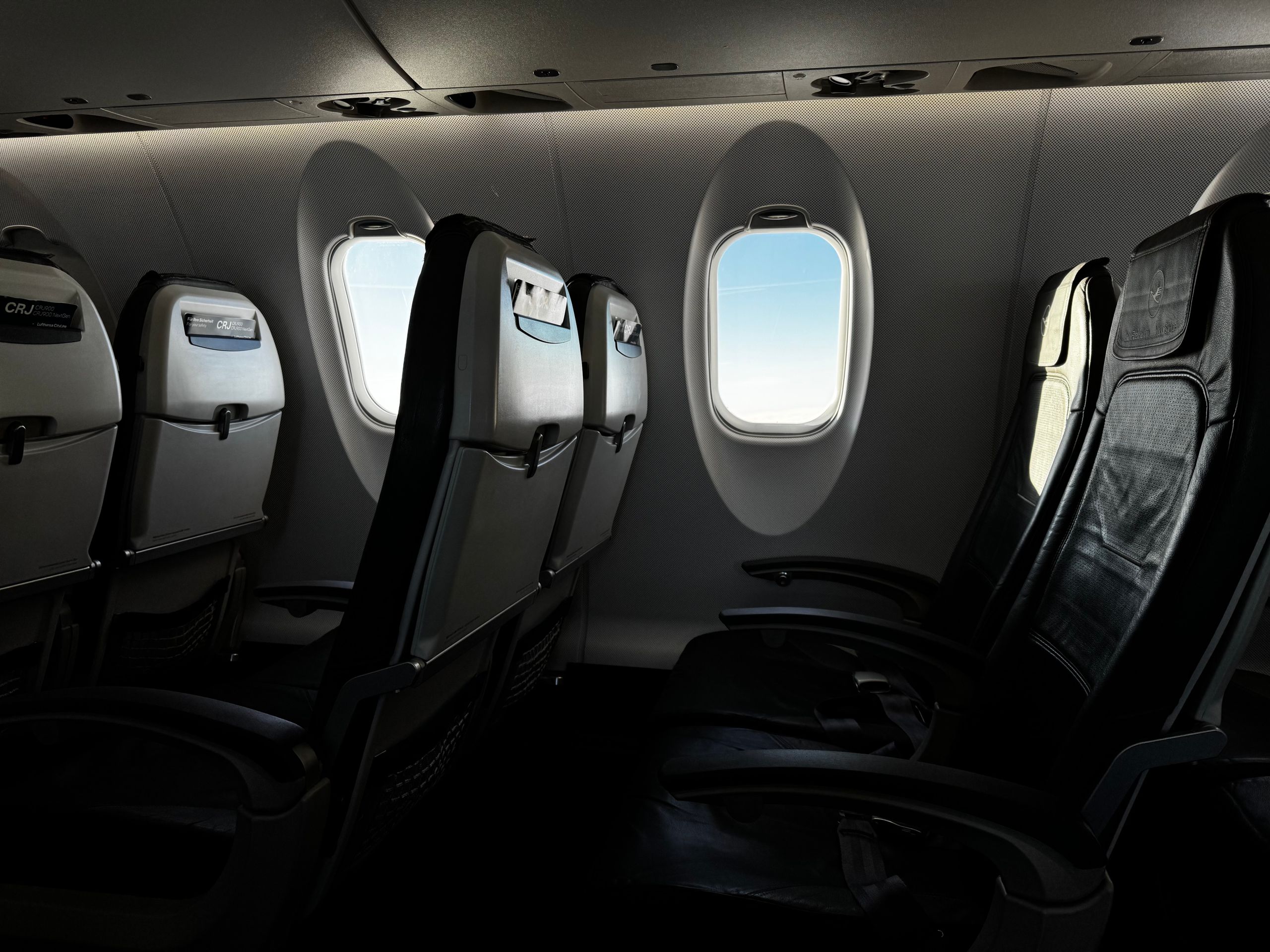
A passenger’s refusal to give up her aisle seat reportedly triggered three hours of tears on a 10-hour flight, leaving a travel blogger questioning what had just happened. The woman allegedly wanted to sit beside her husband, who was only two rows away, but the passenger she approached was not prepared to sacrifice her preferred seat.
Contents
show
Travel blogger Tomiko Harvey shared her account of the unusual encounter online, where it sparked a heated debate about airplane etiquette, couples who expect strangers to accommodate them, and whether refusing a seat swap makes someone inconsiderate or simply sensible.
The Seat-Swapping Request That Turned Into A Flight Drama
According to Harvey, the incident happened during a connecting flight from Istanbul to Washington, D.C., after she had travelled to Kazakhstan following the death of her father. The journey was already a difficult one, and the blogger said she was faced with an unexpected request from a fellow passenger who wanted her aisle seat.
The woman reportedly asked Harvey to exchange seats so she could sit closer to her husband during the lengthy flight. The proposed arrangement would have left Harvey in a middle seat instead, meaning she would lose the extra space and easier access to the aisle that many travellers prefer.
Harvey refused to move, and that decision allegedly set off an emotional reaction that continued for hours. What might ordinarily have been a brief exchange between two passengers became a story about personal boundaries and the expectations people bring into shared spaces.
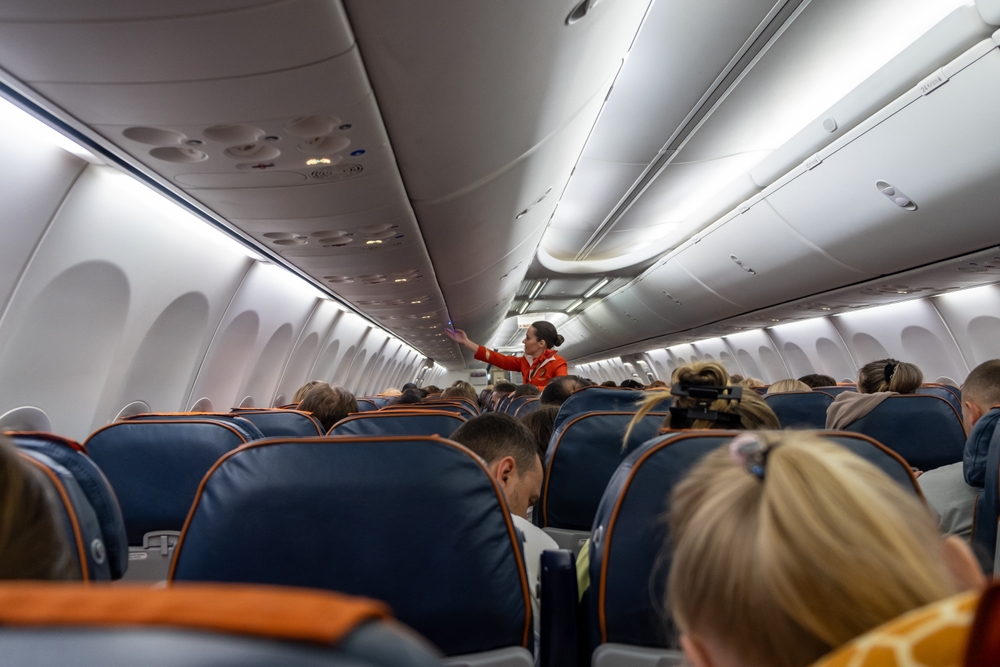
For travellers who carefully select their seats before boarding, the request may sound familiar. Aisle seats can be particularly appealing on long journeys because passengers can get up without asking others to move, stretch their legs more easily, and access the bathroom without disturbing their neighbours.
A middle seat offers fewer of those conveniences, particularly when a flight lasts 10 hours. Although some passengers are happy to exchange places as a favour, others may have paid extra or deliberately chosen their seats for reasons that are not immediately obvious to strangers.
Harvey’s account presented the request as an unreasonable demand rather than a simple misunderstanding. However, the available accounts do not establish every detail of the seating arrangement or explain why the couple had been seated separately in the first place.
Harvey Claims Her Seatmate Cried For Three Hours
The most striking part of Harvey’s story was her claim that the woman began crying after she refused to switch seats, with the episode reportedly lasting around three hours. According to the blogger, the passenger was upset because she wanted to sit with her husband and missed being close to him.
Harvey also pointed out that the husband was apparently not seated at the opposite end of the aircraft. She said he was only two rows ahead, sitting in a middle seat and sleeping peacefully with his headphones on while the dispute unfolded behind him.
That detail became central to the story because it made the reported reaction seem disproportionate to many readers. The couple were still travelling on the same aircraft, and the husband was close enough that the woman would not have needed to cross the cabin to reach him after landing.
Harvey recalled eventually asking the crying passenger whether someone had died, given the amount of time she had reportedly spent in tears. The question was blunt, but it reflected the blogger’s apparent disbelief at the intensity of the reaction.
“She said nobody died. She just missed her husband and whose shoulder would she lay her head on,” Harvey wrote in her account of the encounter.
The remark captured the detail that made the incident so unusual: the woman reportedly wanted somewhere to rest her head during the journey, even though her husband was just a couple of rows away.
Harvey’s story spread because it combined a familiar travel disagreement with a reaction that sounded extraordinary. Still, the three-hour duration and the passenger’s explanation are based on Harvey’s version of events. The available references do not independently verify the account or include a separate statement from the woman involved.
Why Harvey Described The Incident As “The Ultimate White Tears”

Harvey used the phrase “the ultimate white tears” to describe what she considered an excessive response to being refused a seat swap. The wording added a racial dimension to her criticism and became one of the most provocative elements of the story.
Rather than describing the encounter as a disagreement between two travellers, Harvey framed it as an example of someone struggling to accept that another person was unwilling to accommodate her wishes. Her frustration appeared to centre on the expectation that she should give up a preferred seat to solve a problem that was not of her making.
That distinction matters because seat-swapping requests are not inherently unreasonable. Travellers sometimes discover that their reservations have been separated, face unexpected changes to their bookings, or need assistance because of particular travel circumstances.
A polite request can be a perfectly ordinary part of flying, and there is nothing wrong with asking whether another passenger is willing to exchange seats. The problem arises when the request is treated as an obligation rather than a favour that the other person can freely decline.
Harvey’s account also raised questions about how people respond when they do not get the answer they want. Even if the passenger was genuinely upset, another traveller’s refusal to move did not automatically mean that she had been treated unfairly.
At the same time, the full context remains limited because the account comes primarily from Harvey. Without the other passenger’s perspective, it is difficult to know what she understood about the seating options or whether other circumstances contributed to her distress.
The story nevertheless struck a nerve because many passengers have encountered situations in which strangers expect them to change their plans for someone else’s convenience. For readers who value their assigned seats, Harvey’s refusal was an example of a boundary that should not require lengthy justification.
The Blogger Had A Sarcastic Message After Landing
According to Harvey, the disagreement did not end with the flight itself. After the aircraft landed, she reportedly made a sarcastic remark to the woman, congratulating her for managing the 10-hour journey without sitting beside her husband.
The comment was a pointed response to what Harvey viewed as an unnecessarily dramatic episode. She also joked that the incident had made her reconsider her own marriage because she clearly did not love her husband enough if she could travel without needing to sit directly beside him.
Her remarks reinforced the central argument behind her post: wanting to sit together does not automatically entitle a couple to another passenger’s seat. In Harvey’s view, the woman could have avoided the situation by making suitable arrangements before boarding.
She also questioned why travellers sometimes feel comfortable asking strangers to surrender seats, especially on long-haul flights. The question resonated with people who believe that an assigned seat is part of the travel arrangement, not a temporary placeholder that someone else can claim if they have a better reason to move.
There is, of course, a difference between asking for help and demanding it. Some passengers will gladly exchange seats when the arrangement works for everyone, while others may have practical reasons for staying where they are.
Harvey’s response was openly sarcastic rather than conciliatory, and that became another point of discussion. Some readers supported her decision to stand her ground, while others could question whether the situation needed such a cutting remark.
The disagreement shows how quickly a relatively ordinary travel request can become a personal confrontation. Once frustration enters the conversation, both the original request and the refusal can become part of a much larger argument about manners and consideration.
Social Media Users Took Sides Over The Seat Dispute
Harvey’s post reportedly attracted more than 90,000 likes, drawing comments from people who weighed in on whether she had been unreasonable or entirely justified in keeping her seat. Many commenters sided with the blogger and argued that passengers should not have to surrender a preferred seat simply because another traveller wants to sit with a partner.
One commenter questioned why Harvey had not asked a flight attendant to intervene if the crying reportedly continued for so long, suggesting that the blogger had shown considerable patience. Another argued that a passenger who could not manage a 10-hour flight without sitting directly beside a spouse should have paid for seats together.
Other commenters took a more humorous approach, speculating that the sleeping husband might have welcomed the separation. One theory suggested that he could have been responsible for booking the flights and selecting the seats, although that was speculation rather than an established detail.
Another commenter joked that the husband had chosen peace, turning the reported arrangement into a humorous suggestion that he was enjoying the distance. There is no evidence in the available accounts to establish what the husband thought about the dispute or whether he knew how long his wife had reportedly been crying.
Not everyone supported Harvey’s approach. Some commenters questioned why she had been so dismissive toward a woman who had apparently asked for a favour, arguing that a refusal did not have to come with additional criticism.
That disagreement highlights an important distinction. A passenger can have every right to keep an assigned seat while still being considerate in how they respond to another person’s request.
The available references describe a strong response to Harvey’s post, but they do not provide a complete record of the comments or independently establish the broader public reaction. The reported likes and selected comments illustrate the debate without proving that every viewer agreed with the blogger.
When Is It Reasonable To Refuse A Seat Swap?
Seat changes are a familiar feature of air travel, but not every proposed exchange offers the same benefits to both passengers. A request to trade two comparable seats may be easy to accommodate, while a request to surrender an aisle seat for a middle seat can leave one person with a noticeably less comfortable journey.
Several factors can help explain why travellers may reasonably decline these requests:
- The replacement seat matters. An aisle seat and a middle seat offer different levels of convenience, especially during a long flight when passengers may want to stretch or get up regularly.
- Seat selection can cost extra. Some travellers pay additional fees to choose their preferred places, so giving one up may mean losing a benefit they deliberately purchased.
- A request is not an obligation. Asking politely is acceptable, but the other passenger remains free to decline without having to prove that their reasons are important enough.
- Planning ahead can prevent problems. Couples who want to sit together can select adjacent seats during booking when suitable options are available, rather than depending on a stranger’s willingness to move.
- Circumstances can call for flexibility. Families travelling with young children or passengers with particular accessibility needs may have compelling reasons to seek assistance, although each situation still requires consideration of the people involved.
Airlines may be able to help passengers explore alternative arrangements, depending on available seats and the carrier’s policies. However, the fact that two people want to sit together does not automatically make another passenger responsible for rearranging their journey.
In Harvey’s account, the reported proximity of the husband made the request especially difficult for some readers to understand. Nevertheless, the available sources do not explain how the couple received their original assignments or whether they had attempted to arrange seats together before boarding.
That uncertainty is worth remembering when judging the incident. The account gives readers a clear picture of Harvey’s frustration, but it does not provide every detail needed to determine why the woman became upset or whether there were circumstances beyond the reported request.
Why Small Travel Disputes Become Such Big Arguments
Airplanes bring strangers together in a confined environment where personal space is limited and there are few easy ways to escape an uncomfortable interaction. A disagreement that might be brief in another setting can feel much more intense when passengers are sharing the same cabin for hours.
Seat disputes also involve competing ideas about fairness. One person may see a simple favour that would allow a couple to enjoy the journey together, while another sees a request to surrender comfort, convenience, or something they paid extra to secure.
Neither perspective automatically explains every situation. A passenger can reasonably hope that someone will help them, and another passenger can reasonably decide that the proposed exchange does not work for them.
The difficulty begins when one person’s preference is treated as more important than another person’s choice. A request becomes harder to navigate when a refusal is interpreted as an insult rather than an answer.
Harvey’s story resonated because it exposed that tension in an unusually dramatic way. According to her account, a request for a different seat led to hours of crying, a sarcastic exchange after landing, and an online debate that reached far beyond the aircraft cabin.
Yet the most practical lesson does not depend on deciding whether the woman deserved sympathy or whether Harvey could have responded more gently. Travellers can make requests, explain their circumstances, and hope for cooperation without assuming that another person must agree.
Couples who consider sitting together essential can reduce the chance of a similar dispute by arranging their seats ahead of time where possible. When that does not work, asking for help from airline staff may be more productive than relying on another passenger to give up a preferred place.
Ultimately, the simplest boundary is also the fairest one: you can ask a stranger to switch seats, but you cannot expect them to sacrifice their comfort just because they say no.