
Your cart is currently empty!
People Are Just Realizing Why Champagne Bottles On The Titanic Never Exploded
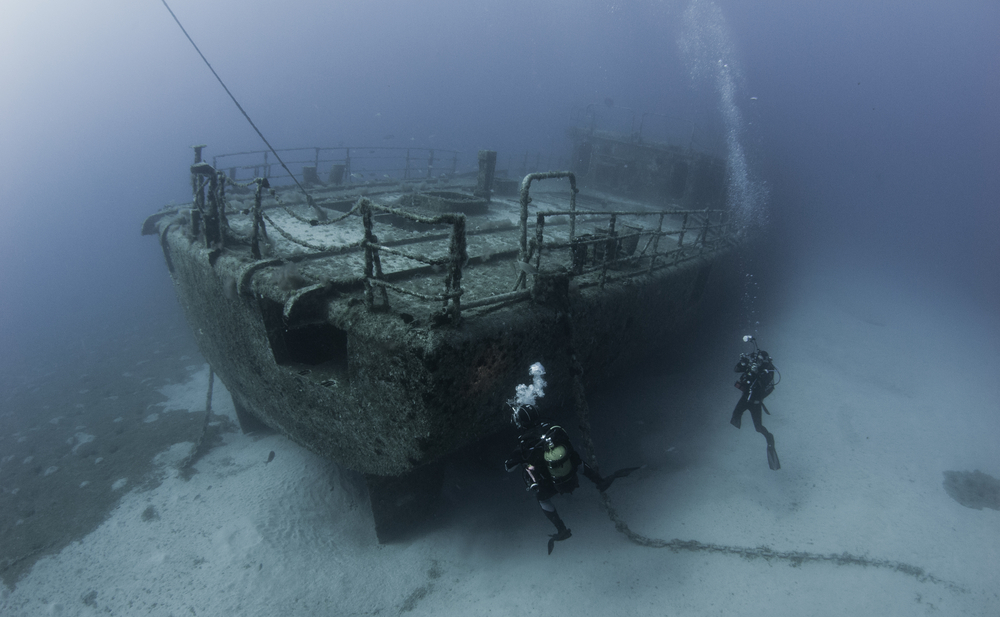
More than 112 years after the Titanic disappeared beneath the Atlantic Ocean, one haunting detail from the wreck continues to leave people completely baffled. Deep among twisted metal, shattered cabins, and thousands of scattered belongings resting nearly 3,800 metres underwater, several champagne bottles still appear intact despite the unimaginable pressure surrounding them. The images resurfaced again after new digital scans of the Titanic wreck went viral online, with many people questioning how ordinary glass bottles could survive conditions strong enough to destroy modern deep-sea technology in seconds. For many viewers, the discovery became even more shocking after the 2023 Titan submersible disaster reminded the world just how deadly the depths surrounding the Titanic really are.
Contents
show
The wreck itself remains one of the most studied disaster sites in human history, yet every new image still seems to reveal another unsettling detail hidden in the darkness. The first full-sized digital scan of the Titanic created an entirely new perspective of the ship resting on the ocean floor, allowing researchers to view the wreck almost as if the surrounding water had disappeared. Alongside massive pieces of the bow and stern, the scans also captured smaller personal artifacts scattered throughout the debris field, including ornate decorations, shoes, luggage, and several unopened champagne bottles. The sight of those bottles quietly sitting untouched after more than a century underwater sparked a flood of questions online, especially from people trying to understand how glass managed to survive under pressures that crush steel and titanium.
National Geographic Magazine releases 1,000 bottles from cruise ship Song of Norway, with instructions in five languages asking whoever finds the bottles to fill out a card contained within and mail it back to National Geographic offices in New York. pic.twitter.com/ULQt1cBwkY
— 1976 Live (@50YearsAgoLive) May 26, 2026
The Titanic Scan Revealed Details Never Seen Before
The full-sized digital reconstruction of the Titanic was created using more than 700,000 images captured by remotely operated submersibles during a deep-sea expedition in 2022. The project was carried out by deep-sea mapping company Magellan Ltd alongside Atlantic Productions, with the goal of creating the most detailed visual record of the wreck ever assembled. Researchers spent more than 200 hours surveying every visible part of the Titanic while operating nearly 4,000 metres below the ocean’s surface. The completed scan revealed the ship in extraordinary detail, including the famous bow section, the collapsed stern, massive propellers, scattered debris, and personal possessions still resting on the seabed after more than a century underwater.
Titanic analyst Parks Stephenson explained why the scans are such a major breakthrough for historians studying the disaster. He said: “There are still questions, basic questions, that need to be answered about the ship.” Stephenson also described the reconstruction as “one of the first major steps to driving the Titanic story towards evidence-based research and not speculation.” Unlike earlier expeditions that only captured brief snapshots in darkness, the digital model finally allows researchers to study the wreck as one complete site rather than disconnected fragments scattered across the ocean floor.
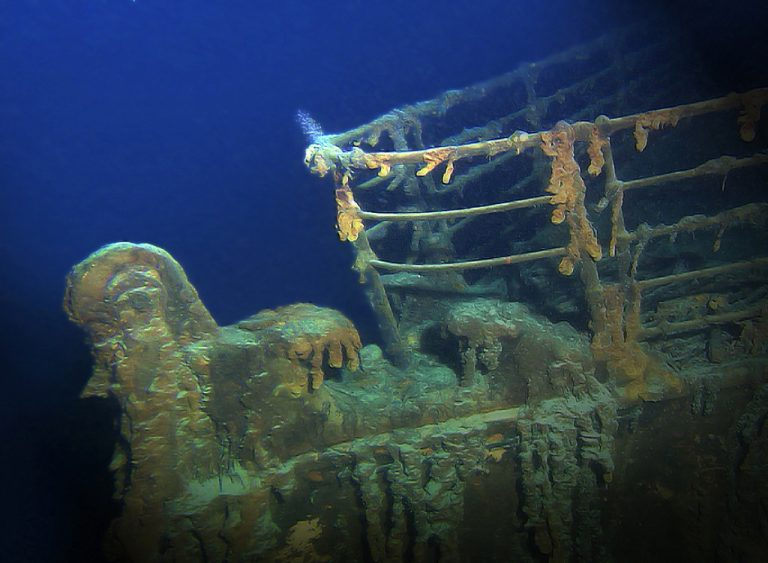
The scans also revealed how violently the ship broke apart during its descent into the Atlantic depths. While the bow section remains instantly recognizable despite decades of decay, the stern appears as a mangled collapse of steel that twisted apart as it slammed into the seabed. Researchers were even able to identify tiny details such as serial numbers on one of the propellers. Among all of those discoveries, the champagne bottles resting untouched within the debris field quickly became one of the images that fascinated people the most.
Image source: Rob, Flickr
People Could Not Understand How The Bottles Survived
The images triggered widespread discussion online because many people struggled to understand how glass bottles could survive at depths where pressure reaches roughly 381 bar. The question became even more common after the Titan submersible imploded in June 2023 during a voyage toward the Titanic wreck site. The disaster killed all five passengers onboard almost instantly and renewed public fascination with the terrifying conditions surrounding the wreck deep below the Atlantic surface.
One user in the Facebook group Journal of Scientific Shitposting summed up the confusion shared by many people online. They wrote: “Remember how last year the Titan submersible got insta-crushed going partway down the journey to see the wreck of the Titanic? So how did a simple glass bottle filled with champagne not shatter?” The comparison quickly spread across social media because it seemed impossible that fragile glass could survive conditions that destroyed a specialized deep-sea vessel carrying advanced engineering and thick carbon-fiber walls.
Scientists say the answer comes down to pressure equalization rather than strength alone. Implosions happen when external pressure becomes far greater than the pressure inside an object, causing the structure to collapse inward violently. Certain parts of the Titanic itself imploded during the sinking process, while other sections survived because air escaped and pressure equalized gradually. Champagne bottles, however, behaved differently because they already contained extremely high internal pressure before the ship even disappeared beneath the ocean surface.
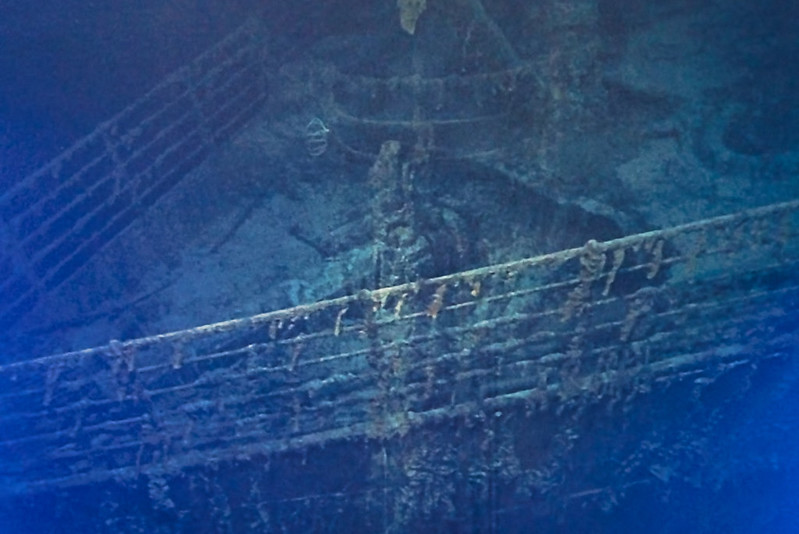
Image source: Daniel Mennerich, Flickr
Champagne Bottles Were Already Built To Handle Pressure
Champagne bottles are designed to survive conditions far more intense than most ordinary glass containers. The carbon dioxide trapped inside creates a pressure of around six bar, which is roughly equivalent to the pressure found about 60 metres underwater. Modern champagne bottles are also built to withstand pressures reaching up to 20 bar before failing, making them significantly stronger than standard glass bottles sold for other drinks. That internal pressure likely reduced the risk of the bottles collapsing during the earliest stages of the Titanic’s descent into the Atlantic.
Experts believe the real reason the bottles survived for more than a century comes down to the corks slowly allowing pressure to equalize over time. As the Titanic sank deeper and deeper, seawater likely seeped through tiny gaps around the corks, gradually filling the bottles and balancing the crushing pressure surrounding them. Once the pressure inside matched the pressure outside, the glass no longer faced the violent stress that normally causes implosions at extreme depths.
A YouTube channel called Dropzone explained the theory in simple terms while discussing the wreck online. The host said: “I reckon all the seals have already been compromised and the pressure inside equalised with the pressure outside when the ship sank on its way down back in 1912.” That slow equalization process appears to have preserved the bottles’ structure despite more than a century resting under one of the harshest environments on Earth.
Credits: Roderick Eime, Flickr
Some Experts Believe The Champagne Could Still Be Drinkable
As surprising as the bottles themselves are, some experts believe the champagne inside may not be completely ruined. Deep ocean conditions create a remarkably stable environment with constant cold temperatures, total darkness, and very little environmental fluctuation. Those conditions can accidentally create something close to a natural wine cellar, helping preserve certain beverages far longer than many people would expect.
That possibility became far more believable after another famous underwater champagne discovery in the late 1990s. In 1998, around 2,000 bottles of 1907 Heidsieck & Co. Monopole champagne were recovered from a Swedish freighter that had been torpedoed in 1916 during World War I. The bottles had spent 82 years underwater in conditions similar to those surrounding the Titanic wreck site.
Laurent Davaine, exports director for Heidsieck at the time, said the champagne remained surprisingly well preserved after recovery. He explained that the drink “still shows an amazing balance and beautiful golden hue with the effervescence still present.” While nobody knows the exact condition of the Titanic’s champagne today, the discovery from the Swedish freighter showed that deep ocean environments can preserve bottles far better than most people imagine.
Researchers Believe The Titanic Still Holds More Secrets
Historians and researchers believe the digital reconstruction of the Titanic could help answer questions that have remained unresolved for more than a century. Parks Stephenson said the scans may reveal new details about exactly how the ship collided with the iceberg and how the wreck separated during its descent into the Atlantic depths. He explained: “We really don’t understand the character of the collision with the iceberg. We don’t even know if she hit it along the starboard side, as is shown in all the movies.”
Researchers are also racing against time as the wreck continues deteriorating on the ocean floor. Microorganisms feeding on the metal structure are slowly consuming large portions of the ship, while collapsing sections continue disappearing into the seabed every year. Many historians believe the Titanic may eventually become almost unrecognizable if the decay continues at its current rate.
For now, the digital scans preserve the wreck in extraordinary detail before more of it vanishes forever. Among the twisted steel and scattered debris, the unopened champagne bottles remain one of the strangest reminders of the disaster. More than a century later, they are still sitting silently on the ocean floor where the Titanic came to rest in 1912.
Atlantic Ocean, champagne bottles underwater, deep ocean, deep sea discovery, ocean pressure, RMS Titanic, shipwreck, Titan submersible, Titanic, Titanic 3D scan, Titanic artifacts, Titanic champagne bottles, Titanic debris field, Titanic mystery, Titanic news, Titanic scan, Titanic underwater, Titanic wreck, Titanic wreck images, viral science news