
Your cart is currently empty!
People Are Sharing Videos of Their Cats ‘Attacking’ Lugers at the Olympics, and It’s Pure Gold

The Winter Olympics are known for breathtaking speed, technical precision, and athletes who dedicate years of their lives to shaving milliseconds off a run down an icy track. Viewers tune in to watch gravity defied, records broken, and history made on snow and ice. But while millions focus on medal counts and dramatic finishes, a completely different kind of competitor has quietly captured the internet’s attention. In living rooms across the world, cats are crouching low in front of television screens, eyes wide and unblinking, tails twitching with intensity as Olympic lugers streak past. The moment an athlete rockets down the track, a small paw flies forward in a bold attempt to intercept the blur. The result is chaos, confusion, and absolute delight for the humans filming it.
Contents
show
What makes these clips so captivating is not just the humor of a ten pound housecat trying to take down a world class Olympian, but the deeper instinct driving the behavior. Cats are not passive observers of movement. They are ambush predators, engineered by evolution to detect subtle shifts in motion and respond in a split second. When a luger flashes across a bright white track, it activates something ancient inside them. For a brief moment, the television is no longer a screen but a hunting ground. The fact that this primal reaction is unfolding in cozy living rooms instead of open wilderness only adds to the charm. It is a perfect collision of ancient instinct and modern technology, and people cannot stop sharing it.
When Lugers Became Living Room Prey
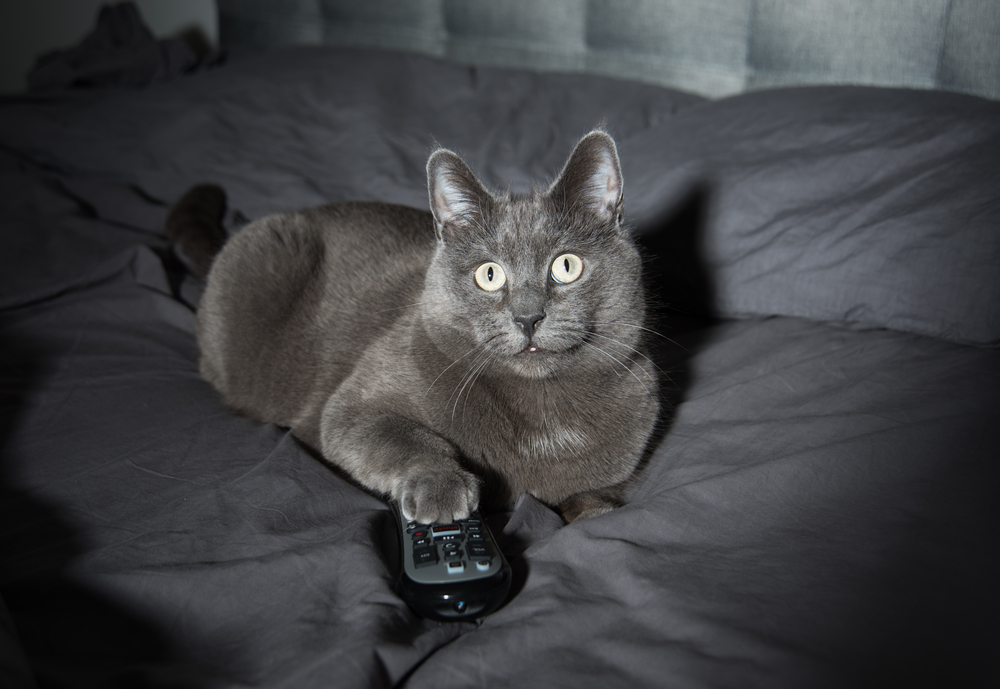
The viral trend began with a simple clip of a cat fixated on a luge event. The athlete appeared small against the icy track, moving in a clean, rapid line across the screen. As the luger accelerated, the cat’s posture changed instantly. Its body lowered toward the ground, shoulders slightly raised, eyes locked in with laser focus. The moment the athlete shot past, the cat lunged forward and smacked the glass as if it had nearly made contact. The athlete continued racing toward the finish line, unaware that somewhere in the world, a determined feline believed it had almost secured the catch of a lifetime.
The comment section quickly transformed into a celebration of shared experience. People from different households began posting their own videos and snapshots of cats reacting the same way. One viewer wrote, “Watching cats watch the Olympics is the best way to watch the Olympics.” Another added, “Wow she almost caught that guy.” A third comment highlighted a tiny detail that resonated with thousands, saying, “The ear flick in confusion after not catching it is so damn cute lol.” That tiny flick, that split second of visible puzzlement, became one of the most relatable parts of the entire phenomenon.
The jokes escalated as more viewers joined in on the fun. “Do the athletes even know they’re up against such a terrifying foe?” one person asked, imagining Olympians facing an unseen army of living room predators. Another leaned fully into the absurdity, writing, “Hey so actually this is bad for the cats because they can get overly invested and join the Jamaican bobsled team.” The humor worked because the cats did not look casually curious. They looked fully committed to the hunt, as if the next swipe might finally succeed.
Soon it was not just lugers attracting attention. Cats were swiping at figure skaters spinning in tight circles, lunging at hockey players darting across the rink, and even tracking curling stones sliding slowly over the ice. Every rapid movement across a bright screen became potential prey. What started as a single clip turned into a wave of shared footage that felt oddly unifying.

The Predator Beneath the Purr
From the quiet twitch of their whiskers to the precise lowering of their bodies before a leap, cats carry the unmistakable energy of skilled predators. Long before they claimed couches and sunny windowsills, they survived by detecting the faintest rustle in grass and moving with astonishing stealth. Their hearing is capable of picking up subtle vibrations. Their eyes are adapted for low light conditions. Their paws land with near silence. These are not accidental traits. They are the result of generations shaped by survival.
In the wild, a small flicker of movement can mean food. A mouse darting across open ground or a bird taking off from a branch demands immediate attention. The body reacts before conscious thought ever forms. That instinct does not vanish simply because a cat now lives indoors with a regular feeding schedule and a comfortable place to sleep. The blueprint remains intact, waiting for the right trigger.
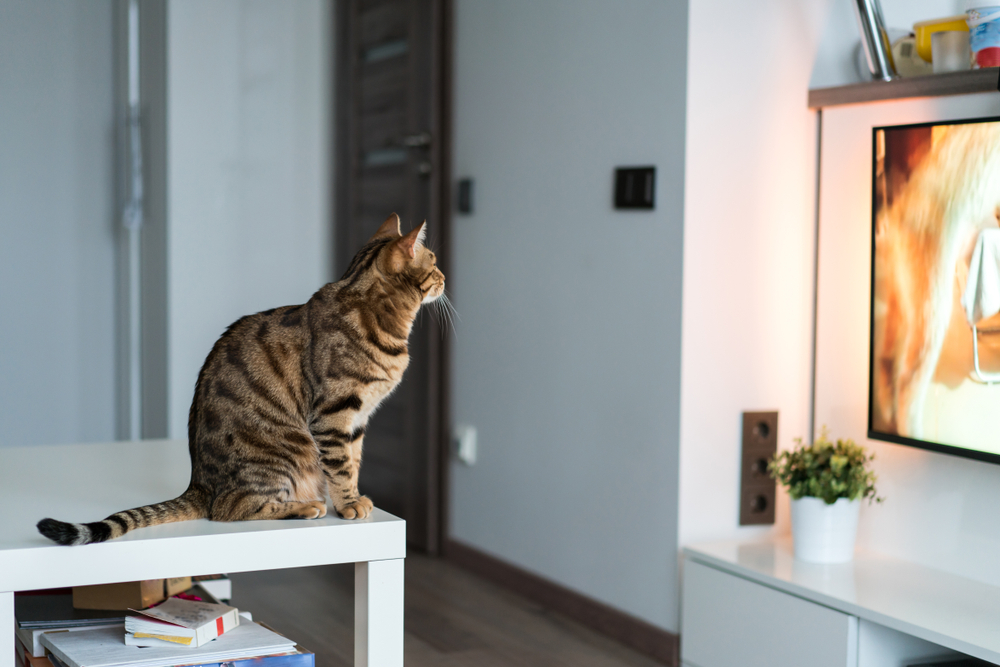
The television provides that trigger in a surprisingly effective way. A luger speeding across a white track mimics prey crossing open terrain. The contrast between athlete and background makes the motion even more pronounced. To a cat’s visual system, which is highly attuned to movement, the screen presents a clear signal that something is running and might be caught.
It is remarkable to consider that creatures designed for survival in unpredictable environments now express those same instincts in front of a glowing rectangle. They have traded tall grass for carpet and open fields for coffee tables, yet the hunter still lives just beneath the surface of their calm exterior.

Why Fast Movement Flips the Switch
Anyone who lives with a cat has likely seen the sudden transformation from relaxed companion to focused predator. A cat can be lounging peacefully one moment and then instantly alert the next, ears forward, pupils wide, muscles coiled in preparation. The shift is dramatic and almost theatrical, but it is rooted in deeply ingrained survival patterns.
Fast moving sports like luge are particularly effective at triggering this response because of their speed and direction. The athlete moves quickly across a consistent background, creating a clear visual target. Unlike slower paced events, luge offers a sharp, linear burst of motion that demands attention. To a cat, it resembles prey, making a desperate dash across open space.
The hunting sequence itself often follows a predictable pattern. First comes orientation, when the cat locks onto the moving object and freezes in concentration. Then comes the stalking posture, with the body lowered and weight shifted forward. Finally comes the pounce, delivered as a swift paw against the screen. When the image disappears or changes abruptly, some cats pause, ears flicking as if recalibrating their understanding of what just happened.
That moment of confusion is part of what makes these clips so universally adored. For a split second, instinct meets a reality it cannot fully comprehend. The prey was there. The movement was clear. The swipe was well timed. Yet nothing was captured. The puzzle lingers only briefly before the next athlete appears and the cycle begins again.
From Ancient Rodent Catchers to Modern Couch Athletes
Whether cats were first domesticated primarily for companionship or for pest control remains a topic of debate among historians and scientists. What is widely accepted is that their ability to catch rodents made them valuable allies in early agricultural communities. Protecting grain stores from mice and rats would have been a practical benefit, strengthening the bond between humans and felines.
Over time, their role evolved. Many modern housecats are no longer expected to hunt for survival. They live indoors, receive regular meals, and enjoy a level of safety their wild ancestors never experienced. Yet despite the comfort of domestic life, their predatory drive remains part of who they are.
This drive often reveals itself through play. A feather wand mimicking a bird in flight, a small toy mouse skittering across the floor, or even a crumpled piece of paper sliding along hardwood can spark intense focus and swift action. These are not random bursts of energy. They are rehearsals of ancient behavior patterns, expressed in a safe environment.
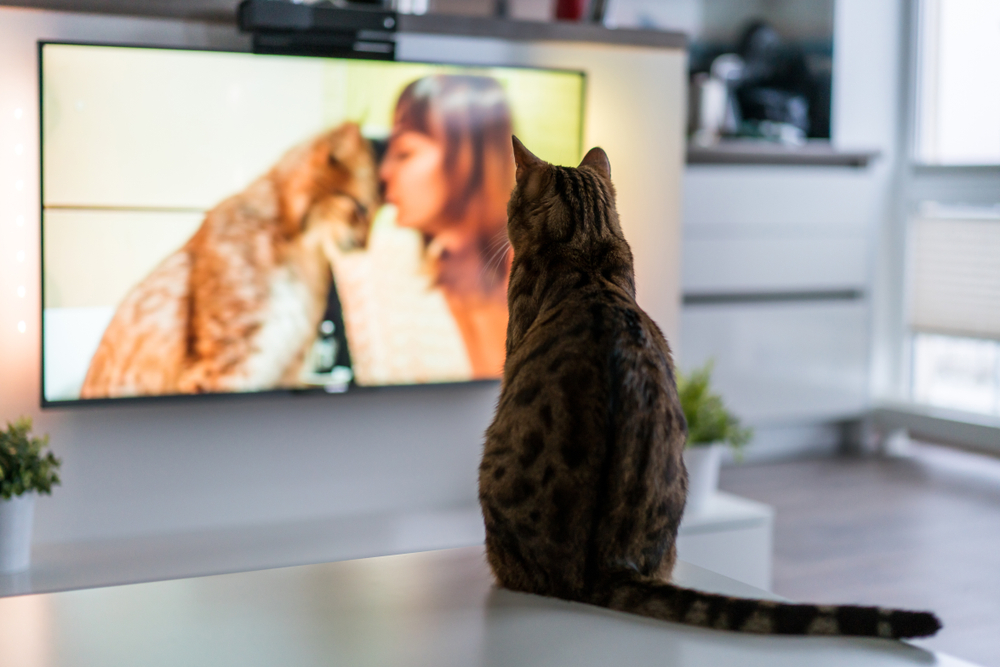
The Olympic television phenomenon is simply a new variation of this rehearsal. Instead of stalking real prey, cats are responding to digital motion. The living room becomes an arena of practice, and the screen offers endless opportunities for simulated chase. It is instinct redirected rather than erased.
Is It Healthy for Cats to Chase the Screen?
As entertaining as the videos are, some pet owners have wondered whether chasing images on a television might be frustrating for cats. Hunting instincts are powerful, and repeated unsuccessful attempts to capture something could potentially lead to overstimulation in certain animals.
Signs of frustration may include tail thrashing, vocalizing, or redirecting energy toward nearby objects. However, for many cats, the interaction appears brief and playful rather than stressful. They swipe, pause, and then either try again or settle back down without lingering agitation.
Experts often recommend providing additional outlets for hunting energy to ensure balance. Interactive wand toys that mimic real prey movement can give cats something tangible to catch. Puzzle feeders can engage their minds while encouraging problem solving. Catnip mice and soft plush toys offer physical targets that satisfy the need to grab and bite.
Laser pointers can also be effective if used thoughtfully. It is important to end a laser session by guiding the dot toward a toy the cat can physically capture. This helps complete the hunting sequence and reduces potential frustration. Window views of birds or safe outdoor enclosures can also enrich a cat’s environment, though owners should monitor reactions to prevent excessive agitation.
Why the Internet Fell in Love
The Olympics represent the height of human physical performance, filled with pressure, precision, and intense competition. Against that dramatic backdrop, a cat earnestly trying to capture a luger offers a refreshing contrast. There are no medals at stake in the living room. There is no scoreboard. There is only instinct meeting motion.
Social media thrives on shared experiences, and pet behavior is one of the most universal forms of connection. People may live in different countries and speak different languages, but the sight of a cat crouching in front of a television, tail twitching in anticipation, needs no translation.
These clips provide a moment of lightness in an often heavy news cycle. They remind viewers that beneath the grandeur of global sporting events lies something simple. Movement sparks curiosity. Curiosity sparks action. Action leads to a fleeting moment of confusion and then reset.
In the end, the luger always escapes. The medal ceremony goes on. But somewhere, in thousands of homes around the world, a small predator believes it almost made the catch. And that tiny, earnest effort is exactly why people are calling it pure gold.