
Your cart is currently empty!
People Who Stay Playful As Adults May Be Doing Something Very Right

Somewhere between work deadlines, bills, family responsibilities, and the endless pressure to stay productive, a lot of adults quietly lose touch with something they once did naturally every single day: play. For most people, it does not disappear in one dramatic moment. It fades gradually, replaced by routines, expectations, and the belief that being grown-up means being serious all the time. Fun becomes something scheduled if there is time left over, imagination starts to feel childish, and the kind of carefree joy that once came easily begins to feel oddly out of place in adult life. But according to researchers, that shift may be doing more damage than many people realize, because the very thing adults are encouraged to leave behind could actually be one of the strongest foundations for emotional health and overall wellbeing.
Contents
show
There is now growing evidence that staying playful into adulthood is not immature or frivolous at all. In fact, it may be one of the most important and overlooked habits for handling stress, maintaining social connection, and preserving a sense of life satisfaction over time. As researchers Scott Duncan and Melody Smith explain, “adults who engage in playful activities tend to cope better with stress, experience more positive emotions, show greater resilience when facing challenges, and report higher levels of life satisfaction.” That is a striking conclusion in a world where people are often taught to measure adulthood by how busy, efficient, and composed they can appear. If anything, the research suggests many adults have not outgrown play. They have simply been conditioned to stop making room for it.
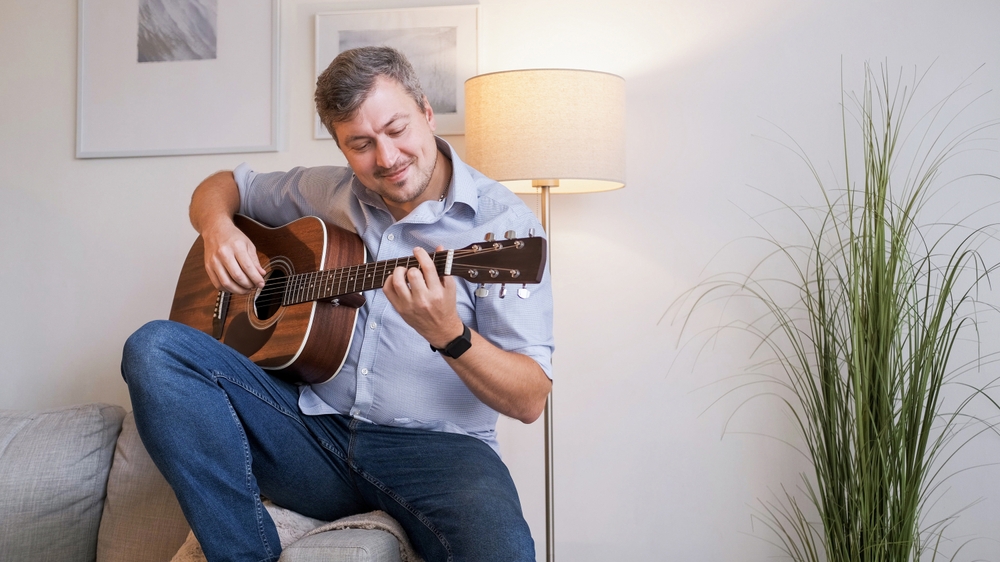
Adulthood may be quietly stripping away something essential
One of the biggest misconceptions about play is that it belongs almost exclusively to children. Many people reach adulthood and unconsciously absorb the idea that silliness, curiosity, and spontaneous fun are signs of immaturity rather than signs of a healthy and flexible mind. That belief can be reinforced by almost every part of modern life. Work culture rewards constant output, social media turns hobbies into performance, and even downtime often comes with pressure to make it “productive.” Over time, many adults stop doing things simply because they enjoy them, and start feeling as though every activity should lead to improvement, achievement, or some kind of measurable result.
That is exactly why this conversation matters so much. The evidence suggests that adults benefit from playfulness just as children do, and perhaps in some ways even more because adult life comes with so many built-in pressures. Researchers note that “in a world that demands constant busyness, play offers essential qualities we are at risk of losing: spontaneity, togetherness and the freedom to have fun.” Those are not small or sentimental qualities. They are deeply human ones, and they become increasingly important when life starts to feel dominated by routine, obligation, and emotional fatigue.
What makes this especially relevant is how easy it is to overlook the loss. People do not always notice when they have become disconnected from joy because seriousness is often rewarded and even admired. Someone who is constantly busy can appear disciplined or successful, while someone who makes space for fun can sometimes be dismissed as unserious. But if the cost of adulthood is losing the ability to feel light, curious, and fully present, then it is worth asking whether that trade was ever healthy in the first place.

Play in adult life looks different, but it still counts
A lot of adults hear the word “play” and immediately imagine toys, children’s games, or activities that feel disconnected from grown-up life. That is one reason many people dismiss the idea before they even consider it. But researchers make clear that adult play is not about pretending to be a child again. It is about the way a person engages with the world. As they explain, “Play in adulthood can look different from play in childhood. It is less about toys or games and more about how we approach everyday experiences.” That shift in definition is important because it opens the door to seeing play as something much more accessible and realistic.
Adult play can show up in ways people already recognize but may not label properly. It can be physical, social, creative, or imaginative. It might look like dancing around the kitchen while dinner is cooking, joking around with friends until everyone is laughing too hard to speak, trying a new hobby without caring whether you are good at it, making up silly stories with your children, or choosing to do something simply because it feels fun rather than useful. In that sense, play is not limited to one type of activity. It is more of an energy or mindset that brings curiosity, openness, and enjoyment into ordinary moments.
That may be why one of the most important lines in the research is also one of the simplest: “What makes an activity playful is not its form, but the mindset behind it: curiosity, openness and a willingness to engage without a fixed outcome.” For adults especially, that idea matters because so much of life is built around outcomes. Work has targets. Exercise has metrics. Hobbies become side hustles. Even rest is often treated like a strategy for better performance. Play interrupts that logic by allowing a person to do something for the pure experience of being in it.

The mental health benefits are much bigger than they sound
At first glance, saying that play reduces stress might sound almost too obvious to be worth discussing. But when you look more closely, the effect appears to run deeper than simple distraction or entertainment. Play gives adults something they often do not get enough of, which is a chance to step outside pressure and performance. Researchers describe this clearly, writing that “at its core, play provides a space to reset, allowing us to step outside pressure and performance.” In practical terms, that means playful experiences can create moments where the mind is not trapped in constant evaluation, problem-solving, or self-monitoring.
That kind of mental reset can have a meaningful impact on emotional wellbeing. Adults who regularly make room for playful activities are more likely to experience positive emotions and emotional resilience, which matters in a world where chronic stress has become so normalized that many people barely notice it anymore. If someone is always bracing for the next responsibility, always trying to optimize their time, or always carrying the invisible tension of modern adult life, then playful moments may offer one of the few spaces where the nervous system can actually soften.
The research also points toward something even more intriguing. There is evidence suggesting “a potential neurobiological pathway between playfulness and cognitive health in older adults.” While that area is still developing, it raises an important possibility: that maintaining a playful orientation to life may help support cognitive flexibility over time. In other words, staying connected to curiosity and enjoyment may not just make life feel better in the moment. It may also help the brain stay more adaptive as people age.

Playful adults may also be better at handling other people
One of the most overlooked parts of this discussion is how play affects relationships. A lot of people think of play as a private or personal activity, but the research suggests it can also shape the way adults connect with others. According to the findings, “Playfulness in adults is also associated with higher emotional intelligence, including stronger ability to perceive and manage emotions in social situations.” That is not just a charming side note. Emotional intelligence is one of the most important skills for navigating friendships, family life, workplaces, and romantic relationships.
In real life, this can show up in subtle but powerful ways. Playful adults may be quicker to use humour to ease tension, more responsive in conversation, more comfortable with spontaneity, and more willing to meet other people in moments of warmth rather than defensiveness. Observational studies have also shown that adults who engage playfully tend to be “more empathetic, reciprocal and positive in their interactions with others.” That matters because so much adult interaction has become transactional, rushed, or emotionally flat. Play can bring back a sense of aliveness that makes relationships feel more human.
There is also something socially disarming about play. It allows people to loosen the script they often feel they need to follow in order to seem competent or composed. In those moments, connection becomes easier because people are no longer interacting only through roles and responsibilities. They are interacting as themselves. That may help explain why playful adults often appear more approachable, more emotionally available, and more capable of creating the kind of shared joy that strengthens bonds over time.

When adults and children play together, the usual rules start to fade
One of the most compelling parts of the research is what happens when adults and children share playful, unstructured time together. In everyday life, adults and children usually relate to one another through a clear hierarchy. One is expected to guide, supervise, instruct, or manage, while the other is expected to follow. But in moments of genuine play, those differences can soften in ways that are surprisingly meaningful. Researchers explain that “when adults and children play together, even if unrelated, differences in age, role and status tend to fade, replaced by shared enjoyment and interaction.”
That shift can be incredibly powerful, especially in families where daily life is often built around routines, rules, and logistics. Shared play creates a space where connection is not based only on care-taking or correction, but on mutual enjoyment. That does not mean adults stop being responsible. It means the relationship expands to include joy, imagination, and presence. In many cases, that may help children feel more emotionally secure while also helping adults feel less burdened by the constant pressure of being “on.”
Researchers found that supporting unstructured play helped adults feel less stressed and more connected, while also making playfulness feel like an ordinary part of daily life rather than some rare, carefully planned activity. That may be one of the most useful takeaways for parents and caregivers. Play does not have to be a major event or a Pinterest-worthy setup to matter. Sometimes it is the small, unstructured moments of silliness, movement, imagination, or shared laughter that do the most for a family’s emotional atmosphere.

The bigger problem may be cultural, not personal
For many adults, the real barrier to play is not a lack of desire. It is a lack of permission. Researchers point out that “when play is treated as embarrassing, indulgent or something to apologise for, it quickly disappears.” That line probably explains a lot about why so many people stop playing long before they stop needing it. In many cultures, adulthood is strongly associated with control, composure, and utility. People are often rewarded for being efficient, disciplined, and relentlessly practical, while anything playful can be viewed as childish or self-indulgent.
That kind of environment does not just discourage fun. It reshapes identity. Adults can start to believe that if they are not being useful, they are wasting time. They may feel guilty for enjoying things that have no obvious purpose. They may even become self-conscious about expressing joy in visible ways. That is why this issue is bigger than individual habit. It is tied to the social rules people absorb about what adulthood is supposed to look like.
But the opposite is also true, and that may be the hopeful part. Researchers note that “when playful behaviour is visible and unremarkable, it becomes easier for others to participate.” In other words, play can be socially contagious. The more normalized it becomes, the easier it is for people to stop treating joy like a guilty secret. That shift alone could make a meaningful difference in how communities, families, and friendships function.
The world around us should make play easier, not harder
Another striking point from the research is that play is not only about attitude. It is also about environment. If the spaces people move through every day are designed entirely around speed, order, and passive behaviour, then play naturally starts to disappear from adult life. That is why researchers argue that “if play matters across the lifespan, the spaces we inhabit need to support it.” It is a reminder that wellbeing is not just an internal mindset issue. It is also shaped by what the world invites or discourages.
Urban design research suggests that the best playful environments for adults are often the ones that do not loudly advertise themselves as playgrounds, but instead quietly build opportunities for movement and curiosity into ordinary public space. That could mean oversized steps, winding pathways, stepping stones, interactive seating, or installations that invite spontaneous engagement. Researchers mention examples such as “musical swings that turn routine movement into playful interaction,” which is a perfect example of how even a small design choice can transform the emotional tone of a space.
At the moment, most public environments still treat play as something primarily meant for children. But if adults also benefit from playful engagement, then designing cities, neighbourhoods, and shared spaces with that in mind could have broader benefits for inclusion, social connection, and public wellbeing. A more playful world would not just be more entertaining. It might actually be healthier.
Maybe the healthiest thing adults can do is stop trying to outgrow joy
For a long time, maturity has been framed as a process of leaving behind childlike traits. But perhaps adulthood is not supposed to mean becoming less playful in every possible way. Maybe it is about learning which qualities were never weaknesses to begin with. Curiosity, imagination, spontaneity, wonder, and the ability to enjoy something without needing to justify it may not be signs of immaturity at all. They may be signs that a person is still emotionally alive.
The strongest message running through all of this is not that adults need to reject responsibility or spend every day chasing fun. It is something much more realistic and useful. Playfulness still matters. It still supports emotional balance, social connection, resilience, and overall wellbeing long after childhood ends. As the research puts it, “play has long been treated as something separate from adult life, confined to childhood or reserved for rare moments of leisure. Yet the evidence suggests playfulness continues to matter well beyond early development.”
So if adulthood has made life feel flat, over-structured, or endlessly practical, there may be something worth reclaiming. Not because it looks cute or nostalgic, but because it might actually be good for your mind, your relationships, and your health. Hanging on to your inner child may not be about refusing to grow up. It may be about refusing to lose the parts of yourself that were helping you feel most alive all along.