
Your cart is currently empty!
Physicists Observe Particles Emerging From Empty Space In Collider Breakthrough
The idea that something can come from nothing has long lived in philosophy, theology, and late night dorm room debates. For centuries, thinkers have wrestled with the mystery of existence itself, asking how a universe filled with stars, planets, and people could arise at all. Now, that ancient question is no longer confined to abstract reflection. It is being tested inside some of the most sophisticated scientific machines ever built, where physicists are probing reality at scales smaller than atoms.
Contents
show
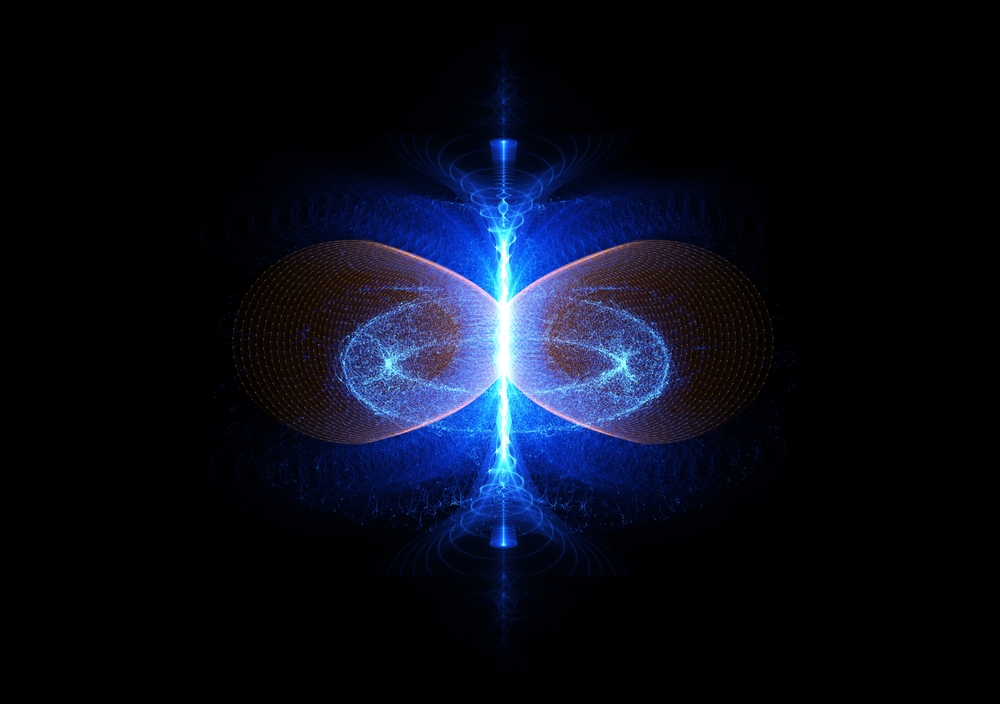
In recent experiments highlighted by Interesting Engineering and Newsweek, researchers working with powerful particle collider systems have reported evidence that matter can emerge from what appears to be empty space. By recreating extreme conditions and analyzing the resulting particle interactions with extraordinary precision, scientists are beginning to trace certain particles back to fluctuations in what is known as the quantum vacuum. This vacuum, far from being a simple void, is a restless sea of energy that flickers constantly with activity.
The implications of this research are both thrilling and deeply humbling. If matter can emerge from quantum fields that pervade space itself, then the foundation of reality may be far stranger and more dynamic than we once believed. Rather than a static backdrop against which events unfold, empty space may be an active participant in the creation of matter. What scientists are uncovering is not magic, but it does challenge our most basic intuitions about what nothing truly means.
The Quantum Vacuum Is Not Truly Empty
For much of human history, a vacuum was imagined as a perfect emptiness. It was defined by absence, a region stripped of air, particles, and substance. Even in early scientific thinking, the vacuum was often treated as a neutral stage on which physical processes occurred. Modern physics, however, has dramatically revised that assumption and replaced it with something far more intricate and surprising.
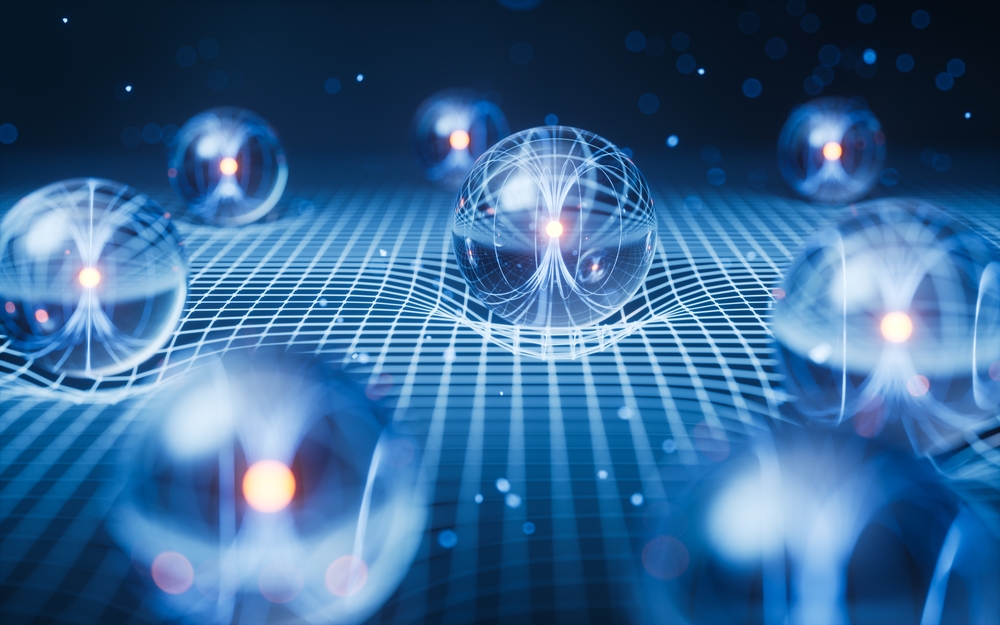
In quantum field theory, the vacuum represents the lowest possible energy state of a field, yet that state is anything but calm. Instead of being silent and inert, the quantum vacuum seethes with microscopic fluctuations. These fluctuations briefly give rise to pairs of particles and antiparticles that appear and disappear in unimaginably short spans of time. Though fleeting, their presence has measurable consequences that influence the behavior of the universe.
Scientific American explains that these vacuum fluctuations are not just theoretical constructs invented to make equations work. They have real, observable effects, including subtle shifts in energy levels and interactions between charged particles. Physicists have been able to detect these effects indirectly for decades, strengthening confidence that the vacuum is an active component of physical reality.
What this means is that what we casually call nothing is actually a structured and energetic foundation. Space is not a blank void but a dynamic arena filled with underlying fields. The new collider experiments suggest that when these fields are disturbed under extreme conditions, their hidden energy can manifest as tangible matter. In that sense, emptiness is not the absence of existence but a different layer of it.
How the Collider Experiment Works
At the center of this breakthrough is the particle collider, a machine designed to accelerate particles to near light speed and smash them together. These collisions generate enormous energies in tiny regions of space, briefly recreating conditions similar to those that existed moments after the Big Bang. By studying the debris from these collisions, scientists can infer what happened at the smallest scales of reality.
According to reporting from Interesting Engineering, researchers focused on situations involving extremely strong electromagnetic fields. When highly charged particles pass near one another at extraordinary speeds, the fields surrounding them can interact in powerful ways. These interactions can reach intensities that allow energy embedded in the fields to transform into new particles.
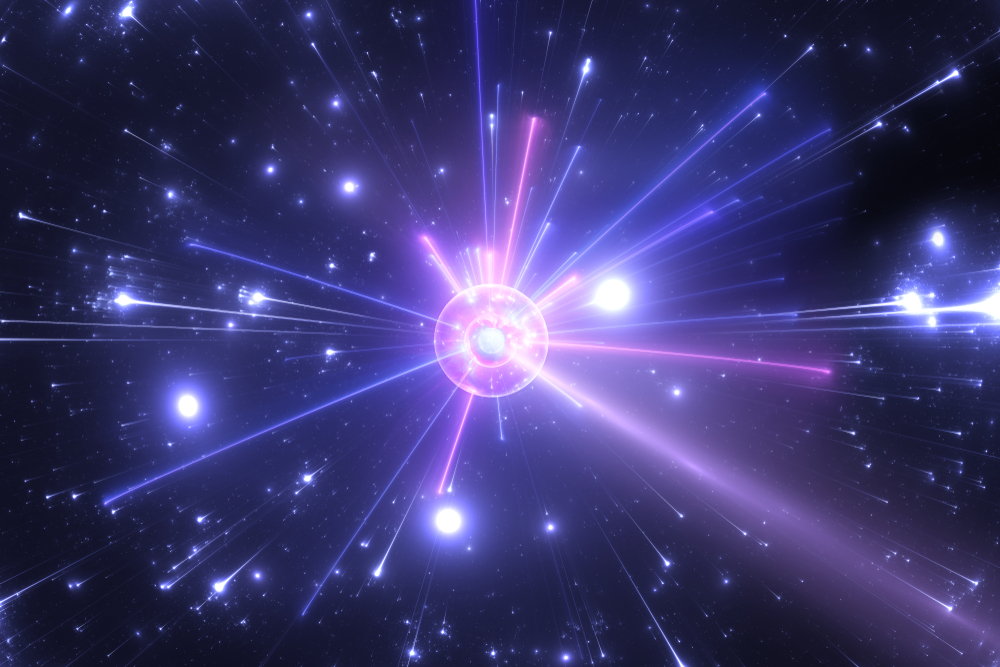
Newsweek reports that scientists observed signals consistent with electron positron pairs emerging not from pre existing matter, but from the interaction of energetic photons within these strong fields. In simple terms, light interacting with light under the right conditions can generate matter. This phenomenon reflects the principle that energy and mass are interchangeable, as described by Einstein’s famous equation.
What makes this experiment particularly compelling is the level of precision involved. Researchers carefully separated ordinary collision debris from signals that indicated something more fundamental was happening. By doing so, they were able to isolate events that align closely with predictions about matter emerging from quantum field interactions rather than from the breakup of already existing particles.
Tracing Particles Back to the Vacuum
One of the most remarkable achievements of this research is the ability to trace certain particles back to processes rooted in the quantum vacuum itself. This is not a metaphor or a dramatic flourish. It is a conclusion supported by detailed modeling and measurement of particle signatures that match theoretical expectations.
Scientific American describes how physicists analyzed specific interaction patterns that could not be explained by conventional particle collision pathways alone. Instead, these patterns pointed toward photon interactions occurring within intense electromagnetic fields. When photons collide under sufficiently extreme conditions, they can produce matter in the form of particle pairs.
By reconstructing the sequence of events from experimental data, researchers concluded that some of the detected particles likely originated from energy fluctuations inherent in the vacuum. This does not imply that particles popped into existence without cause. Rather, it demonstrates that the energy stored within quantum fields can be converted into real, measurable matter when triggered by powerful interactions.
This ability to trace particles back to vacuum processes strengthens decades of theoretical work in quantum field theory. It confirms that the framework physicists have relied upon to describe subatomic behavior continues to hold up under increasingly sophisticated experimental tests. In doing so, it provides deeper insight into how the building blocks of matter can arise from underlying fields.
Breaking Down the Science in Simple Terms
To grasp the essence of this discovery, it helps to translate the technical language into more accessible ideas. Modern physics suggests that fields are the most fundamental components of reality. Particles are not tiny solid beads floating in space but localized excitations, similar to ripples that form on the surface of water when it is disturbed.
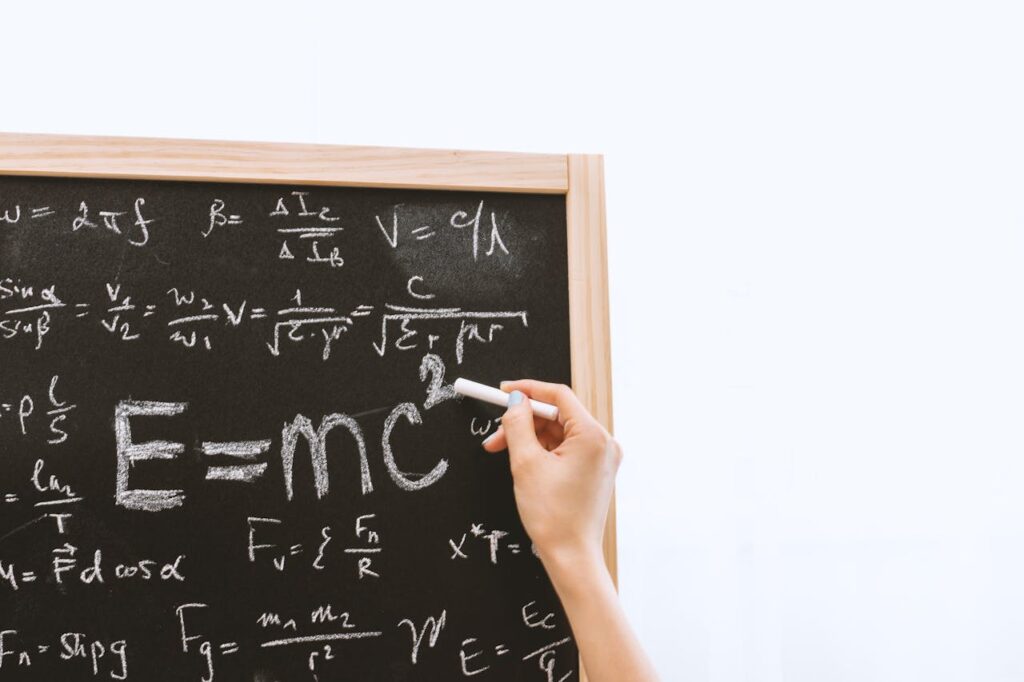
Energy and mass are interchangeable, as described by Einstein’s equation. When enough energy is concentrated in a small region, it can transform into particles with mass. This transformation is not science fiction but a well established principle that has been tested repeatedly in high energy physics experiments.
Even in its lowest energy state, the vacuum contains residual energy due to quantum fluctuations. These fluctuations are unavoidable consequences of the uncertainty principle, which limits how precisely certain properties can be known simultaneously. As a result, fields can never be completely still.
When extreme conditions are created, such as those inside a particle collider with powerful electromagnetic fields, the energy present in the vacuum can convert into real particle pairs. This sequence of ideas explains how something that appears to be empty can, under the right circumstances, give rise to matter that can be detected and measured.
Skepticism, Caution, and Scientific Rigor
Despite the excitement surrounding these results, scientists are proceeding with appropriate caution. In physics, extraordinary claims require careful validation. Researchers must ensure that alternative explanations have been ruled out and that the observed signals cannot be attributed to more conventional processes.
Replication plays a crucial role in this process. Independent teams will analyze similar data sets and attempt to reproduce the findings using different methods and experimental setups. Only through repeated confirmation can a result move from intriguing to firmly established within the scientific community.
It is also important to clarify what scientists mean when they say matter emerges from nothing. The quantum vacuum is governed by physical laws and structured by fields. It is not an absolute void devoid of properties. The term nothing in this context refers to the lowest energy state of these fields, not to the absence of all existence.
By maintaining this distinction, physicists avoid overstating their conclusions. The research does not claim that the universe emerged from pure nonexistence in a philosophical sense. Instead, it demonstrates that within the framework of quantum field theory, the vacuum itself contains the potential for matter when disturbed under extreme conditions.
A New Perspective on Reality
Beyond equations and laboratory equipment, this research invites a broader reflection on the nature of reality. At a human scale, emptiness appears straightforward. An empty room seems to contain nothing of significance. Yet at the quantum level, that same space is alive with fluctuating fields and latent energy.
This realization shifts how we think about the fabric of the universe. Rather than viewing matter as the primary ingredient of existence, we can see it as a temporary and localized expression of deeper fields. Space is not merely a backdrop but an active participant in physical processes.
There is something profoundly creative about this picture. Matter is not inserted into the universe from the outside. It arises naturally from the dynamics of underlying fields. The cosmos becomes a place where structure and substance emerge continuously from more fundamental layers of reality.
For readers, this perspective offers both wonder and humility. The next time you look at the night sky and see vast stretches of darkness between stars, remember that those regions are not truly empty. They are filled with quantum fields that hold the potential to generate matter under the right conditions.