
Your cart is currently empty!
Pizza Hut Is Bringing Back Red Cups, Salad Bars and ’80s Decor And Customers Are Driving Hours to Get There
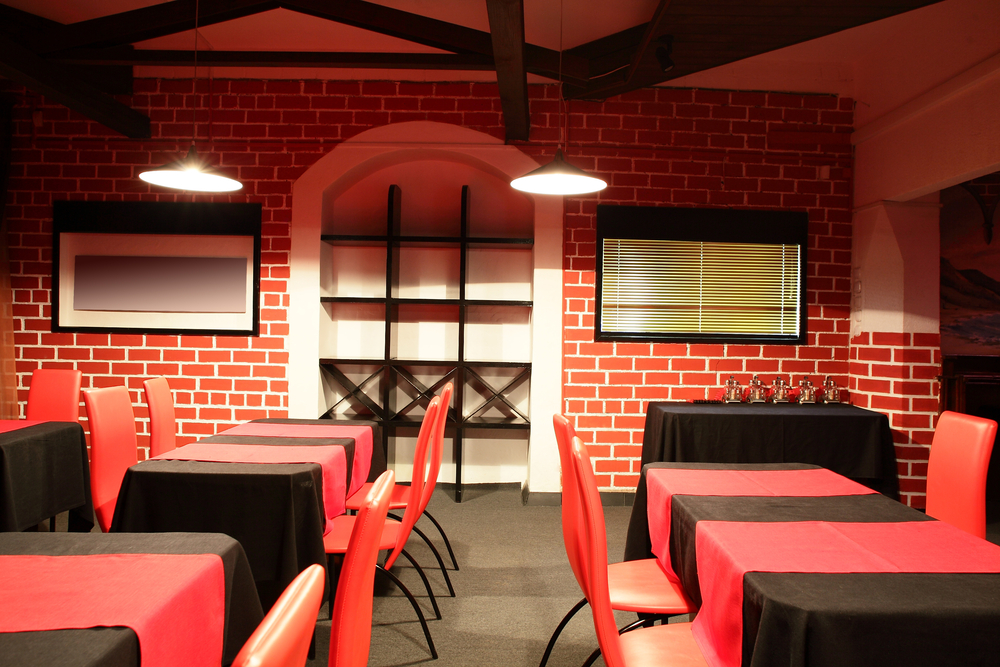
Somewhere between the rise of delivery apps and the relentless march of corporate minimalism, something got lost inside America’s pizza chains. Gone were the red booths and the soft glow of stained-glass lamps. Gone were the salad bars, the red plastic cups, and the Pac-Man machines humming in the corner. For a generation that grew up in the 1980s and ’90s, walking into a Pizza Hut had once felt like an occasion. Over the decades, quietly and without much fanfare, it stopped feeling like much of anything at all.
Contents
show
Now, one of the chain’s largest franchisees is doing something about it, and the response has grown far larger than anyone anticipated.
The Man Driving the Change
Tim Sparks is the president of Daland Corporation, a Kansas-based company that operates 94 Pizza Hut locations across the United States. He did not arrive at his decision to renovate through a focus group or a marketing report. He arrived at it through memory.
Sparks grew up eating at Pizza Hut in an era when its dining rooms were genuinely designed to be places worth sitting in. When he looked at what those restaurants had become in recent decades, stripped of their character and retrofitted with the kind of gray, generic interiors that now pass for modern branding across the fast-casual sector, he saw an opportunity that went well beyond business strategy.
Since 2019, he has been converting Daland locations into what he calls Pizza Hut Classic restaurants. As of now, 38 of his 94 locations carry that designation, with another set to open later this summer. Sparks is also evaluating 12 more for future conversion. Pizza Hut corporate provides franchisees with a specific guidebook outlining what qualifies, since only certain models in certain markets are eligible for the retro treatment.
What Walking Into a Classic Location Feels Like
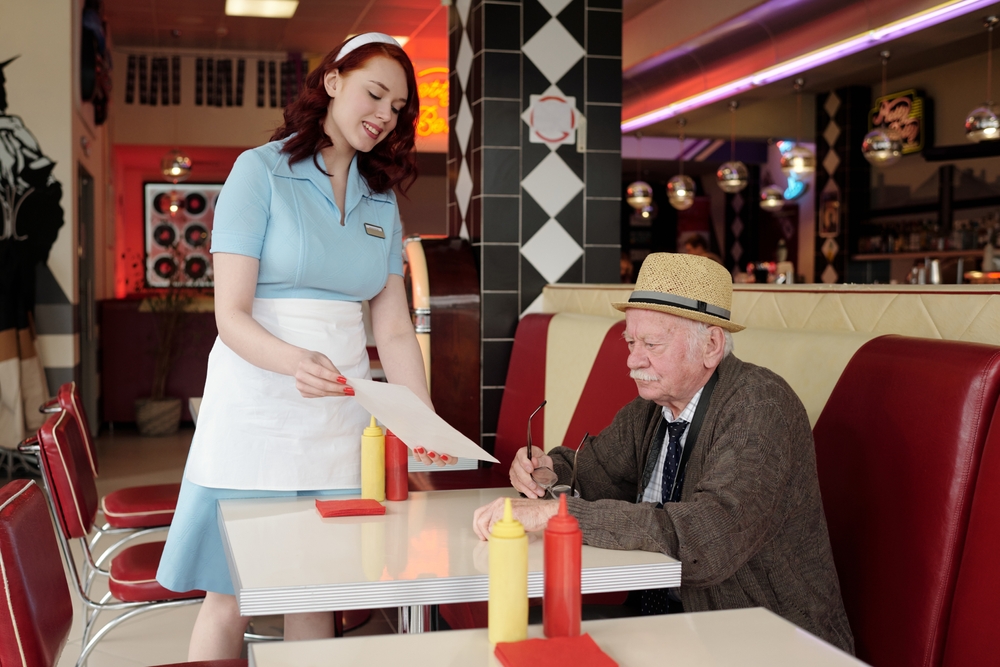
“Our Classic restaurants are designed to bring back the nostalgic Pizza Hut experience from the 1980s and 1990s,” Sparks told PEOPLE. “This includes the return of the iconic red plastic cups, checkerboard tablecloths, red candles, iron table organizers, and the classic Tiffany-style lamps.”
Dining rooms also feature red booth backs with retro photographs, and every Classic location has a salad bar. Some spots have gone further and installed a Pac-Man arcade game to complete the atmosphere. Sparks has been candid about how difficult it is to source some of these original elements. Tiffany-style stained-glass lamps, for instance, he describes as “almost impossible to get,” but he continues to track them down because they are exactly the kind of detail that makes an experience feel authentic rather than approximate.
What Sparks is after is not a superficial coat of nostalgia paint. He wants customers to feel the difference from the moment they walk through the door. In interviews, he has described at length what was lost when the original dining-room model gave way to pickup counters and delivery-first thinking. Pizza Hut, in its prime, was built around a specific kind of experience, one involving families gathering after sports events, children feeding quarters into arcade machines, and groups of friends waiting for a jukebox to cycle around to their song. “These restaurants were built around dining-room experiences,” he told CBC News. “It is a very different experience from simply picking up or having a pizza delivered.”
Customers Are Coming From Hours Away
Word of Classic locations spread without much help from traditional advertising. Bloggers visited, filmed what they found, and posted it. Social media did the rest. A YouTube video covering the Classic revival drew a flood of comments from viewers who had been waiting for exactly this kind of news. Commenters wrote about the pizza, the salad bar, the cups, the pasta, and the lamps, describing years of hoping the chain would return to what it once was. Others wrote about what the original dining rooms represented compared to what replaced them, with one person pointing out that designing a restaurant to feel warm and inviting rather than engineered for high turnover is, in fact, good for business.
Sparks says the reception has gone well beyond online enthusiasm. “People come from two and three hours away, and I’m not making that up,” he told CBS. Classic locations have become some of Daland’s strongest performers, which is worth noting given that Pizza Hut’s overall sales figures have been under sustained pressure in an increasingly crowded pizza market.
When families sit down together in these restored dining rooms, something else happens that Sparks finds worth mentioning. Guests tend to put their phones away and talk to each other. He is not pretending to have solved anything larger with a restaurant redesign, but he is also not shy about what he believes the act of eating together is worth. “I’m not gonna tell you I know how to fix the world,” he said, “but I do think that family is a good place to start.”
Pizza Hut Corporate Steps In
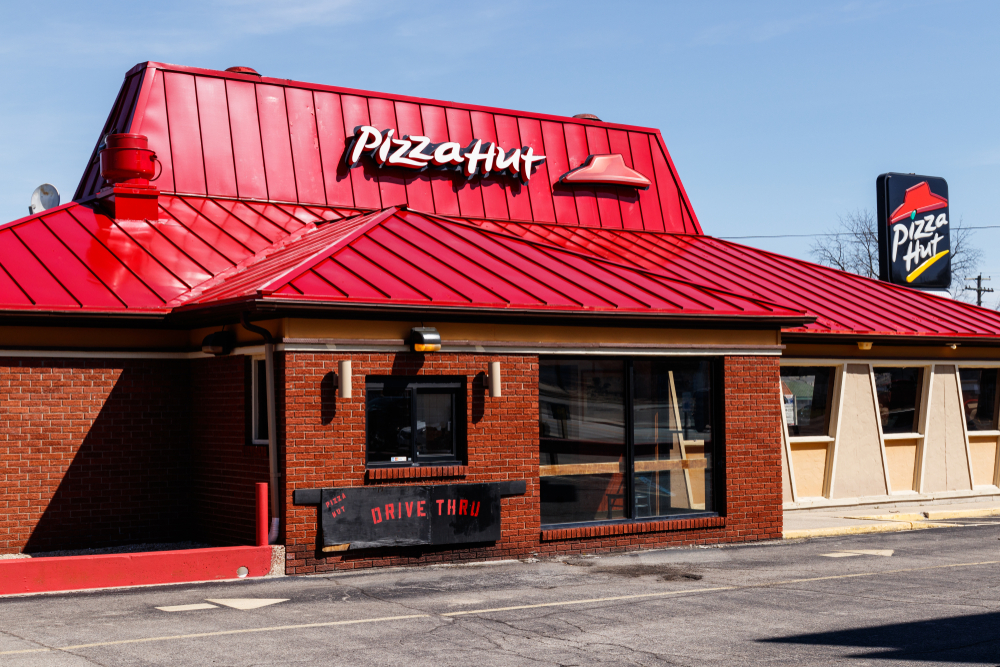
What started as one franchisee’s personal project has grown into something the broader organization is now actively pursuing. Pizza Hut CEO Aaron Powell appeared on NBC’s Today and told viewers that customers should expect “a real focus” on the classic experience going forward. A day later, parent company Yum Brands advertised approximately 155 “retro” Pizza Huts operating across the United States, a figure that includes Daland Corporation’s 38 Classic locations.
For a chain with roughly 16,000 locations across more than 100 countries, 155 is still a small number. But the direction is clear. Pizza Hut was founded in Kansas in 1958 by brothers Dan and Frank Carney, who borrowed $600 from their mother to open their first location. According to the chain’s own website, they named it Pizza Hut because their sign only had room for eight letters. From that starting point, it grew into one of the most recognized restaurant brands in the world and, for many Americans, into something more personal: a place tied to childhood memories in a way that few chains have ever managed to replicate.
Book It! Returns Alongside the Red Booths
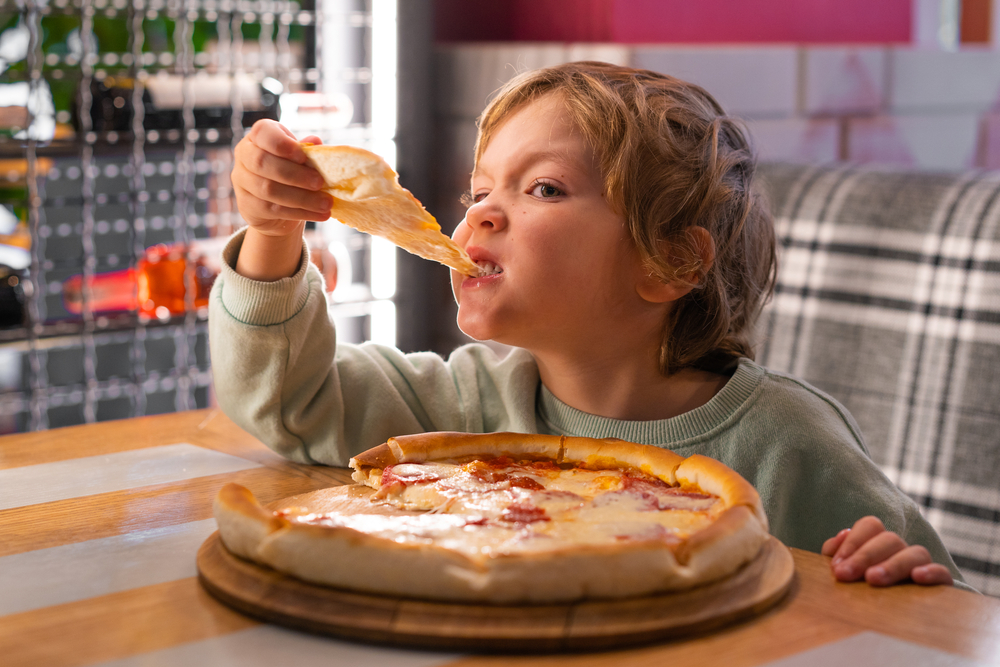
Nostalgia at Pizza Hut is not limited to interior design. Running parallel to the Classic location push, the chain is relaunching its Book It! reading incentive program, an initiative with roots in the mid-1980s that many Gen X and millennial customers will remember from elementary school.
Book It! came about after then-Pizza Hut president Arthur Gunther and marketing executive Bud Gates began responding to a national conversation around literacy that then-President Ronald Reagan had helped amplify. Gates believed children would respond to a tangible reward tied to reading. In its first year, 7 million students across more than 233,000 classrooms participated in the program.
Students from pre-kindergarten through sixth grade who meet set reading milestones now receive a digital Reading Award Certificate redeemable for a free one-topping Personal Pan Pizza each month. Enrollment opened May 1, and the program runs from June 1 through August 31. Parents, teachers, and homeschool instructors can register through the Book It! app. Since the relaunch was announced, fans have also begun calling loudly for an adult version of the program.
Why This Moment Is Made for Nostalgia
Marketing academics who study consumer behavior are not surprised by the scale of the response. Matthew Philp, an associate professor of marketing at Toronto Metropolitan University, has a direct explanation for why campaigns built on memory tend to land hard during periods of anxiety. “Nostalgia is then a warm safety blanket,” he said.
Grant Packard, an associate professor of marketing at York University, frames it in terms of what memory offers that the present cannot always provide: a sense of warmth, simplicity, and safety. When people feel unsettled by economic pressure, geopolitical uncertainty, or rapid technological change, memories of childhood places take on an outsized comfort.
Pizza Hut is far from alone in sensing this. McDonald’s relaunched its Monopoly game after a decade away, describing it as a “core memory” for customers. Tim Hortons brought back retro coffee cups for National Coffee Day and briefly revived two discontinued doughnuts. Vinyl records, film cameras, DVD collections, and classic retail catalogues are all finding new audiences. Across consumer culture, a pattern keeps repeating.
What gives Pizza Hut a particular advantage in this environment, according to Philp, is the depth of emotional connection it already holds. Newer brands have to manufacture that feeling from scratch. Pizza Hut already has it, embedded in the memories of people who had birthday parties in red booths, earned a personal pan pizza for finishing a book report, or simply sat with their family on a Friday night doing nothing more complicated than eating together. “People remember having birthday parties there, or family dinners, and they will remember the red roof and the booths and the salad bar,” Philp said. “These can all be strong emotional cues that are much harder for a new brand to create.”
The Business Reality Behind the Revival
None of this is happening in a vacuum. Yum Brands has announced plans to close approximately 250 underperforming Pizza Hut locations in the United States in 2026, representing around 3% of the chain’s national footprint. Same-store sales fell 1% globally in 2025. Pizza Hut is operating in a market that is more competitive than it has ever been, in a broader restaurant environment where inflation, rising labor costs, and shifting consumer habits have made profitability harder to sustain.
Against that backdrop, Classic locations are not simply a sentimental gesture. Customers who make a two-hour drive for a salad bar and a red plastic cup tend to stay longer, spend more, and return. Dine-in pizza, which had been in decline for years before delivery services accelerated the trend during the pandemic, may not be finished after all. It may simply have been waiting for someone to make it worth doing again.
Sparks has said he hopes families who grew up eating at Pizza Hut will bring their own children in to see what those restaurants once looked like. He phrases it without much ceremony. “If it was good for us,” he said, “it’s good for them, right?”
’80s decor, 90s Nostalgia, American restaurants, Comfort Food, Daland Corporation, dine-in dining, family dining, fast casual dining, food nostalgia, Gen X nostalgia, nostalgic dining, pizza chains, Pizza Hut, Pizza Hut Classic, red cups, restaurant industry, restaurant nostalgia, restaurant revival, retro restaurants, salad bar, Tiffany lamps, Viral Food Trends