
Your cart is currently empty!
Proposed Law Would Give Cognitive Fitness Tests To Elderly U.S. Lawmakers

American politics has never been shy about celebrating longevity in office. Senior lawmakers are often praised as pillars of experience, valued for their decades of service and institutional memory. Yet in recent years, that same longevity has become a source of unease. With nearly 120 members of Congress now aged 70 or older, and several high-profile examples of visible decline among powerful figures, the public is beginning to question whether the system has adequate safeguards to ensure that elected officials remain fit for duty.
Contents
show
This unease is not confined to one party or one chamber. Stories of lawmakers appearing disoriented during hearings, relying heavily on staff to manage their work, or even remaining in office while living in retirement facilities have fueled a perception that accountability is slipping. In a government that demands mental sharpness to navigate crises ranging from international conflicts to economic upheaval, the specter of cognitive decline is no longer just an uncomfortable footnote—it is becoming a central concern about the health of American democracy.
The Growing Age Problem in Congress
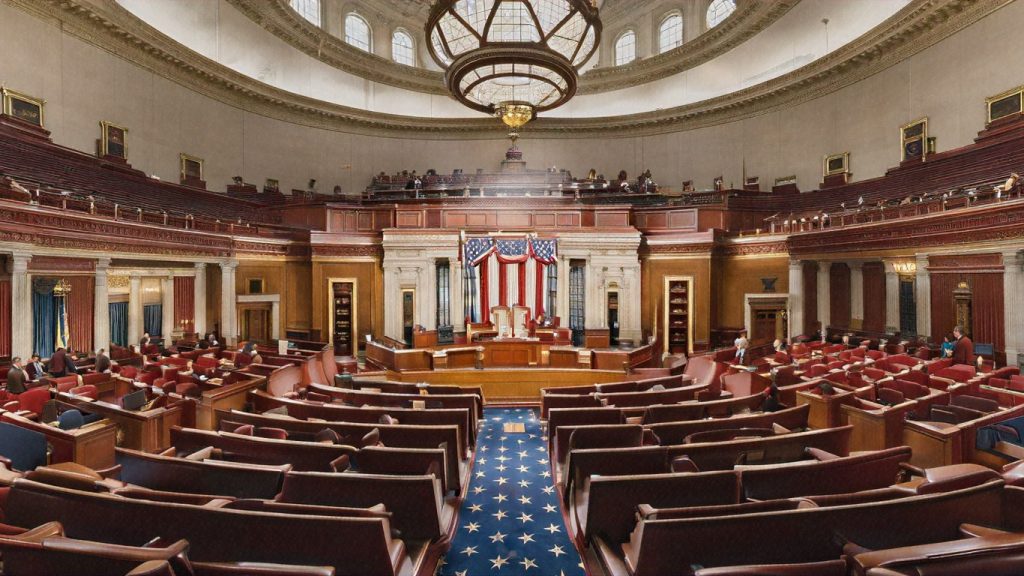
The age profile of the United States Congress has shifted dramatically in recent decades, and it is beginning to raise urgent questions about fitness for office. When the current Congress convened in January, nearly 120 members were aged 70 or older. While advanced age can bring wisdom, experience, and perspective that younger lawmakers may lack, it has also sparked widespread concern that some members may no longer be capable of fully carrying out their duties. These concerns are not just abstract worries about optics. High-profile cases, such as the visible decline of Senator Dianne Feinstein before her passing and reports of Representative Kay Granger spending her final months in a retirement facility while still holding office, have made the issue harder to ignore and harder still to defend as simply partisan sniping.
The unease extends to the highest levels of power. Observers have pointed to moments where President Joe Biden appeared disoriented during speeches or public appearances, or where former President Donald Trump’s unscripted remarks veered into confusion or repetition. In an era where split-second decision-making can affect national security, financial stability, and international diplomacy, questions about cognitive sharpness in leadership are no longer a matter of political rivalry—they cut directly to the heart of democratic accountability. The worry is compounded by a growing perception that many elected officials are increasingly dependent on staffers to carry the true weight of governance. For voters, this raises uncomfortable questions about whether the individuals chosen at the ballot box are still the ones truly shaping policy and making decisions once in office.
At the core of this debate lies a clash between tradition and modern expectations of leadership. America has long idealized elder statesmanship as a marker of wisdom and credibility, but as medical science reveals more about the realities of cognitive decline and as the demands of political leadership become faster-paced and more complex, the assumption that age naturally equates to capability feels outdated. The spectacle of visibly struggling lawmakers clinging to power has forced citizens to confront an uneasy truth: while experience matters, it cannot compensate for the mental clarity required to legislate and lead.
The Proposal for Cognitive Testing
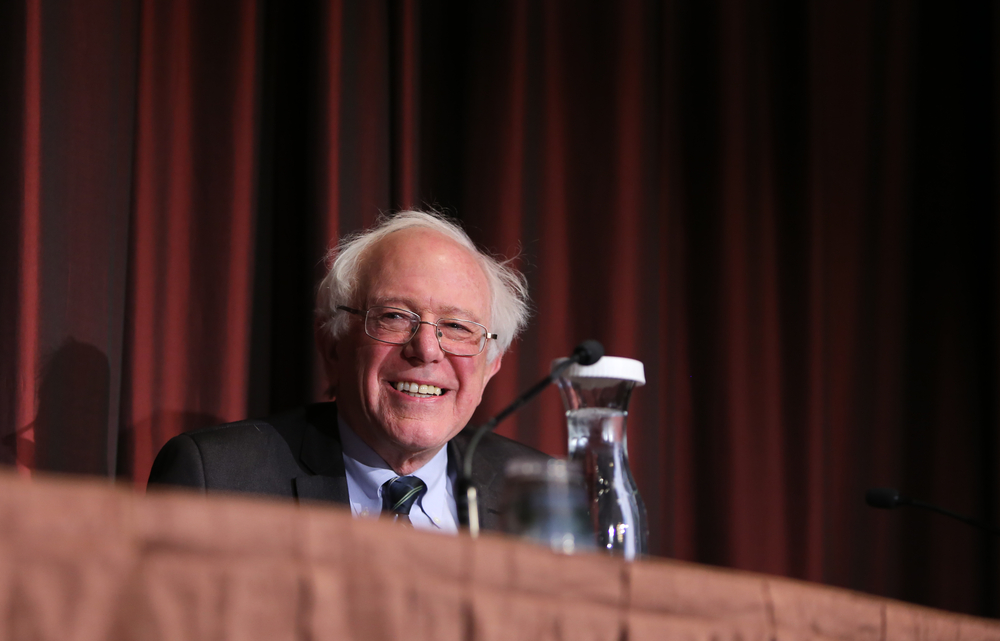
Representative Marie Gluesenkamp Perez has emerged as one of the few voices in Congress openly calling for structural accountability when it comes to cognitive fitness. Her proposal for mandatory testing of lawmakers over a certain age is framed less as a political maneuver and more as a matter of common-sense public safety. She likened the idea to a driver’s license vision test, a small but meaningful safeguard designed to ensure that those in positions of responsibility are still capable of carrying out essential tasks. The principle is simple: if someone steering a car must prove they can see clearly, why shouldn’t those steering the country demonstrate they can think clearly?
Perez’s proposed amendment would have tasked the Office of Congressional Conduct with assessing whether lawmakers remain cognitively capable of doing their jobs. It was a modest step in scope, falling well short of forcing resignations but strong enough to spark debate about what accountability in this area should look like. Yet when she presented it, the House Appropriations Committee shut it down quickly, with no appetite to push the measure forward. This rejection highlighted one of the central paradoxes of the issue: those who would be most affected by testing are the very people who must vote to allow it, creating an inbuilt resistance to reform.
Critics of the current system argue that the rejection reveals an entrenched culture of denial within Congress. Lawmakers may feel that acknowledging the possibility of cognitive decline would weaken their own grip on legitimacy, so they avoid the conversation altogether. But this avoidance only deepens public distrust. Perez herself has argued that Americans are losing faith in a Congress that appears increasingly reliant on younger staffers to mask the declining faculties of older leaders. Without some form of intervention—be it cognitive testing, term limits, or a different system altogether—she and others believe that the erosion of trust will accelerate, leaving democracy itself weakened.
Resistance and Political Backlash
The idea of cognitive testing has faced sharp resistance, not only because of practical concerns but also because it touches a cultural nerve. In the United States, age is often associated with respect and authority, particularly in politics where longevity is celebrated as a sign of resilience and dedication. To suggest that older lawmakers might be unfit for service is to disrupt this cultural narrative, and for many in Congress it feels like an attack not only on their abilities but on their identity as leaders. Some lawmakers have dismissed the proposal outright as ageist, framing it as an unfair attempt to sideline those who have dedicated decades of service to the nation.
This backlash is rooted in more than pride. There are genuine constitutional and logistical questions about how such tests would be implemented. Who would decide the standards for cognitive fitness? How often would lawmakers be tested, and what would happen if they failed? These questions cut to the very structure of American governance, where checks and balances are already fraught with tension. Introducing a new layer of oversight risks being seen as a weapon that could be wielded selectively against political opponents, undermining the very neutrality that would be essential for such a system to gain legitimacy.
At the same time, public sentiment is increasingly tilted toward reform. Polling data has shown that a significant portion of Americans, across party lines, support some form of age or health-related accountability in Congress. The disconnect between voters’ concerns and lawmakers’ resistance fuels a perception that Congress is insulated from the realities facing the people it represents. Critics argue that this insulation creates a dangerous loop: lawmakers cling to power even as their capacity diminishes, staffers quietly take over decision-making, and the public loses faith in the authenticity of representation. Without a mechanism to bridge this gap, the credibility of government remains under strain.
The Broader Debate on Age and Leadership
The conversation about cognitive testing is only part of a larger and more complex debate about the role of age in leadership. Many argue that experience is invaluable in governance, pointing to lawmakers who remain sharp and effective well into their eighties. There are clear examples of individuals whose decades of service and institutional memory allow them to navigate the complexities of legislation with skill and authority. To dismiss all older politicians as unfit would ignore these contributions and risk discarding valuable knowledge at a time when government faces increasingly intricate challenges.
Yet the counterpoint is that age cannot be considered in isolation. Modern governance is fast-moving, technologically complex, and often unpredictable. The demands placed on political leaders today are radically different from those of past generations. The rise of global crises, from cyber warfare to pandemics, requires cognitive agility, adaptability, and rapid processing of information—qualities that may be harder to sustain in advanced age. Critics contend that while wisdom matters, it cannot compensate for the decline in mental speed or clarity that often accompanies aging.
This tension has fueled interest in alternatives to cognitive testing, such as term limits or mandatory retirement ages. While these proposals avoid the stigma of labeling individual lawmakers as unfit, they raise other questions about fairness and the value of experience. Term limits, for example, would prevent individuals of any age from building a career in Congress, potentially weakening institutional continuity. Mandatory retirement ages, meanwhile, could force out capable leaders alongside those in decline. Each solution comes with trade-offs, underscoring that the issue is not just about age but about how to balance capability, accountability, and representation in a democracy that is already under strain.
A Call for Accountability and Renewal
At its core, the debate over cognitive fitness is less about age itself than about accountability and trust. Citizens elect leaders with the expectation that they are capable of performing the job, and when that assumption no longer feels secure, confidence in the entire system erodes. Whether through cognitive testing, term limits, or another yet-to-be-defined mechanism, the American public is signaling a desire for reassurance that lawmakers are fully present and able to make decisions of national consequence.
The question is whether Congress can rise to this challenge without external pressure. Historically, major reforms in government have come not from within but from public demand, often in the wake of crises. As trust in institutions continues to decline, the pressure to address the age and fitness of lawmakers will only grow. If Congress continues to resist, it risks deepening the very cynicism and disengagement that already threaten the stability of American democracy.
An honest reckoning with this issue would not mean discarding the wisdom of older generations. Rather, it would signal a commitment to transparency and renewal—a willingness to ensure that leadership reflects both capability and accountability. The public does not need perfection from its leaders, but it does need assurance that the people making decisions are able to do so with clarity, competence, and independence. If Congress can embrace this reality, it may not only restore confidence but also lay the groundwork for a more resilient democracy.