
Your cart is currently empty!
Putin Ally Warns Trump’s Greenland Push Could Spark Nuclear Apocalypse

A stark warning from Moscow has cast a shadow over Washington’s Arctic ambitions. One of Vladimir Putin’s closest allies has issued a chilling prediction about what could happen if Donald Trump succeeds in his quest to acquire Greenland. According to Dmitry Rogozin, a former Russian deputy prime minister with deep ties to the Kremlin’s nuclear weapons program, American control of the world’s largest island would set humanity on a path toward nuclear annihilation.
Contents
show
Rogozin’s apocalyptic forecast arrives as diplomatic tensions between Washington and Copenhagen reach a fever pitch. Recent talks between American, Danish, and Greenlandic officials failed to resolve their differences, leaving the future of the Arctic territory hanging in the balance. Behind closed doors, military strategists on both sides of the Atlantic are gaming out scenarios that seemed unthinkable just months ago.
What exactly does Russia fear about American designs on Greenland? And why would a frozen landmass larger than Mexico become the flashpoint for a potential nuclear confrontation?
A Putin Loyalist Speaks Out
Rogozin carries considerable weight in Russian political and military circles. His resume reads like a tour through the Kremlin’s most sensitive institutions. He served as deputy prime minister, led Russia’s space agency, and represented Moscow at NATO headquarters in Brussels. Today, he sits in the Russian Senate representing part of occupied Ukraine while overseeing military drone operations against Ukrainian forces on the front lines.
His involvement in Russia’s nuclear deterrent runs even deeper. Rogozin played a central role in developing the Sarmat missile, known in Western military circles as Satan-2. At 208 tons, the silo-launched intercontinental ballistic missile stands as tall as a 14-story building and can travel at speeds exceeding 15,880 miles per hour. Few Russian officials understand their country’s nuclear capabilities better than Rogozin.
When such a figure warns of global catastrophe, military analysts in Washington, London, and Brussels pay attention.
Golden Dome and Arctic Geography
Rogozin claims Trump’s interest in Greenland connects directly to the proposed “Golden Dome” missile defense system. American planners envision a network where space-based technology, artificial intelligence, and layered defense architecture merge into a single system. Orbital sensors would track incoming threats while ground-based interceptors and AI-driven decision-making algorithms coordinate responses in real time.
Such a system requires a favorable geography. Greenland, with its Arctic position and proximity to Russian missile trajectories, offers exactly what Pentagon strategists need. Intercontinental ballistic missiles fired from Russia toward American cities would pass over or near the Arctic. A defense installation on Greenland could detect and potentially intercept these weapons during their vulnerable flight phase.
Rogozin sees something more sinister in American planning. He believes Trump is not acting on impulse but rather executing Pentagon priorities. In his view, Washington wants to abandon negotiations with European allies and simply seize Greenland by force. Once under American control, the island would become a platform for both offensive nuclear weapons and defensive interceptors targeting Russian ICBMs.
Such a move, Rogozin argues, would dismantle strategic stability that has prevented nuclear weapon use since 1945. For nearly eight decades, mutual assured destruction kept both superpowers from crossing the nuclear threshold. If America believed it could strike first and then intercept any surviving Russian response, that calculus might change.
“In real life, this can only be tested once, but it is not certain that anyone will be left to prepare reports afterwards. This is the problem: the US, led by an eccentric, may convince themselves that, finally, thanks to the annexation of Greenland and the deployment there of components of the command and control system for strategic offensive weapons, they have achieved nuclear superiority over Russia and China.” Rogozin warned.
Cold War Ghosts Beneath the Ice
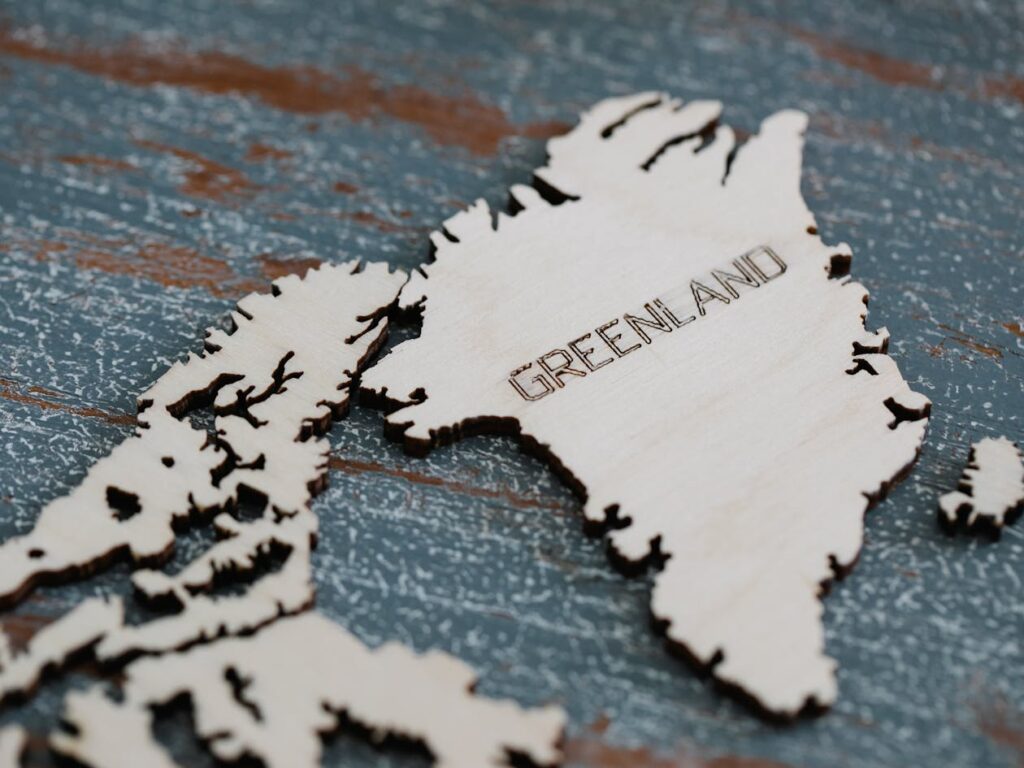
American military interest in Greenland stretches back decades. During the 1960s, Pentagon planners developed Project Iceworm, an ambitious scheme to place hundreds of intercontinental ballistic missiles in tunnels carved beneath Greenland’s ice sheet. Flight times from such positions to major Soviet cities would have been measured in minutes rather than the longer trajectories from continental American launch sites.
Project Iceworm collapsed for reasons having nothing to do with politics or diplomacy. Engineers discovered that Greenland’s glaciers moved and shifted in ways that would crush underground infrastructure. Ice that appeared solid proved alive with motion, grinding against itself and anything humans tried to build within it.
Rogozin notes that technology has advanced considerably since those Cold War experiments. What proved impossible in the 1960s might become feasible with modern engineering. American military planners could potentially solve the problems that doomed Project Iceworm, creating exactly the under-ice missile network their predecessors envisioned.
Diplomatic Standoff in Washington

Against this backdrop of nuclear anxiety, Danish Foreign Minister Lars Løkke Rasmussen and Greenlandic Foreign Minister Vivian Motzfeldt traveled to Washington for high-stakes talks on January 14. Vice President JD Vance and Secretary of State Marco Rubio hosted the meeting at the White House after Vance requested to attend and then to host the discussions.
Observers worried the session might become an ambush designed to pressure Denmark into surrendering its territory under American economic and military threats. After nearly an hour of talks, Rasmussen emerged with little to show for his efforts.
“We didn’t manage to change the American position. It’s clear that the president has this wish of conquering Greenland. And we made it very, very clear that this is not in the interest of the kingdom,” Rasmussen told reporters.
Both sides agreed to create a working group that would address American security concerns while respecting Danish sovereignty. Rasmussen framed the group’s mission as finding middle ground between legitimate defense interests and the inviolability of international borders. Whether such a group can bridge fundamental disagreements remains uncertain.
During the talks themselves, the White House continued its social media campaign against its NATO ally. One post depicted two dogsleds headed in opposite directions, one toward America and one toward Russia and China, with the caption asking which way Greenland should go. Trump had previously mocked Denmark’s defense of the territory as consisting of nothing more than two dogsleds.
Greenland and Denmark Draw Their Line
Greenlandic Prime Minister Jens-Frederik Nielsen made his position clear at a joint press conference with Danish Prime Minister Mette Frederiksen. His territory would not become American property regardless of pressure from Washington.
“If we have to choose between the US and Denmark here and now, we choose Denmark, Nato and the EU,” Nielsen declared, adding that Greenland’s goal remained peaceful dialogue focused on cooperation rather than confrontation.
Frederiksen acknowledged the difficulty of standing up to “completely unacceptable pressure from our closest ally.” Yet she insisted that borders cannot change through force and that small countries should not fear large ones. Denmark would not abandon Greenland or its people simply because a powerful neighbor demanded it.
Public opinion in Greenland itself runs strongly against American takeover. Surveys indicate roughly 85 percent of Greenlanders oppose becoming part of the United States. A 1951 bilateral agreement already allows America to expand its military presence on the island considerably, making outright annexation unnecessary from a pure defense standpoint.
European Allies Rally
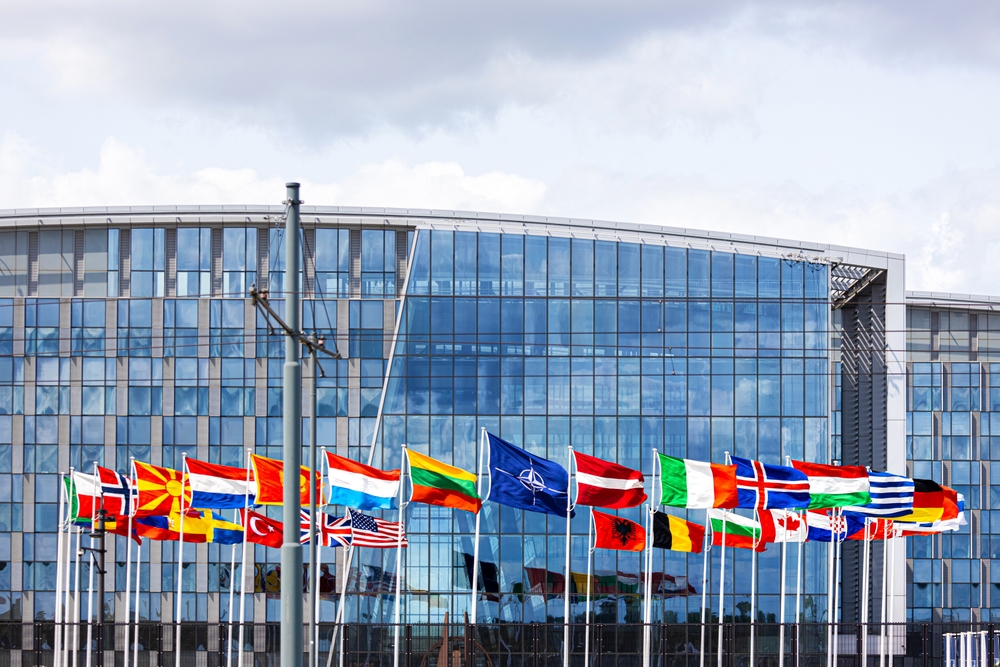
Denmark has not faced American pressure alone. France, Germany, and Norway have all pledged troops to a multinational force that would establish an increased military presence in and around Greenland. Aircraft, vessels, and soldiers from NATO allies would join Danish forces in demonstrating European resolve.
European Commission President Ursula von der Leyen stated plainly that Greenland belongs to its people. She emphasized that European support came through deeds rather than words alone, and that Greenlanders could count on Brussels to respect their wishes and interests.
French President Emmanuel Macron warned of unprecedented consequences if the sovereignty of an EU country and ally were affected. France would act in full solidarity with Denmark, he promised. Such statements carry weight given France’s own nuclear arsenal and its willingness to act independently when it perceives threats to European security.
British forces have also begun positioning warships and troops near Greenland as a signal to Washington. London views the situation as a test of whether NATO solidarity means anything when America itself becomes the aggressor rather than the defender.
Arctic Battleground
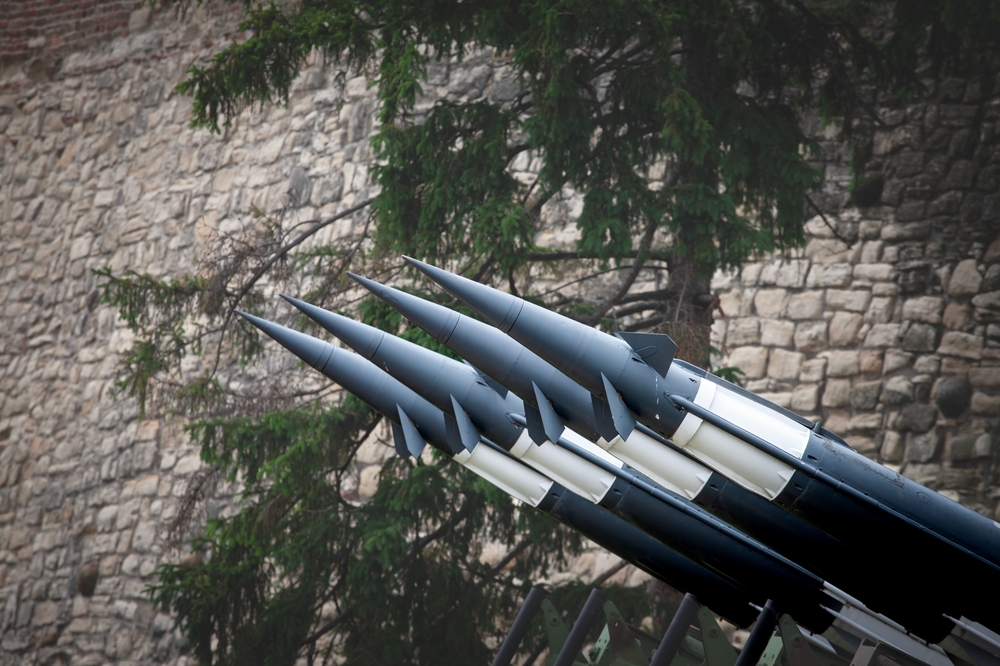
Rogozin paints a grim picture of what nuclear war between America and Russia would look like. In his telling, the Arctic would become ground zero for any exchange of atomic weapons. Geography makes it so.
Intercontinental ballistic missiles traveling between American and Russian territory follow trajectories passing over or near the Arctic. Cruise missiles launched from submarines would take similar paths. Arctic ice, despite its thickness, poses no barrier to nuclear submarines surfacing to launch their weapons.
Any thermonuclear conflict would see strikes exchanged precisely over the Arctic, Rogozin claims. American strategists, in his view, envision a scenario where they could destroy Russian missiles in their silos through a surprise first strike using drones and cruise missiles. Greenland-based interceptors would then catch any surviving Russian weapons launched in retaliation.
Whether such a scenario reflects actual Pentagon planning or Russian paranoia remains impossible to verify. What matters is that Moscow perceives American moves in the Arctic as preparation for nuclear confrontation rather than simple defense.
American Public Skepticism
While the White House presses forward, American voters show little enthusiasm for Arctic expansion. A Reuters/Ipsos poll found only 17 percent of Americans approve of Trump’s Greenland efforts. Support for military force to seize the territory runs even lower.
Just 4 percent of respondents said military action would be a good idea. Among Republicans, only one in ten supported such a move. Among Democrats, almost none did. Expert estimates suggest a Greenland takeover could cost Washington as much as $700 billion, a price tag that would dwarf most military acquisitions in American history.
European officials have played down the likelihood of direct American military action against a NATO ally. Yet Trump’s refusal to rule out force keeps the possibility alive in diplomatic calculations on both sides of the Atlantic.
Uncertain Future

Where matters stand now satisfies no one. Washington wants Greenland for strategic reasons that it considers non-negotiable. Copenhagen and Nuuk refuse to surrender territory that has been part of the Danish kingdom for centuries. Moscow watches with alarm, seeing American expansion into the Arctic as preparation for nuclear superiority it cannot accept.
Working groups and diplomatic channels remain open. Whether they can resolve disagreements that touch on national identity, military strategy, and nuclear deterrence seems doubtful. For now, Greenland sits at the center of a confrontation nobody sought, but everyone must navigate.
Rogozin’s apocalyptic warnings may prove overblown. Or they may reflect genuine fears within the Kremlin about where American ambitions lead. Either way, a frozen island most Americans could not find on a map has become the most dangerous piece of real estate on Earth.