
Your cart is currently empty!
Trump Warns of 10-Year Prison Sentences as Reflecting Pool Deteriorates Weeks After $14.7M Renovation

Just weeks after a rushed $14.7 million renovation intended to prepare the Lincoln Memorial Reflecting Pool for America’s 250th anniversary, the landmark has been drained following a massive algal bloom and the widespread peeling of its new blue liner. This rapid deterioration has triggered a fierce dispute: while infrastructure experts attribute the damage to unresolved plumbing deficiencies and trapped moisture, President Donald Trump has alleged a coordinated act of sabotage involving knives and fertilizer, threatening suspected vandals with ten-year prison sentences
Contents
show
A National Symbol Tainted
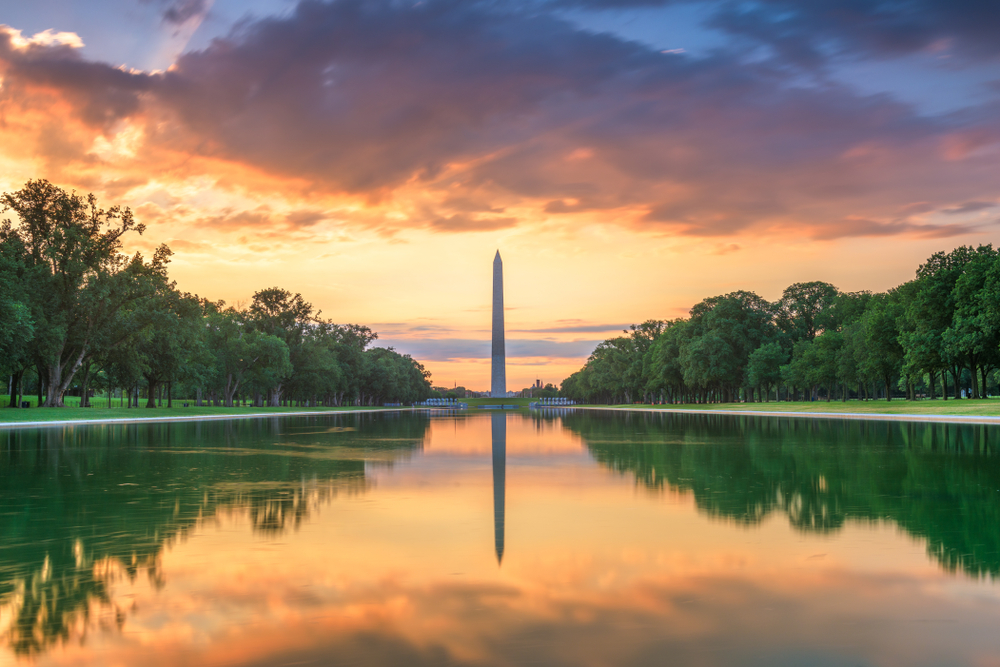
Just weeks after the completion of a $14.7 million renovation on June 6, the Lincoln Memorial Reflecting Pool has experienced a striking and sudden deterioration. The 2,000-foot-long national landmark, envisioned as a pristine centerpiece for America’s upcoming 250th-anniversary celebrations, was quickly clouded by a vivid green algal bloom. Alongside this ecological disruption, massive flaps of newly applied blue paint began peeling away from the pool’s concrete bottom, prompting the DC Water authority to authorize the immediate draining of the seven-acre site for urgent repairs.
The unexpected failure of the pool’s ecosystem and structural lining has triggered starkly different explanations. President Donald Trump has firmly characterized the deterioration as a targeted act of sabotage rather than a construction flaw. He alleged that vandals illegally dumped fertilizer into the water to stimulate the aggressive algae growth and deliberately damaged the pool’s liner. “We have a 290-to-300 [foot] slit, right through it,” the president told reporters, adding, “They went in there with a knife.” While Atlantic Industrial Coatings, the company responsible for the recent recoating, maintains that the damage does not indicate a failure of their materials, the administration’s insistence on deliberate vandalism has transformed a public works setback into a highly scrutinized federal incident.
The Threat of Severe Federal Penalties

As the administration leans into the theory of deliberate sabotage, the response has quickly escalated from a maintenance issue to a matter of federal criminal enforcement. President Trump took to social media to broadcast a stark warning to anyone found responsible for the damage, invoking strict federal property laws. “Please remember that there is a 10-year prison sentence for the destruction, or even the attempted destruction, of such things — Which will be fully enforced!” he wrote. Under the law, the destruction of federal property can indeed carry a maximum penalty of up to a decade in prison, a statute the administration appears ready to leverage.
This zero-tolerance posture has been firmly echoed by the Justice Department. Jeanine Pirro, the U.S. Attorney for the District of Columbia, publicly affirmed the administration’s intent to aggressively prosecute those cited at the site. During a recent television interview, Pirro warned that anyone caught damaging the landmark will “face the criminal justice system in D.C.” She also drew a sharp legal distinction based on the methods allegedly used. While basic vandalism typically results in a misdemeanor charge, Pirro cautioned that the deliberate introduction of biological or chemical accelerants to the water could trigger a harsher legal response. “If there are more serious products that are put into the Reflecting Pool to create more algae or a bigger problem, then we’ll consider more serious charges,” she stated.
The administration’s fierce defense of the renovation has cast a wide net, extending warnings even to those documenting the site’s decay. When asked if a broadcast journalist who recently touched a detached piece of the pool’s liner on camera to demonstrate its condition could face legal consequences, Pirro did not rule it out, emphasizing that anyone impacting the pool risks prosecution. This aggressive legal framing underscores the gravity with which the federal government is treating the high-profile failure, transforming a beloved public space into a heavily policed, potential crime scene.
Arrests and Disputed Accounts
The heavy policing of the Reflecting Pool has quickly resulted in several detentions, though the circumstances surrounding these arrests sharply contrast with the administration’s claims of calculated sabotage. Over the weekend, officers from multiple agencies—including the U.S. Park Police and U.S. Marshals—closely monitored the site, resulting in at least five arrests and several additional citations. While the White House maintains that coordinated vandals deliberately sliced the pool’s liner and dumped corrosive chemicals, the individuals detained thus far insist their actions were driven by sheer curiosity over the visibly failing infrastructure.
The highest-profile arrest has been that of David Hearn, a 67-year-old, three-time U.S. Olympian in canoe slalom. Hearn was charged with a misdemeanor for the destruction of government property after he paused during a 52-mile bike ride to look at the pool’s peeling blue bottom. According to Hearn, he merely reached into the water to feel a piece of the liner that had already separated from the concrete. “I reached in there, and I was able to grab the end of that flapping piece, the already peeling piece,” Hearn explained to reporters following his release. “It was still attached to the bottom. I didn’t remove anything. I didn’t vandalize anything. I didn’t destroy or break or peel anything. By the time I realized what was going on, I was being put in handcuffs.”
Hearn’s account is mirrored by others who have been cited or detained at the site. Several individuals accused of chipping away at the pool’s fresh paint told local media that they were simply picking up loose fragments that were already floating on the murky surface, some treating the debris as impromptu souvenirs of the high-profile failure. Additionally, Park Police reported at least one arrest for disorderly conduct. As of now, authorities have not produced evidence or announced arrests linking anyone to the administration’s specific claims of a 300-foot deliberate knife gash or the introduction of chemical agents, leaving a vast gap between the federal narrative of a targeted attack and the on-the-ground reality of citizens interacting with a rapidly deteriorating public landmark.
Structural Realities and Ecological Factors
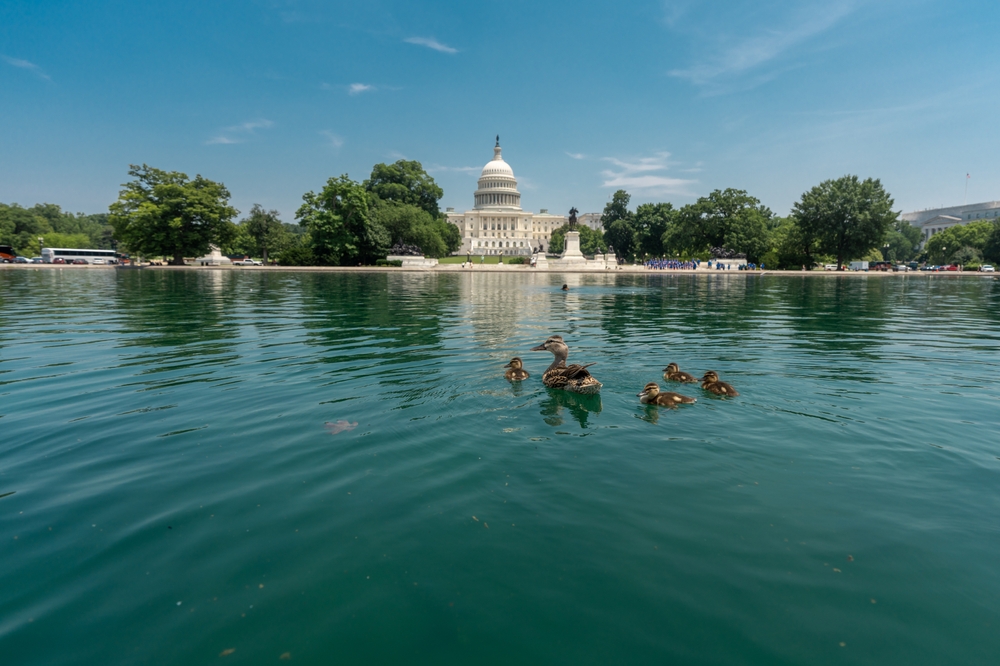
The $14.7 million, six-week renovation prioritized aesthetics over essential infrastructure repairs. Aiming for a patriotic “Old Glory Blue” finish ahead of the nation’s 250th anniversary, the no-bid contract went to a firm previously known for working on swimming pools at the president’s golf clubs. However, the expedited timeline bypassed the pool’s known plumbing deficiencies. Experts note that when sealants are applied over concrete without resolving underlying leaks and moisture, hydrostatic pressure forces the new coating to blister and detach. This classic waterproofing failure directly accounts for the massive, peeling flaps of blue paint floating to the surface, countering the administration’s claims of 300-foot knife gashes.
Similarly, the vivid algal bloom stems from unresolved circulation issues rather than alleged chemical sabotage. A shallow, seven-acre body of stagnant water exposed to intense summer heat provides an ideal breeding ground for rapid algae growth. Because the underlying filtration systems were not rehabilitated, the water lacked sufficient oxygenation to prevent the bloom naturally. To mitigate the resulting ecological fallout, National Park Service workers were documented pouring large quantities of hydrogen peroxide into the pool. While this standard chemical treatment effectively burns off immediate algae, it acts only as a temporary bandage, highlighting the long-term cost of applying a cosmetic fix to a complex, aging water system.
Accountability and the Path Forward
Just weeks before America’s 250th birthday, the Lincoln Memorial Reflecting Pool sits empty. It is a frustrating sight for citizens who value these historic spaces. The situation serves as a clear reminder that rushing a massive renovation purely for the sake of appearances rarely succeeds.
Much like quickly painting over water damage in a home, applying a fresh coat of sealant over a seven-acre pool without fixing the actual plumbing guarantees the paint will eventually peel. Threatening curious tourists and citizens with a decade in federal prison does not repair broken pipes, nor does it address the stagnant water that caused the algae to thrive.
True accountability means stepping back from political blame and focusing on practical, long-term solutions. Properly restoring a national landmark requires transparent contracts, qualified engineering, and a commitment to fixing the foundational issues. Only by addressing the underlying structural problems can the Reflecting Pool return to being a peaceful centerpiece for the nation, rather than a heavily policed controversy.