
Your cart is currently empty!
Ancient Artwork Sparks Viral Claims That Dinosaurs Coexisted With Humans
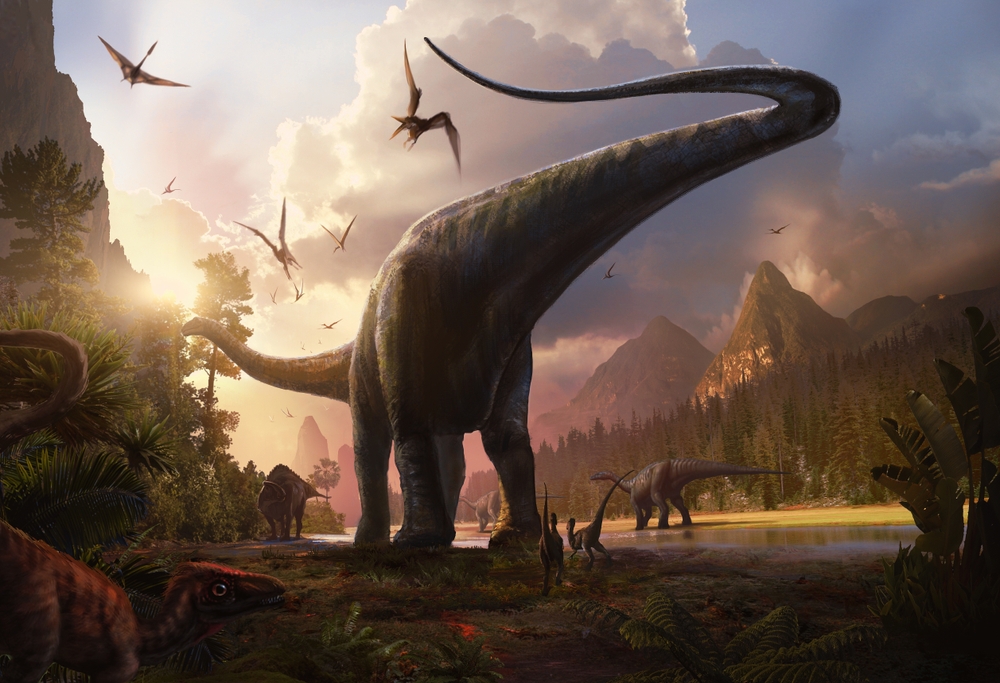
A bizarre claim recently surfaced on social media: a 500-year-old painting supposedly proves dinosaurs lived alongside humans. A battlefield scene from 1562 appears to show massive, long-necked reptiles roaming in the background. While countless viewers are convinced this classic artwork reveals an alternate history, a closer look at the Renaissance canvas exposes a much funnier reality about how modern audiences interpret ancient art.
Contents
show
The True Setting of the Viral “Dinosaur” Painting
A piece from 1562 called The Suicide of Saul is making the rounds online. To understand what is really going on in the picture, it helps to look at where it came from first.
The artwork was created by Pieter Bruegel the Elder. He was a well-known Flemish painter who lived during the Renaissance. Recently, social media posts have been claiming the painting was done by a man named “Peter Bruce Gale.” That name is completely made up. It is simply a distorted version of Bruegel’s real name, seemingly used to make an internet rumor sound fresh and mysterious.
Bruegel was famous for painting wide landscapes based on stories from the Bible. Art historians point out that he frequently placed his main subjects inside large, busy crowds. This style forced viewers to search the canvas to find the real story. In this specific piece, he was illustrating a historical battle on Mount Gilboa. The painting shows two massive armies fighting and the tragic defeat of a king.
During the 1500s, European artists based their work on texts they read. They did their best to bring ancient stories to life for people who had never seen the places being described. The artist wanted viewers to focus on the intense human conflict. If there were actually massive prehistoric reptiles wandering around the battlefield, a skilled artist would have likely made them the main attraction.
A Case of the Misidentified Mounts
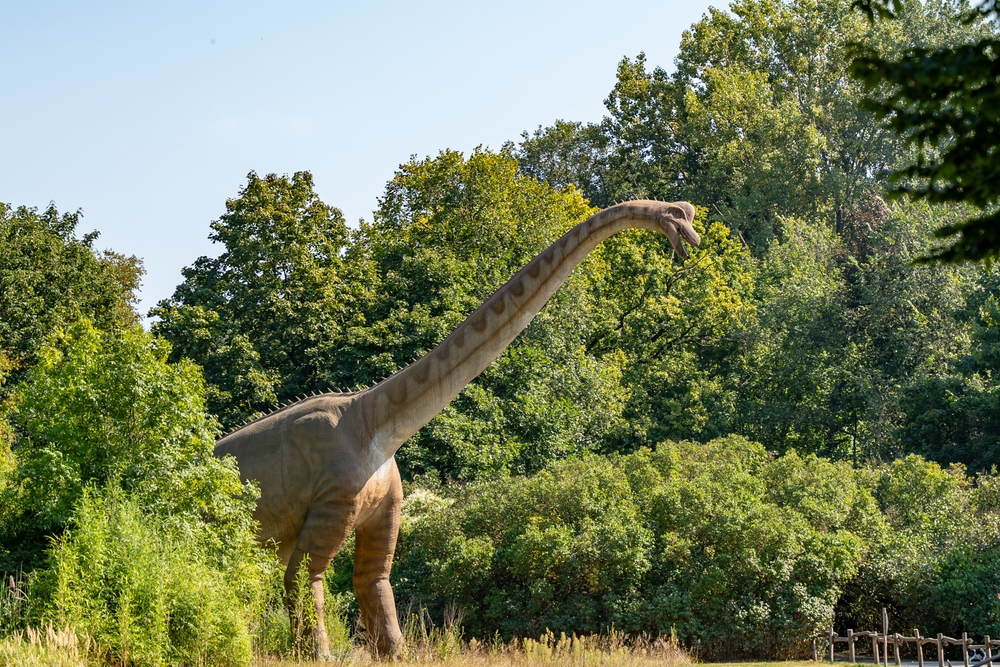
The current confusion stems from a few small figures riding around in the background of the painting. To modern eyes, these creatures look suspiciously like long-necked dinosaurs, specifically the Brachiosaurus. This visual similarity led some social media users to claim the artwork is proof that humans and dinosaurs coexisted. However, the real explanation is much simpler and a lot more humorous.
The creatures in question were actually meant to be camels. The biblical story of King Saul mentions camels, so it makes sense that Bruegel wanted to include them to make his scene accurate to the text. The problem was that living in sixteenth-century Europe, the artist had almost certainly never seen a real camel. He had to rely entirely on written descriptions or vague, second-hand accounts.
Imagine trying to sketch a bizarre animal with a humped back, long spindly legs, and an extended neck based purely on a game of telephone. The result is bound to look a little strange. This was a very common struggle for artists of that era. For instance, medieval painters were famous for drawing incredibly odd-looking lions because they lacked living models to study. In this case, Bruegel’s best guess at a camel just happens to look exactly like a cartoon dinosaur to us today.
How Pop Culture Fills in the Blanks

The internet post that sparked this rumor claimed the artwork was painted three centuries before humanity knew anything about dinosaurs. A closer look at the historical timeline reveals why this detail is misleading. While ancient civilizations certainly uncovered massive fossilized bones, they did not have the scientific framework to understand them. These discoveries often inspired legends of dragons and mythological beasts. The actual scientific classification of these creatures did not occur until the nineteenth century. British scientist Richard Owen officially coined the term “Dinosauria” in the 1840s.
Furthermore, the fossil record and radiometric dating show that non-avian dinosaurs went extinct approximately 66 million years ago. Early humans appeared millions of years later. The concept of the two groups walking side by side is a product of modern entertainment and pop culture, not historical reality.
So why do modern viewers instantly see a prehistoric reptile in a Renaissance painting? The answer lies in human psychology. People naturally try to make sense of unfamiliar shapes by comparing them to images they already know. Today, society is saturated with images of prehistoric creatures through movies, books, and museums. When confronted with an awkward, long-necked figure on a canvas, the modern brain immediately fills in the blanks with a familiar concept.
The Viral Trend of Time Travelers in Art
This dinosaur claim is part of a much larger trend on social media. Every few months, a classic painting goes viral because internet users believe they have spotted a time traveler or a piece of modern technology hidden in the background. From figures appearing to hold smartphones to characters wearing what look like modern sneakers, these claims gather millions of views and spark endless online debates.
A famous example occurred with an 1860 painting titled The Expected One by Ferdinand Georg Waldmuller. Viewers were entirely convinced that a woman walking down a dirt path was staring intently at an iPhone. This generated wild theories about time travel across various online platforms. However, art historians quickly stepped in with a practical explanation. The woman in the painting was actually holding a small, traditional prayer book.
Just like the camel that looks like a dinosaur, this happens because people view historical artifacts through modern experiences. Society today revolves around rectangular screens. When modern audiences see a figure holding a small object and looking down, their brains instantly suggest a smartphone rather than a religious text.
Without knowing the cultural norms of a specific era, it is incredibly easy to misinterpret details. While it is fun to imagine time travelers posing for Renaissance portraits, the reality usually involves mundane, everyday objects from that specific time period.
Looking Closer at the Past
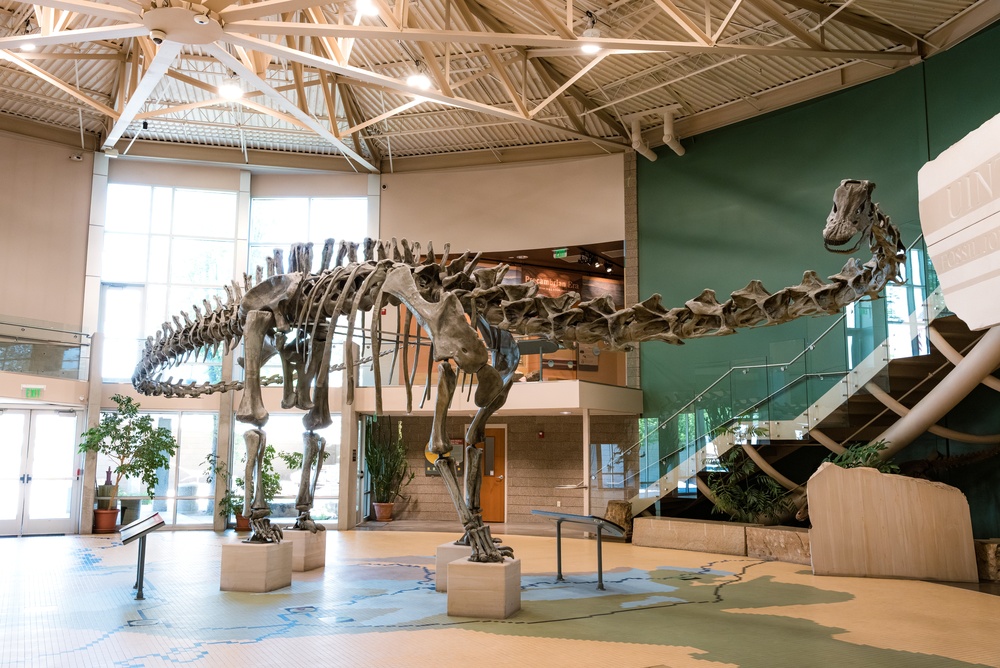
It makes sense why stories about time-traveling beasts catch on so fast. A secret, hidden history is thrilling. But the truth is often much funnier. A sixteenth-century painter doing his absolute best to sketch a camel he had never actually seen is a great story on its own. These viral moments prove that classic art can still grab the world’s attention today.
Next time a wild claim pops up on a social media feed, taking a quick second to double-check the facts goes a long way. If a single blurry detail in an old painting supposedly rewrites the entire human timeline, it is worth doing a quick search. Separating an honest artistic mistake from an internet rumor is usually quite simple.
There will definitely be another historical painting at the center of an online debate soon. Until that happens, this accidental dinosaur is a perfect snapshot of how the modern world interprets history. Sometimes, the most interesting discoveries are just relatable human errors hiding in plain sight.