
Your cart is currently empty!
Research Shows Life Does Not Shut Down Everywhere at the Same Time

For most people, death feels like a clear dividing line. Once the body stops working, we assume everything that made it function disappears with it. That belief is deeply woven into how medicine explains death and how society understands endings. Yet scientists studying what happens inside the body after death are finding that the story may not be as simple or as final as it seems.
Contents
show

Research into cellular behavior shows that some cells continue to function even after the organism as a whole has stopped. In carefully controlled conditions, they can survive, respond to their surroundings, and sometimes organize in ways they never did before. These discoveries come from peer-reviewed studies and are beginning to influence how researchers think about regeneration and healing. More broadly, they invite a quieter question that goes beyond the laboratory. If life does not shut down everywhere at once, what does that say about how we define life in the first place?
Not Every Part of the Body Stops at the Same Time
In biology, death is defined by the failure of the body to function as a coordinated whole. The heart no longer circulates blood and the lungs stop supplying oxygen, bringing the systems that sustain life to an end. What this definition often obscures is that it describes the organism, not each of its individual parts. While the larger system collapses, many cells continue to function independently for a period of time, drawing on their own reserves and responding to what remains of their environment.

This reality is already reflected in medical practice. Organ transplants rely on the fact that tissues can remain viable for hours after death if oxygen loss is carefully managed. Skin grafts and bone marrow transplants work because certain cells can survive separation from the body and regain function in a new setting. Cryopreservation extends this principle even further by slowing cellular metabolism, allowing tissues to be stored for years before being revived. These applications quietly acknowledge that biological activity does not end everywhere at once.
More recent research suggests that postmortem cellular activity involves more than simple endurance. Studies examining gene expression after death have found that some stress-related and immune-related genes become more active for hours or even days. Rather than shutting down immediately, cells appear to adjust to changing conditions around them. This response does not imply consciousness or intent, but it does show that cells are not merely fading remnants. They are capable of active biological processes even after the body they belonged to has ceased to function as a whole.
When Cells Step Outside Their Original Roles
Most of what we know about biology is built on predictability. Cells develop within carefully structured systems that guide what they become and how they behave. Skin cells protect. Muscle cells contract. Development follows a narrow path shaped by genetics and reinforced by constant signals from surrounding tissues. As long as the organism remains intact, those rules hold firmly in place.
Researchers began to notice something different when cells were removed from that familiar setting. When cells taken from deceased organisms were placed in controlled laboratory environments, some did not simply persist or fade away. Instead, groups of cells began organizing themselves into stable structures, coordinating with one another and carrying out actions that had no role in their original biological assignment. These changes occurred without genetic modification and without external instruction, suggesting that the cells were responding to their immediate surroundings rather than following a preset developmental plan.
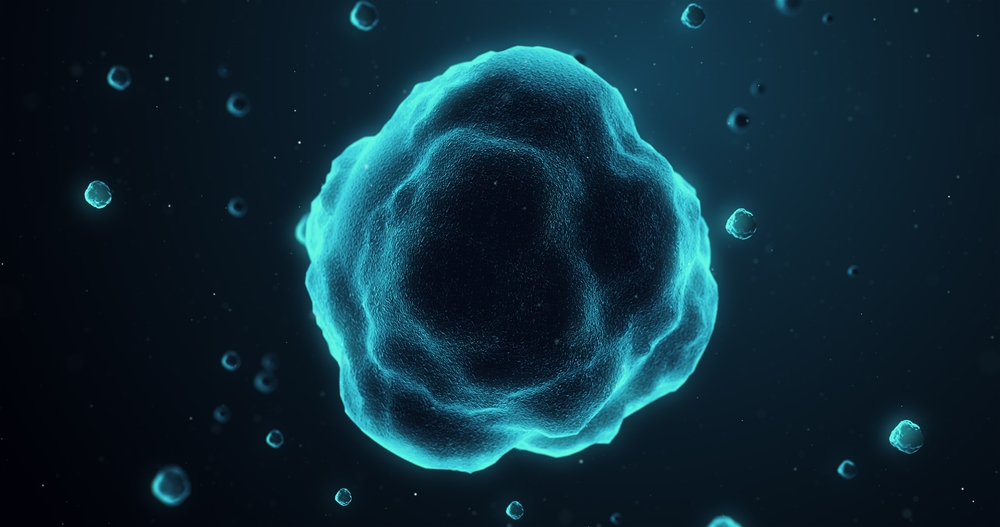
What makes this behavior difficult to categorize is that it falls between established definitions. The cells are not forming a new organism, and they are not reproducing in any conventional sense. At the same time, they are clearly active, coordinated, and responsive. Researchers now describe this as a distinct state of biological behavior, one in which cells operate collectively without the guidance of a larger organism. It challenges long held assumptions about how fixed cellular identity really is and highlights how much potential behavior remains hidden until the usual boundaries are removed.
When Simple Cells Form Unexpected Partnerships
Some of the most surprising insights into cellular flexibility have come from experiments involving skin cells taken from African clawed frog embryos. In their natural setting, these cells perform modest and highly specific tasks related to surface movement and protection. They are not involved in navigation or decision making, and they operate under constant guidance from the developing organism.
When researchers removed these cells from the embryo and placed them in a controlled laboratory environment, the outcome challenged long standing assumptions. Instead of remaining scattered or losing function, the cells gathered into small, stable multicellular structures that researchers later named xenobots. These formations were not created through genetic modification or external design. They emerged from the cells, interacting with one another once the signals that normally direct development were no longer present.

What followed was even more unexpected. The cells coordinated the movement of their cilia in a way that allowed the structure to move across a surface. This ability was not part of their original role inside the embryo and was not introduced by researchers. In later experiments, the structures were also observed collecting loose cells from their surroundings and assembling them into new xenobots with similar behavior. This process did not rely on growth or cell division and did not resemble any known form of biological reproduction.
According to the scientists involved in the research, including Michael Levin, these behaviors were not programmed in advance. They arose from basic cellular interactions responding to a new environment. The significance of xenobots lies not in their novelty, but in what they reveal about cells themselves. Under the right conditions, ordinary cells can organize, cooperate, and solve problems in ways that were previously thought impossible outside a living organism.
How This Research Complicates Our Definition of Death
Modern society tends to treat death as a clear endpoint. A moment that separates before and after, presence and absence, life and what follows it. Legal systems, medical protocols, and cultural rituals all depend on this clarity. Yet the research emerging from cellular biology makes that line harder to draw. If parts of the body can remain active, responsive, and organized after the organism has stopped functioning as a whole, then death begins to look less like a single event and more like a gradual transition.
This does not mean that death is reversible or that life continues in any personal or conscious sense. What it does mean is that the biological processes associated with life do not shut down in perfect unison. Cells operate on different timelines, influenced by their environment, energy demands, and internal signaling. From a scientific standpoint, this challenges the simplicity of how death is often discussed. It suggests that the end of life is not a moment that arrives everywhere at once, but a process that unfolds unevenly across the body.
On a societal level, this uncertainty matters. It reminds us that categories like alive and dead are tools we use to make sense of complex realities, not absolute truths written into nature. Similar to how relationships, careers, or stages of life rarely end cleanly, biological endings carry overlap and ambiguity. This research does not blur boundaries to create confusion, but to invite humility. It shows that even in something as fundamental as death, there is more complexity than our definitions allow, and that understanding may require sitting with uncertainty rather than trying to erase it.
Why Our Language Struggles With Gradual Endings
Society relies on clear language to navigate complex moments, and death is one of the clearest examples. We speak about it in definitive terms because our systems depend on that clarity. Legal documents require a moment of death. Medical protocols need thresholds. Cultural rituals are built around a single point of transition. Language, in this sense, simplifies what biology does not.
What cellular research quietly exposes is a mismatch between how life actually unfolds and how we talk about it. At the biological level, endings are uneven. Some processes stop quickly, others slow down, and some adapt before fading. Yet our words leave little room for this kind of overlap. Alive and dead become absolute categories, even when the reality underneath them is gradual and complex.
This gap between language and biology matters because it shapes how we understand loss, transition, and closure. When endings are framed as instant and complete, anything that lingers can feel unsettling or confusing. Research like this does not demand new definitions, but it does suggest the value of more careful language. It reminds us that many endings, in nature and in life, do not arrive all at once. They unfold. And understanding that may help society approach change with greater clarity rather than forcing precision where it does not exist.