
Your cart is currently empty!
Meet The Physicist Exploring A Mystery That Stumped Einstein
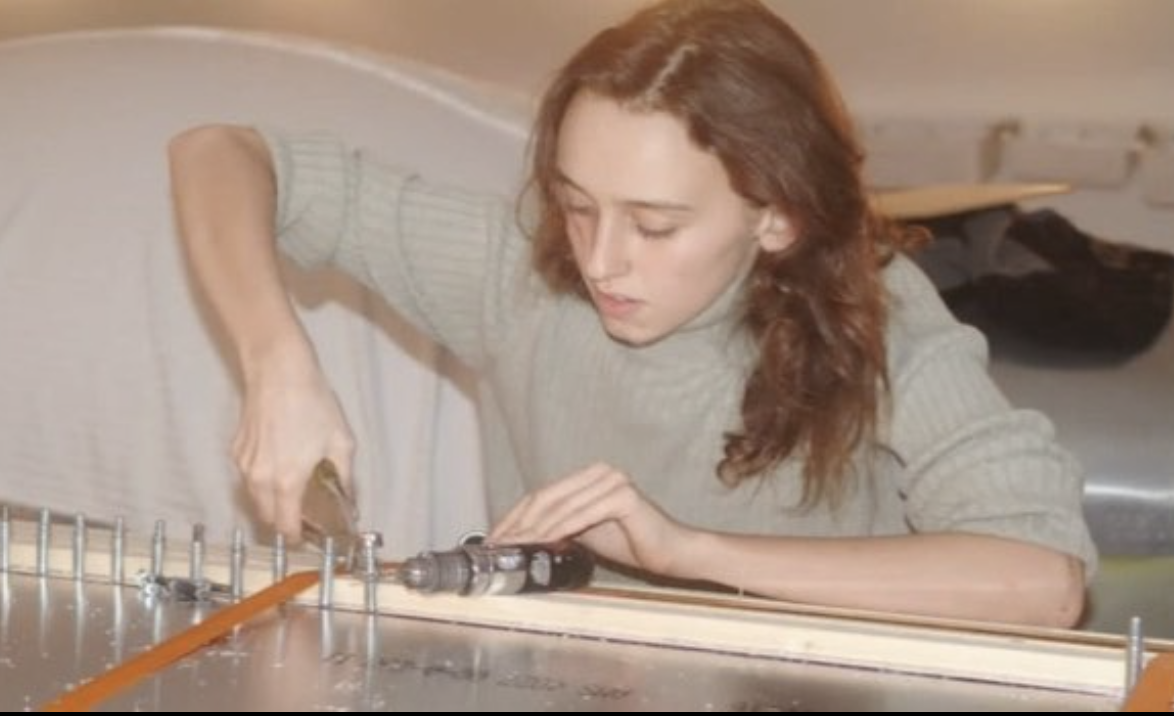
At an age when most teenagers are still figuring out what they want to do with their lives, Sabrina González Pasterski was already building an aircraft. By 16, she had flown a plane she helped construct herself, setting the stage for an extraordinary academic career that would eventually take her to the forefront of theoretical physics.
Contents
show
Today, the American physicist is investigating one of science’s biggest mysteries: how gravity and quantum mechanics can exist within a single mathematical framework. Her work on celestial holography has attracted attention from the scientific community, with some media outlets even describing her as the next Albert Einstein.
From A Childhood Dream To Building Her Own Aircraft
Pasterski was born in Chicago in 1993 and developed an interest in aviation when she was still very young. She began taking flying lessons at nine, gradually becoming fascinated by the engineering and mechanics behind aircraft. Her childhood ambitions were considerably bigger than those of most children her age.
In an interview with MIT’s alumni publication, Pasterski recalled wanting a flying broomstick after reading the Harry Potter books.
Her father responded by arranging for her grandfather to get her a Cessna instead. That decision helped turn an imaginative childhood dream into a serious interest in aviation.
By around 12, Pasterski had begun assembling a fixed-wing aircraft from a kit. The project required considerable patience and technical understanding, as she spent approximately two years putting the aircraft together and making modifications to improve its safety. She eventually managed to fly the aircraft herself as a teenager.
The Unusual Project That Started Everything
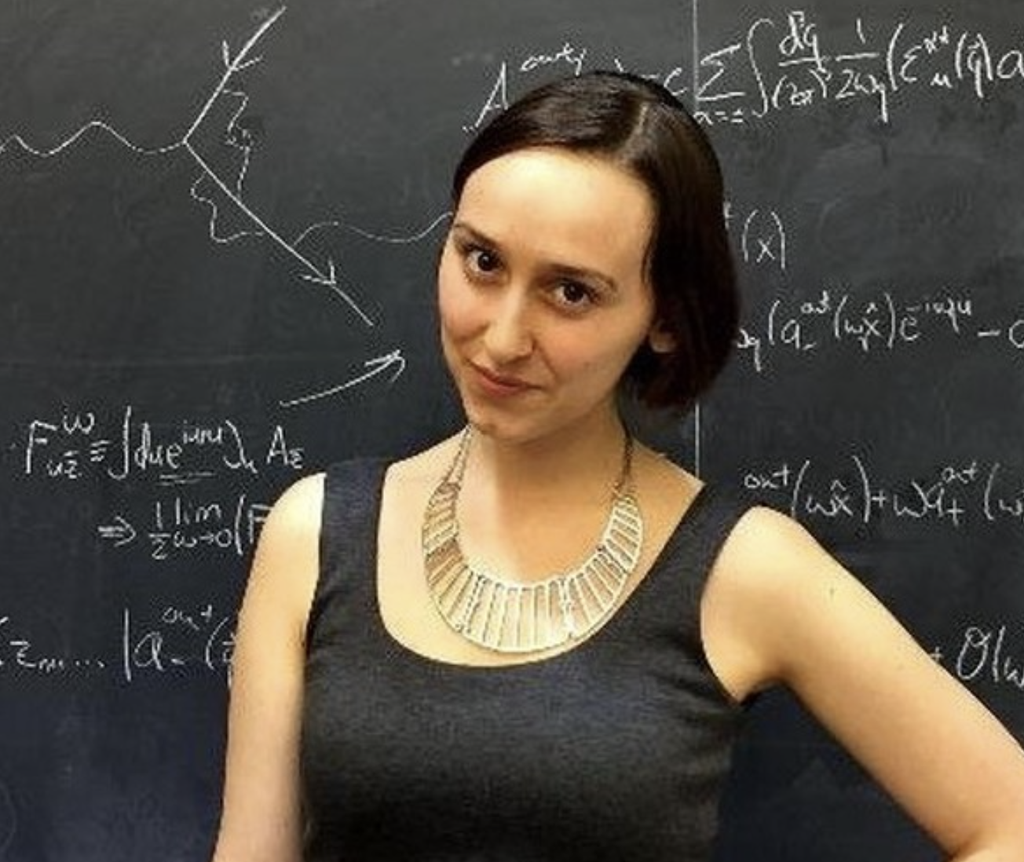
Image Credits – Instagram @sabrina.pasterski
Building an aircraft involves understanding several complicated systems, including its structure, mechanical components and flight controls. Pasterski had to work through these challenges while balancing the responsibilities of being a school student. Her achievement demonstrated an early willingness to take on demanding technical projects.
Her interest in aviation also brought her closer to the aerospace industry. She initially imagined working with companies involved in commercial space exploration, including organisations such as Blue Origin, Virgin Galactic and SpaceX. However, her ambitions eventually shifted towards understanding the fundamental laws governing the universe.
The transition from aerospace engineering to theoretical physics might seem unexpected, but Pasterski found another challenge that captured her attention. She became increasingly interested in questions about how nature works at its most fundamental level. That curiosity would eventually lead her to MIT and Harvard.
How She Became One Of MIT’s Top Physics Graduates

Image Credits – Instagram @sabrina.pasterski
Pasterski enrolled at the Massachusetts Institute of Technology at 17, initially considering a future connected to aerospace engineering. Her academic interests gradually moved towards physics as she explored more complicated questions about the universe. She eventually became one of the university’s most accomplished physics students.
She graduated with a reported perfect 5.00 GPA and ranked at the top of MIT’s physics programme. Her achievement made her the first woman to graduate as the programme’s top-ranked student. The accomplishment attracted attention from academic institutions and publications covering young scientific talent.
Her academic journey continued at Harvard University, where she began doctoral research at just 21. There, she worked with theoretical physicist Andrew Strominger and started investigating mathematical questions involving gravity and spacetime. Her research would eventually contribute to an area that continues to challenge physicists worldwide.
The Achievements That Brought Her International Attention

Image Credits – Instagram @sabrina.pasterski
Pasterski’s academic record attracted considerable recognition during her twenties. She appeared on several prominent young achiever lists and became known for her work in high-energy theoretical physics. Her accomplishments also brought her into contact with some of the most influential researchers in the field.
Some of her notable milestones include:
- Scientific American recognition: She appeared on the publication’s 30 Under 30 list in 2013.
- Forbes recognition: She was included in Forbes’ 30 Under 30 Science list in 2012 and later joined its All-Star list in 2015.
- Harvard doctoral research: She completed her PhD in physics in 2019 after working with Andrew Strominger.
- Stephen Hawking citation: Her research papers were cited by the renowned physicist in 2016.
- Princeton fellowship: She completed a postdoctoral fellowship at Princeton’s Centre for Theoretical Science after earning her doctorate.
These accomplishments helped establish her reputation as an unusually accomplished young physicist. However, her research interests extend far beyond academic awards and university rankings. She is now focused on mathematical questions that could help scientists understand the fundamental structure of reality.
Why Physicists Still Cannot Fully Explain Gravity
Two major theories form the foundation of modern physics, but combining them remains a serious scientific challenge. Einstein’s general theory of relativity explains gravity through the curvature of spacetime, describing how massive objects influence the universe around them. Quantum mechanics, meanwhile, explains how matter and energy behave at extremely small scales.
Both theories have been tested extensively and have produced remarkably accurate predictions. General relativity helps scientists understand planetary motion, stars and black holes, while quantum mechanics describes atoms and subatomic particles. The difficulty appears when researchers attempt to use both theories to explain the same extreme physical situations.
The Problem With Combining Two Major Theories
General relativity describes spacetime as a continuous structure that can bend and stretch under the influence of mass and energy. Quantum mechanics operates through a different mathematical framework involving probabilities and discrete physical quantities. These descriptions do not fit together completely under our current understanding.
Black holes provide one particularly interesting example of the problem. Their extreme gravitational environments create situations where quantum effects and general relativity may both become essential. Scientists still lack a complete theory that can consistently explain these conditions.
This unresolved challenge is known as quantum gravity. Physicists have spent decades investigating possible solutions, but no universally accepted framework has emerged. Pasterski’s research contributes to this wider effort by exploring mathematical relationships between gravity, quantum theory and spacetime.
What Is Celestial Holography And Why Is It Important?
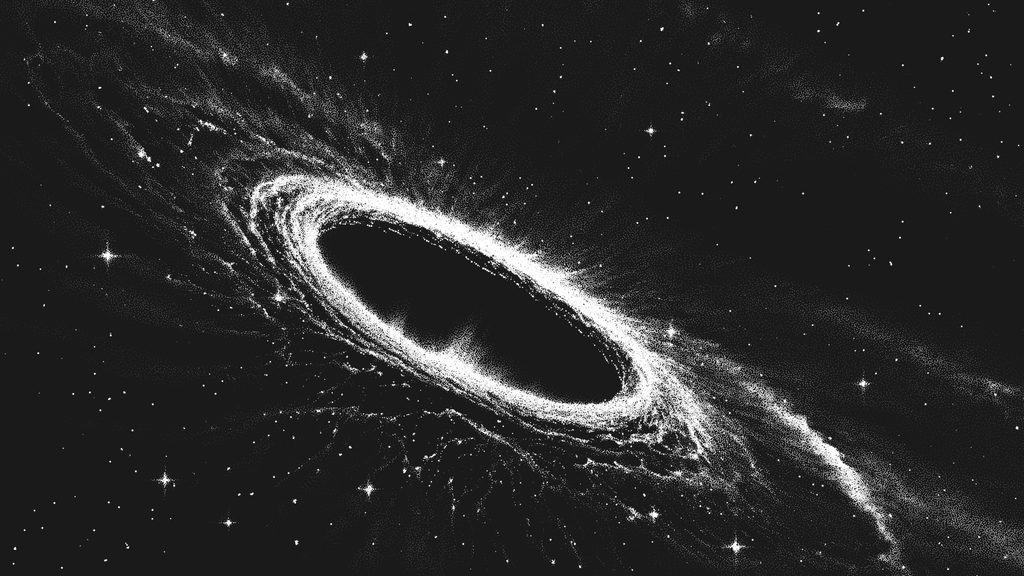
One of the central areas of Pasterski’s research is celestial holography, a theoretical approach that investigates how information about our universe might be represented through a lower-dimensional mathematical description. The idea draws inspiration from the holographic principle, which has become an important subject in theoretical physics. It offers another way to investigate the relationship between quantum information and spacetime.
Imagine looking at a three-dimensional holographic image created from information stored on a two-dimensional surface. The image appears to have depth, even though its underlying representation contains fewer dimensions. The holographic principle explores a related mathematical possibility when describing physical reality.
The Theory That Inspired Her Research
An important development in this area came in 1997, when physicist Juan Maldacena proposed the AdS/CFT correspondence. His work demonstrated a mathematical relationship between two different descriptions of a particular theoretical universe. One description involved gravity within a higher-dimensional space, while the other used a quantum theory on its lower-dimensional boundary.
The two descriptions were mathematically equivalent, meaning they could represent the same underlying physical information. This result attracted considerable interest because it suggested that gravitational physics could potentially be understood through a theory with fewer dimensions. However, the framework applies to a specific type of curved spacetime rather than the flat spacetime associated with our universe.
Celestial holography attempts to investigate whether related mathematical ideas can work in a setting closer to the universe we actually inhabit. This introduces considerable complications because the geometry and mathematical conditions are different. Pasterski and her collaborators are working to develop the framework needed to address those difficulties.
How The Celestial Sphere Fits Into The Theory
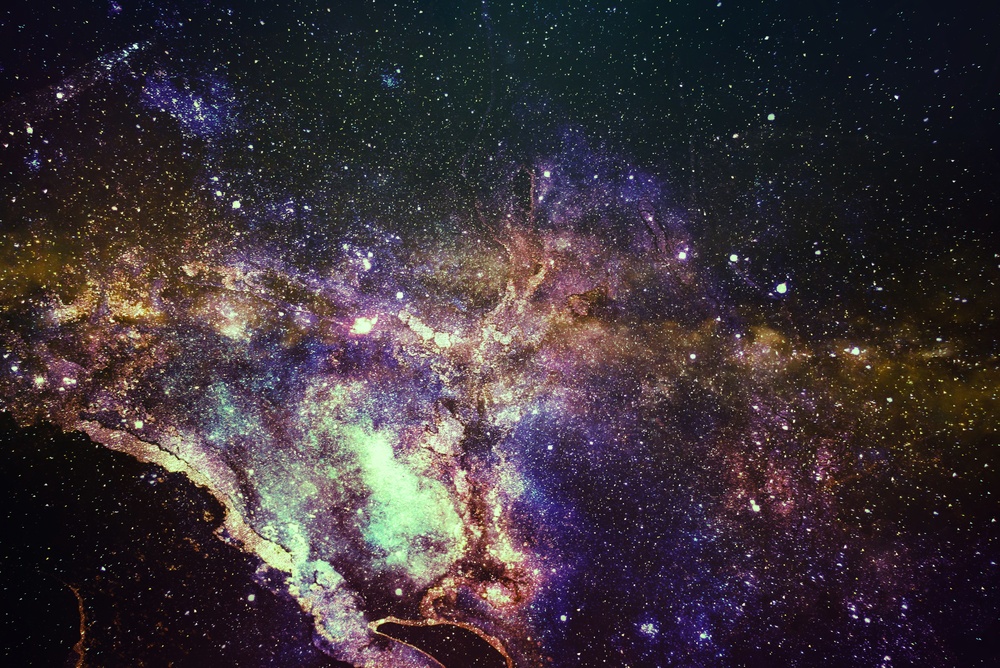
Pasterski’s approach considers particle collisions and the information carried by particles moving in different directions. She investigates whether these events can be represented through information associated with a distant two-dimensional sphere. This mathematical surface is known as the celestial sphere.
During her interview with New Scientist, Pasterski explained the concept by comparing it to the night sky. “You see the stars, you think of them as being infinitely far away, like a sphere around you,” she said. She then described that two-dimensional surface as the celestial sphere.
The approach attempts to reconstruct information about physical events using patterns represented on this distant boundary. Researchers are working to establish the mathematical rules needed to translate between the boundary description and the physics occurring within spacetime. The eventual goal is to develop a consistent framework that can describe more complicated physical systems.
The Research Project That Has Attracted Millions In Funding
After completing her doctorate at Harvard in 2019, Pasterski continued her research through a postdoctoral fellowship at Princeton. She subsequently joined Canada’s Perimeter Institute for Theoretical Physics in 2021, where she became involved in developing celestial holography further. She now leads the institute’s Celestial Holography Initiative.
The research project has received an $8 million grant from the Simons Foundation. This funding supports work involving quantum gravity, mathematical physics and the relationship between quantum theory and spacetime. It also provides researchers with resources to investigate questions that require considerable theoretical development.
Pasterski’s work involves collaborating with other physicists rather than attempting to solve the problem independently. One important part of the research involves extending the mathematical framework beyond individual particles. She and Justin Kulp of Stony Brook University have investigated how the approach can be applied to multiple particles.
Another important subject is quantum entanglement. This phenomenon allows two particles to share a connection through which measurements of one can provide information about the other, even when they are separated by considerable distances. Understanding how entanglement relates to spacetime geometry could help researchers investigate the deeper mathematical structure of the universe.
Could Her Theory Eventually Be Tested?
One of the biggest challenges facing theoretical physics is finding ways to test mathematical predictions experimentally. Some proposed approaches to quantum gravity involve energy levels that are far beyond what existing particle accelerators can achieve. Pasterski has nevertheless considered possible connections between celestial holography and phenomena that scientists can investigate.
Two particularly interesting possibilities involve gravitational waves and particle collisions. Both provide opportunities to study physical processes that could reveal information about the mathematical framework behind her research. However, neither has yet established that celestial holography correctly describes our universe.
The Spin Memory Effect And Gravitational Waves
Gravitational waves are ripples in spacetime produced by violent cosmic events, including collisions between black holes. When these waves travel through the universe, they can leave behind tiny permanent changes in the relative positions of objects. Scientists study these effects to learn more about gravity and the behaviour of massive astronomical systems.
Pasterski and her colleagues have investigated an extension of this phenomenon known as the spin memory effect. The concept proposes that gravitational waves can leave an imprint associated with their angular momentum or rotation. Researchers are interested in how this effect could connect observable gravitational phenomena with the mathematical ideas explored in celestial holography.
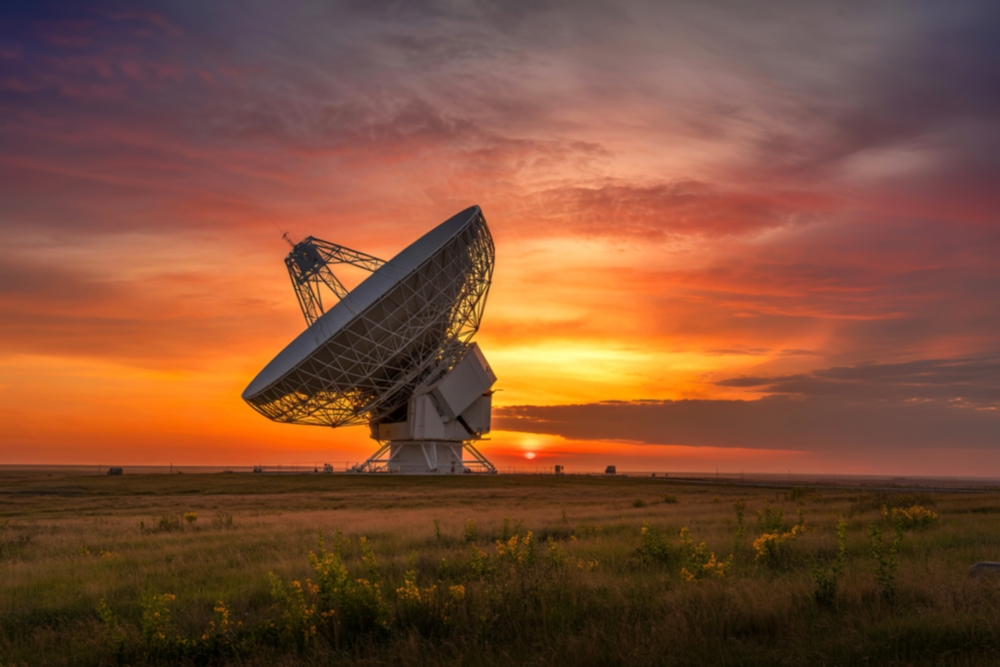
Future space-based observatories could potentially help investigate these predictions. One example is the Laser Interferometer Space Antenna, known as LISA, which is planned as a major gravitational wave observatory. Its observations could provide valuable information about gravitational phenomena that are difficult to study using ground-based instruments.
Could CERN’s Particle Collider Help?
Another possible testing ground is the Large Hadron Collider at CERN, near Geneva, Switzerland. The machine accelerates particles to extremely high energies before bringing them into collisions. Scientists then examine the resulting data to understand the fundamental behaviour of matter.
Pasterski has discussed the possibility of treating particle detectors as boundaries within the mathematical framework of celestial holography. She has suggested that researchers could examine patterns in how energy is distributed during particle collisions. Such observations could potentially provide clues about the geometric relationships predicted by the theory.
This remains an area of investigation rather than an established experimental result. Researchers still need to determine which predictions can be tested and whether the available data can distinguish the framework from other explanations. Nevertheless, the possibility of connecting theoretical mathematics with real experimental observations makes this work particularly interesting.
Why Pasterski Rejects Being Called The Next Einstein
With her academic achievements and ambitious research programme, Pasterski has naturally attracted comparisons with Albert Einstein. However, she has made it clear that she does not particularly appreciate the label. During her New Scientist interview, she was asked directly about being described as the next Einstein.
Her response was blunt: “It’s bullshit,” she said, smiling. She added, “I don’t think I deserve it, first of all.” Pasterski explained that she tries to turn the attention into something positive because the publicity gives her a platform.
Her reaction reflects the difference between media headlines and the realities of scientific research. Solving a problem as complicated as quantum gravity requires years of mathematical work, collaboration and experimental investigation. Even highly accomplished physicists cannot guarantee that their preferred theories will ultimately prove correct.
In another interview with MIT’s alumni publication, Pasterski described her motivation as an effort to uncover what she calls “the source code of the universe.” She also explained that physics advances through identifying contradictions in existing explanations and developing more consistent ways to understand nature.
She remains part of a much wider scientific community working towards these questions. Her research may eventually contribute to a better understanding of gravity and quantum mechanics, although substantial challenges remain. For now, the equations and experiments will determine how far the theory can go.
Pasterski’s journey from assembling an aircraft as a teenager to leading an ambitious theoretical physics initiative is already extraordinary. Whether celestial holography eventually helps solve one of science’s biggest mysteries remains an open question. The next Einstein comparison can wait; the universe still has plenty of secrets left to reveal.
Featured Image from Instagram @sabrina.pasterski