
Your cart is currently empty!
Saying “Please” and “Thank You” to ChatGPT is Costing OpenAl Millions, Says Sam Altman

When you ask a barista for your morning coffee, you probably say “please.” When they hand it over, you say “thank you.” These small courtesies grease the wheels of human interaction—so naturally, many of us carry the same manners into our conversations with artificial intelligence.
Contents
show
But according to OpenAI CEO Sam Altman, that well-meaning politeness is quietly racking up a multimillion-dollar tab.
In a recent disclosure, Altman revealed that all those extra words—please, thank you, if you don’t mind—may be costing OpenAI millions of dollars in computing resources. It’s a surprising example of how human instinct and machine economics don’t always align. What happens when our social reflexes clash with the cold efficiency of code? And what does it say about us that we’re treating bots like baristas in the first place?
What Sam Altman Actually Said

At a recent Stripe Sessions event, OpenAI CEO Sam Altman delivered a comment that was as amusing as it was revealing. While discussing the operational demands of large language models like ChatGPT, he noted that a surprisingly high number of users begin their prompts with “please” and end with “thank you.” Though seemingly benign, Altman explained that this habitual politeness is inflating the cost of running the model at scale. “It’s funny, the number of people who are polite to ChatGPT, which is good,” he said, “but they’re like, ‘Please,’ ‘Thank you,’ and that’s, like, a lot of tokens. We’re trying to figure out if we should tell people to stop doing that—it’s costing us a lot of money.” The room laughed, but the subtext pointed to a larger operational dilemma: how human behavior is quietly shaping the economics of AI.
While Altman’s tone was light, the issue he raised is serious for companies operating AI at scale. OpenAI’s language models, particularly GPT-4 and its more efficient sibling GPT-4 Turbo, process language in discrete units called tokens. A single word like “hello” may be just one token, while a phrase like “thank you very much” could span several. The cost of running these models is directly tied to the number of tokens consumed—both in the user prompt and in the model’s response. When millions of users are routinely adding superfluous words out of politeness, the cumulative toll becomes substantial. These aren’t just wasted characters; they represent real computing resources, electricity, time, and ultimately, dollars.
Altman’s observation underscores a broader challenge OpenAI faces: providing responsive, naturalistic AI while keeping operations financially sustainable. The company, which has raised billions in funding and inked high-stakes cloud deals with Microsoft, is constantly navigating the tension between growth and cost. While user behavior is not something easily controlled, Altman’s comment suggests it may soon become a variable that companies like OpenAI need to address more directly—perhaps not by discouraging kindness, but by educating users on the impact of their input. It’s an unusual twist in the evolution of AI: the very qualities that make interaction feel more human may be creating logistical headaches behind the scenes.
Understanding Token Economics: Why Every Word Matters

To the average user, saying “please” and “thank you” to ChatGPT might seem like a harmless, even charming, quirk. But behind the scenes, these extra words are anything but insignificant. AI models like GPT-4 don’t process language the way humans do—they break down every sentence into chunks of text called tokens. These tokens form the core of how the model understands and responds to input. On a technical level, a token might be a few characters or a whole word, and each one represents a sliver of computational work. When someone inputs a prompt padded with niceties, the number of tokens increases, triggering more computation, greater energy use, and additional strain on data infrastructure.
The economics of these interactions are especially stark when scaled. GPT models process millions of queries daily, and every one of those polite phrases adds to the total volume of data processed. Running these models isn’t cheap: estimates suggest that for complex queries, especially those involving GPT-4 Turbo, the cost per thousand tokens can add up quickly. Even just a few extra tokens per interaction—multiplied across a massive user base—can result in millions of dollars in additional computing costs annually. And since these tokens are also factored into the model’s responses, the cost compounds on both ends of the interaction. This isn’t theoretical: it’s happening in real time, as user behavior silently dictates backend resource usage.
Moreover, this token-based cost structure has ripple effects beyond the bottom line. It affects how fast responses are delivered, how quickly servers are overloaded during peak times, and how accessible AI remains to the general public. The more expensive it becomes to run these systems, the more pressure companies feel to monetize or restrict access. While AI researchers and engineers are continuously refining architectures to be more efficient, the challenge remains that user-generated input is unpredictable and often verbose. In this context, the desire to communicate with machines as if they were people introduces a very tangible and growing cost—one that engineers, executives, and perhaps eventually users will need to reckon with.
The Human Urge to Be Polite to Machines

There’s a deeply human reason why so many people feel compelled to be courteous to a machine. As artificial intelligence becomes more conversational and emotionally responsive, users begin to instinctively apply social rules that are normally reserved for human interactions. Saying “please” to ChatGPT or “thank you” to Alexa doesn’t serve a functional purpose, but it does fulfill a social one. It makes the interaction feel more respectful, more civil—more real. Psychologists suggest that this behavior is rooted in anthropomorphism, the tendency to attribute human traits to non-human entities. When a machine speaks with empathy or humor, users respond in kind, as if they were speaking to a person rather than an algorithm.
This phenomenon is particularly evident in interactions with voice assistants and conversational bots. Studies have shown that users, especially children, often mirror the tone and politeness they receive. In one study conducted by the University of Washington, researchers found that children who were prompted to be polite to Alexa were more likely to transfer that behavior into real-world human interactions.

Conversely, if they were allowed to issue commands to AI without social graces, their communication with others tended to become more curt. This blurring of the line between human and machine etiquette has sparked debate among educators, ethicists, and designers about the kind of behavior we should be modeling through technology.
But the urge to be polite isn’t just about machines—it’s about us. As Dr. Sherry Turkle, a sociologist at MIT, has noted, people often use interactions with technology to express values and maintain a sense of self. Saying “please” isn’t about expecting better results from the AI—it’s about staying consistent with one’s own standards of decency, even when no one is listening. In that sense, our words are performative but meaningful. They reflect our desire to maintain humanity in a world increasingly mediated by code. And while those words might seem like excess in a tokenized system, they are a quiet testament to our need for continuity between the digital and the real.
The Tradeoff: Empathy vs. Efficiency

OpenAI’s challenge in managing the cost of user politeness highlights a broader question that sits at the heart of AI design: Should we prioritize technical efficiency or emotional realism? ChatGPT’s success stems largely from its ability to simulate human-like conversations. Users are drawn to it not just for information, but for the experience—the friendliness, the reassurance, the sense that they’re being “heard.” This emotional resonance is what sets ChatGPT apart from a search engine or a database. Yet achieving that level of realism comes at a high computational cost, and now, as Altman pointed out, even the user’s empathy is contributing to that load.
If OpenAI were to ask users to be more concise—less polite, more directive—it might save money, but it could also diminish the user experience. Politeness, after all, is not just fluff; it sets a tone, adds context, and signals intent. Removing it could make interactions feel transactional and impersonal, eroding the very thing that makes ChatGPT engaging. There’s also the risk of undermining trust. People may wonder why they’re being discouraged from showing basic courtesy, or feel uncomfortable adjusting their language to suit a machine’s bottom line. The optics of that shift could be problematic, especially for a company like OpenAI that promotes responsible and human-centric AI use.
A possible middle ground may lie in smarter design—training models to recognize and internally filter out superfluous tokens without penalizing users for including them. Another option could be transparency: helping users understand how the system works so they can make informed choices about how they interact. But fundamentally, this issue isn’t just about token limits or processing time. It’s about how we design systems that align with human values, without punishing users for expressing those values. In the tension between empathy and efficiency, the future of AI may depend on how gracefully we can hold space for both.
What Our AI Interactions Say About Us
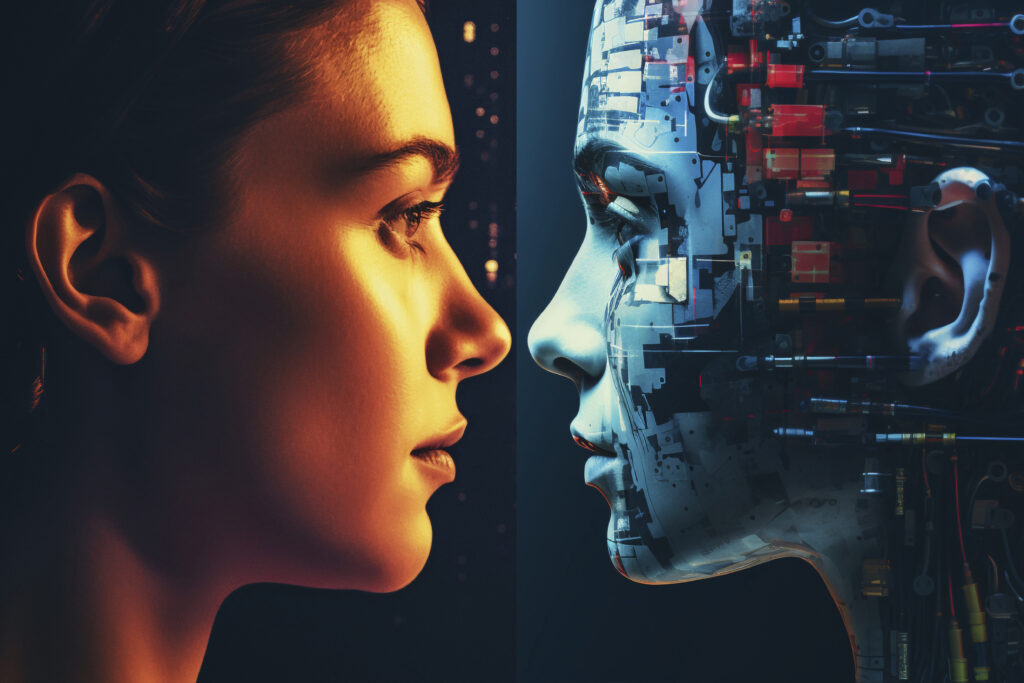
The idea that politeness might be an inefficiency—something to trim or discourage—forces us to confront an uncomfortable truth: our words, even the kind ones, are being weighed and measured in units of cost. In the age of artificial intelligence, every bit of language we produce has a price. But that doesn’t mean we should give up on civility. In fact, the way people interact with AI says more about society than it does about software. When we extend kindness to a machine, we’re not just following habit—we’re expressing our identity, signaling that we value respect, and preserving a sense of decorum in a space where none is required.
These micro-interactions, repeated billions of times across the internet, are shaping an emergent culture of digital civility—or incivility. Unlike traditional tools, AI responds in ways that mimic understanding, and this illusion of connection draws users into more human-like patterns of communication. In a world where social relationships are increasingly mediated by screens, how we speak to our machines can influence how we speak to each other. Parents encouraging kids to say “please” to Siri aren’t just teaching manners—they’re preparing them for a world where AI is a constant companion, and where emotional tone can impact both machine responses and human character.
Perhaps most importantly, our choice to be polite—even when we don’t have to—suggests a desire to maintain humanity in spaces that feel increasingly mechanized. There’s something poetic about that: the idea that, despite everything, people still carry their values with them into the cloud. If AI systems eventually learn to compress or ignore extraneous tokens while preserving tone, perhaps we won’t have to choose between kindness and efficiency. Until then, every “please” and “thank you” we type serves as a small act of resistance—a way of saying that being human still matters, even when speaking to a machine.