
Your cart is currently empty!
Scientists Are Finding Signs Of Consciousness In Newborn Babies, And It May Begin Before Birth
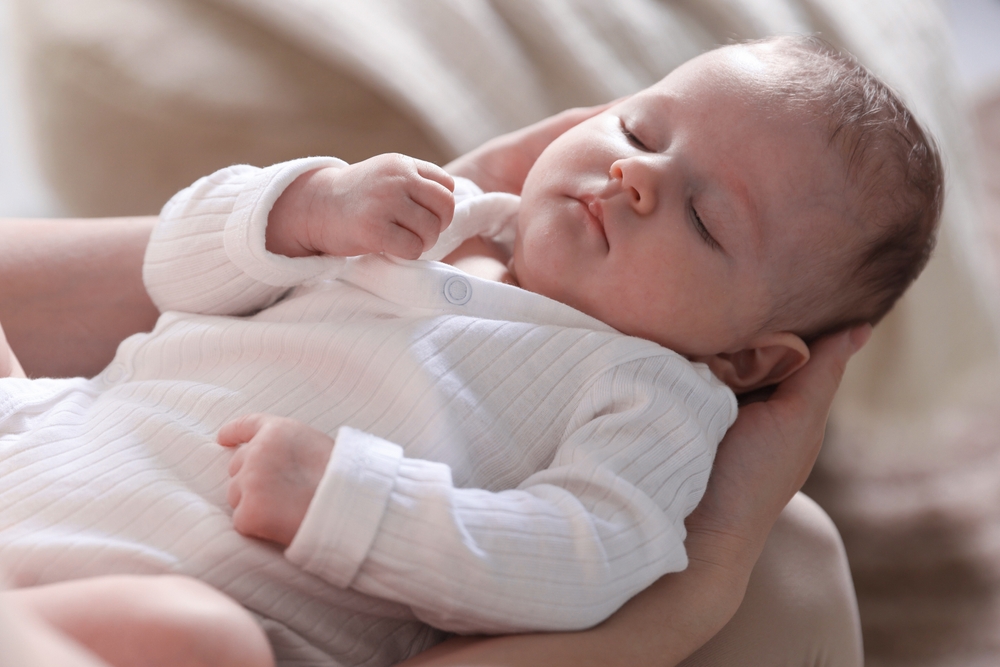
Most people cannot remember being born or describe what their earliest experiences felt like. For many, their first memories only appear around the age of two or three, leaving a huge gap between their arrival in the world and the moment they first remember experiencing it. But scientists are now investigating a fascinating possibility: human consciousness may begin much earlier than most people imagine, potentially before a baby is even born.
Contents
show
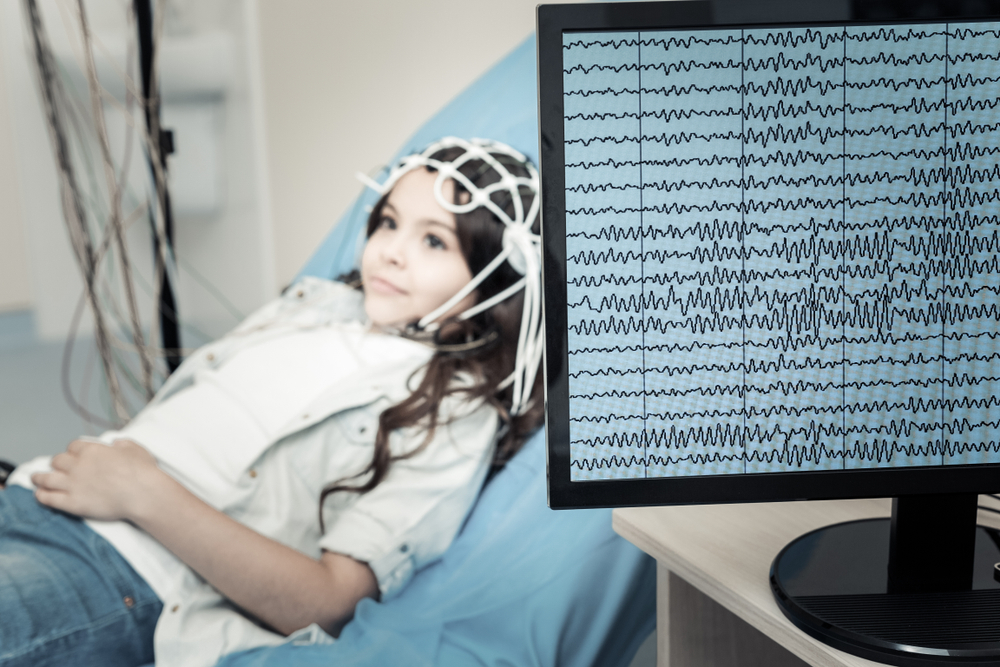
New research examining infant brain activity is revealing signs that newborns may already possess a basic awareness of their surroundings. Scientists have identified brain patterns associated with conscious experiences in adults, and some of these patterns appear in babies during their earliest stages of life. The findings could change how researchers understand the development of the human mind and raise another intriguing question about whether consciousness begins during the final weeks of pregnancy.
The Mystery Of When Human Consciousness Begins
For decades, scientists and philosophers have struggled to establish when a human being first becomes conscious. The difficulty is that newborn babies cannot explain what they experience, describe their surroundings or tell researchers what is happening inside their minds. Scientists must therefore investigate brain activity and observable behaviour to understand something that cannot be directly communicated. Tim Bayne, a philosopher at Monash University in Australia, has questioned when this continuous stream of awareness actually begins, particularly because most people cannot remember its earliest stages.
Researchers have offered different answers, with some believing consciousness exists from birth while others argue that it develops during the first year or even later. New brain-imaging techniques are now allowing scientists to examine developing infant brains in greater detail, revealing patterns that were previously difficult to detect. These findings suggest that important features associated with conscious awareness may appear much earlier than researchers once expected.
Consciousness Is More Than Recognising Yourself
One reason the debate gets complicated is that consciousness can mean several different things. An adult’s experience includes memories, emotions, personal identity and the ability to recognise themselves, but researchers studying newborns are particularly interested in something more basic. Known as primary or core consciousness, this refers to having a subjective experience of the world, such as sensing discomfort, hearing a familiar voice or experiencing different sights and sounds as part of one continuous moment.
A baby might not understand who they are or recognise their reflection, but that does not automatically mean they lack awareness. Scientists are investigating whether newborns can already experience sensations and distinguish between events happening inside and outside their bodies. This distinction is central to the research because basic awareness could emerge long before the more sophisticated abilities associated with adult consciousness.
Why Babies May Be Conscious Before They Can Remember
One common way researchers investigate self-awareness is through the mirror test. An adult places a small mark on a child’s face and then positions them in front of a mirror. If the child notices the mark on their reflection and attempts to remove it from their own face, this suggests they recognise themselves rather than treating the reflection as another person. Most babies fail this test, while toddlers generally begin passing it between approximately 18 months and two years of age.
However, failing to recognise yourself in a mirror does not establish that you have no conscious experiences. The mirror test measures a particular type of self-recognition, which is only one aspect of the much broader concept of consciousness. A newborn may be unable to identify their reflection while still experiencing hunger, discomfort, sounds and physical sensations. Researchers therefore believe that investigating infant awareness requires more sophisticated methods than simply observing whether babies recognise themselves.

The History Of How Medicine Treated Babies
There was a time when medical professionals seriously underestimated how much infants could experience. Until the 1980s, surgeons sometimes operated on babies without providing the pain relief or anaesthesia routinely expected today. The assumption was that newborns could not properly experience pain, meaning painkillers were considered unnecessary. Medical practices have since changed significantly, but the history demonstrates how limited scientific understanding of infant experience once was.
The continuing debate has also raised questions about how researchers interpret newborn behaviour. A baby turning towards its mother’s voice, for instance, could suggest early awareness because the infant appears to distinguish a familiar sound from an unfamiliar one. However, some scientists argue that such responses might simply be automatic reactions rather than evidence of subjective experience. This uncertainty has encouraged researchers to look beyond visible behaviour and investigate what is happening inside the developing brain.
Scientists Have Identified Four Signs Of Conscious Awareness
Tim Bayne and his colleagues have proposed examining four different markers associated with conscious experience in adults. None of these indicators can independently prove that someone is conscious, but researchers believe that finding several of them together in newborns could provide much stronger evidence. Their approach examines how different brain networks communicate, how attention changes, how sensory information is combined and how the brain responds to unexpected events.
The idea is to establish whether newborn brains demonstrate patterns that researchers already associate with conscious awareness in adults. These tests are particularly useful because babies cannot verbally report what they are experiencing. By examining measurable changes in brain activity and behaviour, scientists can investigate whether the earliest stages of human awareness are already present.
1. Different Brain Networks Working Together
The first marker involves communication between different brain networks. Researchers pay particular attention to three systems: the default mode network, which is associated with activity during rest and daydreaming; the executive control network, which supports goal-directed thinking; and the dorsal attention network, which helps direct attention towards relevant information. In adults, these systems show changing patterns of activity depending on what the person is experiencing.
Researchers have observed similar patterns in people who are dreaming, a state generally considered conscious. However, these patterns are absent in people under anaesthesia, making them potentially useful indicators of awareness. Scientists therefore want to establish whether newborns demonstrate comparable communication between these networks, which could suggest that basic conscious processing is already taking place.
2. The Ability To Shift Attention
The second marker concerns attention and the ability to move focus between different objects and events. Scientists can observe this process by tracking eye movements and measuring changes in brain activity. In adults, shifting attention is associated with increased activity in the frontal cortex, a brain region involved in higher-level cognitive functions and the processing of information.
Research published in 2021 found similar patterns in babies aged between three and 12 months. This suggests that important brain processes associated with conscious attention are already developing during infancy, even before children can explain what has captured their interest. Researchers consider this an important clue because the ability to respond differently to changing surroundings may reveal something about how awareness develops.
3. Combining Information From Different Senses
The third marker is known as multisensory integration. Human brains constantly combine information from different senses, meaning what someone sees can influence what they believe they hear. This process helps create a unified experience rather than leaving every sensation as an entirely separate event. One famous example is the McGurk effect, which demonstrates how visual information can influence the sounds people believe they are hearing.
In experiments, adults watch a video of someone making one sound while hearing a different sound through headphones. Many people perceive a third sound created by the combination of the conflicting signals. Testing this in babies is more difficult because they cannot explain what they hear, but researchers can observe how long infants pay attention to familiar sounds and whether their responses change after exposure to particular sensory combinations.
In 2004, Denis Burnham of Western Sydney University and Barbara Dodd of the University of Queensland used this approach to investigate infant perception. Their findings suggested that babies did not distinguish between an illusory sound and the corresponding real sound. This provided evidence that their brains were combining information from different sensory sources into a unified experience.
4. Responding To Unexpected Patterns
The fourth marker involves the brain’s ability to recognise when something unexpected happens. Researchers use an experiment known as the oddball paradigm, in which participants hear a repeated sequence of sounds. Occasionally, an unexpected tone appears and interrupts the established pattern. In conscious adults, the brain produces a particular electrical response known as P300, usually around 300 milliseconds after the unexpected sound.
This response suggests the brain is keeping track of the pattern and recognising when something changes. Researchers wanted to discover whether newborns demonstrated a similar reaction, so Julia Moser of the University of Tübingen and her colleagues studied 20 newborns using sensitive magnetic sensors. The babies displayed a response resembling the P300 signal seen in adults, although it appeared after a longer delay. This offered another piece of evidence that newborn brains can process unexpected events.
Brain Scans Reveal Consciousness Markers In Newborns
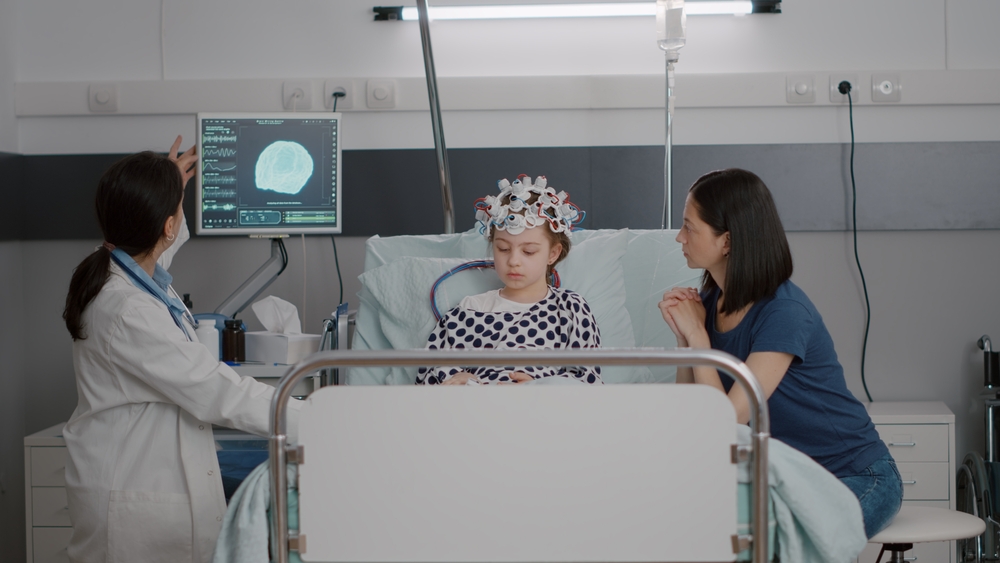
Some of the most interesting evidence comes from research examining newborns inside MRI scanners. In 2022, Lorina Naci of Trinity College Dublin and her colleagues analysed brain images from more than 280 full-term newborns, looking for activity associated with the networks involved in conscious awareness. They found that important features of the default mode, executive control and dorsal attention networks were already present, alongside reciprocal activity between these systems.
Interestingly, the findings also included preterm babies who had reached the equivalent developmental age. However, the same patterns were not present before that point. Naci described this developmental boundary as “a lower limit,” suggesting that important brain networks may develop during the final stage of pregnancy. The results have attracted attention because they indicate that some of the brain’s organisational features associated with consciousness emerge remarkably early.
Why Scanning A Baby’s Brain Is So Difficult
Getting reliable brain images from babies presents a significant challenge because traditional MRI techniques require subjects to remain relatively still. Babies naturally move and rarely cooperate with instructions, meaning even small movements can affect the quality of the resulting images. As Lorina Naci explains, “Movement degrades the image quality.” This has historically made it difficult for scientists to obtain detailed information about infant brain activity.
Improved computer algorithms have helped researchers correct for movement and produce clearer images, allowing them to investigate brain activity that was previously difficult to measure. These technological improvements have made it possible to study newborns in greater detail and identify patterns that could otherwise have remained hidden. Scientists can now investigate developmental processes that cannot be observed through ordinary behaviour alone.
Could Consciousness Begin Before A Baby Is Born?
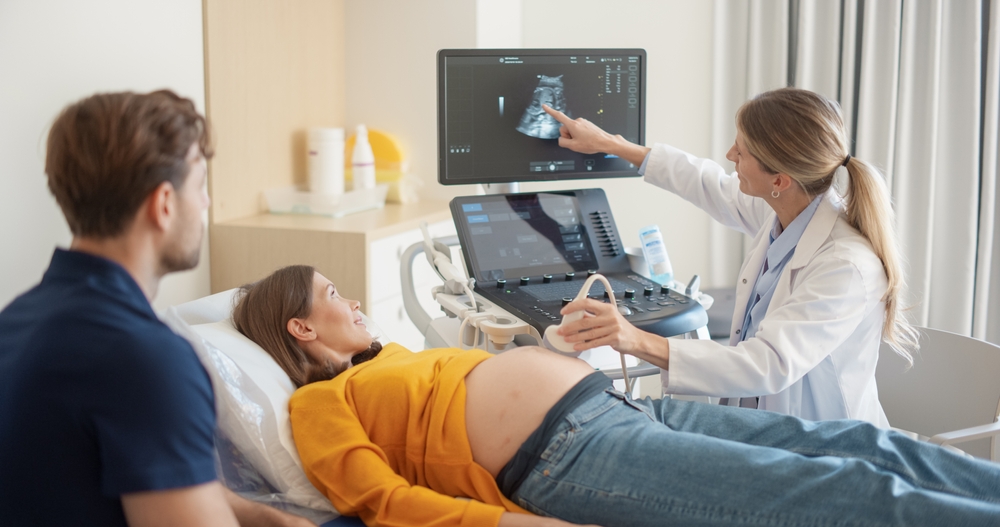
The newborn findings have naturally raised another question: could consciousness emerge during pregnancy? Some evidence suggests that the answer might be yes, although researchers remain cautious about drawing firm conclusions. Scientists using sensitive magnetic sensors have detected brain activity in fetuses, and one study involving 35-week-old fetuses suggested they could respond to oddball tests.
However, the results differ from the patterns observed in conscious adults, leaving researchers uncertain about whether these responses demonstrate subjective awareness. Claudia Passos-Ferreira, a bioethicist at New York University, believes consciousness may be present at birth but acknowledges that the evidence surrounding late pregnancy remains limited. She also considers the possibility that chemical substances in the amniotic fluid influence fetal brain activity.
According to Passos-Ferreira, “My best bet is that they are conscious at birth, but there is a question mark over whether they have the capacity for consciousness in late pregnancy.” The distinction is important because researchers have yet to establish exactly when subjective experience begins. The evidence also has limited implications for abortion debates, since interventions at such late stages of pregnancy are rare.
Scientists Still Disagree About What Consciousness Really Means
Despite the growing evidence, not everyone agrees that the four markers are enough to establish infant consciousness. Philosopher Henry Taylor and psychologist Andrew Bremner of the University of Birmingham have questioned whether researchers should focus so heavily on basic perceptual awareness. They argue that more sophisticated mental abilities may also need to be considered when deciding whether an individual is genuinely conscious.
These abilities include intentionality, which involves taking action to achieve a goal, and explicit memory, which allows someone to recall and mentally revisit previous experiences. Taylor explains, “If you think that consciousness is linked to some high-level cognitive abilities, which quite a lot of people believe, then you can make the case that newborn infants are unconscious.” This disagreement exposes a fundamental problem: scientists may be measuring different abilities while using the same word to describe them.
Consciousness Could Develop In Several Stages
Taylor believes different aspects of consciousness may emerge at different points during development. Some abilities could appear before others, gradually building into the complex mental experience associated with adulthood. He says, “I’m pretty convinced that when you disambiguate all those different kinds of consciousness, you’re going to find them coming online at different times.” This possibility could explain why newborns might experience basic sensations while lacking the more advanced cognitive abilities that develop later.
Researchers are also investigating integrated information theory, which proposes that subjective experience emerges through the integration of information within the brain. The theory remains controversial, but studying how infant brain activity changes could help scientists evaluate it alongside competing explanations. Comparing different consciousness markers as babies develop may eventually reveal which brain processes are essential for subjective experience.
A Baby’s First Experience May Be Very Different From Yours
Even if newborns are conscious, researchers caution against assuming their experience resembles that of an adult. A baby’s attention may be much broader and less focused than ours, potentially allowing them to experience their surroundings in a very different way. Developmental psychologist Alison Gopnik of the University of California, Berkeley, has compared infant consciousness to a “lantern” rather than a “spotlight”, suggesting that babies may distribute attention across a much wider range of sensory information.
An adult might concentrate on one particular object while filtering out much of the surrounding environment, whereas a baby may experience a broader range of sights and sounds simultaneously. Tim Bayne has suggested that newborns might experience something closer to everything being conscious at once. That idea remains speculative, but it offers an intriguing possibility about the earliest stages of human experience.
The research is also changing how scientists approach questions about brain development, infant healthcare and the relationship between physical brain activity and subjective experience. For now, the precise beginning of consciousness remains unknown, but the evidence is increasingly pointing towards an earlier start than many researchers once expected.
The next major discovery may come from finding a reliable way to distinguish genuine awareness from automatic brain responses. Until then, the mind of a newborn remains one of science’s most fascinating unanswered questions.
Sources:
- Hu, H., Cusack, R., & Naci, L. (2022). Typical and disrupted brain circuitry for conscious awareness in full-term and preterm infants. Brain Communications, 4(2), fcac071. https://doi.org/10.1093/braincomms/fcac071
- Pubmed.ncbi.nlm.nih.gov. (n.d.-b). https://pubmed.ncbi.nlm.nih.gov/15549685/
baby brain activity, baby sensory development, brain development in pregnancy, consciousness before birth, consciousness research, fetal consciousness, Human consciousness, infant brain scans, infant consciousness, infant neuroscience, McGurk effect, Neuroscience research, newborn awareness, newborn baby brain development, scientific discoveries