
Your cart is currently empty!
Scientists Asked People Questions While They Were Dreaming, And Some Actually Answered

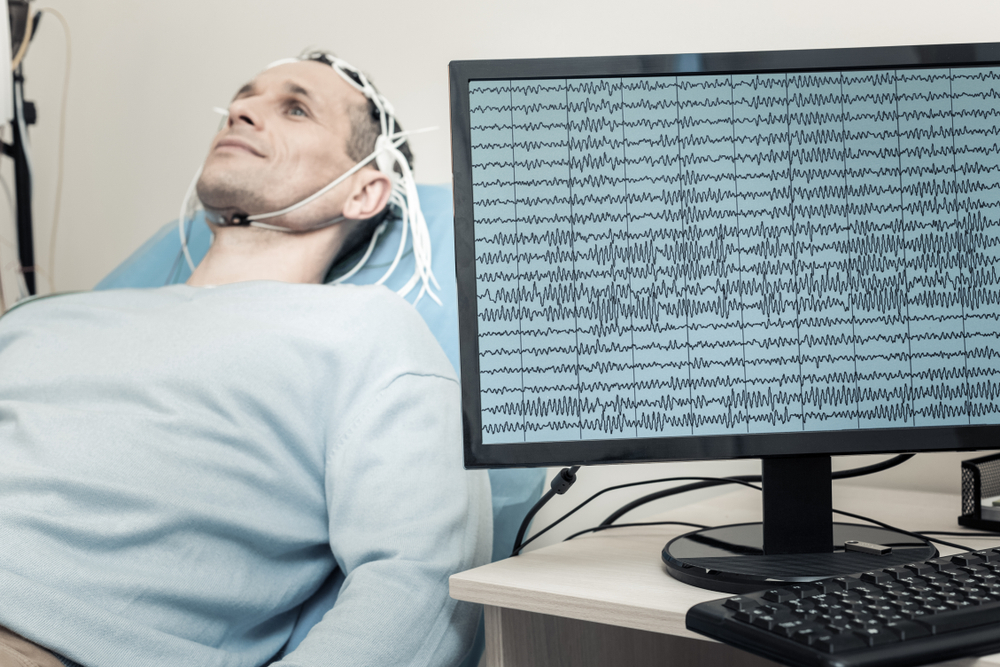
In a sleep laboratory at Northwestern University, a volunteer drifted deep into a daytime nap. By every measure available to the researchers, they were asleep. Their muscles had gone slack, their eyes were closed, and electrodes traced the unmistakable patterns of REM sleep, the stage when vivid dreams are most common.
Contents
show
Then the sleeping volunteer was asked to solve a math problem. Somehow, they answered correctly without waking up. For most of human history, dreams have been treated like a closed door. You enter, experience something strange, and return with a blurry account that nobody can independently check. In 2021, researchers from four laboratories decided to stop waiting for dreamers to wake up. They tried asking questions while the dream was still happening.

Four Laboratories Tested The Impossible
The study, published in Current Biology on February 18, 2021, brought together researchers from Northwestern University, Sorbonne University in Paris, Osnabrück University in Germany, and Radboud University Medical Center in the Netherlands. Thirty-six people took part in the experiments, including experienced lucid dreamers, volunteers trained to recognize when they were dreaming, and a 20-year-old man with type 1 narcolepsy who reportedly experienced around four lucid dreams a day. Each laboratory used a different method to test whether communication was possible, from spoken math problems to Morse code and simple yes-or-no questions.
The answers also came back through different physical signals. Some participants used prearranged left-right eye movements, while participants in the French laboratory answered by activating specific facial muscles. Karen Konkoly of Northwestern explained why combining the results from four separate laboratories was important, saying: “We put the results together because we felt that the combination of results from four different labs using different approaches most convincingly attests to the reality of this phenomenon of two-way communication.” The experiments were testing a startling possibility: a person could remain asleep inside a dream while receiving information from the outside world and deliberately responding to it.

How The Questions Reached Dreamers
The researchers used ordinary sensory channels rather than anything resembling science fiction. Sound could be played through speakers or earbuds, while other experiments relied on visual cues or carefully timed signals. The crucial moment came after researchers confirmed that the participant had entered a lucid dream and could signal awareness through their eyes or facial muscles.
The approach created a narrow communication channel between two completely different states of consciousness. One person was awake in a laboratory. The other was asleep and experiencing a world generated by their own brain. Somehow, under the right conditions, a question could cross that boundary and an answer could come back.

One Simple Math Problem Changed Everything
One participant in the American experiment received sound cues during a 90-minute nap and signaled through eye movements that they had become lucid. Researchers then presented a spoken arithmetic problem: 8 minus 6. The sleeping participant responded with two left-right eye movements. The answer was correct.
Ken Paller, who led the Northwestern research team, said the findings showed something researchers had previously struggled to demonstrate. “We also showed that dreamers are capable of comprehending questions, engaging in working-memory operations, and producing answers,” he said. Paller added that many people would have expected a sleeping participant to either wake up when questioned or simply fail to respond. Instead, at least some dreamers appeared capable of processing information while remaining inside the dream.
The researchers compared the challenge to communicating with an astronaut in an entirely different world. In this case, however, that world was being built from memories and activity inside the dreamer’s own brain. Their experiment was designed to find out whether someone could receive information from outside that imagined environment without the dream collapsing.
What Dreamers Were Able To Do
The successful experiments involved several different forms of communication:
- Solve simple math problems: Participants heard arithmetic questions and sometimes answered with eye movements.
- Answer yes-or-no questions: Some dreamers responded by activating specific facial muscles.
- Recognize external signals: Participants could detect cues delivered while they remained in REM sleep.
- Deliberately communicate: Responses were produced using prearranged physical signals rather than random movements.
The findings did not mean that every sleeping person could suddenly hold a conversation. The experiments worked only under specific conditions and required researchers to carefully monitor when participants were lucid. Even so, the fact that a correct answer could emerge from someone who remained asleep was enough to challenge the old assumption that dreaming completely disconnects a person from the outside world.

The Questions Became Part Of The Dream
What happened inside the dream was just as strange as what researchers observed in the laboratory. One participant from the French experiment described hearing the researchers’ questions while dreaming. “I heard you asking questions. I heard your voice as if you were a God. Your voice was coming from the outside, just like a narrator of a movie.”
Another participant in the Netherlands said the source of the math problems felt “like a sort of radio in the car.” An American participant remembered only fragments of the experience, saying: “I heard three [problems]. I answered ‘2’ for all of them, but I don’t remember what the first one was.” The external voice was not necessarily experienced as someone standing beside the dreamer in a laboratory. The dream appeared to absorb the interruption and give it a role within the strange logic of the imagined world.
That detail makes the experiment particularly fascinating. The participant was not simply lying unconscious while a voice forced its way into their mind. The brain appeared to incorporate the outside signal into an experience that was already unfolding. The question crossed into the dream, but the dream itself decided what that question sounded like and where it seemed to come from.

Why Dreams Can Feel Completely Real
During REM sleep, the brain can generate detailed environments, conversations, emotions, and memories that feel convincing until the dreamer wakes. Lucid dreaming creates an unusual situation because the person becomes aware that the experience is a dream while remaining inside it.
That awareness gave researchers a way to establish a communication system. Dreamers were trained to signal when they became lucid, allowing scientists to know when there was a realistic chance that an outside question might be understood. The resulting exchange was brief and fragile, but it demonstrated that the boundary between waking awareness and dreaming may be more complicated than researchers once assumed.
Most Questions Received No Answer
The success rate needs to be viewed honestly. Across 57 sessions, participants produced a verified signal showing lucidity in 26% of them. Within those confirmed lucid episodes, researchers received at least one correct answer 47% of the time.
The results became less dramatic when every individual question was counted. Researchers presented 158 queries during verified lucid dreams. Correct answers were received 18.4% of the time, while 3.2% were incorrect. Another 17.7% were too ambiguous to score, and 60.1% received no response at all.
So the system worked, but only occasionally. Most attempts did not produce a usable answer, and successful communication depended on catching someone during the rare and unstable state of lucid dreaming. This was not a method for chatting with any sleeping person or trying to interview a friend during a nap.
Why The Experiments Are So Difficult
Several obstacles stand between a sleeping brain and a successful answer:
- Lucid dreams are unpredictable: Many people rarely experience them naturally.
- Timing is crucial: Questions must be delivered during the right stage of sleep.
- Dreams can distort outside signals: A voice may become part of the dream in unexpected ways.
- Physical responses are limited: Eye movements and facial signals provide only a small communication channel.
The limitations are part of what makes the successful responses so compelling. Researchers were working with a person whose conscious experience had shifted into a dream while their body remained largely disconnected from voluntary movement. Finding even a narrow route through that barrier required carefully designed experiments and repeated attempts.
A Startup Claims Two Dreamers Exchanged A Word
In October 2024, a Redwood City company called REMspace claimed it had gone further by connecting two sleeping participants through a dream communication system. According to the company, a server generated a random word on September 24, 2024 and played it to one lucid dreamer through earbuds. The dreamer reportedly repeated the word while dreaming, and the information was later relayed to a second lucid dreamer.
The company says its technology detects facial electrical impulses and converts them into sound using a dream vocabulary it calls Remmyo. Founder Michael Raduga described the system by saying: “When you talk in this language in your dreams, we can hear you and we can connect two dreamers together.”
That claim belongs in a separate category from the 2021 research. The REMspace experiment has not been peer reviewed, and no independent research group has verified the reported result. The second participant also confirmed the word after waking, meaning the reported experiment functioned more like a relay than a live conversation between two people inside separate dreams.
Why The Claim Requires Caution
The difference between a peer-reviewed experiment and a company announcement is significant. The four-laboratory study published in 2021 documented its methods, results, and limitations for scientific scrutiny.
The REMspace claim may eventually receive further testing, but that has not happened yet in a way that independently establishes the result. Until researchers outside the company can reproduce the experiment, it remains an unverified claim rather than established evidence of dream-to-dream communication.
No Message Has Gone Directly From Brain To Brain
Every communication method that has been successfully demonstrated relies on ordinary sensory channels. Sound enters through the ears. Light reaches the eyes. Touch can stimulate the skin. The sleeping brain processes that information and, in rare cases, produces a deliberate physical response.
Dr. Peter Bentley wrote that researchers can currently interpret some brain signals and make rough estimates about imagined scenes or high-level thoughts, but direct transmission remains far beyond current capabilities. “At present, while we can interpret brain signals and roughly figure out imagined scenes and high-level thoughts, we have no way to transfer these into another brain,” he wrote.
Something related can happen between awake people. Brain activity can become synchronized during shared experiences, and Bentley noted that people may cooperate better and show greater empathy when this occurs. Sleep presents a far more difficult challenge because the sleeping brain is not consistently available to receive and process outside information.
Communication Still Has A Physical Route
The experiments have not revealed a hidden telepathic network connecting sleeping minds. Every verified exchange still depends on a physical signal entering the dreamer’s senses and another physical signal returning to the researchers.
That distinction matters because the reality is already strange enough. Scientists do not need brain-to-brain transmission to make the experiment remarkable. A person can remain deeply asleep, become aware inside a dream, hear a question from the waking world, perform a mental task, and intentionally answer without opening their eyes.
Researchers See Potential Beyond A Party Trick
The most interesting applications may have little to do with solving arithmetic problems while asleep. Researchers have pointed toward nightmares, trauma, and the possibility of influencing emotional experiences while dreams are happening.
The research paper suggested that dreams could provide opportunities to reduce the impact of emotional trauma. The researchers also considered whether dream experiences could someday be curated to support activities such as practicing a musical or athletic skill.
Those possibilities remain largely theoretical, and the current communication method is far too limited for routine use. Still, the experiments created a new way to study an experience that has always been difficult to examine while it is happening.
The Door May Not Be Completely Closed
For centuries, the only way to learn about a dream was to wait for the dreamer to wake up and describe it. That method depends on memory, interpretation, and the strange tendency of dreams to disappear within seconds of opening your eyes.
The Northwestern volunteer revealed another possibility. For a brief moment, the dreamer was asleep enough to remain inside a dream and aware enough to answer a question from the waking world. The exchange was short. It was unreliable. But a question crossed the boundary, and a sleeping person answered from the other side.
Sources:
- Konkoly, K. R., Appel, K., Chabani, E., Mangiaruga, A., Gott, J., Mallett, R., Caughran, B., Witkowski, S., Whitmore, N. W., Mazurek, C. Y., Berent, J. B., Weber, F. D., Türker, B., Leu-Semenescu, S., Maranci, J., Pipa, G., Arnulf, I., Oudiette, D., Dresler, M., & Paller, K. A. (2021). Real-time dialogue between experimenters and dreamers during REM sleep. Current Biology, 31(7), 1417-1427.e6. https://doi.org/10.1016/j.cub.2021.01.026
- Real-time dialogue with a dreaming person is possible. (2021, February 21). ScienceDaily. https://www.sciencedaily.com/releases/2021/02/210218114018.htm