
Your cart is currently empty!
Scientists Discover a Hidden Radiation Threat Surrounding Earth After Massive Solar Storm
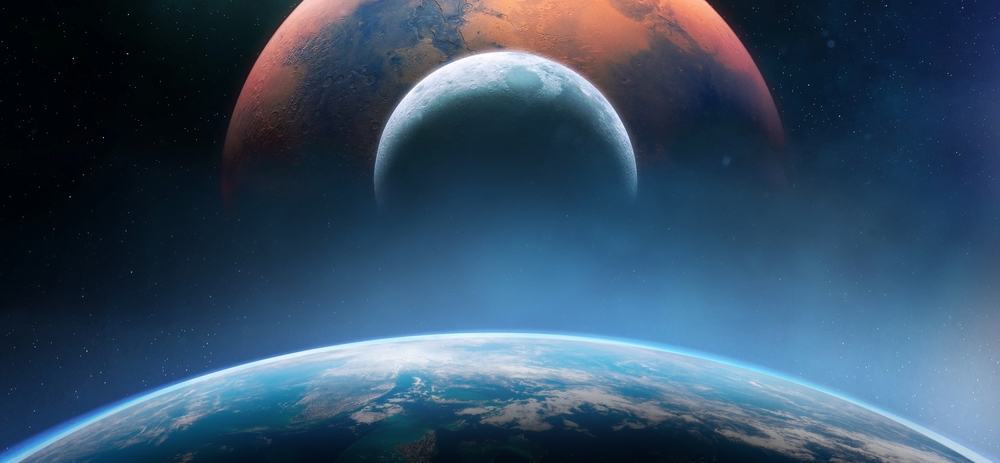
Earth is surrounded by an invisible magnetic shield that helps protect our planet from dangerous particles travelling through space. Deep within this environment, scientists identified what appeared to be an almost impenetrable boundary, preventing some of the most energetic electrons from getting too close. For years, researchers believed this natural barrier could keep these potentially destructive particles at bay, even during periods of intense solar activity. However, an extraordinary event in May 2024 has challenged that assumption after a Japanese satellite recorded something scientists were not expecting to see.
Contents
show
During one of the strongest geomagnetic storms ever recorded, researchers discovered that ultra-energetic electrons had surged inside the supposedly protected region. Their measurements revealed that the number of these particles increased by more than 5,000 times compared with levels recorded before the storm. The discovery suggests that extreme solar activity can dramatically change the conditions surrounding Earth, allowing dangerous radiation to build up in places where scientists previously believed it could not reach.
Scientists Discover Something Unexpected Inside Earth’s Radiation Belts
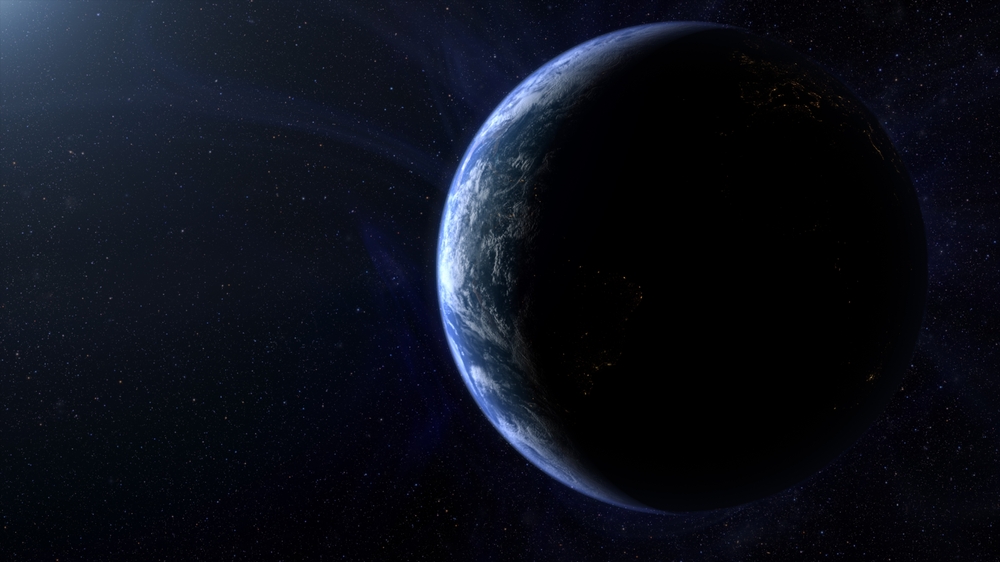
Earth is surrounded by two enormous, donut-shaped regions filled with electrically charged particles. Known as the Van Allen radiation belts, these structures are held in place by our planet’s magnetic field and contain energetic protons and electrons. The outer belt is populated largely by electrons energized through processes driven by the Sun, while many of the inner belt’s protons originate from cosmic rays interacting with Earth’s atmosphere. These regions play an important role in shaping the radiation environment surrounding our planet.
For more than a decade, scientists believed the inner radiation belt contained a particularly effective boundary against ultra-relativistic electrons. These particles, sometimes called “killer electrons,” can travel at speeds approaching that of light and carry enough energy to penetrate satellite shielding. Their presence can damage sensitive spacecraft electronics, shorten satellite lifespans, and increase radiation exposure risks for astronauts. Researchers therefore considered understanding their movement essential for protecting technology operating in space.
A research team led by space physicist Yoshizumi Miyoshi of Nagoya University has now found evidence that this supposed barrier can be breached during extreme space weather conditions. Their findings were based on observations collected during the powerful geomagnetic storm that struck Earth in May 2024. “Here we show that this barrier can be breached under extreme space weather conditions,” Miyoshi and his colleagues write in their study published in Geophysical Research Letters. The measurements challenge the assumption that the region provides reliable protection against the most energetic electrons.
Why These High-Energy Electrons Are So Dangerous
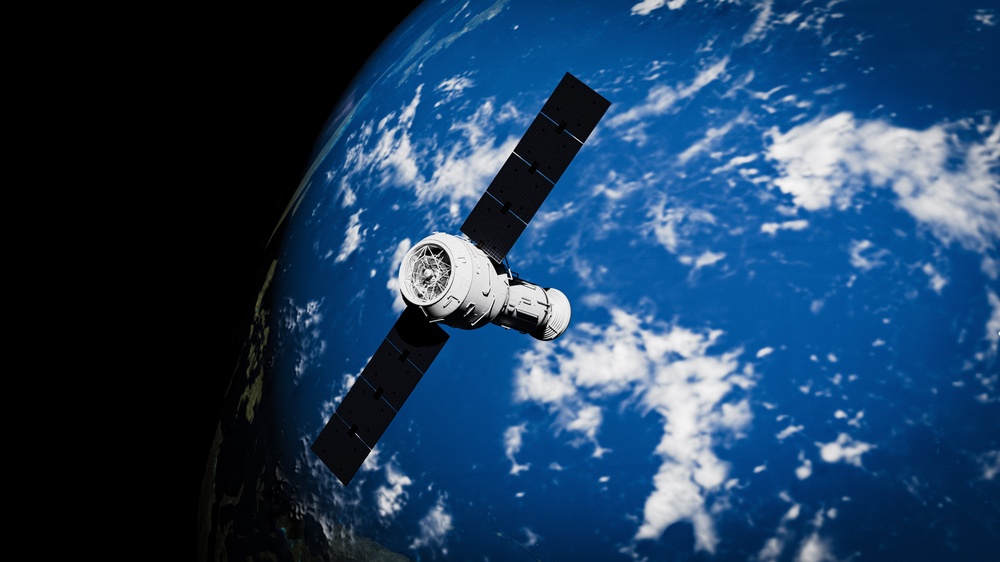
The name “killer electrons” might sound alarming, but these particles present a genuine challenge for spacecraft operators. They become highly energetic through interactions with electromagnetic waves in Earth’s magnetic environment, particularly during geomagnetic storms. Once accelerated, they can carry enough energy to penetrate protective shielding and reach sensitive electronic components inside satellites. This can cause electrical disturbances, damage equipment, and potentially shorten the lifespan of expensive spacecraft.
Satellites are particularly vulnerable because many depend on delicate electronic systems to perform their functions. Communications networks, navigation services, weather monitoring, and other technologies rely on spacecraft operating in Earth’s surrounding space environment. Damage to these systems can create expensive operational problems and threaten missions that depend on reliable equipment. Understanding where energetic electrons accumulate is therefore a major concern for scientists studying space weather.
Astronauts also face potential risks from these particles because increased radiation exposure can create health hazards during space missions. Earth’s atmosphere and magnetic field provide substantial protection at ground level, but spacecraft and astronauts operating beyond that protection encounter a different radiation environment. Monitoring dangerous particles helps researchers understand when conditions become more hazardous and how spacecraft can be better protected.
The Boundary Scientists Once Considered Impenetrable
The mystery surrounding this radiation barrier became clearer in 2014, when NASA’s Van Allen Probes detected an unusually sharp boundary approximately three Earth radii from the planet’s center. Beyond this point, the most energetic electrons rarely travelled. Researchers proposed that electromagnetic waves within a surrounding region of cold plasma helped scatter these particles out of their trapped orbits, sending them toward Earth’s atmosphere. Their relatively slow inward movement also appeared to contribute to the formation of this boundary.
The observations led scientists to describe the region as an “impenetrable barrier.” However, researchers gradually began questioning whether it was genuinely preventing electrons from entering or simply creating conditions that made their inward movement extremely difficult. By 2018, one proposed explanation suggested that the apparent barrier could be influenced by the limited duration of geomagnetic storms. Although fluctuations in Earth’s magnetic field could push energetic electrons inward, the storms responsible often weakened before the particles could travel much farther.
Further evidence emerged from research published in 2024, which examined observations collected between 1996 and 2006. Scientists discovered that electromagnetic waves generated by lightning could send energetic electrons already trapped inside the inner radiation belt tumbling toward Earth’s atmosphere. These observations suggested that the supposedly protected region had more complicated particle dynamics than researchers originally understood. The May 2024 solar storm would provide an even more dramatic opportunity to investigate what was happening.

How The May 2024 Solar Superstorm Changed Everything
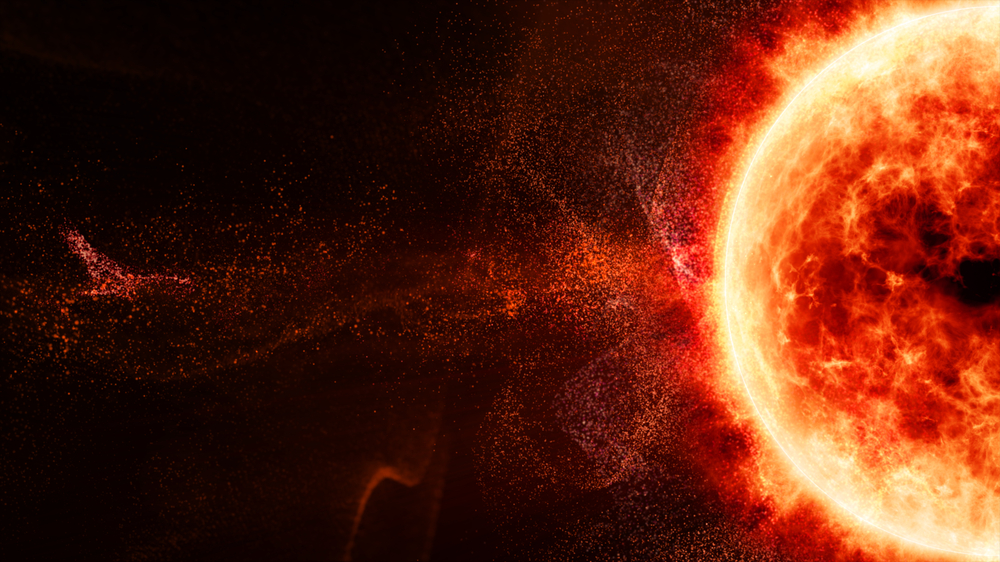
In May 2024, the Sun unleashed a series of powerful solar flares and coronal mass ejections, sending enormous quantities of magnetized plasma racing through the Solar System. When this material interacted with Earth’s magnetic environment, it triggered a G5 geomagnetic storm, the highest category on the storm scale. The event was so powerful that its effects were recorded even at the bottom of the ocean. However, some of its most important consequences were unfolding much farther above Earth’s surface.
One major change involved the dramatic depletion of cold plasma inside Earth’s plasmasphere. This created an unusually sparse environment that allowed a particular type of electromagnetic wave, known as chorus waves, to thrive. These waves get their name from the distinctive sound they produce when converted into audio recordings. Miyoshi described their unusual sound by saying, “When converted into audio, it sounds like a bird song.” Their behavior during the storm became central to understanding the unexpected increase in energetic electrons.
Under ordinary conditions, electromagnetic waves can scatter energetic electrons and disrupt their trapped orbits. However, the conditions created during the May 2024 storm appeared to produce a different effect. The chorus waves helped accelerate electrons to extraordinary energies inside the region scientists had previously considered protected. The depletion of cold plasma seems to have created the conditions needed for this unusual acceleration process, allowing dangerous particles to build up much closer to Earth than expected.
Japanese Satellite Records A Massive Increase In Radiation
The crucial evidence came from Japan’s Arase satellite, which has monitored Earth’s radiation belts since 2017. During the recovery phase of the May 2024 storm, the spacecraft detected a dramatic increase in ultra-relativistic electrons inside the supposed barrier. Measurements revealed that at energies around three megaelectronvolts, electron flux increased by more than 5,000 times compared with pre-storm levels. This extraordinary change gave researchers an opportunity to investigate how the particles were gaining so much energy.
The timing of the increase provided some of the strongest clues. Lower-energy electrons appeared in greater numbers first, followed approximately half a day later by higher-energy particles. Around a day after the initial increase, electrons carrying more than three megaelectronvolts of energy had also surged. This staggered progression suggested that the particles were gaining energy within the region itself rather than simply being transported inward from elsewhere.
Researchers also identified a distinct peak in the distribution of energetic electrons near the boundary. This pattern was difficult to explain through inward transport alone and was consistent with particles being accelerated locally before spreading farther inward and outward. Combined with the timing of the measurements, the evidence pointed toward chorus waves playing an important role in the process. The findings provided a clearer picture of how an extreme solar storm could transform the radiation environment around Earth.
The Effects Continued Long After The Solar Storm
One particularly concerning aspect of the discovery was how long the unusual conditions persisted. The May 2024 storm weakened, but the radiation environment did not immediately return to its previous state. Arase continued observing declining levels of ultra-relativistic electrons until October 2024, when another solar storm affected near-Earth space. This extended recovery period suggests that the consequences of extreme space weather can continue developing for months after the initial disturbance.
The observations also raise important questions about how scientists should assess radiation hazards around Earth. If energetic electrons can accumulate inside a region previously considered protected, spacecraft operators may need more detailed information about changing particle conditions. Existing assumptions about where dangerous electrons are likely to appear could prove insufficient during exceptionally powerful geomagnetic storms. Better monitoring could help researchers identify these changes before they create problems for spacecraft and future missions.
The research team emphasized that understanding these processes is essential for improving space weather predictions. Miyoshi and his colleagues wrote that the discovery highlights the need to understand and predict how energetic electrons behave under extreme space weather conditions. Their work, published in Geophysical Research Letters, adds another important piece of evidence to the study of Earth’s radiation belts. It also demonstrates why continuous satellite observations remain essential when investigating the unpredictable effects of solar activity.
Earth’s Radiation Environment May Be More Vulnerable Than Expected
Earth’s magnetic field remains an important part of the natural protection surrounding our planet, but the latest observations reveal how dramatically its surrounding environment can change. The May 2024 solar superstorm created conditions that allowed energetic electrons to accelerate inside a region scientists once believed they could not penetrate. With electron levels increasing by more than 5,000 times, the discovery raises serious questions about how spacecraft will be protected during future extreme solar events.
The Sun’s next powerful eruption could therefore present challenges that researchers are only beginning to understand. For the satellites supporting everyday technology, knowing where dangerous particles can appear may become just as important as knowing when a solar storm is approaching.
Sources:
Miyoshi, Y., Kurita, S., Shinbori, A., Yamamoto, K., Jun, C., Matsuda, S., Saito, S., Kataoka, R., Wang, D., Shinohara, I., Takashima, T., Mitani, T., Higashio, N., Matsuoka, A., Kasahara, Y., Tsuchiya, F., Kumamoto, A., Hori, T., Kitamura, N., & Teramoto, M. (2026). Local acceleration of Multi‐MEV electrons inside Earth’s impenetrable barrier during the May 2024 superstorm. Geophysical Research Letters, 53(20). https://doi.org/10.1029/2026gl125879