
Your cart is currently empty!
Scientists Discover The Hidden Superpower Behind Bird Navigation

It sounds like something pulled straight out of science fiction. Imagine being able to look up at the sky and actually see invisible lines guiding your path across continents, almost like a built-in navigation system that never fails. For birds, this is not fantasy but a biological reality that scientists are only beginning to fully understand in detail.
Contents
show
For decades, researchers have been fascinated by how migratory birds manage to travel thousands of miles with astonishing precision. From tiny songbirds to homing pigeons, these creatures return to the same locations year after year, often without ever having taken the journey before, raising profound questions about instinct and intelligence.
Now, a growing body of research suggests that the secret lies in a remarkable protein found in their eyes. This discovery is reshaping how we understand animal navigation, offering new insight into biology, physics, and the hidden systems that guide life on Earth.

For centuries, humans have observed birds performing seemingly impossible feats of navigation. Ancient sailors even relied on birds to help guide them toward land, recognizing that these animals possessed a natural sense of direction far beyond human capability, even if they could not explain how it worked.
Scientists initially believed that birds relied primarily on visual landmarks or the position of the sun and stars. While these cues certainly play a role in many situations, they do not fully explain how birds navigate during cloudy days, storms, or across vast oceans where landmarks are completely absent.
As research progressed, scientists began to suspect that birds might be able to detect the Earth’s magnetic field. This invisible force surrounds the planet and provides a consistent directional reference, making it an ideal navigational tool that does not depend on weather or time of day.
However, the biggest question remained unanswered for years. Even if birds could detect magnetic fields, how exactly did they do it within their bodies? The answer turned out to be far more complex and fascinating than anyone initially expected.
The Discovery of Cryptochrome Proteins
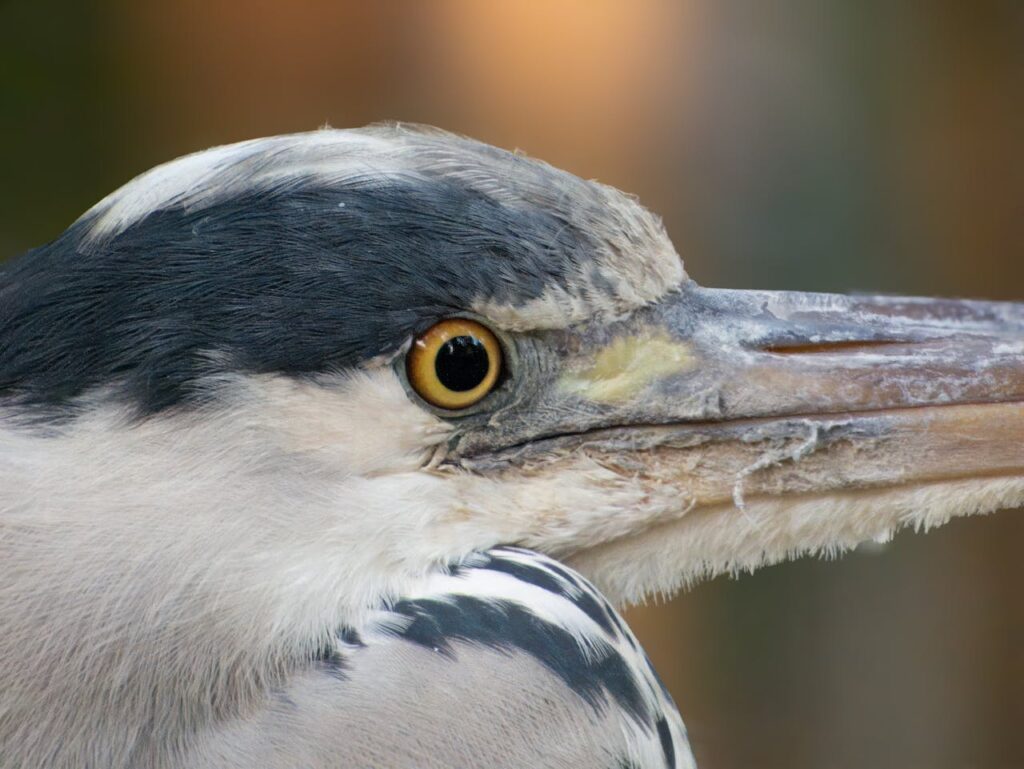
Recent studies highlighted by PBS Nova have brought attention to a protein called cryptochrome, specifically a variant known as Cry4. This protein is found in the retinas of birds and appears to play a crucial role in their ability to sense magnetic fields in a way that connects light and chemistry.
Cryptochrome is light sensitive, meaning it reacts when exposed to certain wavelengths of light. When light hits this protein, it triggers a series of chemical reactions that produce pairs of electrons, and these electrons are influenced by the Earth’s magnetic field in subtle but measurable ways.
This process creates what scientists believe is a kind of visual signal that is integrated into the bird’s normal sight. Instead of seeing the magnetic field as clear lines or colors, birds may perceive it as patterns or shading that shift depending on their orientation.
The idea that birds can effectively overlay a magnetic map onto their field of view is both mind-bending and revolutionary. It suggests that their perception of the world is fundamentally different from our own, combining multiple layers of information into one seamless experience.
How Birds May Actually See Magnetic Fields
Understanding how birds see magnetic fields requires rethinking what vision actually means. Unlike human sight, which depends solely on light and color, bird vision may include an additional layer of sensory information that is constantly updating as they move.
Researchers believe that when cryptochrome proteins are activated, they create a visual pattern that shifts depending on the bird’s orientation relative to the Earth’s magnetic field. This means that as a bird turns its head or changes direction, the pattern also changes, providing continuous guidance.
Some scientists describe this as similar to having a built-in compass that is directly integrated into vision. Instead of reading a needle on a device, birds may instinctively know which way to go because their entire visual field subtly shifts with direction.
This theory also explains why certain birds lose their navigational abilities under specific lighting conditions. If the right wavelengths of light are not present, the cryptochrome proteins may not function properly, disrupting the magnetic sense and causing confusion.
Evidence from Pigeons and Other Birds
Pigeons have long been used in navigation experiments due to their remarkable homing abilities. Scientists have tested how these birds respond when their magnetic sense is disrupted, providing valuable insights into the mechanism.
In some experiments, pigeons exposed to altered magnetic fields became disoriented and struggled to find their way home. This provided strong evidence that magnetic sensing plays a key role in their navigation and is not just a minor supporting factor.
Further studies have examined the presence of Cry4 in different bird species. Researchers found that migratory birds tend to have higher levels of this protein, particularly during migration seasons, suggesting it becomes more active when needed most.
Interestingly, even non-migratory birds appear to possess some level of magnetic sensitivity. This indicates that the ability may be more widespread than previously thought, although it is especially refined in species that travel long distances regularly.

Why This Discovery Matters
The implications of this research go far beyond birds and their behavior. Understanding how animals detect magnetic fields could inspire new technologies and deepen our understanding of biology in ways that were previously unimaginable.
For example, scientists are exploring whether similar mechanisms could exist in other animals, including insects and marine creatures. Some evidence already suggests that species like sea turtles and butterflies also rely on the Earth’s magnetic field to guide their journeys.
Additionally, this discovery could influence the development of advanced navigation systems. By mimicking biological processes like cryptochrome reactions, engineers may one day create devices that operate without relying entirely on satellites or external signals.
Perhaps most importantly, this research highlights the importance of preserving natural environments. Human-made electromagnetic noise could potentially interfere with these delicate biological systems, raising concerns about how modern technology impacts wildlife.
The Bigger Picture of Animal Senses
The idea that birds can see magnetic fields challenges our understanding of perception itself. Humans often assume that our senses represent the full scope of reality, but discoveries like this reveal how limited our perspective truly is in comparison.
Animals experience the world in ways that are almost impossible for us to imagine. From echolocation in bats to ultraviolet vision in insects, nature is filled with sensory abilities that expand beyond human comprehension and reshape how we define perception.
Birds add yet another layer to this list. Their ability to integrate magnetic information into vision suggests a level of sensory complexity that blurs the line between physics and biology in fascinating ways.
As scientists continue to study these phenomena, we may uncover even more hidden dimensions of perception. Each discovery serves as a reminder that the natural world still holds countless secrets waiting to be explored and understood.

A New Way of Seeing the World
The idea that birds can see the Earth’s magnetic field transforms how we think about both vision and navigation. What once seemed like an impossible mystery is now becoming a scientifically supported reality backed by growing research.
Thanks to proteins like cryptochrome, birds may experience the world through an additional sensory layer that guides them across vast distances with remarkable accuracy. This ability, refined over millions of years of evolution, highlights the brilliance of natural systems.
As research continues, scientists hope to unlock even more details about how this process works and whether similar mechanisms exist in other species. Each new discovery brings us closer to understanding not only birds but the fundamental ways in which life interacts with the planet.
Ultimately, this story is a reminder that the world is far more complex and fascinating than it appears. Sometimes, the most extraordinary truths are hidden in plain sight, waiting for us to look a little closer and ask deeper questions.
Sources
- Xu, J., Jarocha, L. E., Zollitsch, T., Konowalczyk, M., Henbest, K. B., Richert, S., Golesworthy, M. J., Schmidt, J., Déjean, V., Sowood, D. J. C., Bassetto, M., Luo, J., Walton, J. R., Fleming, J., Wei, Y., Pitcher, T. L., Moise, G., Herrmann, M., Yin, H., . . . Hore, P. J. (2021). Magnetic sensitivity of cryptochrome 4 from a migratory songbird. Nature, 594(7864), 535–540. https://doi.org/10.1038/s41586-021-03618-9
- Wiltschko, R., Nießner, C., & Wiltschko, W. (2021). The Magnetic Compass of Birds: The role of Cryptochrome. Frontiers in Physiology, 12, 667000. https://doi.org/10.3389/fphys.2021.667000
- Cryptochrome and magnetic sensing. (n.d.). https://www.ks.uiuc.edu/Research/cryptochrome/