
Your cart is currently empty!
Scientists Discover Unexpected Change Happening Inside Human Blood as CO₂ Levels Rise
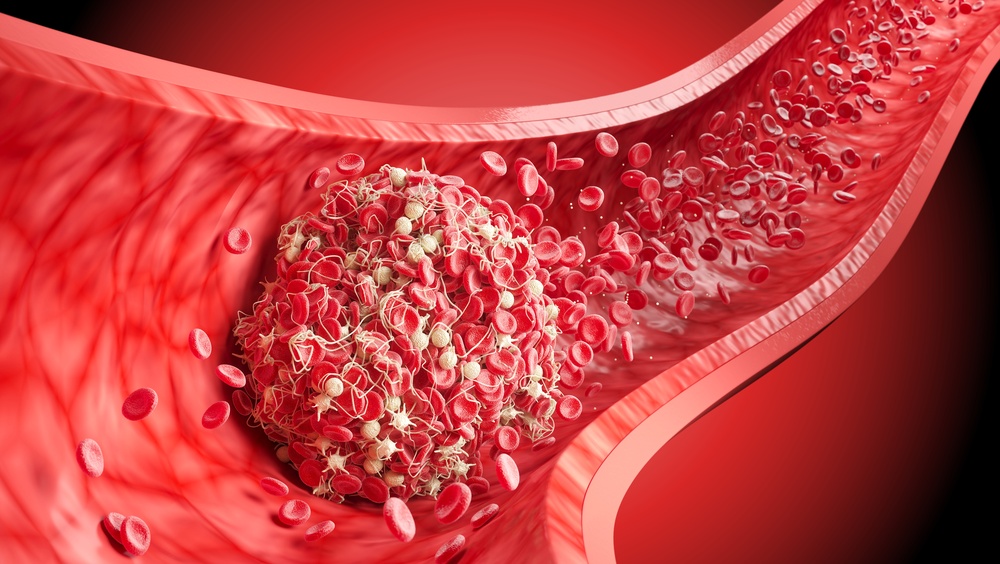
For decades, carbon dioxide has been viewed primarily as the gas driving climate change, fueling stronger hurricanes, record-breaking heatwaves, devastating wildfires, and rising sea levels. But scientists are now warning that its impact may extend beyond the environment itself. According to a newly published study, the steady increase in atmospheric CO₂ could already be leaving a measurable fingerprint inside the human body. Researchers analyzing more than two decades of blood samples discovered gradual shifts in several important blood chemistry markers that closely mirrored the rise in carbon dioxide in Earth’s atmosphere. While the study stops short of proving that atmospheric CO₂ is directly responsible, the consistency of the findings has raised fresh questions about whether climate change could also be quietly influencing human physiology.
Contents
show
The research, conducted by scientists from The Kids Research Institute Australia, Curtin University, and The Australian National University (ANU), suggests this isn’t an issue likely to cause sudden illness or trigger an immediate public health emergency. Instead, it points to subtle biological changes that may accumulate over decades as atmospheric CO₂ continues climbing. The researchers believe children and young people could face the greatest long-term exposure because they are likely to spend their entire lives breathing air with higher carbon dioxide concentrations than any previous generation. The findings have prompted calls for scientists to begin tracking human health markers alongside traditional climate indicators, opening an entirely new discussion about what rising carbon dioxide could mean for the future of public health.

Researchers Found Blood Chemistry Has Been Gradually Changing
The study, published in the journal Air Quality, Atmosphere and Health, examined blood test results collected through the U.S. National Health and Nutrition Examination Survey (NHANES), one of the world’s largest ongoing public health databases. Researchers analyzed samples from roughly 7,000 Americans every two years between 1999 and 2020, allowing them to compare long-term biological trends against steadily increasing atmospheric carbon dioxide levels. Because NHANES follows standardized testing procedures across decades, it provided scientists with an unusually reliable way to look for gradual changes that might otherwise go unnoticed.
Their analysis revealed several consistent shifts in blood chemistry. Average serum bicarbonate levels increased by approximately seven percent during the study period, while average calcium and phosphorus concentrations slowly declined. At the same time, atmospheric carbon dioxide rose from roughly 369 parts per million (ppm) around the year 2000 to more than 420 ppm today. Although these blood markers remained within today’s accepted healthy ranges, the researchers found that the trends closely tracked the steady increase in atmospheric CO₂ throughout the study period.
Associate Professor Alexander Larcombe, one of the study’s authors, said the findings suggest the human body may already be responding to changes in the composition of the air people breathe every day. “What we’re seeing is a gradual shift in blood chemistry that mirrors the rise in atmospheric carbon dioxide, which is driving climate change,” Larcombe explained. He stressed that the results point to a population-wide pattern rather than isolated medical cases, making the trend particularly important for future research.
The researchers emphasize that this does not mean atmospheric carbon dioxide has been proven to cause the observed changes. Many environmental, dietary, and lifestyle factors can influence blood chemistry. However, the remarkable consistency across more than twenty years of nationwide health data convinced the team that the relationship deserves much closer scientific investigation, particularly as carbon dioxide levels continue rising year after year.

Why Bicarbonate Could Be the Key to Understanding the Findings
One of the most significant discoveries involved serum bicarbonate, a substance that plays a central role in keeping the body’s acid-base balance stable. Every time people breathe, carbon dioxide enters and leaves the bloodstream. The body constantly adjusts bicarbonate levels to prevent blood from becoming either too acidic or too alkaline, allowing organs to function normally despite natural fluctuations in breathing and metabolism. It is one of the body’s most carefully regulated systems because even small disruptions in blood pH can interfere with normal biological processes.
Scientists believe rising atmospheric carbon dioxide may gradually increase the amount of CO₂ absorbed into the body through breathing. If that occurs, the body can compensate by retaining additional bicarbonate, helping maintain a stable blood pH. In other words, the increased bicarbonate detected in the study may represent the body’s natural attempt to adapt to subtle environmental changes rather than a disease process itself. The concern lies not in the adjustment alone but in what decades of continuous compensation could eventually mean for human health.
Using current atmospheric trends, the researchers created models projecting how blood chemistry could continue changing if carbon dioxide concentrations keep increasing. According to Larcombe, average bicarbonate levels could approach the upper end of today’s accepted healthy range within the next 50 years. Calcium and phosphorus, meanwhile, could gradually drift toward the lower end of their normal ranges later this century. Those projections do not predict widespread illness, but they suggest today’s “normal” blood chemistry may continue evolving as atmospheric conditions change.
For scientists, this raises an intriguing possibility. Climate change has traditionally been measured through temperature records, greenhouse gas emissions, melting glaciers, and sea level rise. This study suggests human biology itself may eventually become another indicator of a changing planet, with blood chemistry offering clues about how environmental shifts influence the body over the course of an entire lifetime.
Scientists Say More Research Is Needed Before Drawing Conclusions
Despite the striking pattern uncovered in the study, the researchers are careful not to overstate what the results mean. The data show that changes in blood chemistry closely tracked rising atmospheric carbon dioxide over more than two decades, but that alone does not establish cause and effect. Many factors can influence serum bicarbonate, calcium, and phosphorus levels, including diet, kidney function, medications, physical activity, and underlying health conditions. Untangling those influences will require additional studies involving different populations and controlled experiments.
Dr. Phil Bierwirth, a retired environmental geoscientist affiliated with the Australian National University’s Emeritus Faculty and co-author of the study, believes the findings are significant because they reveal a remarkably consistent trend across thousands of people rather than isolated cases. He argues that humans evolved in an atmosphere containing far less carbon dioxide than exists today, making it reasonable to question whether the body is beginning to encounter conditions outside the range it was originally adapted to handle.
“It appears we are adapted to a range of CO₂ in the air that may now have been surpassed,” Bierwirth said. “The normal range maintains a delicate balance between how much CO₂ is in the air, our blood pH, our breathing rate, and bicarbonate levels in the blood. As CO₂ in the air is now higher than humans have ever experienced, it appears to be building up in our bodies.”
He added that scientists still do not know whether humans can fully adapt if atmospheric carbon dioxide continues increasing. “Maybe we can never adapt such that it is vitally important to limit atmospheric levels of CO₂,” he said. While that idea remains a hypothesis rather than a confirmed conclusion, it highlights why researchers believe the issue deserves much closer attention over the coming decades.
Children Could Experience the Longest Lifetime Exposure
One reason the researchers believe this issue deserves immediate attention is the potential impact on younger generations. Adults alive today spent much of their lives breathing air with significantly lower carbon dioxide concentrations than children born in recent years. If atmospheric CO₂ continues rising throughout this century, today’s children could experience continuous exposure from birth to old age, something no previous generation has faced.
Developing bodies are constantly undergoing changes involving bone growth, organ development, metabolism, and hormone regulation. Scientists do not yet know whether the gradual shifts observed in blood chemistry could influence those processes over many decades, but they believe the possibility warrants careful monitoring. The study does not claim that children are currently experiencing health problems because of these changes, nor does it suggest parents should be alarmed. Instead, it identifies an important question that future research will need to answer.
The findings also highlight how climate change may affect human health in ways that extend beyond heatwaves, poor air quality, or the spread of infectious diseases. Much of the public discussion around climate focuses on visible consequences such as floods, droughts, and rising sea levels. This research points toward another possibility: that long-term changes in Earth’s atmosphere could gradually influence the body’s internal chemistry without producing immediate symptoms.
Because these changes appear subtle rather than dramatic, scientists say they could easily go unnoticed unless researchers continue tracking them across entire populations. Long-term public health monitoring may become just as important as environmental monitoring if future studies confirm the relationship between atmospheric carbon dioxide and human physiology.

Why the Findings Could Influence Future Climate Policy
The researchers believe their study raises an important point for policymakers. Carbon dioxide has traditionally been viewed as an environmental measurement used to estimate future warming, but it may eventually need to be considered as a public health indicator as well. If atmospheric CO₂ can influence human biology over time, monitoring blood chemistry alongside greenhouse gas concentrations could provide another way to understand the long-term effects of climate change.
Associate Professor Larcombe stressed that the study should not be interpreted as evidence that people will suddenly become ill once atmospheric carbon dioxide reaches a particular level. Instead, he said the findings suggest that gradual physiological changes may already be occurring across entire populations, making them worthy of continued scientific observation.
“We’re not saying people are suddenly going to become unwell when we cross a certain threshold,” Larcombe explained. “But this suggests there may be gradual physiological changes occurring at a population level, and that’s something we should be monitoring as part of future climate change policy.”
The researchers recommend expanding climate monitoring beyond traditional environmental indicators by studying human biomarkers alongside atmospheric measurements. Doing so could help scientists determine whether the trends observed in this study continue, level off, or eventually begin affecting health outcomes in measurable ways. That information could prove valuable as governments develop long-term climate adaptation strategies.
A New Question in the Climate Change Debate
Most climate research focuses on how rising carbon dioxide transforms the world around us. This study asks whether it may also be changing something far more personal. While the evidence is still emerging, the findings suggest the atmosphere people breathe every day could be leaving a subtle biological signature that only becomes visible after decades of careful observation.
The researchers are not sounding an immediate alarm, nor are they claiming to have discovered a new disease linked to carbon dioxide. What they have uncovered is a trend that challenges scientists to ask a new set of questions about the relationship between the environment and human health. As atmospheric CO₂ continues climbing, future studies will determine whether these gradual changes remain a scientific curiosity or become another important reason to reduce greenhouse gas emissions before the planet, and perhaps the people living on it, change even further.
Air Quality Atmosphere and Health, Alexander Larcombe, atmospheric CO2, Australian National University, blood biomarkers, blood chemistry, Carbon Dioxide, carbon emissions, climate change, climate news, Climate research, Climate Science, CO2, Curtin University, environmental health, environmental research, Global Warming, Greenhouse gases, health news, human blood chemistry, human health, Kids Research Institute Australia, NHANES, public health, Scientific Study