
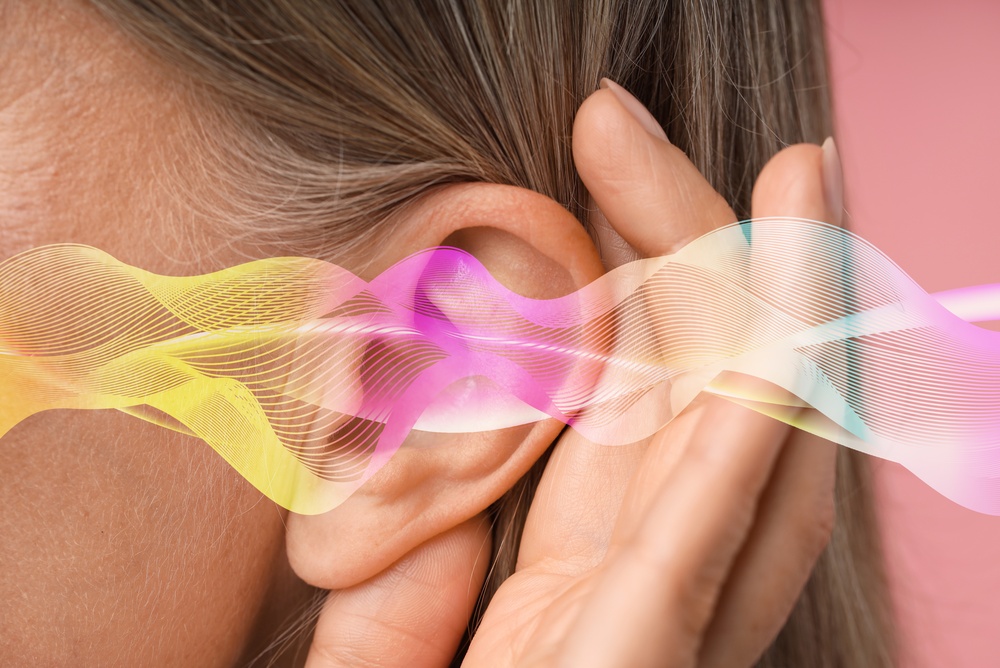
Scientists have discovered a way to strengthen a process that could play a crucial role in keeping the brain healthy, and it involves something many people already do every night. Researchers at MIT found that playing pink noise during sleep increased the size of certain slow electrical waves in the brain, alongside larger waves of cerebrospinal fluid moving through it. The finding could eventually help scientists investigate new ways to support the brain’s natural waste-clearance system, which has attracted growing attention because of its possible connection to conditions such as Alzheimer’s disease.
The research, led by Laura Lewis and involving researcher Joshua Levitt, focused on what happens inside the brain during sleep. The team studied 14 healthy volunteers and found that carefully timed pink noise could influence the relationship between brain activity and the movement of cerebrospinal fluid. It is an intriguing discovery, particularly because the researchers say they have found a way to increase the size of these fluid waves. However, there is an important distinction: the study did not prove that listening to pink noise removes harmful proteins from the brain, prevents dementia or protects someone from developing Alzheimer’s. What it does offer is a new direction for research into a process scientists are increasingly interested in understanding.

Why the Brain Needs Time to Clear Away Waste
The brain is constantly working, even when someone is fast asleep. Its cells communicate, maintain essential functions and carry out the activity needed to keep the body operating. Like other active parts of the body, the brain also produces waste as part of its normal functioning. Removing that waste is important, and scientists have been investigating how the brain manages this task.
One part of the process involves cerebrospinal fluid, often shortened to CSF. This clear fluid surrounds the brain and spinal cord, helping protect them while also playing a role in the movement of substances around the brain. Its movement is not simply constant or random. Researchers are interested in how it changes alongside the brain’s activity, particularly during sleep, when some of the brain’s slow electrical patterns become more prominent.
This has made sleep an important area of study for researchers investigating brain health. The relationship between sleep and the brain’s internal cleaning processes is complex, and scientists are still working out precisely how different types of brain activity influence fluid movement. The MIT research adds another piece to that picture by examining whether an external sound could influence the size of the fluid waves associated with the process.
The potential significance is considerable, but it needs to be understood carefully. Researchers are not claiming that the brain becomes completely clean overnight or that a particular sound can remove every harmful substance. Instead, the study investigates whether one part of the process can be influenced in a measurable way.
The MIT Experiment Used Pink Noise During Sleep
The research involved 14 healthy volunteers who took part in an experiment examining the relationship between sound, brain activity and cerebrospinal fluid movement. The team used pink noise, a type of sound that contains a range of frequencies but has a different distribution of energy from white noise. It is often described as having a softer, more balanced quality than the sharper sound associated with white noise.
Rather than simply playing noise and asking participants whether they slept better, the researchers were interested in what happened inside the brain. They examined slow electrical waves and the movement of cerebrospinal fluid, looking at how the two were connected. This allowed them to investigate whether sound could influence the patterns that occur naturally during sleep.
The results suggested that pink noise could increase the size of slow electrical waves in the brain. The researchers also observed larger waves of cerebrospinal fluid moving through the brain during the experiment. That connection is what makes the findings particularly interesting: the sound was associated with changes in both brain activity and fluid movement, rather than simply producing a subjective feeling of relaxation.
Laura Lewis explained the significance of the result, saying: “We found that we were able to increase the size of the CSF flow wave during sleep, which as far as we know, there hasn’t been a method to do before.” She added that the team was excited about the possibility of taking the technology into clinical populations to investigate its effects.

How Sound Could Influence What Happens Inside the Brain
Pink noise is not a new discovery, and researchers have previously investigated how sound can affect sleep and brain activity. What makes this experiment stand out is its focus on the movement of cerebrospinal fluid. The researchers were looking beyond whether a sound might help someone settle down or remain asleep. They wanted to understand whether sound could influence a physical process taking place inside the brain.
The findings suggest that sound stimulation may be able to affect the size of slow waves linked to sleep, with corresponding changes in CSF flow. This matters because the brain’s electrical activity and the movement of cerebrospinal fluid are connected. By influencing one part of that relationship, researchers may have found a way to alter another.
There are several reasons this could become an important research direction:
- A measurable change: The researchers observed changes in the size of cerebrospinal fluid flow waves during the experiment.
- A link with brain activity: Pink noise was associated with larger slow electrical waves in the brain.
- A non-invasive approach: The experiment used sound rather than a surgical procedure or an implanted device.
- A possible route for further research: The findings give scientists a method to investigate whether influencing these waves could have wider effects.
- A potential clinical application: The researchers want to explore the approach in groups of people with neurological conditions.
It is important not to confuse a larger fluid wave with proof of improved waste removal. The experiment measured changes in the movement of cerebrospinal fluid, not whether harmful substances were cleared from the brain more effectively. That question will need to be examined in further research.

Why Researchers Are Interested in Alzheimer’s and Dementia
One reason the findings have attracted attention is the possible connection between the brain’s waste-clearance processes and neurological conditions. Alzheimer’s disease and other forms of dementia are associated, in part, with the buildup of molecules including amyloid and tau in the brain. Scientists have been investigating how these substances accumulate and whether the body’s natural processes could help limit that buildup.
Joshua Levitt highlighted why improving the understanding of brain waste clearance matters. He explained: “Brain waste clearance is really important for Alzheimer’s and other forms of dementia, which are caused, in part, by the buildup of molecules like amyloid and tau in the brain.” He also discussed the possibility that improving clearance could help prevent the accumulation of plaques associated with disease.
That possibility is one of the reasons the MIT team’s findings could be worth investigating further. If researchers can reliably influence the movement of cerebrospinal fluid, they may be able to study whether doing so has an effect on the substances involved in certain neurological conditions.
However, the distinction between a promising research direction and a proven treatment is essential. The experiment involved 14 healthy volunteers, and it did not establish that pink noise reduces amyloid or tau, prevents Alzheimer’s or lowers someone’s risk of dementia. Those are much bigger questions that cannot be answered by observing changes in fluid waves alone.
What the Study Has Not Proved Yet

The discovery is exciting, but there are clear limits to what can be concluded from the research. The study showed that pink noise could increase the size of certain brain waves and cerebrospinal fluid flow waves during sleep. It did not demonstrate that the participants experienced better long-term brain health or that the changes led to measurable improvements in waste removal.
The number of participants also matters. Fourteen healthy volunteers provide useful information for an experimental study, but that is not enough to establish how the approach might work across a much wider population. People with neurological conditions may have different patterns of sleep, brain activity and fluid movement. Researchers will need to investigate those differences before drawing conclusions about possible clinical benefits.
There is also a difference between influencing a biological process and improving the outcome that process is associated with. Increasing the size of a CSF flow wave is a measurable result. Showing that this leads to more effective clearance of harmful molecules, and that this in turn changes the risk or progression of disease, would require further evidence.
For now, the research should not be treated as a reason to buy a pink-noise machine or change a sleep routine in the expectation of preventing dementia. The findings do not establish a proven sound treatment, an ideal listening volume or a recommended duration for use. Those practical questions would need to be addressed through additional studies.
The Next Step Is Testing the Technology in Clinical Populations
The MIT researchers have made clear that they want to take the work further. Lewis said the team was excited to bring the technology into clinical populations to investigate what effects it might have. That next stage could help establish whether the changes observed in healthy volunteers can also be produced in people with neurological conditions.
Further research will need to answer several important questions. Scientists will need to establish whether the effects can be reproduced in larger groups, whether they remain consistent over time and whether changes in cerebrospinal fluid movement have any meaningful impact on waste clearance. They will also need to determine whether the approach is suitable for people whose sleep or brain activity may already be affected by illness.
The most important question is whether changing these fluid waves can produce a benefit that goes beyond the measurements recorded during the experiment. If future studies find evidence of improved waste clearance, researchers could then investigate whether the approach has any relevance to conditions associated with the buildup of amyloid and tau.
That is still a long way from having a treatment. But the ability to influence a process that researchers have struggled to manipulate could give scientists a useful new tool. Rather than claiming to have found a way to prevent dementia, the team has identified a possible route for investigating how the brain’s natural cleaning system works.
A Simple Sound Could Open Up a Much Bigger Area of Research
The idea that a sound played during sleep could influence activity deep inside the brain is striking. The MIT study suggests that pink noise can increase the size of slow electrical waves and associated cerebrospinal fluid flow waves in healthy volunteers. That gives researchers a new way to examine the relationship between sleep, brain activity and the movement of fluid through the brain.
The next breakthrough will not be proving that a particular sound can be played overnight. It will be finding out whether influencing these waves actually helps the brain clear waste more effectively. Until that evidence exists, pink noise remains a promising research tool, not a proven defence against Alzheimer’s disease.
Sources:
Levitt, J., Zeng, X., Yang, Z., Jacob, L. P. L., & Lewis, L. D. (2026). Closed-loop auditory stimulation in phase with slow waves during sleep enhances cerebrospinal fluid flow in humans. Science Translational Medicine, 18(866), eaea5469. https://doi.org/10.1126/scitranslmed.aea5469