
Your cart is currently empty!
Scientists Found a Cellular Mechanism That Could Help Explain How Aging Takes Hold

Scientists may have found a surprisingly specific weak point in the aging process. A new study suggests that a molecule inside our cells helps keep mitochondria working properly, and its decline with age may contribute to cellular deterioration.
Contents
show
Even more striking, researchers were able to restore younger-looking mitochondrial function in laboratory worms by supplying either choline or phosphatidylcholine. The finding does not prove that humans can reverse aging, but it gives scientists a new biological pathway to investigate.
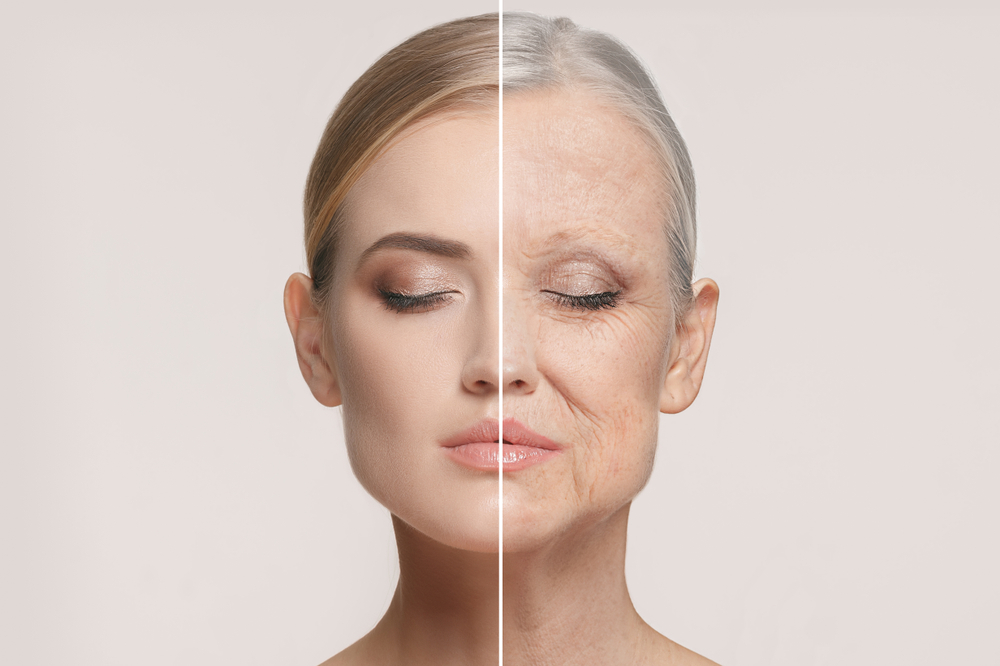
Our Cells May Lose Their Energy Flexibility With Age
Most human cells contain mitochondria, tiny structures responsible for transforming food and oxygen into chemical energy. They are often described as the “powerhouses of the cell,” but their role is more complicated than simply producing energy. Healthy mitochondria also need to adjust their structure and activity as the body’s energy demands change.
Researchers at the Leibniz Institute on Aging investigated whether this flexibility becomes impaired as cells grow older. Their study focused on phosphatidylcholine, a membrane lipid that appears to help mitochondria maintain dynamic networks inside cells. When levels of the lipid fall, the researchers found that mitochondria can become less flexible and less efficient.
Maria Ermolaeva, the study’s lead author, compared the process to an aging electrical system. “You can imagine the whole system as a finely branched power grid that becomes increasingly damaged with age: connections break down and currents stall,” she said in a press statement. Energy production can continue, but the system becomes less efficient and less sustainable.

A Tiny Molecule Could Be Part Of The Problem
Phosphatidylcholine is part of the membranes surrounding cells and cellular structures. In mitochondria, the researchers found evidence that it plays a role in maintaining the flexibility needed for these organelles to adapt to changing energy requirements. As levels decline, mitochondrial networks appear to lose some of that adaptability.
The researchers studied the process using human cells, clinical datasets and Caenorhabditis elegans, a microscopic roundworm commonly used in aging research. The worms have a lifespan of only around two to three weeks, allowing scientists to watch age-related biological changes unfold much faster than they could in humans.
The experiments suggested that cellular aging develops through several stages. The researchers observed changes involving stress resistance first, followed by metabolic changes and eventually epigenetic alterations. Their findings also pointed to differences between males and females, suggesting that the biological process may not unfold identically in everyone.

The Decline May Be Linked To A Major Life Stage
The human data offered another clue that caught the researchers’ attention. Phosphatidylcholine levels appeared to decline rapidly around menopause, a period that is also frequently associated with changes in energy and fatigue.
That connection does not prove that declining phosphatidylcholine causes menopause-related fatigue or other symptoms. It does, however, give scientists another potential biological relationship to investigate as they study why cellular aging can accelerate at different stages of life.
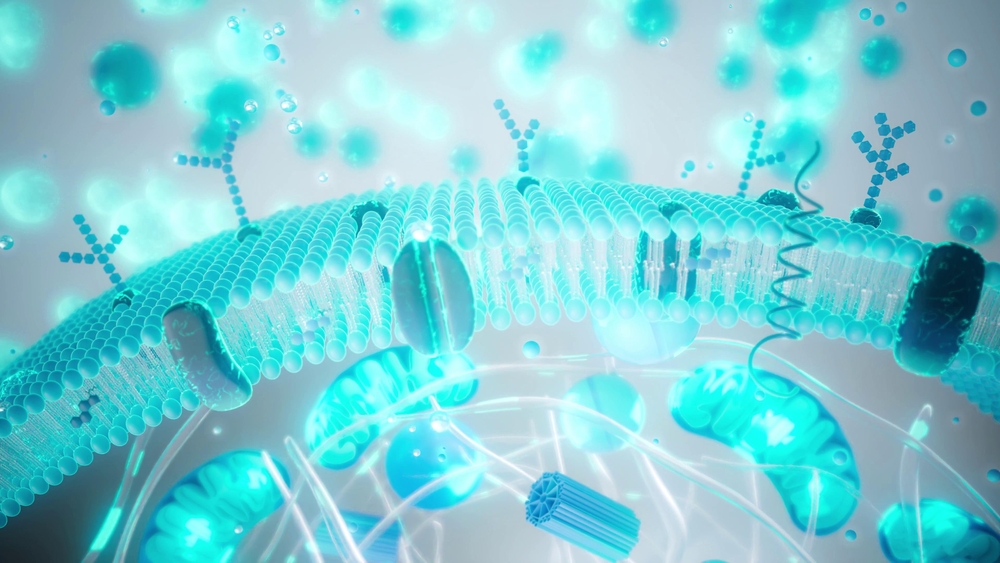
Researchers Found A Way To Restore Younger Mitochondria
The biggest surprise came when the scientists tested whether the mitochondrial changes could be reversed. They supplied laboratory worms with either choline or phosphatidylcholine and observed younger-acting mitochondrial characteristics within only a few days.
That result suggests that at least some aspects of mitochondrial aging may be modifiable rather than permanently locked in once they appear. Instead of treating cellular decline as a one-way process, researchers now have evidence that changing the underlying molecular environment can alter how aging mitochondria behave.
Ermolaeva said the research shows that “both mitochondrial aging and broader systemic aging are, at least in part, modifiable.” The finding provides a possible direction for future treatments, although considerably more research is needed before anyone can know whether the same approach would work safely in humans.
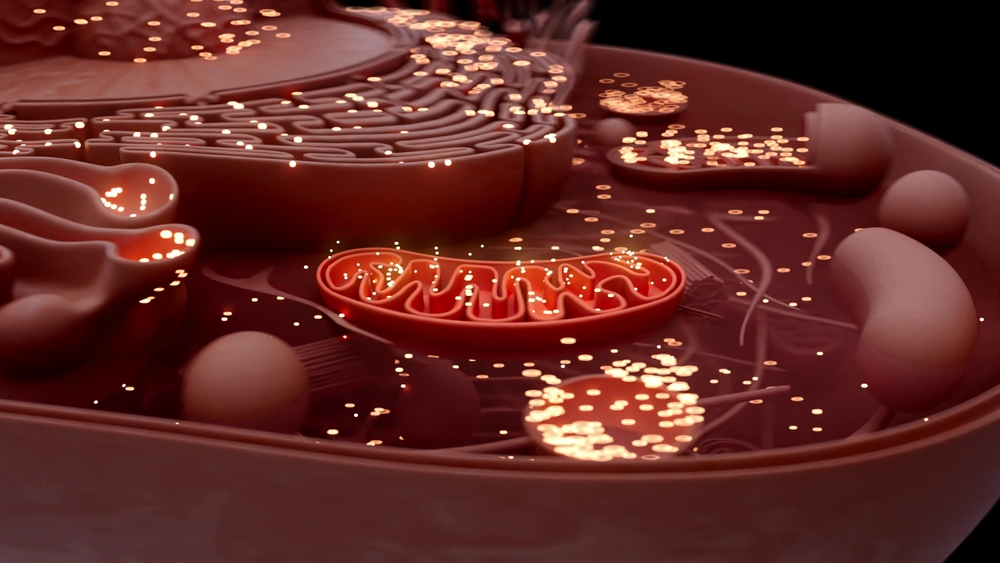
Why The Findings Are Getting So Much Attention
Aging affects virtually every part of the body, but researchers increasingly study it as a collection of interconnected biological processes. Mitochondrial dysfunction is one part of that picture because cells depend on these structures for energy and metabolic activity.
The new study gives scientists a more specific mechanism to investigate. Rather than simply observing that mitochondria become less effective with age, the researchers identified a change in membrane composition that appears to be associated with the loss of mitochondrial flexibility.
The findings could lead researchers toward several new questions:
- Can the mechanism be reproduced in human cells? The researchers will need to establish whether restoring phosphatidylcholine produces similar effects outside laboratory worms.
- Can the process be targeted safely? Increasing a molecule in an organism does not automatically mean that doing so would be beneficial or safe as a treatment.
- Why do the levels change with age? Understanding what causes phosphatidylcholine to decline could reveal another part of the aging process.
- Why are there sex-specific differences? The observed differences could help explain why certain age-related biological changes affect men and women differently.
This Does Not Mean Humans Can Take Choline To Reverse Aging
The word “reverse” is doing a lot of work when this research is described. The experiment showed younger mitochondrial characteristics in worms after they received choline or phosphatidylcholine. It did not demonstrate that people can reverse biological aging by taking either substance.
Human aging is also far more complicated than mitochondrial function alone. Multiple biological systems change with age, including metabolism, cellular repair, gene regulation and other processes. Altering one pathway would not necessarily reverse all of those changes.
The study therefore represents a potential research direction rather than a ready-made anti-aging treatment. There is currently no basis in the supplied research for claiming that choline supplements can make an older person biologically younger.
That distinction is especially important because laboratory findings can look dramatically different once researchers begin testing an intervention in humans. Safety, dosage, effectiveness and long-term consequences would all need to be established through additional research.
The Real Breakthrough May Be The Idea That Aging Can Change
For decades, aging has often been described as an accumulation of damage that becomes increasingly difficult to undo. This research adds another possibility: at least some age-related cellular changes may remain biologically adjustable.
The experiments suggest that mitochondria can regain characteristics associated with younger cells when their molecular environment is changed. That does not mean scientists have discovered a universal aging switch, but it does point toward a more precise way of studying why cells lose their youthful function.
The researchers now need to determine whether the mechanism can be reproduced in human biology and whether it can eventually be targeted without causing harmful effects. Those answers could take years to establish.
For now, the most intriguing part of the study is not a promise of immortality. It is the possibility that some cellular changes associated with aging may be more reversible than scientists once assumed.
Sources:
Poliezhaieva, T., Li, Y., Chaudhari, P. S., Isildak, U., Alonso-Pernas, P., Valentim, I. S., Su, F., Espada, L., Bayar, M., Fu, L., Koeberle, A., Dönertaş, H. M., & Ermolaeva, M. A. (2026). Aging-associated decline of phosphatidylcholine synthesis is a malleable trigger of natural mitochondrial aging. Nature Communications, 17(1). https://doi.org/10.1038/s41467-026-71508-7