
Your cart is currently empty!
Scientists Found Something Unexpected About What Early Humans Actually Ate

For decades, the image of our ancient ancestors has been remarkably simple: humans hunted animals, killed them, ate the meat and slowly built their way toward civilization. It is an image filled with spears, fires and carcasses, while the plants that once made up much of the daily menu have largely disappeared without a trace. But the archaeological record is beginning to tell a very different story, one in which gathering, crushing, cooking and processing plants were regular parts of human life long before supermarkets and farms existed.
Contents
show
Evidence from ancient tools, teeth, pottery and burial sites now points to diets that were far more varied than the familiar caveman stereotype suggests. Researchers have found traces of acorns, cereals, legumes, roots, berries, tubers and aquatic plants at sites separated by thousands of miles and millions of years. Meat was certainly part of the story in many communities, but the evidence suggests humans were remarkably flexible eaters who knew how to turn an enormous range of plants into food.
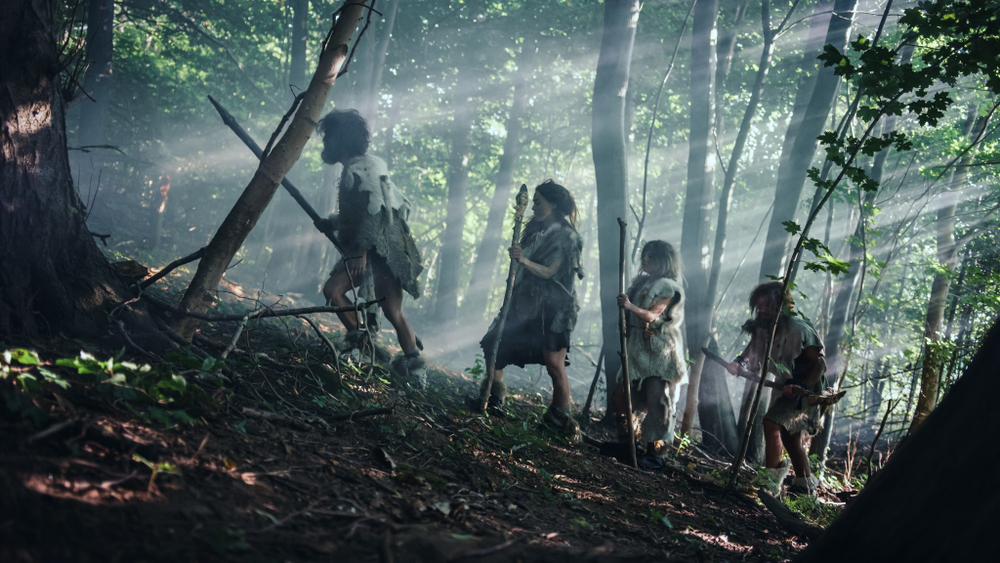
A 780,000-Year-Old Stone Still Holds A Menu
One of the clearest clues comes from Gesher Benot Ya’akov beside what was once Hula Lake in northern Israel. People repeatedly used the area around 780,000 years ago, leaving behind basalt tools that could be used for cracking, crushing and processing food. When researchers examined microscopic residues preserved on those stones, they found starches linked to acorns, cereals, legumes and aquatic plants. The discovery also included evidence connected to a water chestnut that no longer grows anywhere on Earth, giving researchers a rare glimpse into a food landscape that has completely disappeared.
The tools themselves provide important context because they show that the plants were not simply available in the environment. They were being deliberately processed. Hard nuts could be cracked against stone, grains could be crushed and starchy plant material could be broken down before being eaten. The presence of these residues turns an ordinary-looking collection of rocks into something much more revealing: evidence of repeated food preparation by people living hundreds of thousands of years ago.
The location beside the ancient lake also matters. People could collect resources from the land and water around them, creating a varied food supply that changed with the seasons. Aquatic plants could be gathered from shallow water, while nuts, legumes and other vegetation could be collected from the surrounding landscape. The evidence suggests these activities were not simply desperate attempts to find something edible after a failed hunt.
Researchers described the plant gathering as a year-round activity. That makes the discovery particularly interesting because it places plant foods within the routine of daily life rather than treating them as occasional substitutes for meat. The basalt stones effectively preserve part of an ancient menu, and that menu looks much broader than the image of a prehistoric hunter carrying a spear.
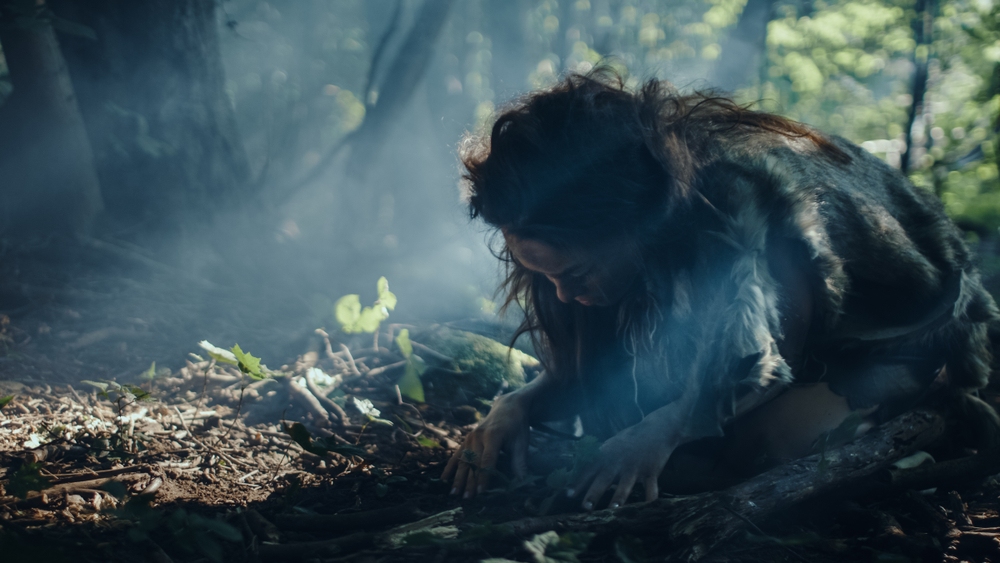
Plants Disappeared While Bones Stayed Behind
There is a simple reason the archaeological record has made ancient diets look so meat-heavy: bones survive far better than most plant foods. Animal remains can remain visible in archaeological deposits for enormous periods of time, while berries, leaves, soft fruits and many roots can rot away without leaving obvious traces. Even foods that were eaten regularly can therefore become nearly invisible to archaeologists examining an ancient settlement.
That creates a major imbalance in the evidence. A site containing large numbers of animal bones can appear to tell a story about hunting and meat consumption, while the same people could have been gathering large quantities of plants that simply disappeared. Unless starch grains, chemical signatures, charred remains, pollen or other traces survive, researchers may never know those foods were there.
Researchers examining this problem looked at 59 archaeological sites across nine areas of eastern Africa covering a period from around 2.6 million to 1.2 million years ago. The study investigated the familiar idea that meat consumption suddenly became much more important with Homo erectus. At first, the archaeological record appeared to support that idea because some famous sites contained impressive quantities of butchered animal remains.
Once researchers accounted for differences in how intensely the sites had been excavated, however, that pattern became much less convincing. The amount of animal evidence was strongly influenced by how much attention archaeologists had given particular locations. That means the fossil record may have been showing researchers where bones survived and where people looked for them, rather than providing a complete picture of what ancient humans actually ate.
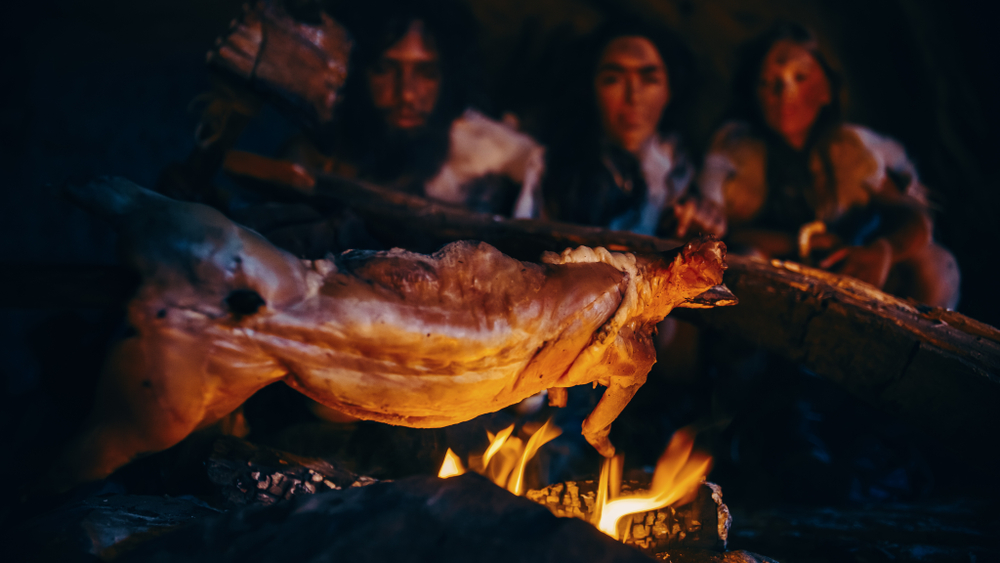
Ancient Teeth Reveal Another Side Of The Story
When the food itself has vanished, researchers can sometimes turn to the human body for clues. Tooth enamel is one of the hardest tissues in mammals, and its chemical composition can preserve information about diet long after softer tissues and food remains have disappeared. That makes ancient teeth valuable records for reconstructing what people were eating millions of years ago.
Scientists have developed methods that examine nitrogen isotopes preserved in fossilised tooth enamel. These chemical signatures can help researchers determine where an animal sat within a food chain because nitrogen values tend to change as nutrients move between plants, herbivores and carnivores. It gives researchers another way to investigate diet without depending entirely on preserved bones or food scraps.
The method was applied to seven Australopithecus individuals from South Africa’s Sterkfontein caves. The remains were dated to between 3.7 million and 3.3 million years ago, placing them far earlier than many of the archaeological sites associated with later human ancestors. The results showed nitrogen values closer to those expected in herbivores than in carnivores living in the same environment.
The findings point toward diets that were largely or entirely plant based, although the researchers acknowledged that occasional animal foods could not be completely ruled out. That distinction matters because archaeology rarely gives researchers a perfect record of every meal. What the evidence does provide is another piece of a growing pattern: early human relatives were capable of relying heavily on plants long before the rise of agriculture.
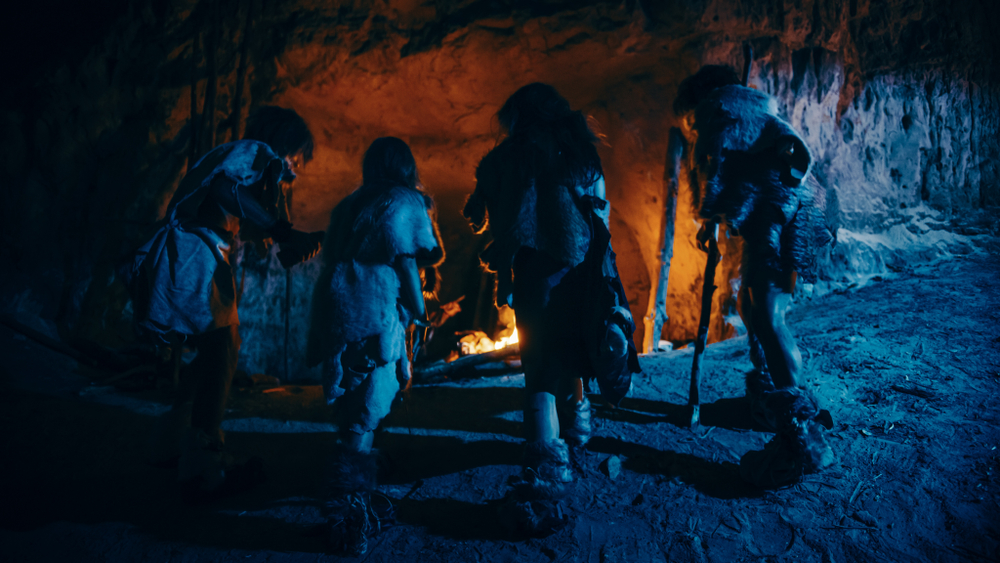
Acorns And Wild Pulses Were More Important Than We Thought
Another clue comes from Taforalt in Morocco, where members of the Iberomaurusian culture were buried between roughly 15,000 and 13,000 years ago. These communities lived thousands of years before agriculture became established in the region, meaning they depended on the wild resources available around them rather than fields of domesticated crops.
Researchers used several chemical indicators from teeth and bone collagen to reconstruct what these people were eating. The analysis pointed toward substantial consumption of Mediterranean plant foods, including acorns, pine nuts and wild pulses. The physical remains found at the cave supported that picture, providing archaeological evidence that these foods were actually present in the community’s environment.
Acorns are particularly interesting because they require processing before they become an easy food source. They can contain bitter compounds that need to be reduced through preparation, while their hard shells also require cracking. Finding evidence of acorns in ancient diets therefore suggests knowledge of how to collect, process and prepare foods that might otherwise be overlooked.
The same principle applies to wild pulses and other plants. A landscape can contain hundreds of species, but only some are useful as food, and many require specific preparation. Ancient foragers had to recognize those plants, understand when they were available and know how to make them edible. Their diets therefore depended on detailed knowledge of the environment rather than simply eating whatever happened to be nearby.

One Ancient Community Got 80 Percent Of Its Diet From Plants
Evidence from the Peruvian Andes provides an even more striking example. Researchers examined the remains of 24 people from the Wilamaya Patjxa and Soro Mik’aya Patjxa burial sites, who lived between roughly 9,000 and 6,500 years ago. Chemical analysis of the remains offered researchers a way to estimate the balance between plant and animal foods in their diets.
The results suggested that approximately 80% of their diet came from plant matter, while around 20% came from meat. Much of the plant contribution appears to have come from tubers, including wild potatoes that were available in the region. The finding challenges the assumption that hunting automatically meant meat dominated the diet of every hunter-gatherer community.
The number should not be applied to every ancient population. These were two specific archaeological sites covering a particular period and landscape, and food availability would have differed enormously elsewhere. A community living beside a rich wetland would have had different options from one living in a dry grassland or high mountain environment.
What the evidence does show is how misleading a single label can be. A person can be described as a hunter-gatherer while obtaining a large share of their calories from plants. Hunting and gathering were not opposing lifestyles. They were complementary strategies that allowed people to exploit different resources when they became available.
Ancient People Were Already Making Recipes
Plant foods were not necessarily eaten raw or treated as emergency rations. Evidence from pottery suggests that prehistoric communities deliberately processed and combined ingredients, creating meals that could vary depending on the landscape and the resources available at different times of year.
Researchers examining 85 pottery vessels from 13 sites stretching from Russia to southern Denmark found plant remains in 58 of them. The foods included grasses, roots, tubers and berries, with some plant ingredients appearing alongside fish. The remains provide evidence of food preparation rather than simply proving that particular plants existed in the surrounding environment.
One particularly unusual example involved guelder rose berries. The raw berries were described by archaeobotanist Lara Gonzalez Carretero as having an unpleasant taste and smell. Cooking them with fish apparently changed their flavour, making the berries sweeter and more pleasant to eat.
That small detail says something important about prehistoric food. People were not simply surviving on whatever could be swallowed. They were processing ingredients, experimenting with preparation and combining foods in ways that improved their meals. A pot containing berries and fish is evidence of a prehistoric kitchen, not merely evidence of hunger.
What The Evidence Actually Tells Us
None of this means ancient humans were vegetarians, and the evidence does not justify replacing one simplistic diet story with another. Animal foods clearly mattered to many communities, sometimes substantially, and the balance between plants and meat changed according to geography, season, climate and the resources available in each environment.
The evidence also has limitations. The South African tooth study involved seven individuals, while the 80% plant estimate from the Andes applies to people from two specific burial sites. Archaeologists therefore have to be careful when moving from evidence about one community to claims about humanity as a whole.
Several food categories appear repeatedly across the archaeological record:
- Acorns and nuts: Hard plant foods were cracked and processed with stone tools.
- Wild pulses: Legumes provided another source of food before agriculture.
- Tubers: Underground plant foods could supply a substantial share of calories.
- Aquatic plants: Communities living near wetlands gathered edible resources from water.
- Berries and roots: Pottery evidence shows that plants were cooked and combined with other foods.
Taken together, these findings make one point difficult to ignore. Ancient diets were not governed by a universal meat-heavy formula. They were flexible systems built around whatever a particular landscape could provide, with plants often playing a much larger role than their fragile archaeological remains would suggest.
The Biggest Change May Have Been Variety
The most interesting part of this research may have less to do with whether ancient humans ate meat and more to do with how many different foods they could access. One archaeological site can preserve evidence of acorns, pine nuts and wild pulses, while another can reveal roots, grasses and berries. Elsewhere, people processed aquatic plants or relied heavily on tubers.
Agriculture eventually changed that relationship with food. Farming allowed people to produce reliable quantities of particular crops, but it could also reduce the diversity of plants that appeared regularly on the plate. University College London archaeobotanist Dorian Fuller has pointed to the reduction in plant-food diversity as one of the important changes associated with agricultural diets.
That creates a striking contrast with modern eating habits. Ancient foragers could draw from many edible species across different seasons, while modern diets often revolve around a comparatively small collection of crops and highly processed foods. The difference is not simply about meat versus vegetables. It is about the sheer variety of plants humans once knew how to find and prepare.
The basalt tools beside that ancient Israeli lake therefore tell a much more interesting story than the standard caveman image. They show people cracking nuts, crushing cereals, processing legumes and gathering food from both land and water. The oldest human menu was not defined by one food group. It was defined by adaptability.
And that may be the detail worth remembering: our ancestors did not eat like the modern paleo aisle suggests. They ate according to what the landscape offered, and the evidence suggests that landscape could put a surprisingly wide range of plants on the menu.
Sources:
Bar-Ilan University. (2025, January 6). Archaeological study challenges ‘paleo’ diet narrative of ancient hunter-gatherers. Phys.org. https://phys.org/news/2025-01-archaeological-paleo-diet-narrative-ancient.html
Human ancestor Homo erectus probably wasn’t the carnivore we thought | Natural History Museum. (2022, January 24). https://www.nhm.ac.uk/discover/news/2022/january/human-ancestor-homo-erectus-probably-wasnt-carnivore-we-thought.html