
Your cart is currently empty!
Scientists Gave People Virtual Wings, And Their Brains Began Responding In A Surprising Way
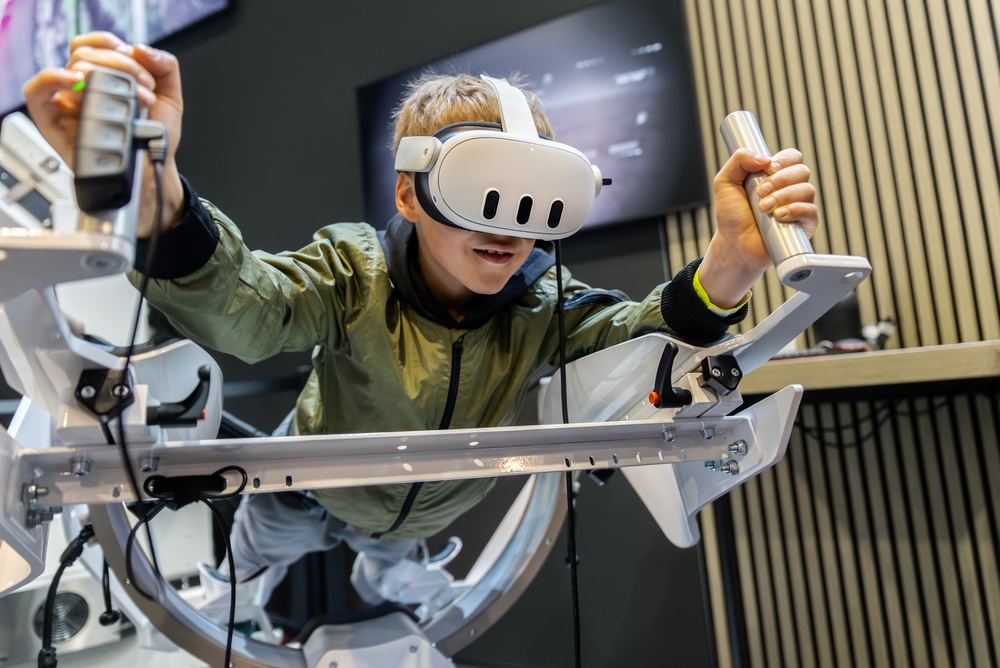
Imagine putting on a virtual reality headset and seeing a pair of enormous feathered wings where your arms should be. You spend a few sessions learning to fly, steering through the sky and adjusting your movements to control your new appendages. Then researchers examine your brain and discover something unexpected: the neural activity associated with those artificial wings has started to resemble the patterns used to process human limbs.
Contents
show
That is what researchers found in an experiment involving 25 volunteers who trained to fly using virtual wings. The study, published in Cell Reports in May 2026, offers new evidence of how the brain adapts to unfamiliar experiences. The participants did not grow wings, of course, and the researchers did not establish that the virtual appendages had become genuine body parts in the brain’s representation. However, the changes they observed raise fascinating questions about how immersive technology could influence the way humans perceive and interact with their bodies.
Researchers Gave 25 Volunteers A Pair Of Virtual Wings
Researchers affiliated with Beijing Normal University and Peking University in China designed an experiment to investigate how the brain responds to artificial body parts that humans have never possessed. They recruited 25 volunteers and gave them four 30-minute virtual reality training sessions over the course of a week. Inside the simulation, the participants saw large, feathered wings replacing their arms, creating the visual experience of having a completely different set of appendages.
The participants had to learn how to control these wings by moving their physical arms and wrists. The virtual system translated those movements into wing movements, allowing volunteers to practice flying through an environment designed around aerodynamic principles. They completed exercises that required coordination and control, including flying through rings suspended in the sky. Some participants learned the movements quickly, while others required more practice to become comfortable with the unfamiliar controls.
The researchers wanted to understand whether repeated exposure to this artificial body configuration would change the way the brain processed images of wings. To investigate, they used functional magnetic resonance imaging, or fMRI, to measure brain activity before and after the training period. This allowed the team to compare neural responses to images of wings and familiar body parts. The resulting scans revealed measurable changes in the way a brain region associated with visual body recognition responded to the artificial appendages.
The Brain Started Treating Wings More Like Human Arms
The most striking changes appeared in the occipitotemporal cortex, commonly abbreviated as the OTC. This brain region helps process visual information, including images of human bodies and their individual parts. Before training, the participants had no reason to associate wings with their own bodies because wings are unfamiliar structures from the perspective of ordinary human anatomy. After the virtual flying sessions, however, the researchers observed stronger responses to images of wings in this region.
The neural patterns associated with viewing wings also became more similar to those associated with viewing human upper limbs. This similarity was particularly noticeable in the right side of the OTC, which is generally involved in processing visual information about body parts other than hands. The researchers also observed stronger functional connectivity between the right OTC and frontoparietal brain regions involved in processing sensory information and coordinating movement. Together, these findings suggest that the training was associated with changes extending beyond simple familiarity with the appearance of wings.
What The Brain Scans Actually Revealed
The experiment produced three particularly important observations:
- Stronger responses to wings: The OTC showed increased responses to images of the virtual appendages after training.
- Greater similarity to human limbs: Neural activity associated with wings became more similar to patterns associated with upper limbs, particularly in the right OTC.
- Changes in brain connectivity: The researchers observed stronger functional communication between the right OTC and frontoparietal regions associated with movement-related processing.
These findings provide evidence that the brain’s visual processing systems can adapt after people learn to control unfamiliar virtual appendages. However, the researchers were careful not to claim that the participants’ brains had completely incorporated the wings into their normal body representations. The changes reflected greater similarity between neural response patterns, which is a more limited finding than proving that the brain had fully reclassified the wings as biological limbs.
Why The Occipitotemporal Cortex Is So Important
The occipitotemporal cortex helps the brain recognize visual information, including the shapes and configurations of human bodies. Recognizing a hand or arm involves processing visual features that distinguish familiar body parts from other objects. Through development and experience, the brain becomes skilled at identifying these structures and interpreting them within the wider context of the human body. Researchers have long been interested in how flexible these systems remain when people encounter unfamiliar objects or learn new ways to move.
The virtual wings experiment provided an opportunity to examine that flexibility under controlled conditions. Participants repeatedly saw wings occupying the visual position normally associated with their arms, while their own movements controlled those appendages. This combination of visual feedback and motor activity created a consistent association between the wings and the participants’ actions. After several sessions, the researchers found that the brain’s responses to wing images had changed in measurable ways.
How Virtual Reality Changes The Experience Of Having A Body
Virtual reality can create a strong visual impression of occupying a different body or environment. When people move their physical limbs and see a corresponding action in a virtual world, the brain receives information that can help it connect the movement with the simulated experience. In this experiment, participants were repeatedly exposed to a body configuration that differed significantly from their actual anatomy. The resulting changes suggest that the brain’s visual processing systems can adjust to such experiences over a relatively short training period.
However, the study did not establish exactly which elements of the experience produced the changes. The participants saw the wings replacing their arms, learned to control them and received visual feedback from their movements. Further experiments will be needed to determine how these different factors contribute to the observed neural responses. The results nevertheless provide a useful starting point for understanding how immersive environments influence the brain’s representation of unfamiliar body parts.
Virtual Wings May Be Different From Ordinary Tools
People routinely learn to use objects that extend their physical abilities, from simple hand tools to complex prosthetic devices. Although a person can become highly skilled at controlling an external object, the brain does not necessarily process that object in the same way it processes a biological limb. Previous research has explored how the brain distinguishes between the body and the tools people use to interact with their surroundings. The new findings suggest that immersive virtual experiences may create a different set of conditions.
The researchers observed that neural responses to wings became more similar to those associated with human limbs after training. However, the patterns could also resemble those linked to tools or animal tails. This means the results cannot be interpreted as definitive evidence that the brain had accepted the wings as genuine body parts. Instead, they indicate a shift in the way the visual system processed the unfamiliar appendages, bringing their neural representation closer to that of familiar limbs.
The research team made this distinction clear in its paper, writing, “We merely report that their neural response profiles became significantly more similar to those of body parts.” The wording is important because neural similarity does not necessarily reveal exactly how a person consciously experiences their body. It also does not demonstrate that the participants felt they had physically grown wings or that the changes persisted after the experiment ended. More research is needed to understand the relationship between these brain patterns and the participants’ subjective experience.
The Findings Offer New Questions About Brain Plasticity
The brain’s capacity to change in response to experience is known as neuroplasticity. This ability supports learning and skill development, allowing neural systems to adjust as people encounter new tasks and environments. The extent of those changes depends on the brain regions involved and the experiences being learned. The virtual wings experiment adds evidence that even relatively brief training can be associated with measurable changes in visual processing systems involved in recognizing body parts.
The researchers described virtual reality as a way for humans to experience forms of embodiment that are impossible through ordinary biology. In their paper, they wrote, “VR pushes these boundaries further by allowing users to experience embodying artificial non-human body effectors that are never biologically present, such as wings.” Their findings suggest that the brain’s visual representation of the body may be more adaptable than familiar anatomy alone would lead us to expect. However, the experiment did not show that virtual reality can change every aspect of body perception or override the brain’s biological constraints.
What Researchers Still Need To Investigate
Several questions remain unanswered following the experiment. The researchers would need to determine whether the neural changes persist after participants stop using the virtual wings, whether longer training produces different results and whether similar effects occur with other artificial body parts. They would also need to examine whether the changes influence real-world movement or primarily affect the way the brain responds to visual images.
The study involved only 25 volunteers, and its findings should be interpreted within that context. It was designed to investigate neural responses to an unusual virtual experience rather than test a medical treatment. Although the results provide a foundation for further research, they do not establish that VR wings can produce lasting changes in body awareness or improve physical performance outside the simulation.
Could Virtual Reality Help People Learn To Use Prosthetic Limbs?
One potential area of interest is rehabilitation. People who use prosthetic limbs often need to learn how to coordinate movements with an artificial device, interpreting new forms of feedback while developing control over its functions. Virtual reality could offer a controlled environment for studying how people adapt to unfamiliar appendages before applying similar principles to physical devices. The wing experiment suggests that immersive training can influence neural responses associated with artificial body parts, providing a possible direction for future research.
However, the distinction between a virtual appendage and a working prosthetic limb remains substantial. The volunteers in this study were healthy participants learning a simulated flying task, and the experiment did not test amputees or people recovering from neurological injuries. It also did not measure whether the observed neural changes improved prosthetic control or produced therapeutic benefits. Any application in rehabilitation would require separate clinical research to establish whether the approach is effective and safe.
Future studies could investigate whether virtual training helps people become more comfortable with unfamiliar movements, whether visual feedback improves coordination and how different forms of simulated embodiment affect the brain. Researchers could also compare training methods to identify which combinations of movement, visual feedback and repetition produce the strongest adaptations. These investigations may help clarify how immersive technology could support people learning to use artificial limbs or other assistive devices.
Scientists Are Only Beginning To Understand VR’s Effects
Virtual reality is increasingly capable of creating convincing experiences that connect physical movements with simulated environments. As people spend more time interacting with digital spaces, understanding how these experiences influence perception and brain activity becomes an important area of research. The virtual wings experiment offers one example of how the brain can respond to an unfamiliar body configuration after repeated exposure, even when that configuration has no biological equivalent in humans.
Psychologist Kunlin Wei of Peking University, a coauthor of the study, explained the team’s interest in the subject by saying, “We are very interested in what that could mean for the human brain.” The question extends beyond virtual flying because researchers are still working to understand how immersive environments influence the relationship between perception, movement and body representation. The current findings provide evidence of neural adaptation, but they leave open questions about how long the changes last and whether they affect everyday experiences.
For now, the volunteers’ virtual wings remain a research tool rather than a new human ability. The brain scans reveal that a short period of training can change how the visual system responds to unfamiliar appendages, but they do not show that people can acquire new biological limbs through technology. What researchers have demonstrated is that the brain’s response to the body is capable of adapting to experiences far removed from ordinary human anatomy, giving scientists a new way to investigate the limits of perception and learning.