
Your cart is currently empty!
Scientists May Have Solved The Mystery Behind Van Gogh’s Most Famous Painting
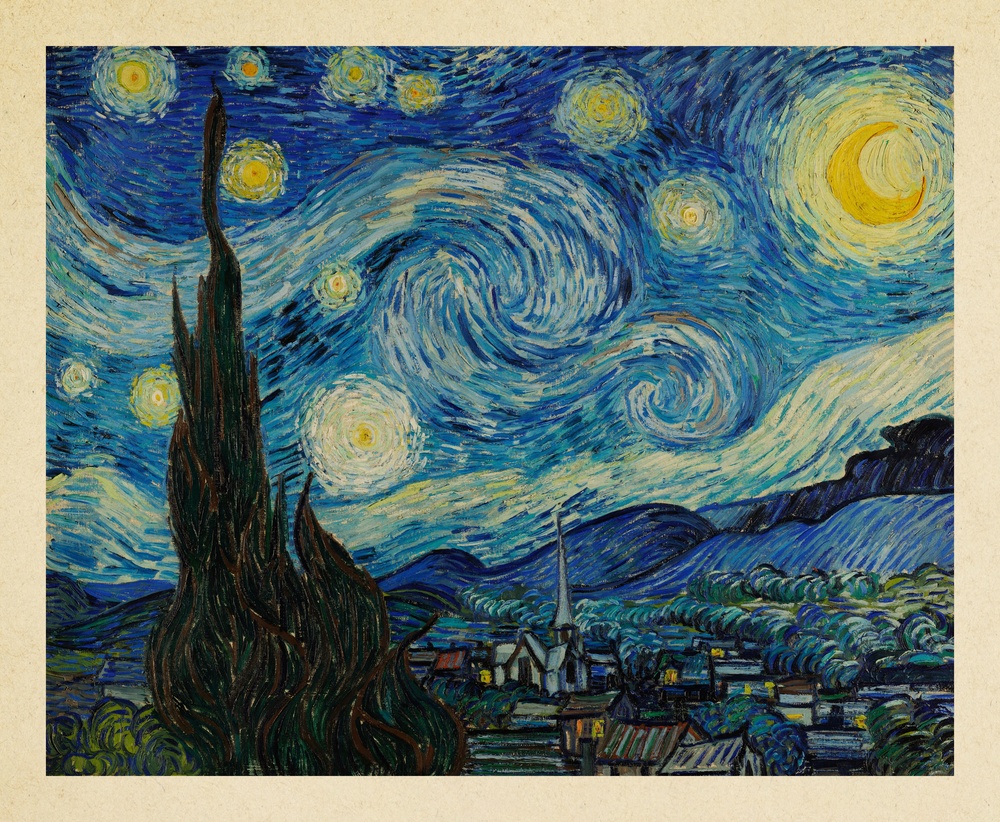
For more than a century, one question has followed Vincent van Gogh’s most famous painting: was its extraordinary night sky born entirely from his imagination, or did he capture something he actually witnessed? Now, researchers believe they may have found an answer hidden in the positions of the Moon, Venus, and a distant star cluster. Their discovery points to a specific morning in July 1889, potentially challenging the long-accepted timeline behind one of the world’s most recognizable masterpieces.
Contents
show
A new study suggests that The Starry Night closely matches the pre-dawn sky above Saint-Rémy-de-Provence, France, around July 22, 1889. The researchers used astronomical calculations, mathematical comparisons, historical correspondence, and weather records to reconstruct what Van Gogh could have seen. Their findings suggest that the painting’s famous swirling sky may have originated from a real celestial arrangement, although the precise date of its completion remains uncertain.
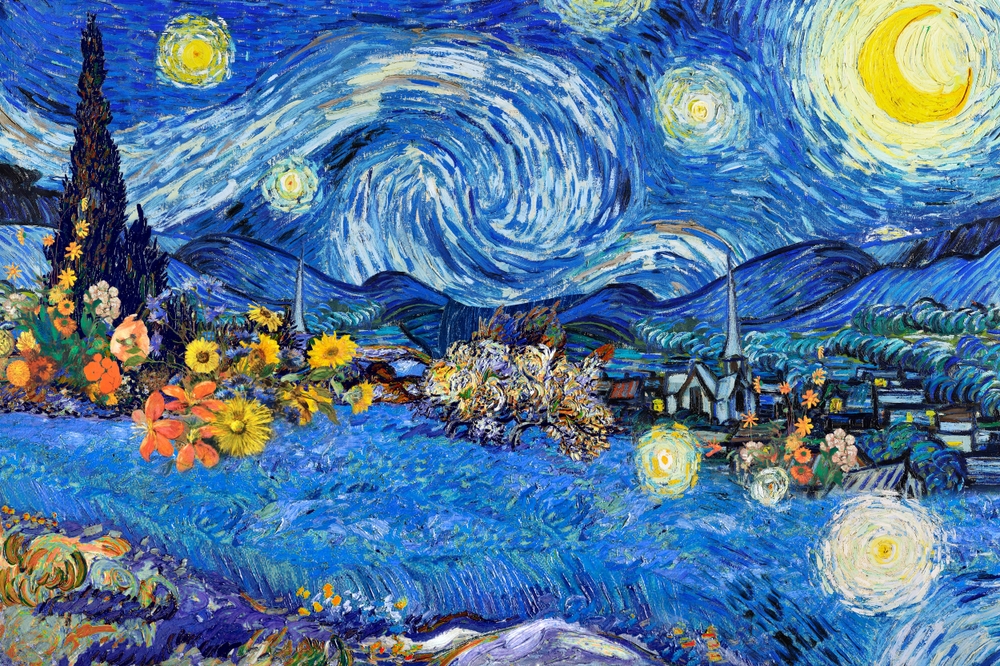
The Famous Painting May Have Captured A Real Night Sky
Painted in 1889, The Starry Night remains one of the most recognizable artworks in modern history. Its deep blue sky, swirling patterns, glowing stars, and enormous crescent Moon have inspired countless interpretations. For decades, viewers have debated whether Van Gogh created the scene entirely through imagination or transformed an actual view into his distinctive artistic style.
Van Gogh painted the masterpiece while staying at the Saint-Paul-de-Mausole asylum in Saint-Rémy-de-Provence, southern France. He had entered the institution following a difficult period in his life and continued producing remarkable paintings during his stay. Although the landscape outside his window influenced several works, the extraordinary arrangement of celestial objects in The Starry Night remained difficult to explain.
Art historians have traditionally associated the painting with June 1889. Earlier astronomical investigations also attempted to identify the celestial objects using dates around the middle of that month. However, those interpretations produced conflicting results, and no convincing explanation accounted for the entire arrangement of the Moon and stars.
A research team led by Elijah Jeong-hyun Kim has now approached the mystery using a broader combination of scientific techniques. Their study, published in Scientific Reports, argues that the pre-dawn sky around July 22, 1889, offers a particularly strong match. The finding could change how historians understand the painting’s creation and the relationship between Van Gogh’s observations and imagination.
Three Celestial Objects Helped Reveal The Date
The researchers concentrated on three important features visible in the painting: the waning-crescent Moon, Venus, and the Hyades star cluster. Each offered a clue about the possible date because celestial objects change their apparent positions throughout the year. By examining how these objects appeared above Saint-Rémy-de-Provence in 1889, the team could identify dates that matched the composition.
The Hyades is a prominent star cluster in the constellation Taurus. Its stars form a recognizable V-shaped pattern, making it relatively easy to identify in the night sky. Researchers compared this arrangement with the central group of stars depicted in Van Gogh’s painting and found similarities that supported their proposed reconstruction.
The Moon provided another important clue. Its painted crescent shape suggested a waning phase, which did not fit the previously favored June dates as closely as the late-July reconstruction. Venus also appeared in a position consistent with the proposed scene, strengthening the possibility that Van Gogh had observed the arrangement before translating it onto canvas.
According to the study, the three celestial features gathered within the narrow viewing frame reconstructed for the artist around July 22. Their combined positions offered a more complete explanation than earlier attempts that focused on individual stars or planets. The researchers therefore suggest that the painting’s central celestial arrangement may have originated from a specific morning sky.
How Researchers Reconstructed Van Gogh’s View
Recreating a sky from more than a century ago required several different investigations. The team examined the geographical location associated with the painting, reconstructed historical astronomical positions, and compared the resulting patterns with the objects Van Gogh placed on his canvas. They also examined historical documents and environmental records to test whether the proposed date fitted the circumstances surrounding the artist.
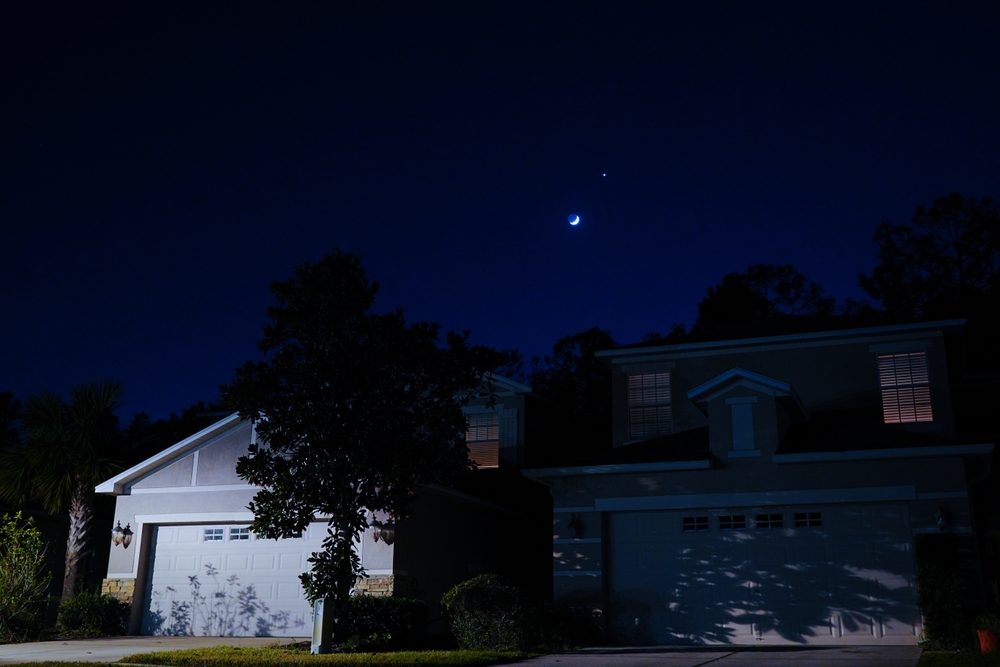
Reconstructing The Artist’s Field Of View
One important part of the investigation involved determining how much of the sky Van Gogh could have observed from his position. The researchers examined an earlier sketch of the same terrain to help reconstruct the narrow viewing frame. This allowed them to establish which celestial objects could realistically have appeared within the artist’s field of vision.
The distinction was important because a star or planet might occupy a mathematically suitable position in the wider sky while remaining outside the area Van Gogh could have seen. By restricting their calculations to the reconstructed frame, the researchers could test the proposed arrangement against the physical setting.
Using Mathematics To Compare Star Patterns
The team also applied a mathematical technique called Procrustes analysis. It compares the shapes formed by different sets of points after allowing adjustments to their position, size, and rotation. Researchers can then measure the remaining differences between the patterns.
This was particularly useful because Van Gogh did not reproduce celestial objects according to their exact astronomical sizes or orientations. He enlarged and rearranged elements to suit the composition. Procrustes analysis allowed the researchers to compare the underlying star pattern without requiring the painted objects to look identical to their real counterparts.
The method helped quantify the resemblance between the Hyades cluster and the central star arrangement. It also addressed a weakness in earlier interpretations, which had largely relied on visual similarities rather than a reproducible mathematical comparison.
Checking Historical And Environmental Evidence
Astronomy was only one part of the investigation. The researchers also examined contemporary weather records, bioclimatic information, and Van Gogh’s original correspondence. These sources helped them assess whether the proposed date was consistent with the environmental conditions and documented circumstances surrounding the artist.
The team first tested its broader approach using historical night paintings by Adam Elsheimer and Jean-François Millet. It also examined two of Van Gogh’s 1888 night paintings whose original locations still exist. These comparisons helped establish whether the framework could be applied beyond a single famous artwork.
Why The July Discovery Challenges Art History
The proposed July date raises questions about the accepted chronology of The Starry Night. If Van Gogh observed the celestial arrangement around July 22, the painting’s development may have continued beyond the June period traditionally associated with its creation. This would require historians to reconsider the relationship between his earlier descriptions of the work and the finished canvas.
A letter dated June 18, 1889, contains Van Gogh’s description of a new study of a starry sky. Earlier interpretations connected this correspondence with the painting’s creation, helping establish the traditional June timeline. However, the researchers argue that the letter does not necessarily prove that the final composition had already been completed.
The distinction between beginning and finishing a painting is particularly important here. Van Gogh could have started developing the composition in June and continued refining it after observing the late-July sky. This possibility would allow the historical correspondence and astronomical reconstruction to fit within the same broader creative period.
The researchers also point to the painting’s differences from some of Van Gogh’s other June works. Its distinctive arrangement and visual style have previously attracted attention from art historians. The new findings offer another reason to reconsider its chronology, although further historical investigation will be needed before the proposed timeline can be established.
Van Gogh’s Imagination May Have Transformed What He Saw
The possibility of a real astronomical reference does not mean Van Gogh copied the sky exactly as it appeared. His artistic style involved dramatic changes to color, shape, scale, and movement. Even when working from recognizable landscapes, he transformed ordinary scenes into compositions that carried a distinct visual identity.
The researchers acknowledge this difference between observation and artistic reproduction. The star cluster in the painting appears larger and differently arranged than its real astronomical counterpart. However, its underlying geometry offers similarities that support the proposed identification.
Van Gogh’s artistic decisions may therefore have played an important role in shaping the final scene. He could have observed the Moon, Venus, and the Hyades cluster before exaggerating their appearance to create the movement and visual intensity associated with the painting.
This interpretation also offers an interesting explanation for why the painting feels both recognizable and unreal. Its celestial arrangement may have begun with an actual view, while its final appearance reflects the artist’s individual way of seeing and representing the world.
Earlier Astronomical Investigations Reached Different Conclusions
The mystery has attracted attention from astronomers and art historians for decades. In 1984, art historian Albert Boime and astronomer George Abell examined possible astronomical connections within the painting. Astronomer Charles Whitney later offered another interpretation, but the proposed identifications did not agree.
Those disagreements made it difficult to establish a convincing observational explanation. Earlier investigations considered possible celestial matches, but they did not combine the artist’s actual field of view, the geometry of the central star cluster, historical correspondence, and weather information into one framework.
The latest study attempts to address those limitations by treating the painting as a composition that can be tested against physical evidence. Its methods also incorporate comparisons with other historical night paintings, allowing researchers to assess whether the same approach works across different artists and periods.
The authors suggest that this framework could eventually help researchers investigate other artworks featuring recognizable astronomical arrangements. Historical paintings may contain more observational detail than previously assumed, particularly when artists recorded unusual celestial events or distinctive arrangements of stars and planets.
Important Questions About The Painting Remain Unanswered
Although the July 22 reconstruction provides a compelling astronomical match, it does not establish the exact date Van Gogh completed the painting. The researchers identify a sky that closely corresponds with the celestial arrangement on the canvas. Establishing when the artist observed it and how he incorporated it into the finished composition requires additional historical interpretation.
There is also the possibility that Van Gogh combined observations from different mornings. Artists often work through sketches, memories, and repeated observations before completing a composition. The painting’s final appearance may therefore reflect more than one moment in the sky.
Several questions remain particularly important:
- The completion date: The astronomical match cannot independently establish the precise day Van Gogh finished the painting.
- Multiple observations: The composition may combine impressions from several mornings rather than one isolated view.
- Artistic alterations: Van Gogh changed the apparent size, position, and appearance of celestial objects to suit his composition.
- Historical evidence: Old correspondence and environmental records provide useful clues but cannot answer every question.
- Further investigation: Additional research could help clarify the relationship between the proposed observation date and the painting’s creation.
These limitations leave room for further discussion among historians and scientists. However, the mathematical and astronomical similarities provide a stronger basis for the observational interpretation than earlier visual comparisons alone.
One July Morning Could Change How We See A Masterpiece
For more than a century, The Starry Night has been celebrated as an extraordinary expression of Van Gogh’s imagination. The new research introduces another possibility: the famous sky may have started with a real astronomical scene above southern France before the artist transformed it into something uniquely his own.
If the proposed reconstruction is correct, one of the world’s most recognizable paintings may preserve the arrangement of celestial objects visible during a particular July morning in 1889. The mystery surrounding its sky has gained a scientific explanation, even as questions about Van Gogh’s creative process remain open.
Sources:
- Kim, E. J., Kang, S., Song, J., & Jin, H. (2026). The actual sky of Van Gogh’s Starry Night: a multidisciplinary reconstruction. Scientific Reports, 16(1). https://doi.org/10.1038/s41598-026-73025-5
- Kim, E. J. (2026). Procrustes shape-matching and null tests for The Starry Night (F612) and benchmark nocturnes. Zenodo (CERN European Organization for Nuclear Research). https://doi.org/10.5281/zenodo.21175816