
Your cart is currently empty!
Scientists Trace America’s Record Honey Bee Collapse To A Troubling New Threat
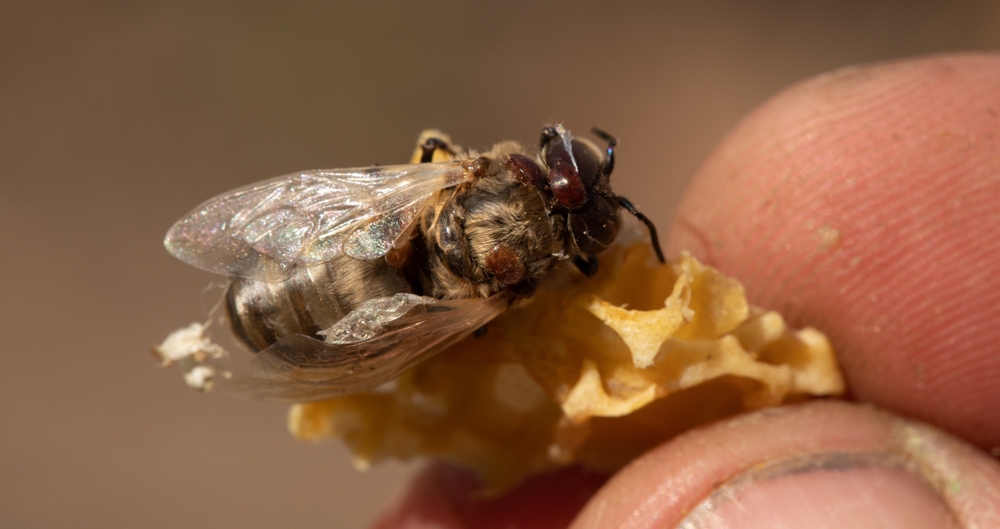
A disaster has been unfolding inside America’s beehives, and the latest numbers are difficult to ignore. Between June 2024 and January 2025, U.S. beekeepers lost 62% of their commercial honey bee colonies, marking the largest winter die-off ever recorded. The collapse followed another brutal season in which 55% of colonies were lost, leaving beekeepers facing two consecutive years of extraordinary losses.
Contents
show
Now, researchers at the U.S. Department of Agriculture say they have identified a major culprit. Nearly every dead colony examined in their investigation carried viruses associated with parasitic varroa mites, while every mite screened showed resistance to amitraz, one of the most important treatments beekeepers have left. The finding raises fresh concerns about what could happen if these parasites become even harder to control.
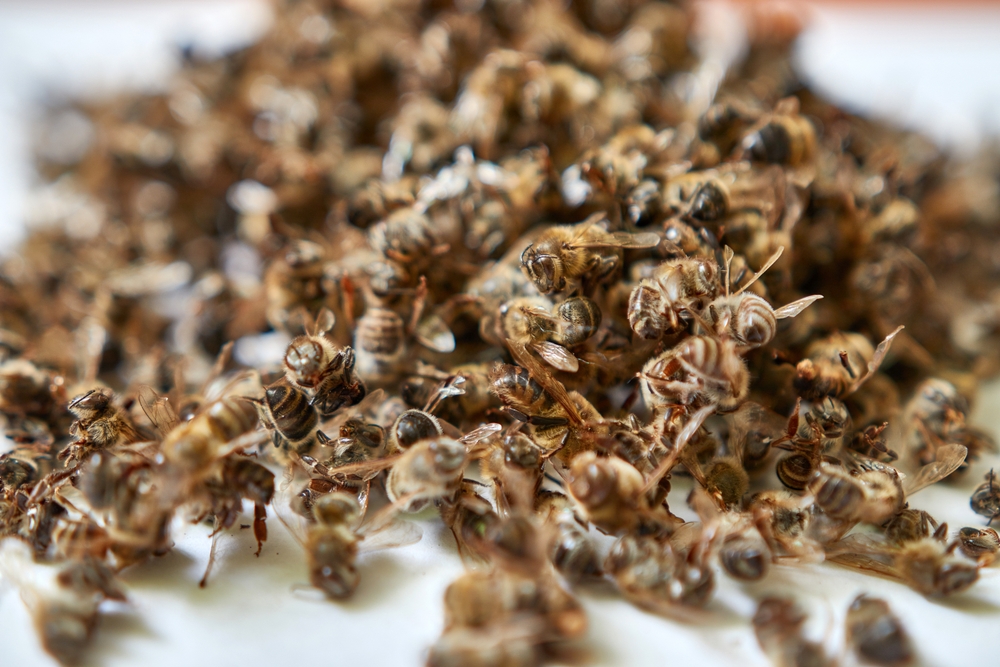
Scientists Investigated The Worst Bee Die-Off On Record
The scale of the losses forced researchers to look beyond the usual seasonal problems affecting honey bee colonies. A nationwide survey found that commercial beekeepers lost 62% of their colonies during the latest period, far exceeding the previous winter’s already alarming 55% loss. The scale made it clear that something more serious could be happening across the country’s managed bee population.
USDA researchers responded by examining colonies that had already collapsed. A team led by bee researchers Jay Evans and Zachary Lamas collected dead bees from 113 affected colonies located across the United States. Researchers also collected wax, pollen, honey, and parasites when those materials were available.
The samples were sent to national bee laboratories in Beltsville, Maryland, and Baton Rouge, Louisiana. There, scientists extracted DNA and RNA and searched for genetic traces of viruses and bacteria. They also sequenced DNA from recovered varroa mites, specifically looking for genes connected to resistance against miticides.
The investigation produced a striking pattern. Nearly all of the dead colonies tested positive for viruses spread by varroa mites, while the mites themselves showed evidence of resistance to amitraz. The findings were published as a preprint on the bioRxiv server, meaning the research has not yet completed the full peer-review process.
Varroa Mites May Have Delivered The Killing Blow
Varroa mites are tiny parasites that have become one of the biggest threats facing managed honey bee colonies. They attach themselves to bees and can spread viruses between individual insects and entire colonies. When infestations become severe, the combination of parasites and disease can leave a colony unable to survive.
The new USDA research suggests that these mites played a major role in the latest die-off. Matthew Mulica of the Keystone Policy Center, which leads a coalition focused on honey bee health, said mite-borne viruses probably delivered a killing blow to many colonies. He also cautioned that other pressures may have weakened bees before disease took hold.
Those additional pressures could include pesticide exposure and inadequate nutrition. That means the varroa mites may represent a major part of the explanation without necessarily being the only factor behind every colony death. Scientists are expected to learn more when USDA releases additional analysis of pesticide residues found in the affected colonies.
For now, the evidence gives researchers something concrete to investigate. Mulica described the initial diagnosis as useful because scientists have identified a specific problem they can target. The question now is whether beekeepers still have enough effective tools to keep the parasites under control.
The Mites Are Becoming Resistant To A Key Treatment
The most worrying discovery may not be the presence of varroa mites themselves. Beekeepers have been battling those parasites for decades. The bigger problem is that the parasites appear to be developing resistance to one of the industry’s most important weapons.
Every varroa mite screened in the USDA investigation showed resistance to amitraz. The chemical is widely used because it has been considered one of the less toxic options for controlling mites while limiting damage to honey bees.
Aaron Gross, a toxicologist at Virginia Polytechnic Institute and State University, called the findings “concerning.” Gross, who was not involved in the study, said losing amitraz could be a major blow because many alternative miticides are either harsher on bees or less effective against the parasites.
The situation creates a difficult balancing act for beekeepers. They need to eliminate mites before the parasites spread viruses through a colony, but treatments that are too aggressive can also weaken the insects they are supposed to protect. As Gross put it, “You not only have to worry about killing the mite itself; you also don’t want to damage the honey bee.”
Varroa Mites Have Been Fighting Back For Years
The resistance discovered in the latest investigation did not suddenly appear during one disastrous winter. Varroa mites have been developing resistance to chemical treatments for years, creating an ongoing battle between parasites and the people trying to control them.
Since the 1980s, researchers have documented the evolution of resistance to at least four major classes of miticides. Each time a treatment becomes widely used, mites that survive exposure can reproduce and pass resistance traits through future generations.
That evolutionary process makes the current situation especially difficult. Amitraz has remained one of the more useful options available to beekeepers, but resistance could reduce its effectiveness just as colonies are already under pressure from disease and other environmental stresses.
Researchers have also tried breeding honey bees with traits that help them resist mites. Those efforts could become increasingly important if chemical treatments continue losing their effectiveness. But breeding programs take time, while beekeepers are dealing with colonies that need protection immediately.
Losing Bees Could Become An Agricultural Problem
The crisis extends far beyond the people who keep commercial hives. Honey bees pollinate more than 90 commercial crops in the United States, making healthy colonies an important part of the country’s agricultural system.
The insects also generate between $20 billion and $30 billion in agricultural revenue. That does not mean every dollar depends directly on honey sales. Much of the economic value comes from the pollination services bees provide to farmers growing crops that depend on managed pollinators.
Danielle Downey, executive director of Project Apis m., said, “There is a lot at stake.” Her organization conducted the survey that documented the record colony losses.
A single difficult season does not necessarily destroy the commercial beekeeping industry. Honey bee colonies can recover from one or two difficult years. But repeated crashes can leave beekeepers with fewer colonies available for the next growing season, increasing the pressure to rebuild quickly.
Beekeepers Are Running Out Of Easy Options
For now, organizations focused on honey bee health are advising beekeepers to use multiple strategies against varroa mites. Relying on one treatment becomes increasingly risky when parasites have already demonstrated the ability to survive it.
The recommended measures include rotating through nonamitraz miticides, sterilizing hive equipment with alcohol or fire, and isolating colonies that are struggling. These methods can help reduce opportunities for mites to spread and can prevent one infected colony from becoming a larger problem.
Researchers are also exploring ways to attack the viruses themselves. One possible approach involves RNA interference, a technique that could potentially trigger protective responses in bees and interfere with the viruses carried by mites.
That technology remains years away from being used outside the laboratory, according to Mulica. There are currently no existing antivirals specifically targeting these viruses, leaving beekeepers dependent on strategies aimed largely at controlling the parasites that spread them.
Some Beekeepers May Already Be Too Late To Fully Recover
The timing of the USDA findings creates another problem for beekeepers. The preprint appeared near the end of the annual rebuilding window, when commercial operations work to replace colonies lost during the winter and prepare for the next season.
Once summer arrives, rebuilding becomes more difficult. Beekeepers who have not treated their colonies for the right problems may find it particularly challenging to restore their numbers before the next major seasonal cycle.
Downey said some beekeepers will have to move forward with fewer colonies than they are accustomed to maintaining. That could make the next season more difficult even if the immediate crisis begins to ease.
The industry is therefore facing two problems at once. Beekeepers must recover from the largest recorded colony loss while also confronting a parasite that appears increasingly resistant to one of their most important treatments.
Scientists Now Need Better Tools Before Another Collapse
The USDA investigation provides an important starting point, but the researchers still have more work to do. Further analysis of pesticide residues could reveal whether chemical exposure played a significant role alongside mites and viruses.
The findings also need to be interpreted with the limitations of a preprint in mind. The research has not yet gone through the full peer-review process, so additional scrutiny could change how scientists interpret some of the results.
Even so, the resistance finding gives researchers a clear warning. If amitraz becomes broadly ineffective, beekeepers could be forced to rely more heavily on treatments that may be harsher, less reliable, or both.
Downey said preventing another collapse will require resources and coordination between agencies and researchers. “With the right will and resources, there are tangible efforts that could prevent this happening again,” she said. “The USDA and university labs are key components.”
The next major test will come when beekeepers face another winter. After two record-breaking seasons, the industry needs more than another emergency response. It needs effective ways to stop the mites before they get another chance to wipe out millions of colonies.
agriculture, agriculture news, amitraz resistance, bee colony collapse, bee health, bee population, bee viruses, commercial beekeeping, environmental crisis, honey bee colonies, honey bee crisis, honey bee die-off, honey bees, pesticide resistance, pollinators, Science news, U.S. beekeepers, USDA, varroa mites