
Your cart is currently empty!
Scientists Urge NASA to Investigate Strange Shiny Object Found on Mars
A small object resting quietly on the dusty surface of Mars has suddenly become the focus of fresh scientific curiosity and public fascination. The item, which appears to be a shiny cone or cylinder about 20 centimeters long with a flat end, was originally photographed by NASA’s Curiosity rover in Gale Crater near the Martian equator. While the image itself dates back to 2022, the unusual object has recently sparked renewed discussion after being highlighted by Harvard astrophysicist Avi Loeb. The strange geometric shape stands out clearly against the rugged Martian terrain, where rocks are typically irregular, fractured, and shaped by billions of years of wind erosion and ancient geological processes.
Contents
show
What makes the object so intriguing is how structured it appears compared with the surrounding environment. Mars is known for its chaotic landscape of layered rocks, dust, and debris scattered across vast plains and craters. Yet this particular object appears smooth, symmetrical, and sharply defined, almost like a small metallic cone placed deliberately on the ground. While many scientists believe the explanation is likely simple and related to human-made equipment from the rover mission, others say that unusual features like this deserve closer inspection before conclusions are drawn. In planetary exploration, even small anomalies captured in a photograph can sometimes lead to new questions and discoveries.
🚨 PERSEVERANCE JUST FOUND SOMETHING ON MARS THAT… SHOULDN’T BE THERE
— Mario Nawfal (@MarioNawfal) November 16, 2025
NASA’s rover has been crawling across Jezero Crater for four years without spotting a single iron-nickel meteorite – something every other Mars rover stumbled on like loose change.
Then, out of nowhere, this… https://t.co/vW60cG0oyg pic.twitter.com/U1MtoPM43J
The Strange Object Spotted in Gale Crater
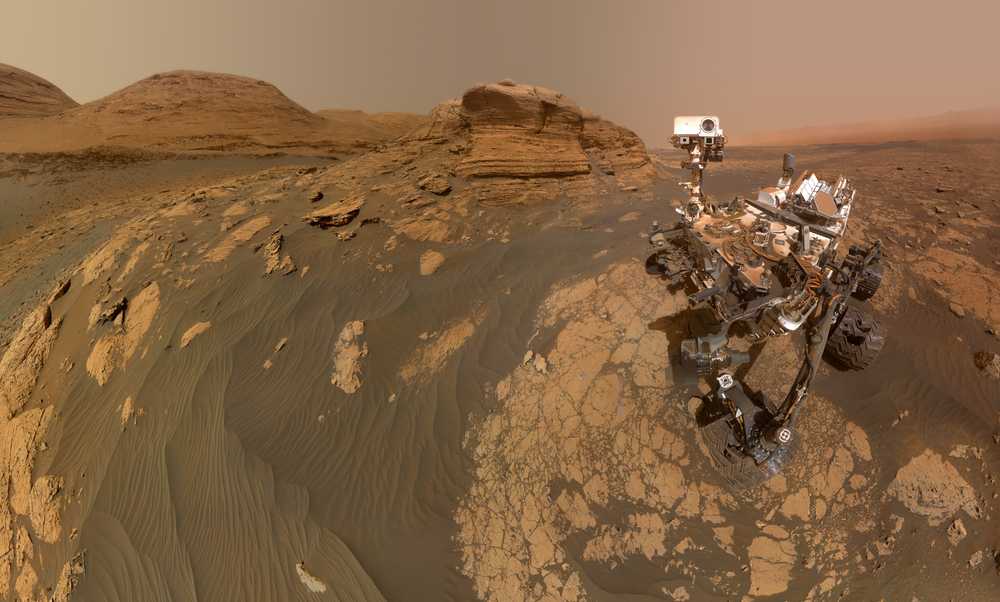
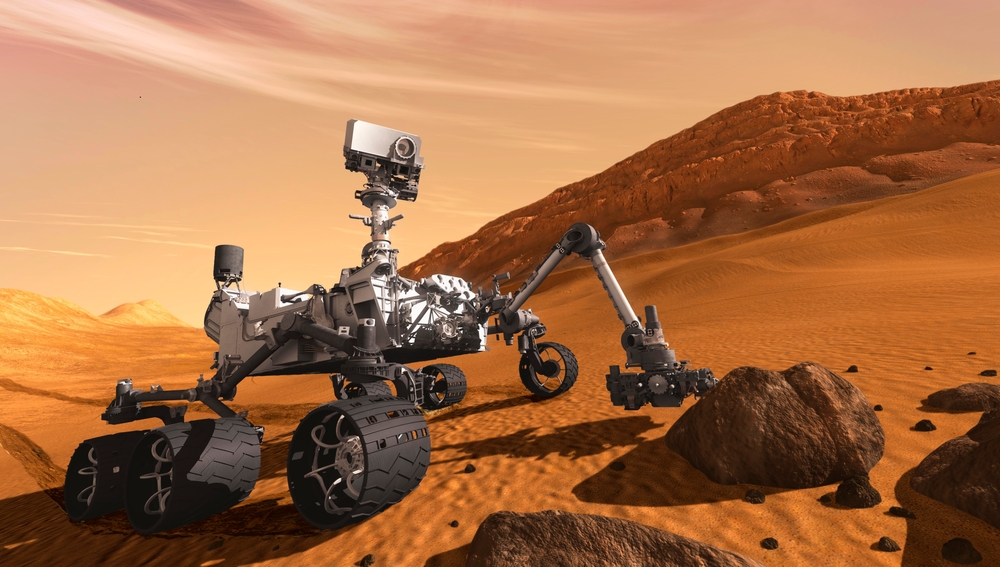
The photograph that first captured attention was taken by the Mast Camera mounted on NASA’s Curiosity rover, which has been exploring Gale Crater since landing on Mars in August 2012. Curiosity’s mission is to study the planet’s geology, examine rock samples, and search for signs that Mars once had conditions suitable for microbial life. Over the years the rover has sent back hundreds of thousands of images from the Martian surface, documenting everything from ancient lakebeds to towering rock formations and dust devils moving across the plains.
Among this enormous collection of images, one frame stood out because of a small cone-like object lying among scattered rocks. The object resembles a tiny party hat or cylinder and measures roughly 20 centimeters in length. One end appears flat while the other narrows slightly, giving it a defined geometric structure that contrasts sharply with the surrounding terrain. The Martian ground around it is covered in rough stones and sediment layers that appear jagged and uneven, making the smooth form of the object particularly noticeable in the photograph.
The cone sits alone without any clear geological formation around it that might explain its shape. Natural rock formations on Mars can sometimes produce unusual patterns, but they are usually the result of erosion or mineral processes that create irregular edges and textures. In this case, the object appears more symmetrical than typical Martian rocks. That contrast is one of the main reasons researchers reviewing rover imagery began paying closer attention to it.
A party-hat shaped object spotted on Mars in 2022 by NASA’s Curiosity Rover in Gale Crater near the Red Planets equator, is drawing renewed scrutiny. First discovered by on May 8, 2022 by Harvard University astrophysicist Avi Loeb, he called NASA to send the Curiosity Rover to… pic.twitter.com/VnE9EtVsJa
— Robbie Mouton (@mcgmouton57) March 14, 2026
How the Image Was Rediscovered
Although the image was captured in 2022, it only recently gained wider attention after amateur Mars researcher Rami Bar Ilan reviewed NASA’s publicly available image archives. NASA releases vast amounts of rover data online, allowing anyone with interest in planetary science to browse through photographs taken by missions exploring Mars. This open access has allowed independent researchers and enthusiasts around the world to participate in analyzing images from the Red Planet.
While examining these images, Bar Ilan noticed the small cone-shaped object sitting among the rocks and flagged it as unusual. He shared the image with Dr. Jan Spacek from the Florida based Foundation for Applied Molecular Evolution, who then helped bring it to the attention of Harvard astrophysicist Avi Loeb. Loeb later discussed the object in a Medium post published on March 8, which quickly reignited interest in the mysterious feature.
In his post, Loeb raised a simple but important question about how scientists should respond to the discovery. “Should we just assume that the mysterious cylinder is human-made debris and move on or turn back the rover to figure out whether its origin is different?” he wrote. His question encouraged scientists to consider whether the object might deserve closer examination rather than being dismissed immediately.

Avi Loeb Calls for Further Investigation
Loeb suggested that NASA could consider sending the Curiosity rover back to investigate the object more closely. At the time of the discussion, Curiosity was operating on the slopes of Mount Sharp, a large layered mountain that rises from the center of Gale Crater and contains geological records of Mars’ ancient climate. The mysterious cone lies roughly five miles away from the rover’s current location, which means a return trip would require careful planning and scientific justification.
Even though Loeb acknowledged that the object most likely has a simple explanation, he argued that confirming its origin could still be valuable. “The most likely explanation is that it corresponds to human-made debris,” Loeb wrote. Determining whether that assumption is correct would remove uncertainty and help scientists better understand what exactly the rover photographed on the Martian surface.
He also explained his reasoning in comments discussing the discovery, saying, “In my opinion, NASA should prioritize going back to examine the cylinder relative to the more mundane tasks of the Curiosity rover is pursuing.” Loeb further pointed out that space exploration is funded by public interest and curiosity, suggesting that investigating unusual objects on Mars could capture the imagination of taxpayers who support such missions.
The Possibility of Human-Made Debris
Despite the excitement surrounding the discovery, many experts believe the object may simply be a fragment of hardware related to the Curiosity mission itself. Space missions involve complex equipment, including protective caps, covers, and components that can detach during landing or long periods of operation. These pieces can occasionally appear in rover photographs after they separate from the spacecraft.
Curiosity has been operating on Mars for more than a decade, far longer than the mission’s original planned duration. During that time the rover has traveled across rocky terrain, drilled into Martian rock layers, and conducted numerous scientific experiments. With so much mechanical activity taking place over the years, it is not impossible that a small piece of mission equipment could have detached and ended up on the ground.
Loeb himself acknowledged that possibility while discussing the object, suggesting that the cone may have been shed during the rover’s long mission. If that explanation proves correct, the object would represent a minor piece of debris rather than something unknown. Even so, identifying it clearly would still help scientists understand the rover’s operational history and the equipment it has used during its exploration of Mars.
Why the Shape Still Draws Attention
Even if the object ultimately turns out to be mission debris, its appearance highlights an important aspect of planetary exploration. Scientists studying images from Mars often look for patterns, structures, or shapes that stand out from the surrounding environment. These anomalies can sometimes reveal interesting geological processes or previously unknown features of the planet’s surface.
Mars is shaped by powerful natural forces including volcanic activity, meteor impacts, and wind erosion that has been active for billions of years. These forces typically create landscapes filled with rough edges and irregular formations. As a result, smooth geometric shapes are relatively uncommon in natural Martian geology, which is why this cone-like object attracted attention so quickly.
Investigating such features carefully helps ensure that scientists do not overlook important details. While most anomalies eventually turn out to have ordinary explanations, the process of studying them remains an essential part of planetary science. Each unusual image encourages researchers to examine data more closely and refine their understanding of how Mars evolved over time.
Citizen Scientists and the Power of Open Data
The rediscovery of the mysterious object also highlights the growing role of citizen scientists in space exploration. NASA’s decision to publish rover images online has created opportunities for people around the world to participate in studying another planet from their own homes. Enthusiasts with patience and curiosity often spend hours examining photographs for unusual features that might otherwise go unnoticed.
Over the years, citizen scientists have helped identify dust devils swirling across the Martian surface, unusual rock formations shaped by ancient water flows, and patterns in the landscape that later became subjects of scientific investigation. Their contributions demonstrate that scientific discovery is not limited to laboratories and research institutions.
In this case, the cone shaped object might have remained hidden in the vast archive of rover images if not for the attention of independent researchers reviewing the data. The collaboration between professional scientists and amateur observers continues to expand the reach of planetary exploration and allows more people to take part in the process of discovery.
What NASA Says So Far
For now, NASA has not officially identified the object or confirmed plans to revisit its location. The Curiosity rover continues its main scientific mission of studying Mount Sharp and analyzing layers of sediment that record the environmental history of Mars. These layers contain valuable clues about how the planet’s climate changed over billions of years.
Rover missions operate under strict limitations involving energy, time, and navigation across difficult terrain. Every movement of the rover must be carefully planned to maximize scientific results while protecting the vehicle from hazards. Redirecting Curiosity several miles to examine a single object would require researchers to determine that the investigation would provide meaningful scientific value.
For the moment, the small cone remains an intriguing feature captured in a photograph from the Martian surface. Whether it turns out to be mission debris, an unusual rock formation, or something else entirely, the discovery has already served an important purpose. It has reminded scientists and the public alike that Mars still holds many mysteries, and sometimes even a tiny object in the dust can spark worldwide curiosity about what lies on the Red Planet.
Avi Loeb Mars object, Curiosity rover Gale Crater, Gale Crater Mars discovery, Harvard astrophysicist Avi Loeb, Mars anomaly, Mars cone object, Mars exploration news, Mars geometric object, Mars mystery object, Mars photo discovery, Mars rover images, Mars space discovery, Mars surface mystery, mysterious cylinder on Mars, NASA Curiosity rover discovery, NASA Mars mission, NASA rover debris Mars, strange object on Mars, unusual Mars rock formation