
Your cart is currently empty!
Sealed for 40,000 Years: Archaeologists Reveal the Hidden Home of the Last Neanderthals
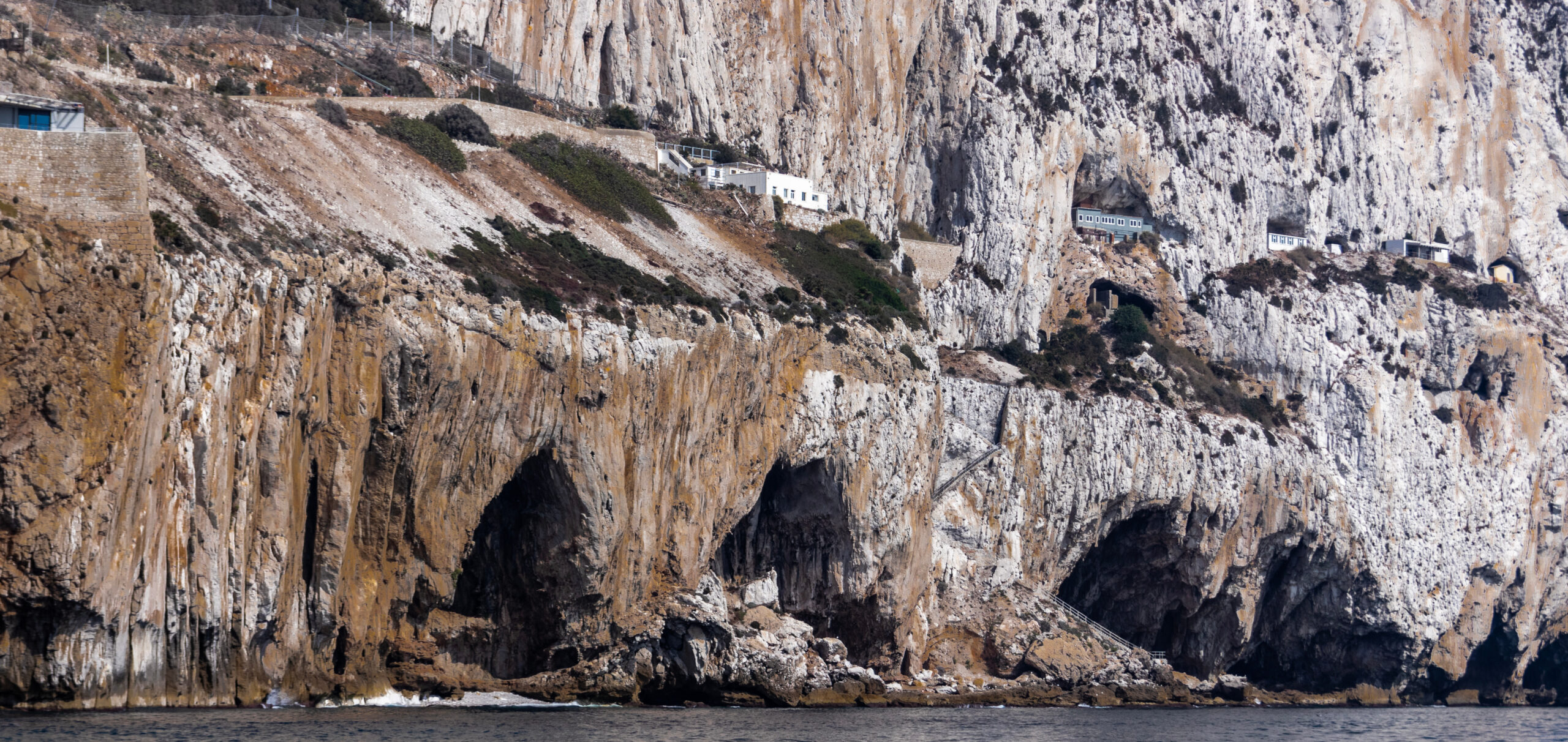
Archaeologists in Gibraltar recently broke through a sediment seal to enter a cave chamber that had been closed off for forty thousand years. The space acted as a perfect time capsule, protecting its contents from the elements since the height of the last Ice Age.
Contents
show
Inside, the scattered remains and markings offer a rare, undisturbed look at the final stronghold of the Neanderthals, providing fresh evidence that complicates the story of their survival and eventual disappearance.
Unlocking a Prehistoric Time Capsule
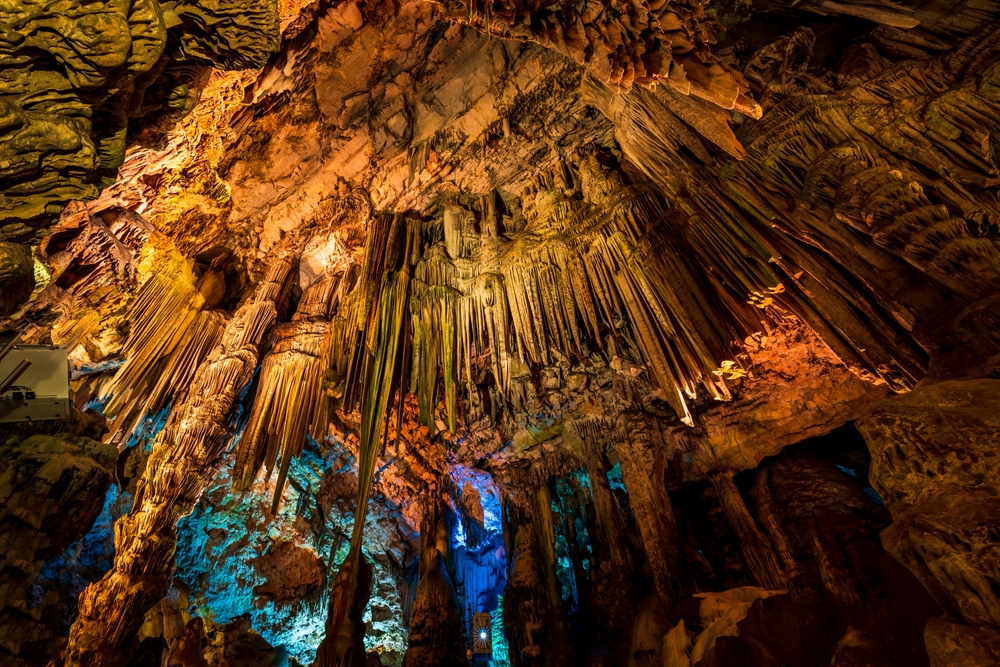
Situated on the southern tip of the Iberian Peninsula, the Gorham’s Cave complex offers a rare window into a prehistoric world frozen in time. While the site has been a focal point for archaeological study since the 1980s, a remarkable discovery in 2021 brought new intimacy to our understanding of ancient history. Deep within Vanguard Cave, researchers from the Gibraltar National Museum unearthed a chamber that had remained hermetically sealed by sand and sediment for at least 40,000 years.
This hidden space, stretching approximately 13 meters (42 feet) deep, was found to contain the skeletal remains of a lynx, a hyena, and a vulture. However, it was not merely a den for predatory animals. The discovery of a large whelk shell, an edible sea snail, indicated that hominins had visited this remote corner of the cave. Given the chamber’s distance from the water and the steep limestone cliffs, the shell could not have arrived there by natural tides, suggesting it was carried up by ancient hands.
This sealed environment acts as a pristine time capsule. Unlike other sites often disturbed by millennia of geological shifts or human interference, the Vanguard chamber preserves a specific moment in history. It offers physical evidence of a time when the Mediterranean coast was a sanctuary for the world’s last Neanderthals, providing a tangible link to a lost cousin of modern humanity.
Life on the Rock
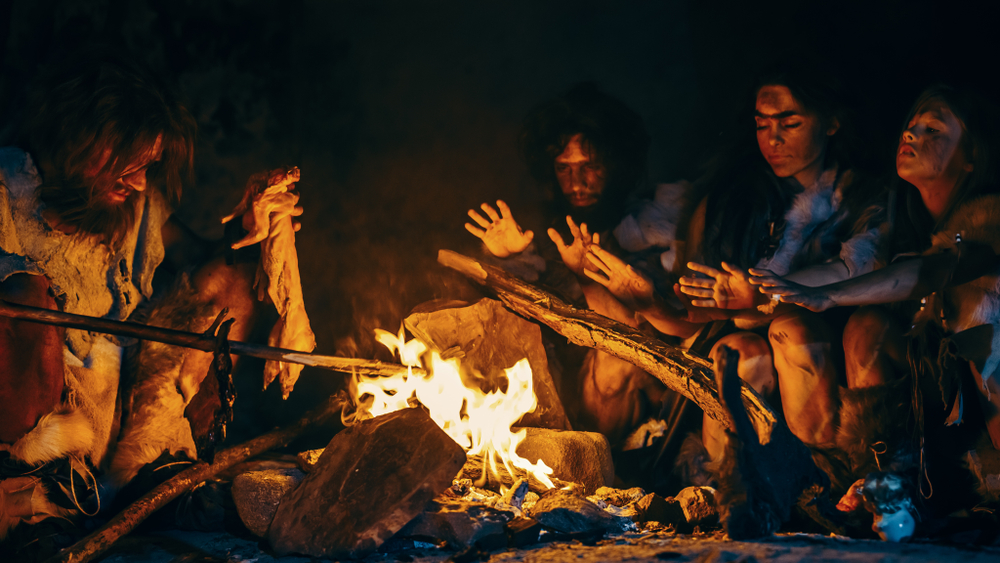
The Gorham’s Cave complex was far more than a rocky shelter to hide from the cold; for thousands of years, it was a home. The debris left behind paints a picture of people who were surprisingly adaptable and skilled at using the resources around them. While popular culture has often dismissed Neanderthals as primitive brutes, the archaeological record in Gibraltar reveals a population that knew exactly how to survive and perhaps even thrive on the coast.
Excavators have sifted through layers of history to find massive piles of mussel shells mixed with the bones of seals, dolphins, and fish. These weren’t accidental wash-ups from the tide. The bones bear distinct cut marks, proof that these families were butchering and processing marine life to supplement their diet. There is even evidence that they roasted pigeons and stripped feathers from birds of prey, possibly for personal decoration.
Beyond their menu, these groups possessed impressive technical knowledge. Deep inside Vanguard Cave, researchers identified a hearth used 60,000 years ago to manufacture birch tar. This sticky, pitch-like substance served as a prehistoric glue, essential for attaching stone blades to wooden handles. Creating birch tar isn’t a simple task; it requires maintaining specific temperatures and following a precise process. The presence of this technology suggests these communities were not just scraping by, but were engineering complex tools and passing that knowledge down to the next generation.
The First Abstract Artists?
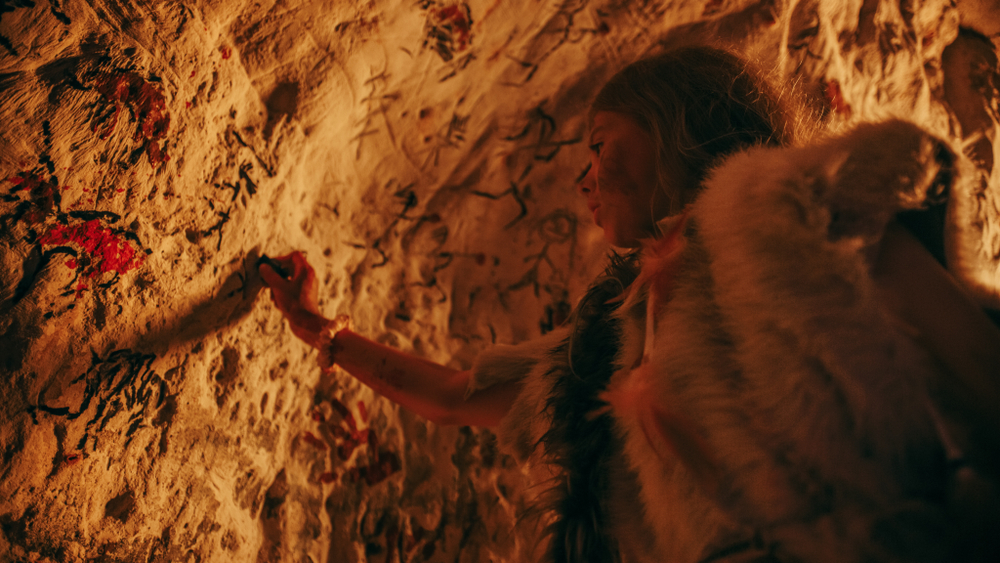
The most controversial finding within the cave complex is a geometric carving etched into a natural bedrock platform. Buried beneath undisturbed soil dating back roughly 39,000 years, the design consists of deeply incised lines that cross to form a pattern resembling a modern hashtag or a grid. While previous excavations yielded plenty of practical tools, this discovery hints at something far more elusive: the capacity for symbolic thought.
Researchers needed to rule out the possibility that these marks were merely accidental scratches left behind while butchering meat. To test this, the team conducted experiments using stone tools on fresh pork skin laid over similar rock. They found that accidental cuts were messy and could not replicate the deep, controlled grooves of the original artifact. Recreating the grid required between 188 and 317 deliberate strokes, a task that would have taken at least an hour of focused effort.
Clive Finlayson, director of the Gibraltar Museum, emphasized that this was intentional work rather than idle doodling. He argued that the engraving serves as an indication of abstract thinking. However, the interpretation of the carving as “art” remains a subject of debate. Jean-Jacques Hublin of the Max Planck Institute pointed out the stark contrast between this simple grid and the intricate animal paintings or Venus figurines created by modern humans during the same era. He noted that while the markings were deliberate, they are vastly different from sculpting a statue.
Despite the differing opinions, the engraving suggests that the cave’s inhabitants possessed a desire to leave a permanent, non-functional mark on their surroundings.
The Final Refuge
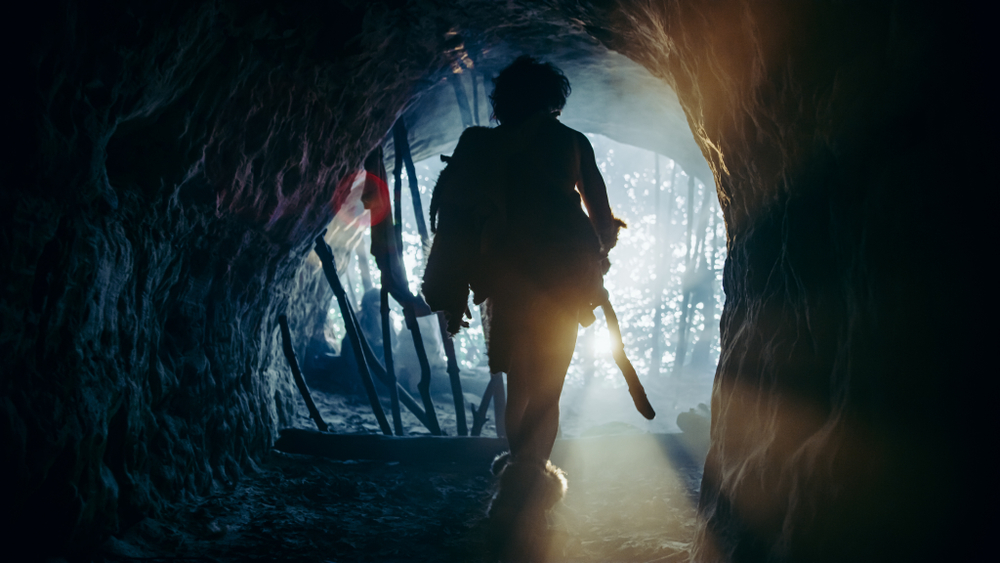
While Neanderthal populations were disappearing across the rest of Europe around 40,000 years ago, the southern Iberian Peninsula appears to have served as a lasting sanctuary. Radiocarbon dating suggests that groups inhabited Gorham’s Cave until perhaps as recently as 24,000 years ago, thousands of years after their relatives elsewhere had vanished. In this isolated pocket, traditional Neanderthal life continued, seemingly undisturbed by the arrival of modern humans who had not yet migrated into the area.
The specific placement of the geometric engraving supports the idea that these residents possessed a keen awareness of their physical environment. Clive Finlayson observed that the carving is located exactly at the point where the cave’s orientation shifts by 90 degrees. He compared the location to a major intersection, speculating that the design might have served a navigational purpose, a primitive map or signpost indicating, “This is where you are.” Francesco d’Errico, a researcher with the French National Centre for Scientific Research, noted that because the rock was in a highly visible spot, the markings could have signaled ownership or alerted visitors that the space was already occupied.
From the mouth of the cave, these final survivors would have had a clear view of the Rif mountains in Morocco across the strait. Despite the narrow 28-kilometer gap separating the continents, there is no evidence that they ever made the crossing to Africa. Instead, they remained on the European side, living out the final chapter of their species in a coastal haven that provided protection and resources until the very end.
Echoes from the Gibraltar Shore
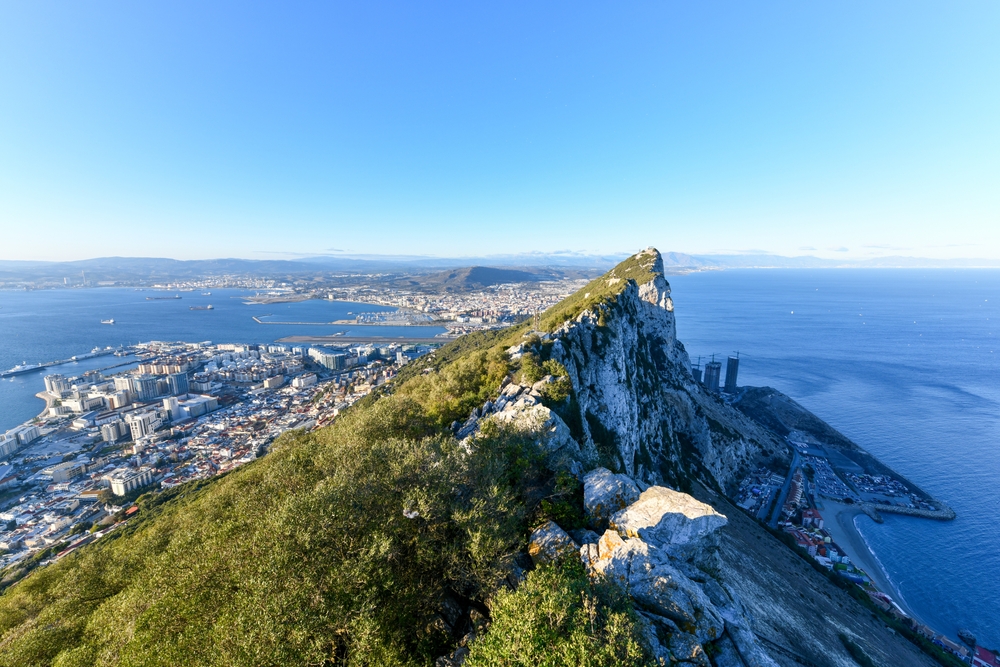
What archaeologists found in Gorham’s Cave changes how we see our past. For a long time, Neanderthals were treated as crude failures in the story of human evolution, strong but simple, surviving without much thought or feeling. The evidence from Gibraltar tells a very different story. These people had skills, traditions, and maybe even a need to create and leave something behind. They weren’t just getting by. They were living.
Seeing this makes it easier to feel close to them. As Clive Finlayson pointed out, Neanderthals now feel less like strangers and more like relatives we’ve lost. It’s moving to think that they once stood on the same shores, looked out at the same sea, and lived lives filled with care, cooperation, and meaning. They shaped their spaces and left marks that still make us wonder what they were trying to say.
In the end, the quiet cave and the marks on its walls remind us how fragile humanity really is. We aren’t the winners of evolution by destiny, just the ones who happened to remain. Neanderthals held on for as long as they could in their coastal home. What they left behind is more than stone tools and bones. It’s a reminder of their strength, their humanity, and the fact that we were never alone in being human.